- BYU basketball coach Kevin Young condemned a derogatory chant targeting Mormons.
- Athletic director Brian Santiago called the chant hurtful and unacceptable against any religion.
- Big 12 is investigating, emphasizing zero tolerance for such behavior at games.
PROVO — Kevin Young looked tired.
The second-year BYU basketball coach was tired of his team's slow starts, trailing by as much as 15 in the first half and 12 in the second half of a 99-92 loss to Oklahoma State.
He was tired of the 52 points in the paint, and of Anthony Roy's season-high 30 points that included five 3-pointers against a porous defense that led to the Cougars' third consecutive loss.
Young gave plenty of credit to the Cowboys. But then he spoke up.
During Wednesday night's Big 12 men's basketball game, Young said he heard some Oklahoma State fans using a derogatory phrase directed at BYU and members of the school's sponsoring faith, The Church of Jesus Christ of Latter-day Saints.
The all-too-common chant of "(expletive) the Mormons" appeared to be loud enough to be heard on the FS1 broadcast, too.
And Young, who has endured the chant that has become commonplace across multiple road venues, had enough. It was the second time in four days a Big 12 opponent had allegedly used the phrase directed not only at his team, but at the religious minority to which he belongs.
So after he had answered all sorts of questions about BYU's poor starts, porous defense and lack of paint production that has plagued the 16th-ranked Cougars all year, he took aim at the chant he said he heard while sitting next to his star wing AJ Dybantsa, who had just dropped 36 points in the loss and is not a member Young's faith.
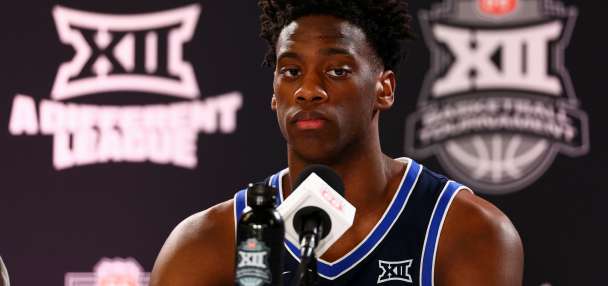
"It's a great win for Oklahoma State University; their fans should be proud," Young said. "But it would be great if some class was in there, as well. I've got four small kids at home — I'm a Mormon. And when I go home, they're going to ask me about it the same way they asked me about it last year at Arizona.
"There's just too much hate in the world to be saying stuff like that. We've got enough problems in our world without going at people's religion and beliefs, whether it's in vogue or not."
It's at least the fourth time in the last year a BYU athletic team has been subjected to the derogatory chant at an opponent's venue.
BYU coach Kevin Young said he heard some "F- the Mormons" chants during the #OkState game.
— Eric Bailey (@EricBaileyTW) February 5, 2026
He wasn't happy. pic.twitter.com/n1OVQS1K4o
Big 12 commissioner Brett Yormark said Thursday that his office was "investigating reports of inappropriate chants" from the game.
"All parties have been notified," he said in a statement. "The conference has zero tolerance for behavior of this nature and will address the matter in accordance with Big 12 sportsmanship policies."
BYU athletic director Brian Santiago said in an interview that his school hopes to break the cycle where an opponent uses the derogatory chant, the offending school apologizes, and all is forgotten until it happens again.
"It's super hurtful and unacceptable for these chants to be going on, these discriminatory chants, against our religion, against any religion," Santiago told the Associated Press. "There's a human element of it that we want people to understand how hurtful it is and how unsafe it feels for members of our faith."
Santiago, who was not in Stillwater, Oklahoma, added that most Big 12 schools have done a job making pre-game announcements and warnings to fans not to direct abusive language at players, staff and officials.
He praised Texas Tech men's basketball coach Grant McCasland, who used the microphone during a game in Lubbock to encourage fans to support the Red Raiders and not be negative toward BYU or its sponsoring faith; and Arizona's Desireé Reed-Francois, who apologized after a similar incident happen during a men's basketball game in Tucson a year ago.
Oklahoma State president Jim Hess released a statement Thursday saying that any behavior that targets or demeans others has no place at his school, adding the school's Cowboy Code "calls us to treat others with respect and dignity, and we are reviewing what occurred and will address any violations of our standards of conduct appropriately."
"It's a little confusing to us why there is hate toward us when we are a church built and founded on the savior Jesus Christ and filling the world with love and that we're all connected and brothers and sisters and trying to lift and help each other," Santiago added.
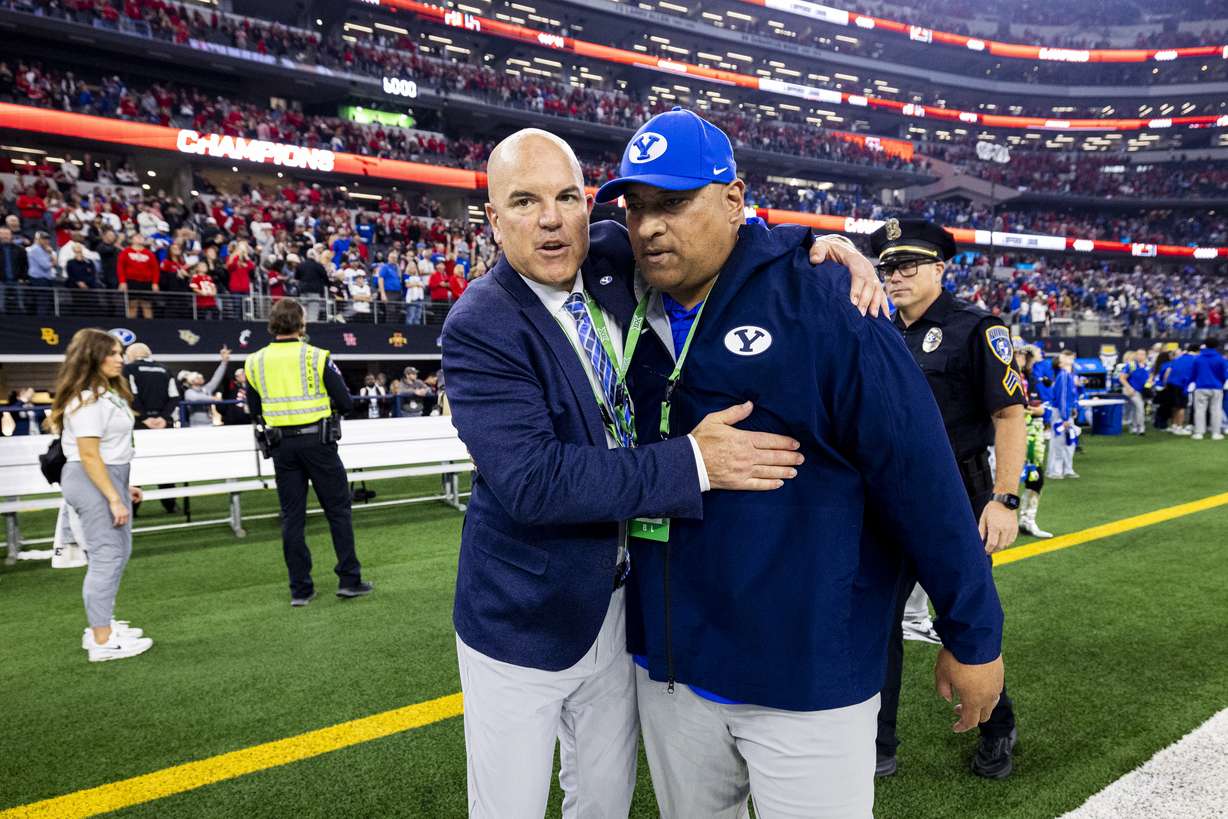
In one of the more heavily criticized incidents last fall, Colorado was fined $50,000 and publicly reprimanded by the Big 12 after some students used the chant during a 25-21 loss to BYU in Boulder. Many observers pointed out the irony of the chant directed at BYU football, which was led by quarterback Bear Bachmeier, who was raised Catholic.
It's similar for Young's team, which only has one member of the church — Riverton's Richie Saunders — in the regular starting lineup.
"We only have probably 4-5 guys who are Mormon on the team," Young said. "I understand what we represent; but even for a guy like AJ, that stuff is unwarranted. I try to talk to our guys about being examples in the world; we can use basketball to bring people together and not tear people apart.
"It's something we talk about a lot. It's just disappointing; I hope someone prints that. I hope it's in bold on someone's publication. And maybe as a society, we can help the world move forward and not divide each other with hate and things that are really nonsensical."
Providence used the profane chant a year ago during a nonconference game in Young's first season. So did Stanford and Oregon in football in 2022, and USC four years ago.
Yormark said during the Big 12 football championship game that the chant — and potential repercussions — would be a matter of discussion among league presidents following the season.
"We're going to make it crystal clear, and we do have a sportsmanship policy, and our schools must abide by it," he said. "Having said all that, we are going to come together as 16 institutions following this football season and figure out how we can get better. It's about changing behavior, and we will do that."
Contributing: Eric Olson, Associated Press