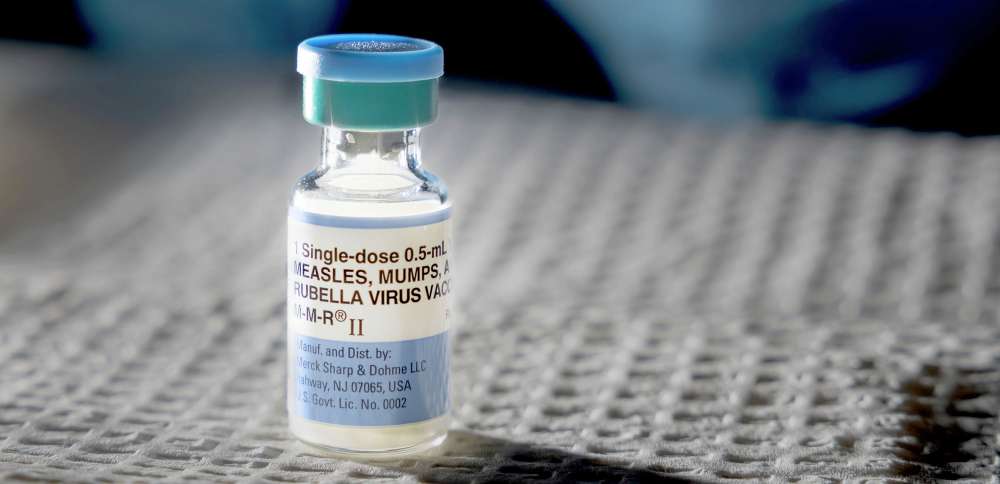
- A Utah House committee opted to maintain online training for vaccine exemptions amid the state's measles outbreak.
- Rep. Trevor Lee's proposal to ease exemption process was rejected in a tied vote.
- Medical professionals supported the online training module; some parents argue it's cumbersome and unnecessary.
SALT LAKE CITY — A Utah House committee has decided parents still need to complete an online training before trying to exempt their children from school vaccine requirements.
Rep. Trevor Lee, R-Layton, proposed changing that policy through HB152. It was the latest version of a bill that initially would have eliminated vaccination requirements completely for public school students, right as Utah is dealing with an outbreak of measles.
But lawmakers on the House Health and Human Services Committee decided even Lee's watered-down plan went too far, rejecting it in a 6-6 vote Friday afternoon. That leaves in place the requirement that parents undergo online training before receiving a vaccination exemption form for their children.
"What we're going to do is … make the exemption process easier, instead of just not having it at all," Lee told KSL's "Inside Sources" ahead of the committee meeting. "What that would mean is you wouldn't have to watch the 20- to 30-minute video … but instead just sign a form or waiver that's easily accessible online."
Lee added that vaccination status could still be tracked, "but at the same time, for those parents who have already made that decision, done all the research, they're not feeling like there's an added step that's not convincing them otherwise to, you know, vaccinate their children."
Currently, public school students in Utah are required to be vaccinated against multiple illnesses including hepatitis A and B, polio, chickenpox, measles, mumps, tetanus and whooping cough, according to the Utah Department of Health and Human Services. Vaccines against COVID-19 and influenza are recommended but not required.
Vaccine exemptions may be granted for medical, religious or personal reasons, according to the department. Parents must complete an online module and turn in an exemption form to their child's school, along with a signed note from a health care provider in the case of medical exemptions.
During the House committee hearing on Friday, some lawmakers suggested the state should play a role in providing information about vaccines, even if some parents have already made up their minds.
"If folks have chosen to get information that is mostly negative to vaccines, is there any role to say that they ought to have some information about what the state feels like is important?" asked Rep. Ray Ward, R-Bountiful, a physician.
Daniel Woodruff, KSLLee said he wasn't opposed to changing the bill to allow school districts to display information about vaccines.
"I'm not against information getting out there," he said. "What I'm saying is, these parents have overwhelmingly decided if they want an exemption. … They feel like they've done that research and almost feel like it's saying that what the decision they're making is wrong on this."
Lee noted that only a small minority of parents request vaccine exemptions for their children.
Several members of the public spoke both for and against the bill, including a handful of medical professionals who urged the committee to oppose it.
"I've been in practice for 25 years. There are diseases I never saw that are now back in Utah," said pediatrician Jennifer Brinton. "Unfortunately, our community immunity is decreasing through the state and through the country. This is not the time to decrease information families have."
There are currently 588 cases of measles reported nationwide during 2026, according to the Centers for Disease Control and Prevention, including 54 in Utah in the past three weeks. Utah has reported 237 cases in this outbreak. Of those cases, 94% involved people who were unvaccinated or who weren't sure about their vaccination status.
The number of measles cases in the U.S. began plummeting in the early 1960s after a vaccine was licensed, and the disease was declared eliminated in 2000.
Tate Colton, a medical student, pushed back on claims by some of those in favor of the bill that requiring parents to complete the training module is "cumbersome."
"More cumbersome than watching the video is having one of these preventable illnesses," he said.
But several others supported the bill, including some mothers who say their children had adverse reactions to taking childhood vaccines. Krystle Cordingley said her son died as an infant as the result of vaccines, something she previously detailed in testimony before the U.S. Senate Committee on Homeland Security and Governmental Affairs.
"Every single time I am required to go in and I am required to watch that video, I feel like that I'm being reprimanded because I feel like that my son's death doesn't matter," she said.
Gayle Ruzicka, the president of the Utah Eagle Forum, said her son had a negative reaction to a vaccine and urged the committee to pass the bill.
"Nobody should have to watch that video before their child can go to school," she said.
The bill failed to pass after a tied 6-6 vote to advance to the full House floor. Three Republicans joined all three Democrats in voting it down. Rep. Cheryl Acton, R-West Jordan, said she supports the "health freedom" movement but cast her vote against the bill.
"I also believe in informed consent," she said. "And although this informed consent is inconvenient at times, I think it's still very important."