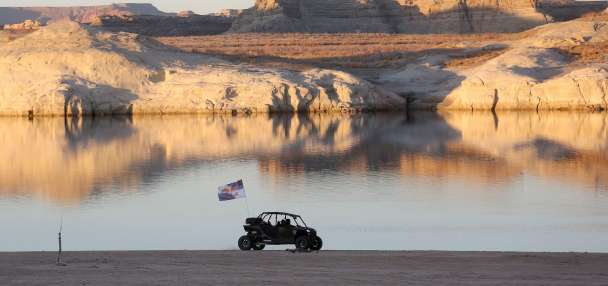
- Interior Secretary Doug Burgum urges Colorado River states to agree on water allocations.
- Governors must negotiate to avoid federal water management amid ongoing drought concerns.
- Utah Gov. Cox optimistic about reaching a deal; hydropower may aid negotiations.
SALT LAKE CITY — For the last two years, Colorado River states have been locked in a bitter stalemate over their future river allocations. But their countless hours of negotiating will need to reach a binding agreement on long-term water allocation by Feb. 14.
To give the states a push toward consensus, Interior Secretary Doug Burgum has asked Colorado River governors to meet together in Washington, D.C., on Friday.
Utah Gov. Spencer Cox will join his three other Upper Basin governors over the weekend to hash out their disagreements with Lower Basin governors.
Sticking points in the negotiations so far have centered on water cuts and what to do in dry years. Who will cut back, by how much, and when?
If the governors can't reach an agreement by the end of 2026, the federal Department of the Interior will impose its own water management framework for the states.
What do the Colorado River states disagree about?
When water was formally allocated in the early 20th century, 7.5 million acre-feet were given to Upper Basin states, which include Utah, Colorado, New Mexico and Wyoming, and 7.5 million acre-feet were given to the Lower Basin states, California, Arizona and Nevada.
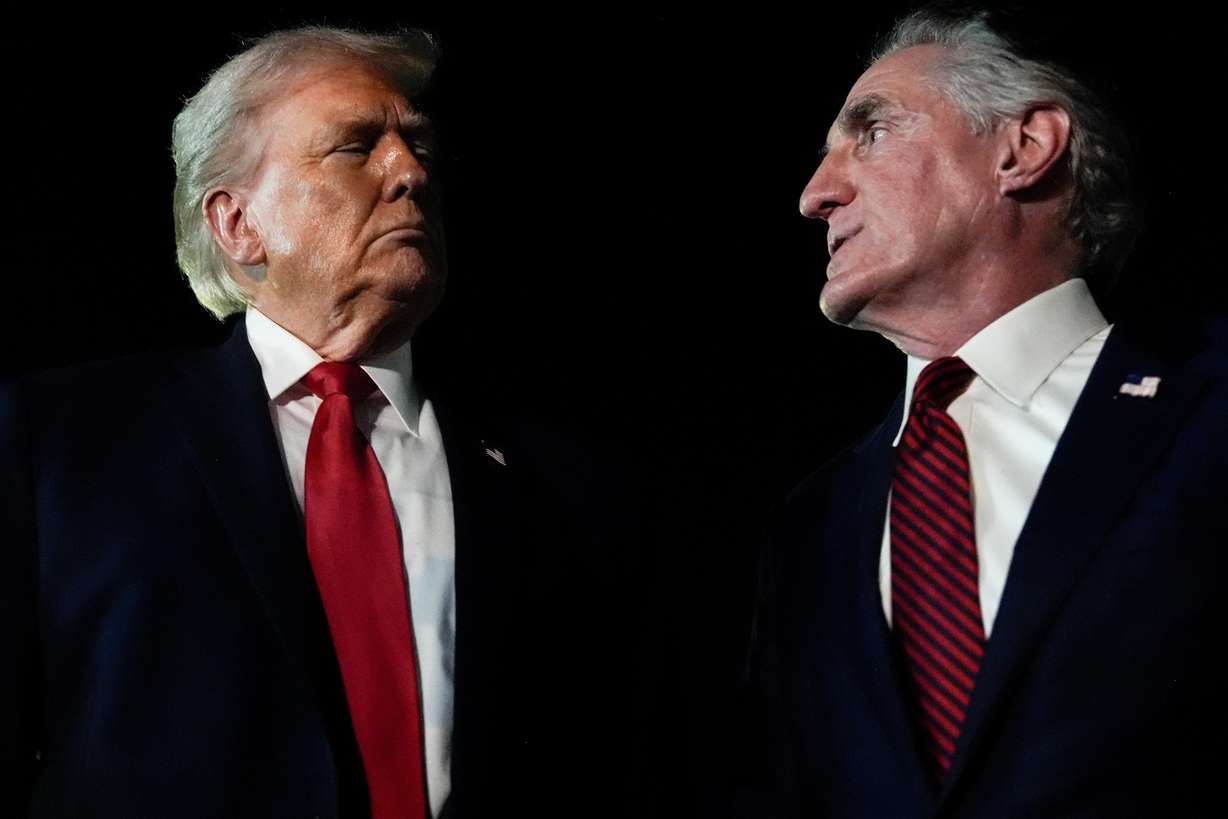
However, that 7.5 million figure was based on exceptionally wet years, so the water allocations are all too high and have resulted in the reservoirs shrinking.
For instance, in early 2000, Lake Powell's water level sat at about 3,700 feet and held more than 20 million acre-feet of water. In 2024, the reservoir was more than 100 feet lower, at 3,586 feet (about 9.8 million acre-feet).
The Upper and Lower Basin states' arguments center around who should face mandatory cuts to their water allocations post-2026 if there's a drought. California, Arizona and Nevada think the Upper Basin should face cuts.
In November, Arizona Gov. Katie Hobbs accused Upper Basin leaders of "complete refusal to implement water conservation commitments." Meanwhile, those states argue they shouldn't be forced to do water cuts because collectively, they use less than their allocated amount.
Gov. Cox optimistic the river states will reach a deal in D.C.
Cox told a local Fox channel last Thursday, "I think we'll get a state deal. By the end of our negotiating period, I think everybody realizes there's too much at stake, and we don't want to leave that up to the feds or the courts."
He added that the negotiations will be difficult for every state involved, but hydropower generated in the Colorado River's dams could help the states cement a deal.
"It adds a sense of urgency, which could be helpful in getting us to down to brass tacks and actually sign an agreement," Cox said.
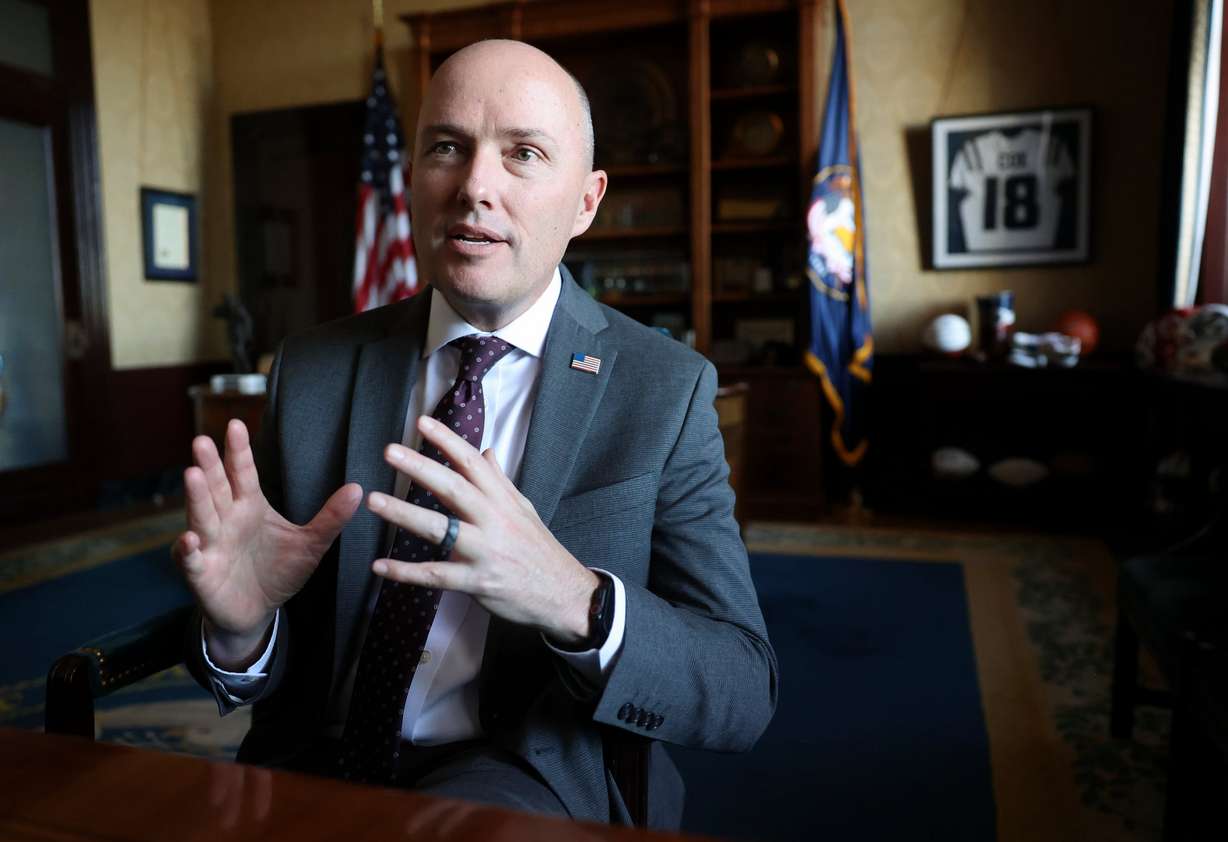
Gene Shawcroft, Utah's Colorado River commissioner, traveled with Cox to D.C. and will be present during the negotiations. Shawcroft has paralleled Cox's hope for a resolution before Feb. 14.
"There are many moving parts and complex issues, and I believe we will get closure on (them)," Shawcroft previously told the Deseret News.
Utah senator asks D.C. to continue a Colorado River grant program
Meanwhile, senators from the West have kept the Colorado River at the forefront of their minds.
On Tuesday, Sen. John Curtis, R-Utah, proposed a bipartisan bill with Sen. Catherine Cortez Masto, D-Nev., to extend a large-scale water recycling grant program through 2032.
"For the millions that rely upon the Colorado River Basin, water scarcity is a daily reality," Curtis said. "Large-scale water recycling is one of the most effective, forward-looking tools we have to stretch limited supplies, support growing communities, and protect our environment."
Thanks to Nevada's advanced water-recycling technology, the state doesn't use its entire 2% allotment of Colorado River water, Las Vegas Weekly reported.