- Intermountain Transplant Program celebrated over 500 transplants in 2025.
- Dr. Jean Botha said technological advancements have allowed them to provide transplants for people in a wider area, expanding access.
- A heart recipient, a liver recipient and a kidney donor shared their experiences at an event on Tuesday.
MURRAY — Erin Barker said her story is "kind of unbelievable." In the summer of 2024, she was running the Utah Spartan, and less than a year later, she was getting a heart transplant.
"I love telling people I received my heart on Valentine's Day, because I really did," she said.
Barker said she remembers thinking her kids were too young to lose their mom. She said her transplant allowed her kids to have their cheerleader back.
"You think you save a life when you donate, but you just do so much more than that. You save a family," she said.
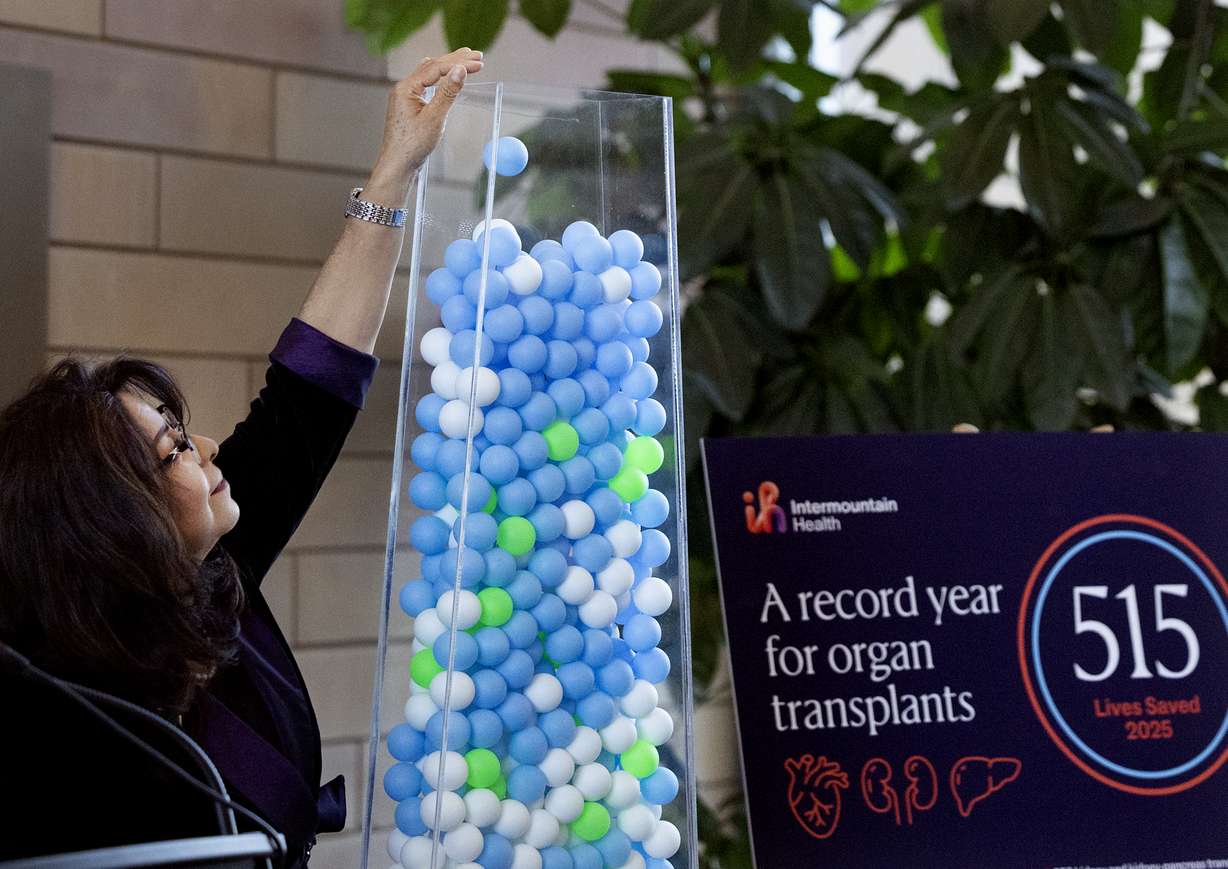
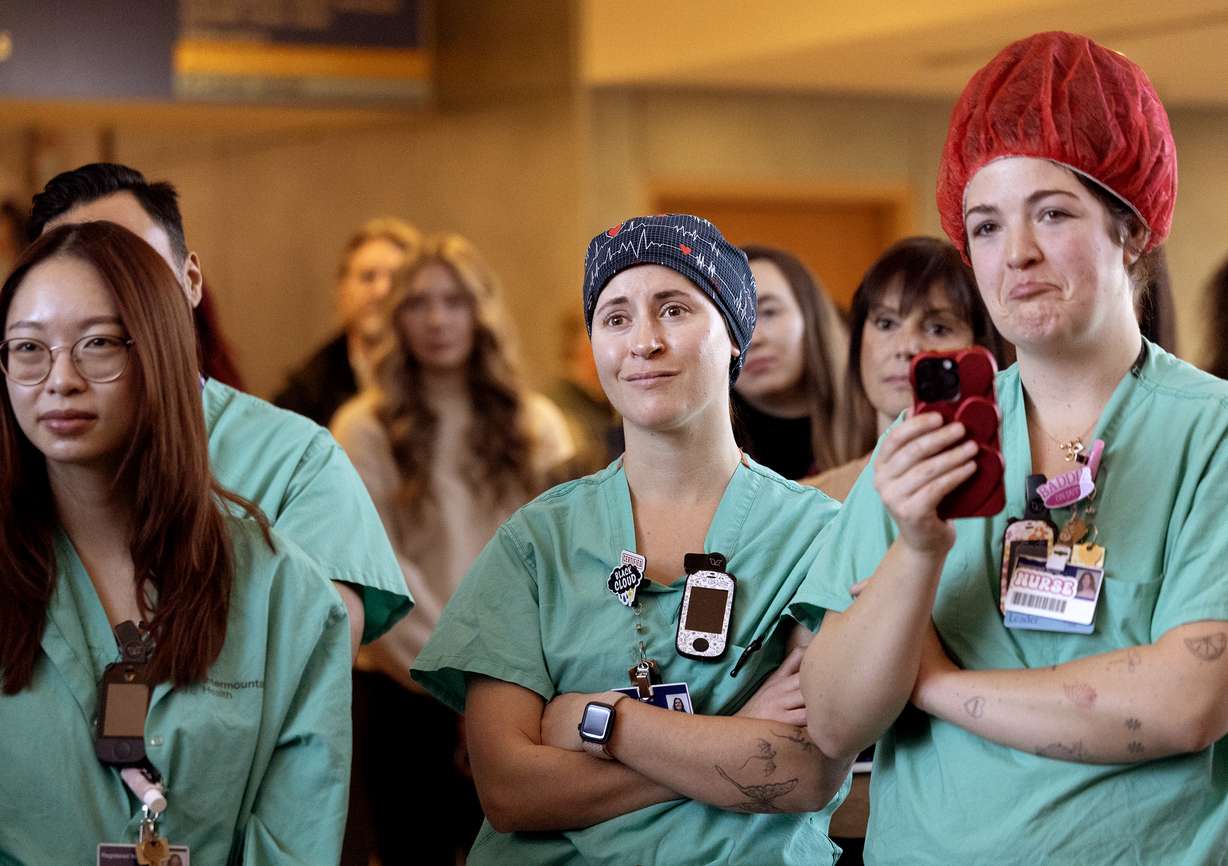
She was one of three patients who spoke at an event on Tuesday to commemorate the Intermountain Transplant Program reaching over 500 transplants in the 2025 calendar year — 515 to be exact. Doctors and nurses involved with the program filled the lobby to hear from their patients, along with those patients' family and friends.
Rob Allen, CEO of Intermountain Health, said in a recorded message that the team made a goal to get to 500 transplants by 2030. They reached it five years early. He said the year also included breaking records with 227 liver transplants and 32 heart transplants.
Barker said she had leukemia and chemotherapy at 18, and that, along with delivering four babies, caused her some heart problems. She joked, however, that a "heart-stopping" ride at Disneyland around Halloween was the "final nail in the coffin" leading her to learn that she needed a transplant.
Barker talked about being admitted to the hospital in January 2025, leaving behind four kids between 2 and 9 years old, but she said the nurses, techs, surgeons, and other team members at Intermountain helped her process something that was impossible to process.
She said they laughed at her jokes, cried with her, washed her hair and sang opera to her as she was being wheeled into surgery.
Expanded footprint
Dr. Jean Botha, a surgeon and director of the program, joked that his team is "SEAL Team 6," and it is a privilege to lead them, and that they are just getting started. He said complex patients come to them for help.
"When everyone else says 'no' to these patients, we're the program that says 'yes,'" he said.
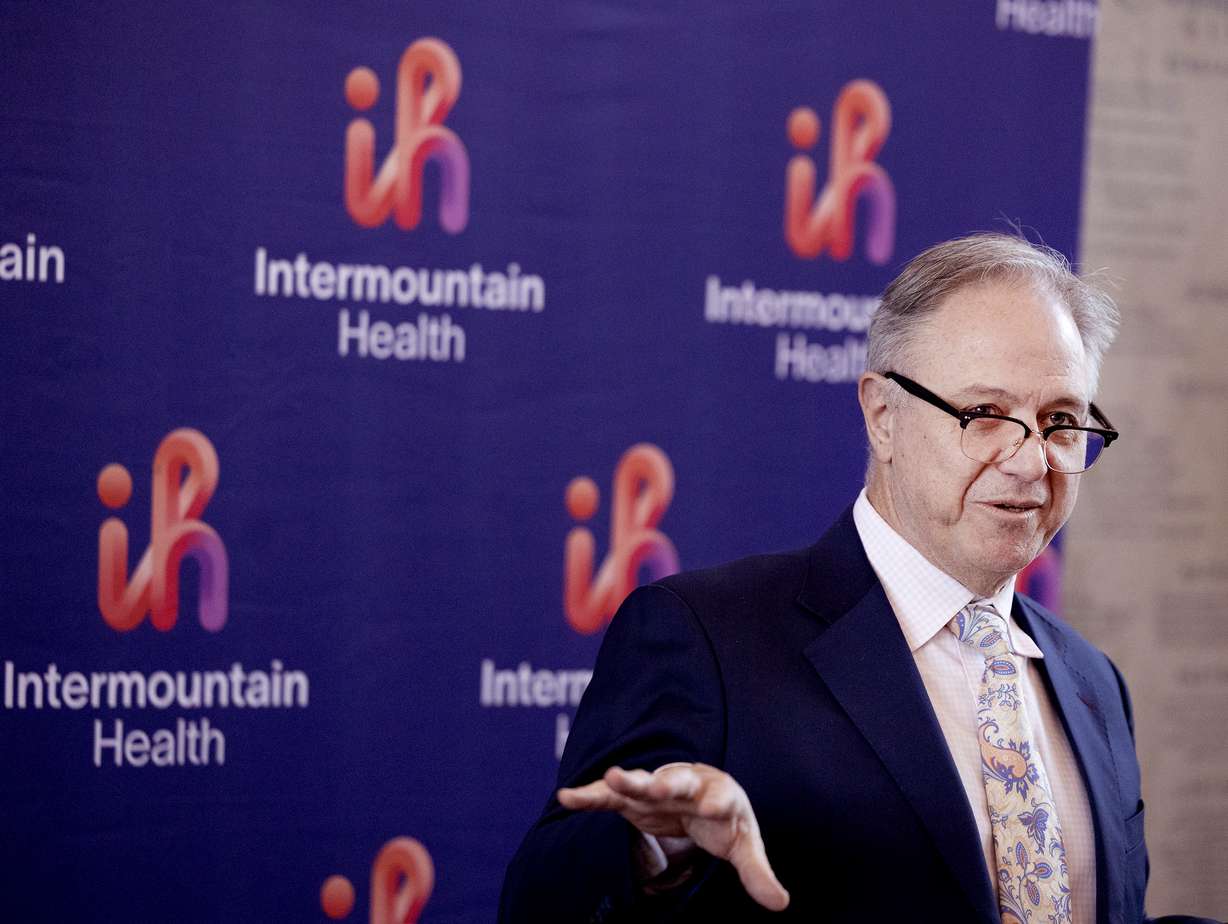
Botha said implementing new technology helped the program reach its goal of 500 transplants much faster than expected by "spreading out our geographic footprint." This includes better technology for finding matches and for preserving organs longer, so people can take time to travel. He said it is expensive, but they have shown it is worth the cost.
He said they brought 12 patients from Montana to Intermountain Medical Center for transplants in 2025, when a few years ago, they were not able to help anyone in Montana.
"We've now created access for people who are geographically disadvantaged," he said, noting multiple states near Utah have no transplant programs.
This increase has also provided a need to increase staff, and Botha said they are now worried about how to sustain the growth, which is "a good problem to have."
"We are going to continue to change the landscape of organ therapy, not only in the Intermountain West but in this country as a whole," he said.
Ralph Jean-Mary, CEO of Intermountain Medical Center, said Intermountain Health has performed over 6,900 transplants since it began its transplant program in 1983. He said it is a "critical resource for patients across the Intermountain West."
Choosing to donate
Ofelia Murillo, of Highland, said she met Pedro because he was the best at countertops, and she helped her husband fix up properties they would buy. She said once he was hard to reach, and when he finally called her back, he said he was struggling. When they met, she said he did not look good and was in pain just walking.
It wasn't until a few months later that she learned he was in kidney failure and needed a transplant. She asked how she could help and said Pedro laughed when she said she wanted to be a donor.
Although Murillo was not a match for her friend, she still donated a kidney on his behalf through an exchange program, helping him get a kidney that was a match for him.
Murillo said she felt like she had nothing to lose; she encouraged others to eat healthy foods, exercise, and register as organ donors.
She said her scars remind her that because she said yes, two people got a second chance.
"I am convinced ... that Heavenly Father blessed us with two kidneys so you can donate one," she said.
Life changing
Jean-Mary said the program has the top heart transplant survival rate in the country and is the only program to rank in the Top 5 for both kidney and liver transplants.
"While we are proud of these volumes, what matters most are the outcomes we deliver for patients," he said. "Today's celebration honors the donors, the recipients and the extraordinary teams who make this work possible."
Tyrese Boone, KSLHe said everyone on the campus helps them to achieve these positive outcomes.
Amy Baird, a liver transplant recipient and nurse, said she had just prepared her home for Christmas guests when, on Dec. 21, she got a call that a liver was available — just eight days after she was placed on the list and told it would be months.
"It was the most beautiful Christmas present," she said, noting that it was so surreal.
She said her "whole life changed" with the transplant; she was walking the first day in the intensive care unit. She was diagnosed with Stage 4 liver cirrhosis after being sick for several years. The condition was finally identified when she had her gallbladder removed, and she said she was shocked.
Baird said her brother also needed a liver transplant but died while on the list in Virginia. She also said her first patient who died was an organ donor and talked about seeing the agony of families of organ donors.
"Not everybody gets a transplant. ... I feel deeply about organ donations," she said.