- Matia Mobility, a Utah company, develops standing wheelchairs for people with disabilities.
- The Tek RMD M1 device allows users to stand and interact more naturally.
- CEO Steven Boal aims to expand insurance coverage and accessibility for the device.
SALT LAKE CITY — Up to a quarter of Utah adults struggle with some sort of disability, the Kem C. Gardner Policy Institute found as part of a 2024 study.
Just over 9% of Utah adults surveyed have a mobility disability, according to the Institute.
Setbacks for people with disabilities aren't limited to obstacles in navigating their world, but they're also more likely to face various unique challenges, like increased housing cost burdens, educational and health coverage hurdles, according to the Institute's study.
A Utah-based company is on a mission to help those with disabilities regain their independence with standing wheelchairs.
Steven Boal, CEO of Matia Mobility, says his team of expert inventors and engineers is committed to developing innovative robotic mobility devices.
The Salt Lake City-based company's flagship device — known today as the Tek RMD M1 — enables people with spinal cord injuries, multiple sclerosis, and other conditions to stand up, move around, and interact with their environment in a more natural and comfortable way, according to a description on its website.
The origins go back to a university lab in Turkey, where Necati Hacikadiroğlu and Enes Canıdemir created a wheelchair that utilizes hydraulics to elevate the user into a standing position.
Boal said he first learned about the device more than a decade ago through an online publication that covers technology, science and internet culture.
Fascinated by the product, Boal, who had another company at the time — coupons.com — reached out to them to offer advice on how to bring it to market and help make it available to those who could benefit from it.
Boal said he was invited to meet the inventors at a trade show in Germany a short time later.
"(It) was a fascinating day and a little bit emotional; while we were talking with them in the beginning, a lady rolled up in a wheelchair," he recalled. Boal said he and his late business partner, Paul Keen, directly experienced how the device can be a life-changing technology.
"She had spent all of her free money just for a ticket to come into that show, just to see this device. She wanted to stand; she hadn't stood in years," he said.
Boal said it became evident from the woman's reaction to the device what it means to people with similar disabilities.
"She got about three years of use out of it (until) she passed away, but she got three years of use from the device, and that's how it started," Boal said.
Matia Mobility was founded, with Boal serving as CEO and working with the inventors to ensure the Tek RMD M1 met all federal requirements and was manufactured in the United States.
"So the manufacturing facility of record here (in Utah), FDA inspected, certified, open for business," he said.
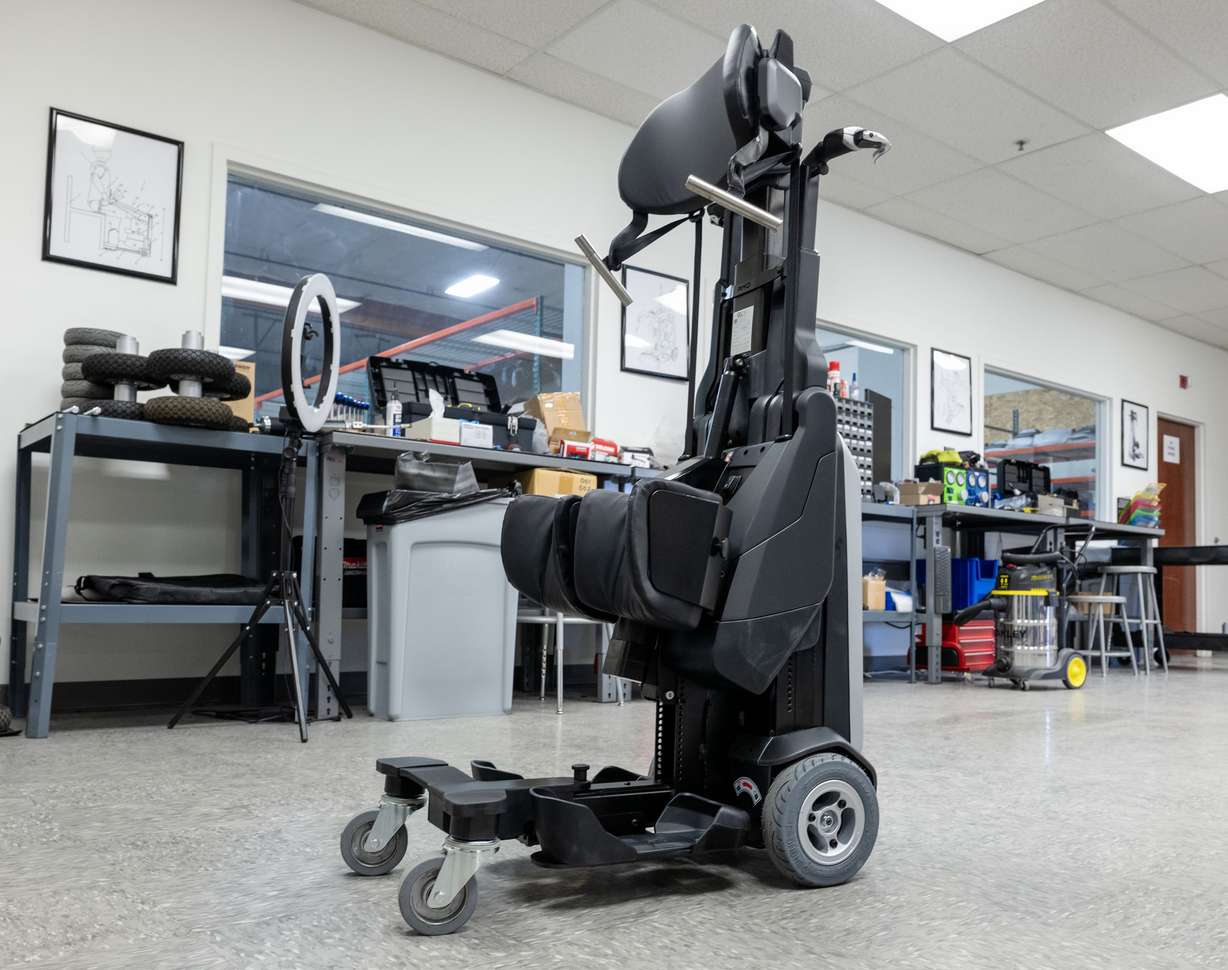
Additionally, Boal said the device meets the Trade Agreements Act requirements, meaning the Tek RMD M1 can be purchased by the Department of Veterans Affairs for disabled veterans.
One of the biggest hurdles for patients, he said, is getting more health networks to cover the medical device.
But access through insurance is improving, as Blue Cross Blue Shield has recently accepted Matia Mobility in their network, as well as workers' compensation.
Boal said that though the company is based in Utah, the Tek RMD M1 is being made accessible worldwide.
"We have about 55 (sales representatives) around the U.S right now, we hope to have about 100 by the end of the first quarter," he said.
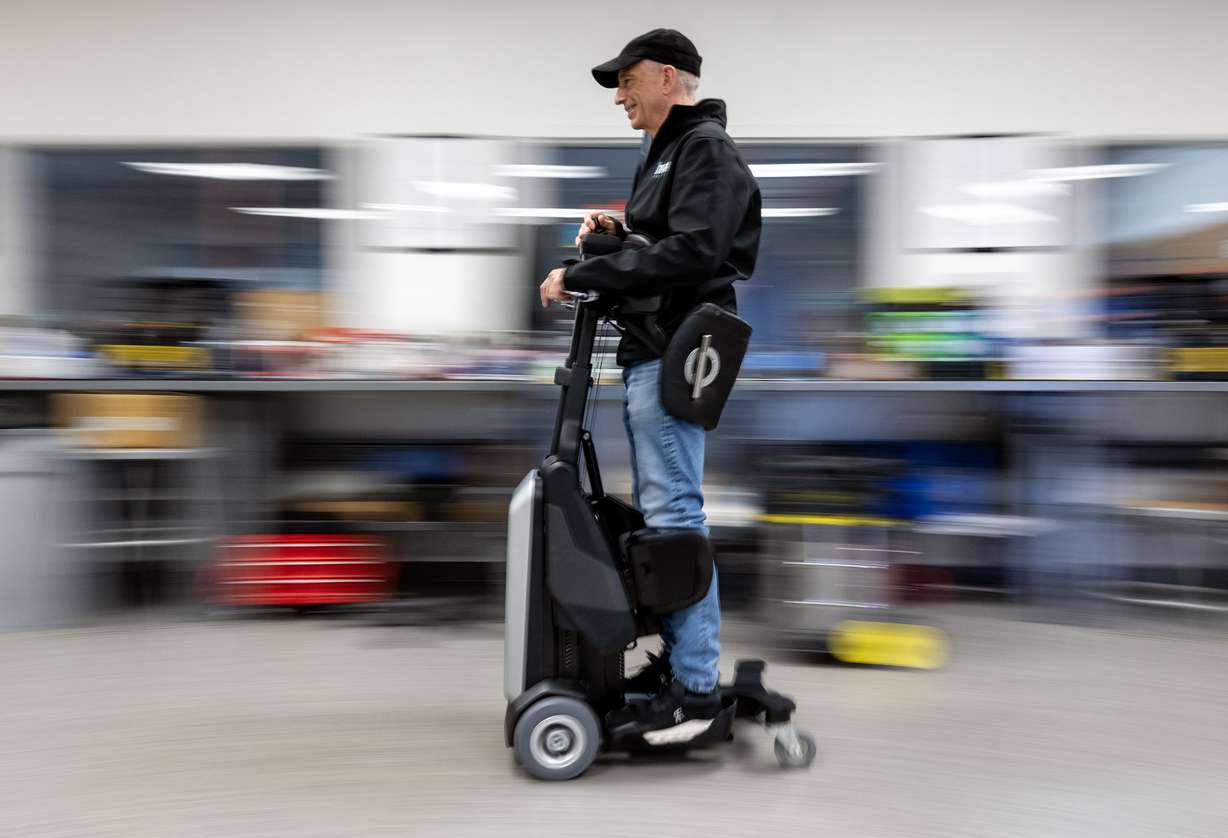
Each device is custom-built to accommodate its respective patient. The compact wheelchair can be used in the home, in the office, and transported on public transit or an airplane.
Not only does the device aim to help people with disabilities regain mobile independence, but Boal believes it may also aid in mental health support for those who have been wheelchair bound.
"What happens when you're eye-level, is that you no longer feel different. And when you're in a wheelchair and you're mechanized or one of those robotic things or what have you, you feel different, right? But all it takes is being eye level and being proximate to people," he explained.
Boal said he and the Matia Mobility team look to continue advocating for more health insurance networks to provide coverage for the Tek RMD M1, ultimately making it more accessible to those that the device will help change lives for.
More information can be found on the company's website.