Estimated read time: 6-7 minutes
- Judge Tony Graf released a redacted transcript from Tyler Robinson's Oct. 24 hearing.
- Robinson, charged with capital murder, can wear street clothes but must remain shackled.
- Defense argues for unshackling Robinson, citing no courtroom threat.
PROVO — Ensuring Tyler Robinson's right to a fair trial while still keeping everyone in the courtroom safe were the main topics of discussion during a closed hearing in October.
On Monday, 4th District Judge Tony Graf ordered that a redacted transcript from Robinson's Oct. 24 hearing be released to the public. The 83-page document was released Monday afternoon.
Robinson, 22, is charged with capital murder and faces a possible death sentence if convicted. He is accused of shooting and killing Charlie Kirk on Sept. 10 on the campus of Utah Valley University.
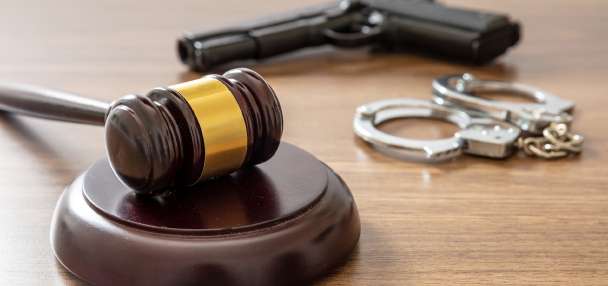
On Oct. 24, attorneys for the state and Robinson held a hearing that a judge closed to the public to discuss such issues as Robinson being allowed to wear civilian clothes for all future hearings and whether he would be required to wear shackles during those hearings. Graf announced his decision on Oct. 27, ruling that Robinson can wear street clothes during all his pretrial hearings but has to remain in shackles.
Monday, the transcript from that Oct. 24 meeting was released with some redactions. Most of the redactions involved courtroom security being discussed. The judge did not agree to some redactions requested by Robinson's defense team that they believed protected privacy interests and non-party participants, and portions of the transcript they claimed may jeopardize his right to a fair trial.
Robinson was present in the courtroom for the closed hearing, according to the transcript.
"If he's going to be in this courtroom and we're going to have a secure courtroom, but it's going to be broadcast to the world, he should not be depicted as a jail inmate. He should be depicted as a citizen of the United States with a presumption of innocence. And that is why we believe he should be able to appear in street clothes that also are consistent with the court's standards for what kinds of clothing individuals can wear," defense attorney Richard Novak argued in court.
Novak also argued Robinson should be unshackled during his hearings because he has not shown he's a threat to anyone in the courtroom.
"The state has offered no specific evidence that he presents a risk to anybody in the courtroom or to himself by being unshackled," he argued.
He further addressed the state's notion that Robinson needs to remain shackled for his own protection because of the intense public interest the case has generated.
"There's a reference to, you know, unstable people coming to the courthouse, to conspiracy theorists saying things online. We're all aware of that. I mean, I don't know what the court has read. It's none of my business. I've received some wacky phone calls and e-mails, people telling me what they think happened here. It's noise," Novak said. "We're not litigating this case in the press. We're not talking to crazies. So we don't think that the intense public interest, which may be drawing in unstable fringe people from the left and the right and the center and other places, is imputed to Mr. Robinson.
"The question is: Can the court trust Mr. Robinson to sit there the way he has been doing for the last hour and respect the decorum and the dignity of the courtroom just like the court would expect him to? And we think that the answer is obviously yes."
Christopher Ballard, with the Utah County Attorney's Office, countered that the idea that the judge would be prejudiced by seeing Robinson in jail clothes or in restraints "demeans this court, and it ignores well established precedent in Utah.
"There's no Utah case law that supports the kind of rule the defendant's asking for at pretrial proceedings. It's contrary to the practice of courts across this state. This court would be plowing entirely new ground, and it would be — it would be setting precedent for trial courts throughout the state," he continued.
Ballard further noted that Robinson is accused of changing clothes, blending in with others around UVU and escaping after shooting Kirk. If there is a commotion in the courtroom, Ballard argued it would be easier for officers to find Robinson if he's in jail clothing.
The issue of cameras in the courtroom was also discussed again at the Oct. 24 hearing. Novak told the judge that Robinson's defense team plans to file a motion "to completely eliminate all video and audio broadcasting or delayed feeds of court proceedings."
Ballard argued that if cameras are eliminated, then so would the need for civilian clothing.
"But what stops a journalist from saying, 'Mr. Robinson appeared in jail clothing?' Doesn't that create the same risk as a video?" Graf questioned.
"I think your honor's order could stop that," Ballard replied.
"To suppress a journalist from writing?" Graf questioned.
Novak opined that preventing the media from writing about Robinson's courtroom attire was not the answer.
"The suggestion that this court can order the entire world not to say anything about what Mr. Robinson is wearing in court is both impractical — I think it's a prior restraint. And the burden would fall on us to enforce it. … It's completely unenforceable," he said. "The idea of prohibiting cameras and video in the courtroom is very easy for this court to enforce. That's easy. … But to somehow believe that this court can effectively prohibit everybody — every blogger in the world from commenting on what Mr. Robinson is wearing in court, it's totally unenforceable. … I mean, our effort to keep track of who is saying what about our client is already, you know, an insane project."
Also during the Oct. 24 hearing:
- The defense introduced the idea that they would be asking for the Utah County Attorney's Office to be disqualified from the case because one of its attorneys has a relative who witnessed Kirk being shot.
- Defense attorney Kathy Nester believes this will be a "very long case. This case is probably going to last a long time."
- Attorneys also debated whether Robinson needed to be in the courtroom for every hearing.
"We, meaning Mr. Robinson and his defense team, are very concerned that the nature, content, scope, pervasiveness, of the pretrial publicity, of the statements that have already been made by law enforcement officers, by lawyers, by the representatives of the state in this case, may have a significant impact on the fairness of his trial," Novak argued in court.
But Ballard assured the judge that the state is just as interested in preserving Robinson's right to a fair trial.
"We are going to try this case once," he said.