- Lauren Bangerter endured a 52-day hospital stay before giving birth prematurely.
- She now supports Utah women in similar situations by donating comforting items.
- Bangerter emphasizes the importance of community and preparation for NICU experiences.
HIGHLAND — Lauren Bangerter said she wishes she had spent a minute with her sons and taken the time to tell them goodbye before going to the hospital, but when she left home in the middle of the night at 26 weeks pregnant after her water broke, she hadn't considered she could be staying.
"I had no idea that I'd be going to the hospital and not coming back out," she said.
Instead, her three boys woke up to their grandparents, leaving one son to question for months after she returned with her newborn whether she was going back. Bangerter was unable to care for her boys, and only saw them a few times a week, during a 52-day hospital stay in an antepartum unit while she and her pregnancy were closely monitored.
After weeks spent worrying in the hospital, she gave birth to a healthy son last year. Now, she is hoping to improve the experience of other Utah women who find themselves in a similar position.
"There's nothing more empowering, and that will make you want to cry, than seeing women come together," she said.
Bangerter said she has already gotten a lot of donations and help from reaching out to people on Facebook and family members, including people who have donated money or offered to drop items off at other hospitals in Utah.
A small gift
Bangerter said while she was in the hospital, she connected with other women who had gone through similar pregnancy complications. One of them, connected to her through a friend, visited and brought a paper garland of butterflies that turned her stay around.
"It really did save my sanity," she said.
She would watch the butterflies fly as they were being blown by the heater as she was monitored twice a day. While being monitored, she would need to stay still for at least 30 minutes, with the clock resetting if the baby moved too much.
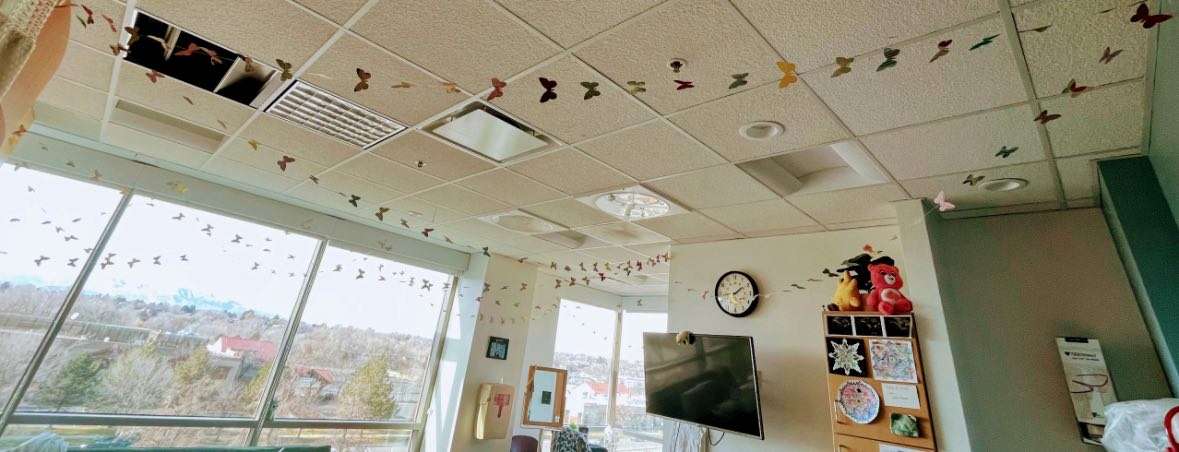
The garland inspired her to display Christmas lights, family photos, stuffed animals from her children and birthday decorations. She has since realized it was a form of nesting, a phrase describing the urge pregnant women often have to prepare their homes for a baby.
"I had created such a safe, comfortable place. It was still a hospital room … but I really made it feel like mine," she said.
Although many women stayed in the hospital for extended periods and remained healthy, they did not have common areas where they could interact with each other and instead occasionally saw each other on walks or visited other rooms.
Bangerter said a nurse gave her the idea to help future mothers in the antepartum unit make their hospital rooms into a home after seeing what she had done. At the time, she didn't want to think about it, but the nurse brought in some paper, and they made a list of items that could help — like blankets, string lights, activities, books, notes and flowers. She said donated money can go toward DoorDash gift cards — a weekly treat during her stay.
When she has visited and dropped off gifts and met women in the unit since she left, she said the women who have the hardest time are those who, like her, were separated from their older children.
"I have cried with women, like sobbing cry," she said
'It was devastating'
Bangerter rolled over the night she went to the hospital and thought she had urinated, choosing initially to laugh. But when she felt liquid again 10 minutes later and started feeling contractions, she knew it was more serious. Thankfully, she could still feel her baby moving.
She and her husband hurried to the American Fork Hospital only to be transferred by ambulance to Utah Valley Hospital — which is equipped to handle women like her and significantly premature babies.
She said in the first few days, doctors came in and explained what they hoped would happen — that she would be able to stay pregnant in the hospital until she reaches at least 34 weeks — along with all of the risks and possible complications and how they would be handled. She spent her time mentally preparing for all of those scenarios, including a premature baby.
"It was really hard, and it was devastating. And I don't think I've ever cried harder," she said.
Eventually, she came to realize that she'd rather be spending time confined to a hospital than have her baby require treatment in the neonatal intensive care unit, and that helped her keep going as well. She realized she could want to be at the hospital because it was best for her baby, while also wanted to be with her other three sons.
Bangerter's baby was born at 36 weeks, just one month early.

One thing she wishes she had done was prepare better for her baby to be taken away and brought to the NICU right after his birth.
"I had no idea that I would be crying for months after I gave birth to him, just trying to process the fact," she said.
She said women who find themselves in a similar situation should ask questions, noting she repeated questions to different doctors and nurses over and over until she understood.
Bangerter also encouraged women to tour the NICU to help better prepare for their baby's arrival and learn how premature babies are cared for. She said seeing premature babies gave her more motivation to keep going.