- Officers urge Pioneer Day safety after recent drownings in Utah reservoirs.
- Life jackets could prevent 100% of water fatalities, officials emphasize.
- The ROV team aids in recoveries, providing closure to grieving families.
WASATCH COUNTY — Ahead of the Pioneer Day weekend, state law enforcement officers and rescuers on Monday called for safety on land and on water, as they hope to avoid additional outdoor injuries and deaths in the month of July.
Last weekend, two people drowned at Yuba Reservoir and at Causey Reservoir.
Utah Department of Natural Resources Division of Law Enforcement Chief Todd Royce said those two incidents made it six total drownings in the state this year.
Four of those, he said, involved paddle boards.
"If you think you've got a paddle board and you're safe, and that's the only flotation that you need, you're wrong," Royce told reporters during a Monday news conference. "Over the Fourth of July weekend, we had quite a few incidents, and we don't want those same incidents to happen over the 24 of July weekend."
Utah Division of Outdoor Recreation boating program coordinator Ty Hunter also stressed the importance of life jackets and said people should wear them even when not required to do so.
He said boating inspections estimate that only 6.7% of people recreating on the water in Utah voluntarily wear life jackets.
"We are at 100% of these that could have been prevented," Hunter said of the fatalities. "These all could have been prevented by one simple thing of wearing a life jacket."
'Major' injuries reported on land
Royce said over the July Fourth weekend, there were nine "major" incidents on water, including one that resulted in boating under the influence and severe injury. There were seven additional incidents on land involving three DUIs, and two rollovers and ejections that caused life-threatening injuries.
Utah DNR Division of Law Enforcement Capt. Chase Pili also added that state officers were seeing a lot of arm and limb injuries due to off-highway vehicle accidents.
Officials urge caution, preparedness
Pili urged people to be aware of the terrain, as well as the performance capabilities of the driver and the off-highway vehicle. Pili noted how technical some of the trail systems can be, and that the state offers training courses.
Hunter said boater education is only required in Utah for children aged 12 to 17 who ride a personal watercraft. He said he'd like to see adults take that course voluntarily.
"These are all preventable, folks," Royce said of the accidents. "We can do better at recreating safely. Make sure you're wearing helmets, life jackets (and) seat belts. Recreating responsibly could have changed the outcome of a lot of these situations."
Tiffinie Wolfalso joined the call for safety on Monday.
On June 28, Wolf was paddle boarding down the Provo River near the trestle bridge when a strap from her sandal became caught under the water, and she was stuck.
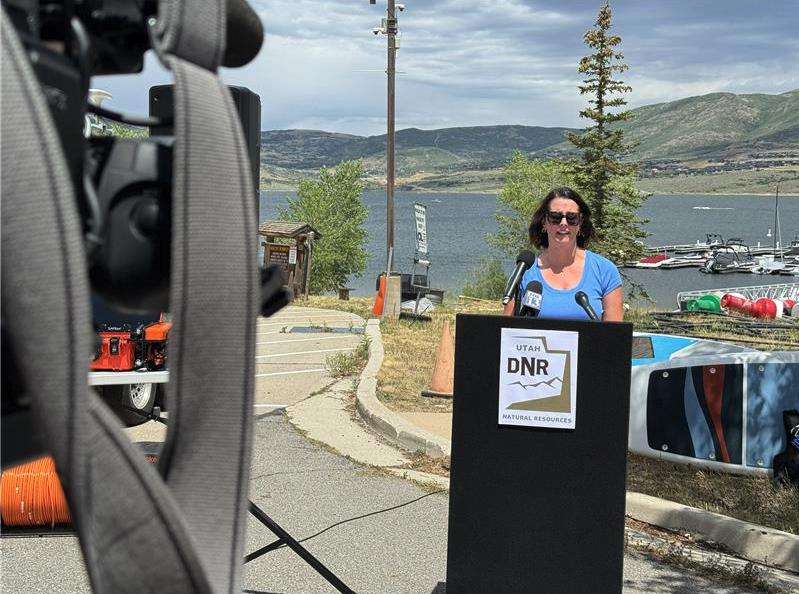
"I just stress the importance of life jackets and how they can help in any situation that you wouldn't think would cause something like that," Wolf said.
A ranger jumped into the river to help Wolf, holding her head above water for nearly 30 minutes until rescuers could free her.
"I credit a lot to my safety, and why I'm here today, from all of the people that were there — the bystanders, the DNR, the SAR team — and most importantly, wearing a life jacket," Wolf said.
"I wouldn't have been able to get to that point if I didn't have my life jacket on, so with that said, it is so important to wear a life jacket. I don't know what I would have done if I didn't have it. The current was too much to stand up straight, so I wouldn't have been able to stay above the water."
State ROV team
In the worst-case scenarios, a Remotely Operated Vehicle team and boat led by the Utah Division of Outdoor Recreation are called out to support county sheriff's deputies in recovery operations.
Hunter, who runs the team, showed a KSL-TV crew on Monday afternoon how the team works during a demonstration at Jordanelle Reservoir.
The boat, Hunter said, uses a sonar system to initiate targeted searches under the water, and then a ROV — essentially a sophisticated underwater drone — moves in for a better look and can potentially recover a person on its own.
Hunter acknowledged that sometimes part of the recovery will be conducted by a dive team once the body is located.
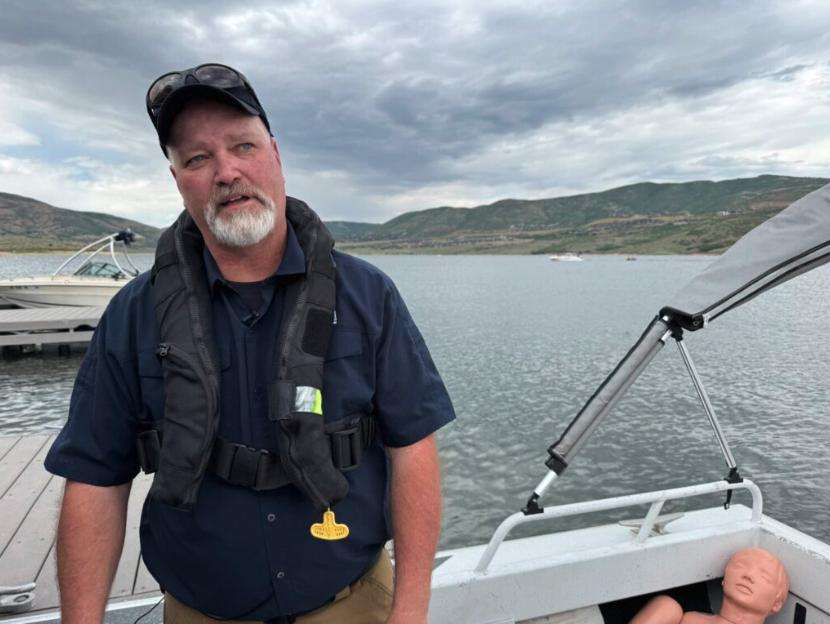
The ROVs, according to Hunter, offer more safety to crews by operating in places and in conditions where it is difficult for the dive team to go.
"It may take divers a long time to see or to feel and find," Hunter said. "We can do this in a matter of minutes."
The state's two current ROVs have aided in 12 recoveries since 2019, Hunter said. He called the process "damaging but healing."
"We see a lot of things that most people don't ever want to see," Hunter said. "They stick and they record and they're in your minds and your memories, but the healing portion is we can bring closure to a family that has lost a loved one."
He hopes, at the end of the day, the answers his team finds will offer some comfort to those grieving families.
"We're all human beings and we care," Hunter said. "We just want to make, try to make their unfortunate circumstance better than what the potentials could be."