- Mark Wait became one of the youngest U.S. Senate chiefs of staff.
- Wait's journey from Utah to D.C. involved declining initial offers from Sen. Lee.
- Despite youth, Wait's skills and dedication earned him the chief of staff role.
SALT LAKE CITY — The youngest chief of staff in the U.S. Senate says he rocketed from Utah to Washington, D.C., relying on the principle, "Say yes to everything."
But when the office of Sen. Mike Lee first offered the then-22-year-old Mark Wait a fast track to his dream Capitol career, he said "no."
Wait had already committed to finish the year as an intern for the chief of staff to the president of Utah Valley University, and he wouldn't waver, not even at the request of a sitting senator.
The senator's office, which had welcomed Wait as an intern the summer before, followed up with Wait's boss, who proceeded to ask the young aspiring politico, "Are you nuts?"
Wait took the message — and started packing his bags.
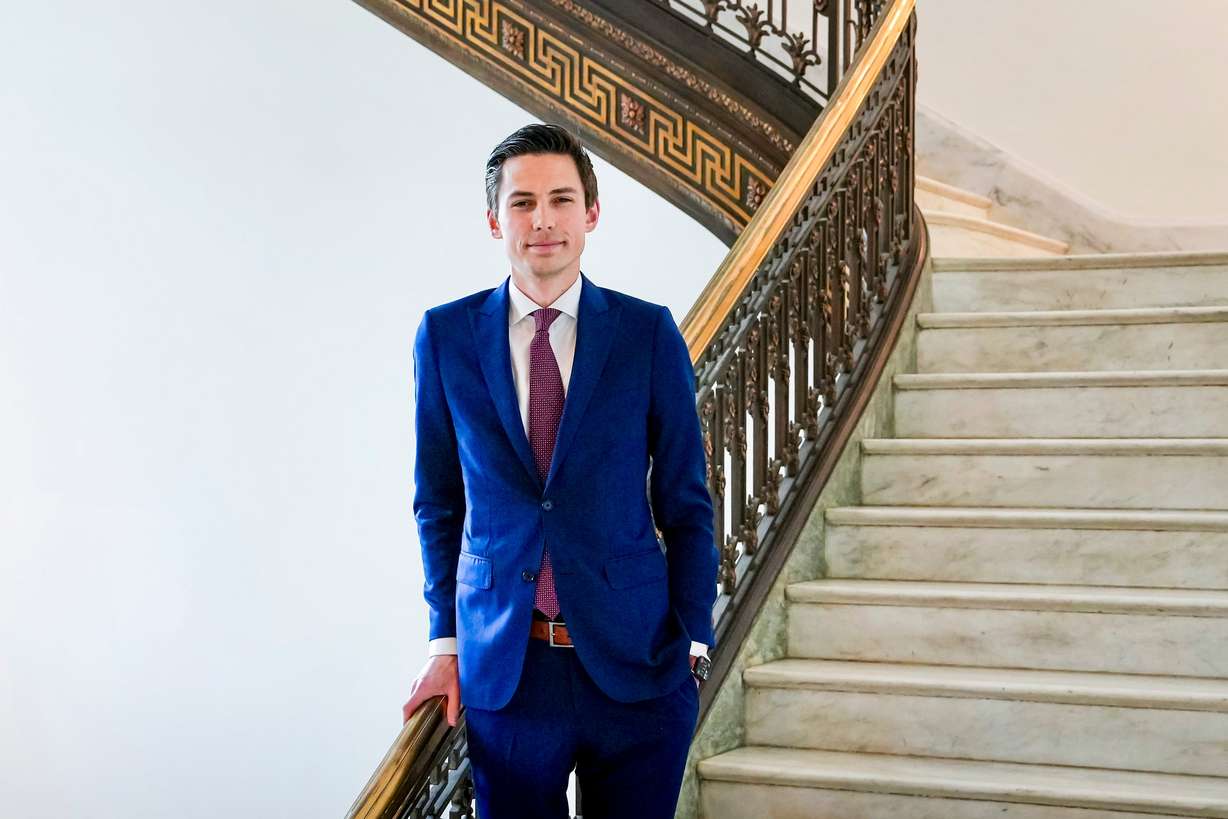
Soon after he arrived in Washington, Lee led out in promoting his freshest staffer from office assistant to scheduler, then to deputy chief. And, in 2023, Lee asked Wait to be his chief of staff at age 26.
"He had political skills and instincts that reflect a maturity one doesn't expect out of somebody still in his 20s," Lee said. "He could see the forest for the trees."
Despite his youth, Wait inherited a complex task: coordinating the senator's public persona, policy shop and Capitol Hill connections, in a position previously held by some of the biggest names in Beehive State politics.
In biweekly meetings with Senate chiefs of staff, Wait often hears that he is the youngest to ever get the job. But he doesn't "really get caught up in that," he says. If anything, his perceived inexperience has pushed him to outwork everyone in the room.
"It's actually a blessing in disguise," Wait said. "It's more motivation to learn more about an issue than anybody else."
A busy time at Lee's office
Wait's appointment to run the behind-the-scenes for one of the Senate's most outspoken conservative crusaders could have hardly come at a more notable moment for Utah's senior senator.
As chair of the Senate Energy and Natural Resources Committee, Lee stands at the crossroads between one of Utah's most pressing needs as a rapidly growing state and the Trump administration's priority to supercharge U.S. energy production.
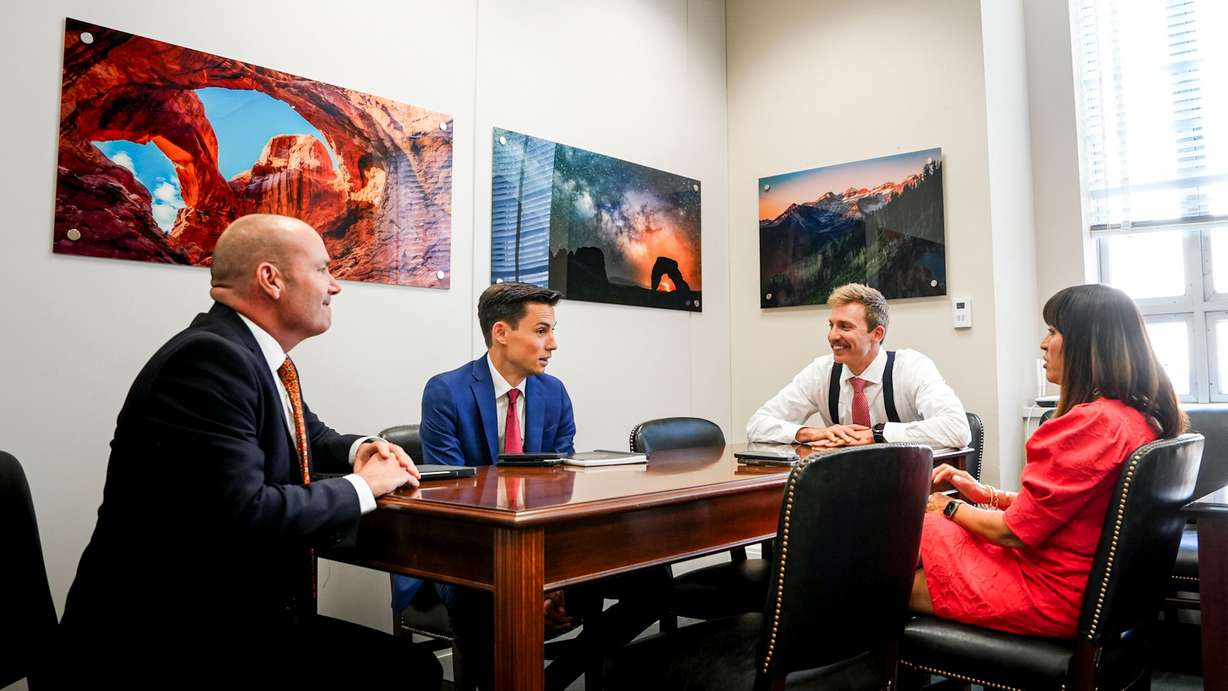
Lee's work on these issues drew a wave of attention when he stole headlines across the country last month for his proposal to sell a small percentage of public lands for development, which he ultimately pulled after he received pushback.
This comes at a time when Lee's lawyerly temperament has been accompanied by an increasingly prolific, and occasionally insensitive, "BasedMikeLee" social media account on X where he posts dozens of times a day for his more than 600,000 followers.
In recent weeks, Lee's reputation as a committed fiscal hawk and stickler for proper budget process was tested when faced with President Donald Trump's "One Big Beautiful Bill Act," which some believe flouted both concerns.
But Wait has taken the challenge of helping the senator navigate these competing pressures in stride. Lee's goal has remained the same, according to Wait: to help Utahns by tackling burdensome regulations and bureaucratic overreach.
"There's not another member of the Senate or the House, for that matter, or, politically across the spectrum, whether that's federally or in state government, who I'd rather work for than Senator Lee," Wait said.
Those who have worked the closest with both the senator and his Gen Z chief say the sentiment is mutual; after working with Wait, it became clear to Lee, they say, that there wasn't another congressional staffer he trusted as much to run his operations.
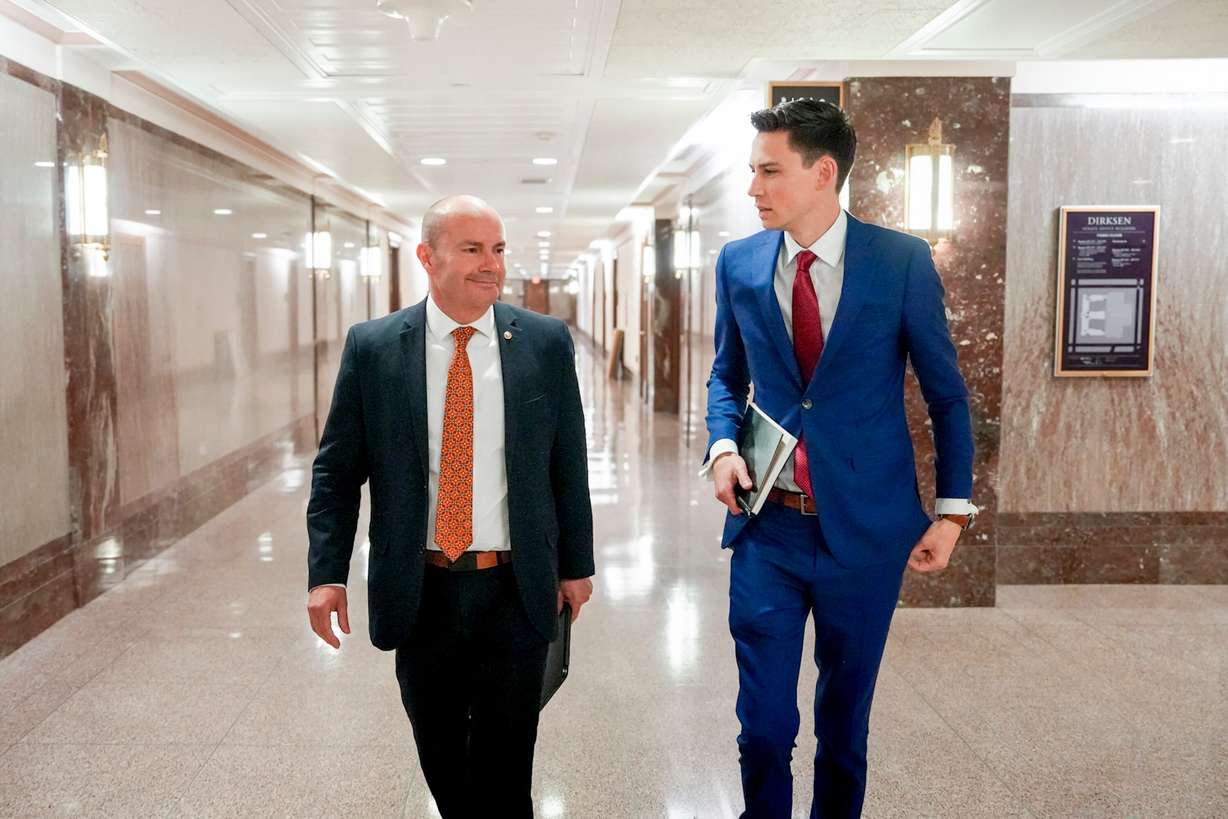
'You don't look at his age'
Growing up in Bountiful and Provo, politics was far from Wait's mind. Wait, the youngest child of a banker and a stay-at-home mother of four, wanted to be a sports broadcaster.
The dream was short-lived. Following a mission for The Church of Jesus Christ of Latter-day Saints in Houston, Wait shifted his attention to detail from memorizing sports stats to understanding the world of politics.
After his interest was piqued by attending Lee campaign events in the run-up to the 2016 election, Wait got involved with UVU's Center for Constitutional Studies and secured an internship with Justin Jones, the university president's chief of staff.
Even as a student, Wait "exhibited all the qualities of a good chief of staff" by holding employees accountable while paying deference to his principal, according to Jones, who now directs the Herbert Institute for Public Policy at UVU.
But more than being a good manager, Wait managed to demonstrate integrity in his interactions, Jones said. Jones will never forget the day Lee's office called to say Wait had turned them down because he had accepted Jones' internship first.
"That speaks to Mark Wait's character," Jones said. "He commits to something, and it doesn't matter, he's going to find a way."
It wasn't long after Wait left UVU for Washington that Lee saw fit to make him his scheduler, which Lee considers one of the most difficult jobs in Congress because it involves constant judgement about how a senator should use his or her time.
The new role placed Wait at a desk directly outside Lee's office and required him to get there an hour before the senator, to leave long after he was gone and to spend many long nights figuring out how to fit conflicting hearings, votes and meetings into a daily agenda.
Wait's self-described talent as "an organizational freak" contributed to Lee's decision to elevate him to deputy chief of staff, in addition to his role as scheduler, to prepare him to take the spot of Lee's then-chief, Allyson Bell, who was planning to retire.
While her initial reaction was "Well, he's really young," Bell said Wait's forward-looking mentality and strategic approach to being a "traffic cop" for Lee's schedule proved his "aptitude" for leadership.
"Once you get to know Mark, you don't look at his age," Bell said.