'%3e%3cpath%20d='M34.1406%205.85938C30.3906%202.10547%2025.3047%200%2020%200C14.6953%200%209.60938%202.10547%205.85938%205.85938C2.10938%209.61328%200%2014.6953%200%2020C0%2025.3047%202.10547%2030.3906%205.85938%2034.1406C9.61328%2037.8906%2014.6953%2040%2020%2040C25.3047%2040%2030.3906%2037.8945%2034.1406%2034.1406C37.8906%2030.3906%2040%2025.3047%2040%2020C40%2014.6953%2037.8945%209.60938%2034.1406%205.85938ZM37.0117%2023.543H31.1602V13.5391H27.6328V19.9414C28.1211%2020.6914%2028.3711%2021.582%2028.3711%2022.5625V22.625C28.3711%2023.668%2028.1172%2024.6055%2027.6328%2025.4297V26.6094H36.082C33.4883%2032.9375%2027.2891%2037.3789%2020.0039%2037.3789C10.3711%2037.3789%202.62109%2029.6289%202.62109%2020C2.62109%2010.3711%2010.3711%202.62109%2020%202.62109C29.6289%202.62109%2037.3789%2010.3711%2037.3789%2020C37.3789%2021.1484%2037.2617%2022.2656%2037.0508%2023.3477C37.0391%2023.4141%2037.0234%2023.4766%2037.0117%2023.543Z'%20fill='white'/%3e%3cpath%20d='M22.3086%2018.5352C20.4336%2018.125%2019.9531%2017.8398%2019.9766%2017.1836V17.1406C19.9766%2016.6992%2020.3477%2016.2148%2021.4023%2016.2148C22.582%2016.2148%2023.8867%2016.6797%2025.0781%2017.4766L26.8516%2015.0195C25.4453%2013.8906%2023.707%2013.3398%2021.5547%2013.3398C18.5195%2013.3398%2016.4375%2015%2016.4063%2017.4766V17.5352C16.3633%2020.2617%2018.5859%2020.9805%2021.293%2021.6016C23.0391%2021.9766%2023.5703%2022.3164%2023.5703%2022.9609L23.5469%2022.9766C23.5469%2023.3906%2023.2578%2023.7031%2022.7852%2023.8359C22.5742%2023.9062%2022.1289%2023.9727%2021.5156%2023.9727C20.7617%2023.9727%2019.7539%2023.8633%2018.6328%2023.4844C18.0898%2023.2891%2017.4727%2023.0039%2016.8047%2022.6133L20.1406%2026.625C20.2813%2026.6602%2021.0977%2026.8516%2021.7734%2026.8516C25.0039%2026.8516%2027.0859%2025.2461%2027.1094%2022.6328V22.5703C27.1602%2020.1133%2025.2148%2019.1719%2022.3086%2018.5352Z'%20fill='white'/%3e%3cpath%20d='M5.24219%2013.5664V26.6133H8.75391V23.7578L10.2969%2021.9531L14.2031%2026.6133H18.3867L12.3555%2019.5195L17.4023%2013.5664H13.4531L8.75391%2019.0586V13.5664H5.24219Z'%20fill='white'/%3e%3c/g%3e%3cdefs%3e%3cclipPath%20id='clip0_97_2430'%3e%3crect%20width='40'%20height='40'%20fill='white'/%3e%3c/clipPath%3e%3c/defs%3e%3c/svg%3e)




- Utah gas prices hit $5 per gallon Wednesday amid persistent inflation concerns.
- U.S. inflation remains above the Federal Reserve's 2% target, impacting consumer costs.
- Diesel prices near record highs affect transportation, agriculture and infrastructure sectors.
SALT LAKE CITY — The average price of gas hit the $5 per gallon mark for Utah drivers Wednesday as the latest federal inflation report found the rate of price increases on consumer goods and services cooled a bit, though it is still running well above the Federal Reserve's target rate of 2%.
The Personal Consumption Expenditure report from the U.S. Commerce Department found annual inflation came in at 3.4% in August, up 0.3% on a monthly basis but down from July's original 3.7% reading. July's PCE data has been revised down to 3.4%, following changes in how the Bureau of Economic Analysis computes price changes. Core PCE inflation for August, which strips out volatile food and energy prices, was 3%, down from July's 3.3% measure.
August's overall and core inflation readings came in well below most economists' expectations of 3.7% and 3.3%, respectively.
"Inflation's trend is lower but still not close to their target and not improving, either," Bill Adams, chief U.S. economist at Fifth Third Commercial Bank, said in an email, per the Associated Press.
The Personal Consumption Expenditure report is the Fed's preferred inflation metric as it accounts for changes in consumer purchasing behavior. Earlier this month, the U.S. central bank voted unanimously to raise its benchmark rate by .25%, bringing the range of interest charged for overnight intra-bank lending to 3.75% to 4%.
"The plain fact is that inflation is too high and has been for too long," Fed chairman Kevin Warsh told reporters at a press conference after the monetary body's September policy meeting. "We must be confident that underlying inflation is moving to our objective, clearly and at sufficient speed. Today, the (Federal Open Market Committee) decided that this standard has not been satisfied."
U.S. inflation, which has stayed stubbornly above the Fed's target rate for 5 1/2 years now, is currently being buoyed by impacts from trade tariffs and petroleum industry disruptions from the ongoing Middle East conflict.
The broad impacts of high fuel prices
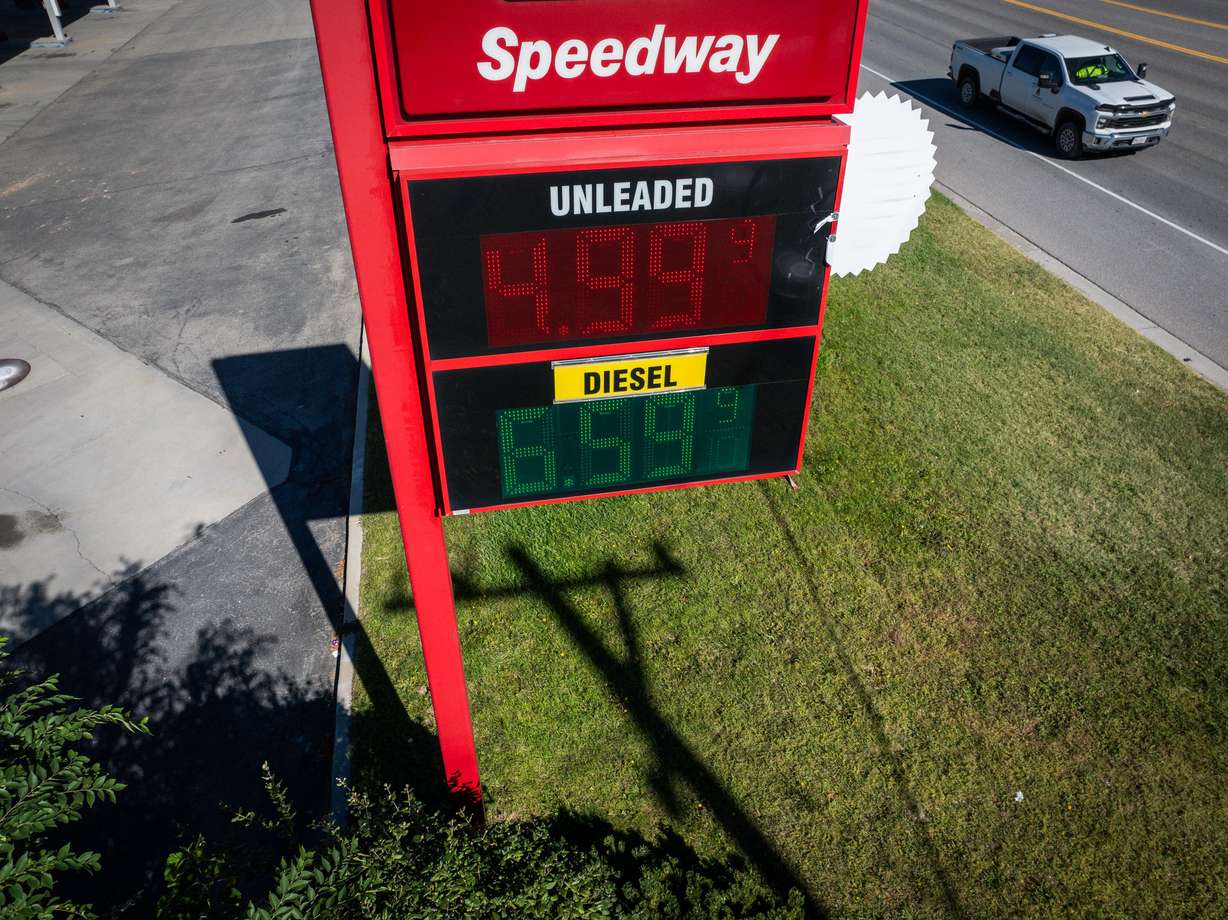
The national average price of a gallon of regular was $4.43 on Wednesday, down slightly over the last week but $1.28 per gallon more than this time last year, according to AAA tracking. In Utah, drivers were paying an average of $5 per gallon Wednesday, up 3 cents per gallon over the last week and $1.61 more than a year ago.
While crude oil prices had been heading lower over the past week on news of increases in shipping traffic through the critical Strait of Hormuz passage out of the Persian Gulf, prices were on the rise again Wednesday.
Consumer gas prices in the U.S. are on the cusp of setting an all-time record for the month of September after hitting a new high mark in August. Diesel fuel, which hit an all-time high of $6.53 per gallon earlier this month, is still hovering near record territory, with the average per-gallon price across the country at $6.41, per AAA.
While drivers feel the fuel price crunch every time they fill up, diesel fuel costs trickle down to impact household budgets in a wide variety of ways. Diesel powers the trucks, trains and shipping vessels that distribute and deliver the majority of consumer goods; fuels the machinery that keeps the agriculture sector producing and distributing farm products; and is the power behind equipment that helps build and repair roads and other infrastructure as well as putting up commercial and residential buildings.