'%3e%3cpath%20d='M34.1406%205.85938C30.3906%202.10547%2025.3047%200%2020%200C14.6953%200%209.60938%202.10547%205.85938%205.85938C2.10938%209.61328%200%2014.6953%200%2020C0%2025.3047%202.10547%2030.3906%205.85938%2034.1406C9.61328%2037.8906%2014.6953%2040%2020%2040C25.3047%2040%2030.3906%2037.8945%2034.1406%2034.1406C37.8906%2030.3906%2040%2025.3047%2040%2020C40%2014.6953%2037.8945%209.60938%2034.1406%205.85938ZM37.0117%2023.543H31.1602V13.5391H27.6328V19.9414C28.1211%2020.6914%2028.3711%2021.582%2028.3711%2022.5625V22.625C28.3711%2023.668%2028.1172%2024.6055%2027.6328%2025.4297V26.6094H36.082C33.4883%2032.9375%2027.2891%2037.3789%2020.0039%2037.3789C10.3711%2037.3789%202.62109%2029.6289%202.62109%2020C2.62109%2010.3711%2010.3711%202.62109%2020%202.62109C29.6289%202.62109%2037.3789%2010.3711%2037.3789%2020C37.3789%2021.1484%2037.2617%2022.2656%2037.0508%2023.3477C37.0391%2023.4141%2037.0234%2023.4766%2037.0117%2023.543Z'%20fill='white'/%3e%3cpath%20d='M22.3086%2018.5352C20.4336%2018.125%2019.9531%2017.8398%2019.9766%2017.1836V17.1406C19.9766%2016.6992%2020.3477%2016.2148%2021.4023%2016.2148C22.582%2016.2148%2023.8867%2016.6797%2025.0781%2017.4766L26.8516%2015.0195C25.4453%2013.8906%2023.707%2013.3398%2021.5547%2013.3398C18.5195%2013.3398%2016.4375%2015%2016.4063%2017.4766V17.5352C16.3633%2020.2617%2018.5859%2020.9805%2021.293%2021.6016C23.0391%2021.9766%2023.5703%2022.3164%2023.5703%2022.9609L23.5469%2022.9766C23.5469%2023.3906%2023.2578%2023.7031%2022.7852%2023.8359C22.5742%2023.9062%2022.1289%2023.9727%2021.5156%2023.9727C20.7617%2023.9727%2019.7539%2023.8633%2018.6328%2023.4844C18.0898%2023.2891%2017.4727%2023.0039%2016.8047%2022.6133L20.1406%2026.625C20.2813%2026.6602%2021.0977%2026.8516%2021.7734%2026.8516C25.0039%2026.8516%2027.0859%2025.2461%2027.1094%2022.6328V22.5703C27.1602%2020.1133%2025.2148%2019.1719%2022.3086%2018.5352Z'%20fill='white'/%3e%3cpath%20d='M5.24219%2013.5664V26.6133H8.75391V23.7578L10.2969%2021.9531L14.2031%2026.6133H18.3867L12.3555%2019.5195L17.4023%2013.5664H13.4531L8.75391%2019.0586V13.5664H5.24219Z'%20fill='white'/%3e%3c/g%3e%3cdefs%3e%3cclipPath%20id='clip0_97_2430'%3e%3crect%20width='40'%20height='40'%20fill='white'/%3e%3c/clipPath%3e%3c/defs%3e%3c/svg%3e)


- A Senate committee voted 11-9 to advance a bill repealing the Roadless Rule on Wednesday.
- Utah Sen. Mike Lee supports the repeal based on environmental and economic concerns.
- Democrats unanimously opposed the repeal due to their own environmental and economic concerns.
SALT LAKE CITY — A wildfire prevention bill, which includes a repeal of the "Roadless Rule," moved favorably out of the Senate Energy and Natural Resources Committee on Wednesday, in an 11-9 vote.
Congress passed the Roadless Area Conservation Rule in 2001, which prohibited road construction and timber harvesting on about 60 million acres of national forests, overwhelmingly concentrated in Alaska and across the American West.
Wednesday's bill also requires the Forest Service and the Bureau of Land Management to scale up forest thinning and prescribed burns by 40% and invest in advanced firefighting technology.
Utah Sen. Mike Lee was mistakenly named by media outlets as the sponsor of the amendment to the bill, Energy Committee communications director Jordan Roberts told the Deseret News. "There was a version of the amendment that had circulated, because we had filed it for them, but it was a (Wyoming Sen. John) Barrasso-sponsored amendment," he said.
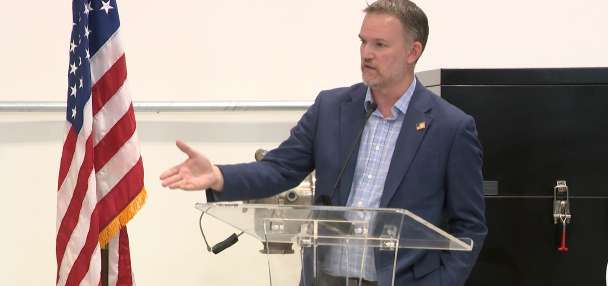
As chairman of the Senate committee, Lee spoke in favor of the bill on Wednesday. The Roadless Rule led to access restrictions on federal lands that "have a tendency to increase wildfire risk, endanger communities and limit economic activity," he said.
"There's no explicit statutory activity directing the Forest Service to do this — to create inventory of roadless areas. The rule has wreaked havoc on a lot of Western communities, including a lot of communities in my state, the state of Utah," Lee said.
About half of Utah's 8 million acres of U.S. Forest Service-managed land is restricted by the Roadless Rule.
Energy Committee Democrats unanimously opposed the bill

Sens. Ron Wyden, D-Ore., Maria Cantwell, D-Wash., Alex Padilla, D-Calif., and Martin Heinrich, D-N.M., voiced opposition to the repeal of the Roadless Rule due to environmental and economic reasons.
Cantwell said getting rid of the Roadless Rule "is basically like saying, 'OK, we're going to go build a road anywhere, even where it's not cost effective, even where it's going to cost the public more,' instead of focusing on the backlog ... it's like, there's a divide here. And it's a bad divide."
Even if the Roadless Rule is nullified, a private citizen or company still would not automatically be allowed to construct roads through national forest land. They would still need to obtain a Forest Service special use permit, undergo an environmental review from NEPA and follow any other location-specific regulations.
Prior to voting no, Padilla said fire threats increase by four times when a road is established, due to human-caused ignitions. Opening roadless areas to construction "would put rural communities at increased risk of fire," he said.
Padilla was referencing a study conducted by The Wilderness Society, an environmental conservation group. The study took data from 1992 to 2024 and found that fires were four times more likely to occur within 50 meters of a road compared to roadless areas.
"Republicans have claimed that the Roadless Rule has hindered wildfire mitigation efforts, and it's simply false," Padilla said.
However, the Forest Service has maintained that roadless areas are a threat to communities and that having improved road access helps to fight wildfires.
During the debate prior to the vote, Cantwell also referenced a bill Lee sponsored last year, which would have allowed 0.5% of federal lands to be sold.
"I mean it's clear, Mr. Chairman," Cantwell said, referring to Lee, "that you would like to sell public land. On our side of the aisle, we would like to acquire public land and set it aside for the general public to use."