'%3e%3cpath%20d='M34.1406%205.85938C30.3906%202.10547%2025.3047%200%2020%200C14.6953%200%209.60938%202.10547%205.85938%205.85938C2.10938%209.61328%200%2014.6953%200%2020C0%2025.3047%202.10547%2030.3906%205.85938%2034.1406C9.61328%2037.8906%2014.6953%2040%2020%2040C25.3047%2040%2030.3906%2037.8945%2034.1406%2034.1406C37.8906%2030.3906%2040%2025.3047%2040%2020C40%2014.6953%2037.8945%209.60938%2034.1406%205.85938ZM37.0117%2023.543H31.1602V13.5391H27.6328V19.9414C28.1211%2020.6914%2028.3711%2021.582%2028.3711%2022.5625V22.625C28.3711%2023.668%2028.1172%2024.6055%2027.6328%2025.4297V26.6094H36.082C33.4883%2032.9375%2027.2891%2037.3789%2020.0039%2037.3789C10.3711%2037.3789%202.62109%2029.6289%202.62109%2020C2.62109%2010.3711%2010.3711%202.62109%2020%202.62109C29.6289%202.62109%2037.3789%2010.3711%2037.3789%2020C37.3789%2021.1484%2037.2617%2022.2656%2037.0508%2023.3477C37.0391%2023.4141%2037.0234%2023.4766%2037.0117%2023.543Z'%20fill='white'/%3e%3cpath%20d='M22.3086%2018.5352C20.4336%2018.125%2019.9531%2017.8398%2019.9766%2017.1836V17.1406C19.9766%2016.6992%2020.3477%2016.2148%2021.4023%2016.2148C22.582%2016.2148%2023.8867%2016.6797%2025.0781%2017.4766L26.8516%2015.0195C25.4453%2013.8906%2023.707%2013.3398%2021.5547%2013.3398C18.5195%2013.3398%2016.4375%2015%2016.4063%2017.4766V17.5352C16.3633%2020.2617%2018.5859%2020.9805%2021.293%2021.6016C23.0391%2021.9766%2023.5703%2022.3164%2023.5703%2022.9609L23.5469%2022.9766C23.5469%2023.3906%2023.2578%2023.7031%2022.7852%2023.8359C22.5742%2023.9062%2022.1289%2023.9727%2021.5156%2023.9727C20.7617%2023.9727%2019.7539%2023.8633%2018.6328%2023.4844C18.0898%2023.2891%2017.4727%2023.0039%2016.8047%2022.6133L20.1406%2026.625C20.2813%2026.6602%2021.0977%2026.8516%2021.7734%2026.8516C25.0039%2026.8516%2027.0859%2025.2461%2027.1094%2022.6328V22.5703C27.1602%2020.1133%2025.2148%2019.1719%2022.3086%2018.5352Z'%20fill='white'/%3e%3cpath%20d='M5.24219%2013.5664V26.6133H8.75391V23.7578L10.2969%2021.9531L14.2031%2026.6133H18.3867L12.3555%2019.5195L17.4023%2013.5664H13.4531L8.75391%2019.0586V13.5664H5.24219Z'%20fill='white'/%3e%3c/g%3e%3cdefs%3e%3cclipPath%20id='clip0_97_2430'%3e%3crect%20width='40'%20height='40'%20fill='white'/%3e%3c/clipPath%3e%3c/defs%3e%3c/svg%3e)


- The Utah Wildlife Board approved 450 additional elk permits in a meeting on Aug. 20.
- The decision addresses drought-induced forage shortages impacting elk and landowners.
- Experts agree hunting is preferable to starvation or vehicle collisions for population control.
SALT LAKE CITY — The Utah Wildlife Board unanimously approved 450 additional elk hunting permits in a meeting Aug. 20 — and it's not just for sport.
It's in response to the state's drought.
"In years like this, where we have severe drought and it reduces forage availability, we want to be responsive to those changing conditions so that we're being good partners with the state agencies and the land owners that are really managing these landscapes," said Mike Wardle, big game coordinator for the Division of Wildlife Resources, in the meeting.
Researchers agree this is a common practice.
David Stoner, a wildlife extension specialist and associate professor at Utah State University, said the state has two variables to take into account when making permit decisions:
"How many (elk) can we grow?" and "How many (elk) is society willing to tolerate before the conflicts become too much?"
How many elk can Utah's wildlands support?
Utah's Division of Wildlife Resources creates an objective each year — a population number the land and community can reasonably support. This year, the number of elk exceeded the objective in various areas.
In Nebo, there are an estimated 2,750 elk — 550 over objective. In the Wasatch West area, there are an additional 400 elk over objective.
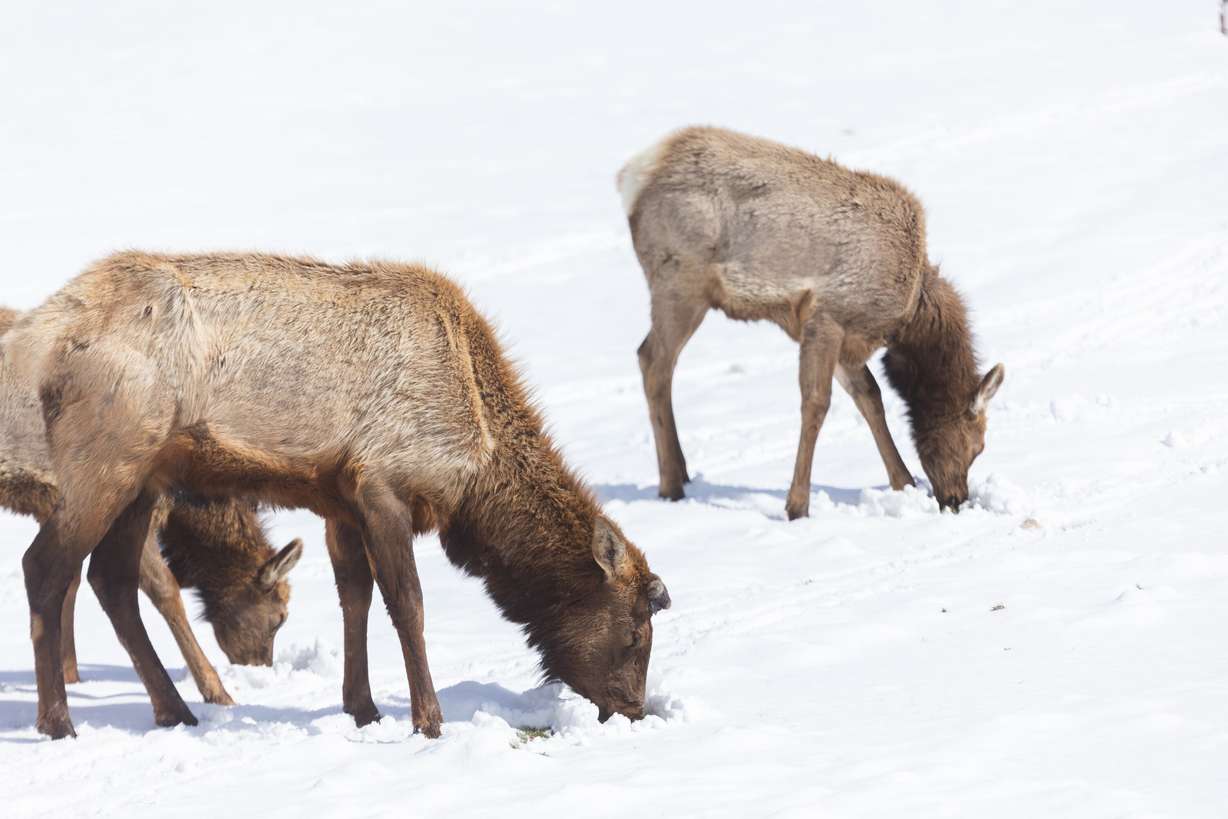
"Animals have to live off the land," explained Stoner. "They don't have refrigeration, they don't have pantries, they're solely dependent on what's available to them in the environment."
In intense drought scenarios — like this year, when statewide reservoir storage is at 32% — foliage that wildlife depend on are not as productive, leaving less food.
"We have received some good monsoon moisture in the past few weeks, but we're still not out of the woods," said Wardle.
In an earlier study, Stoner and colleagues found that drought in the West reduced good habitat for wildlife by 10%-18%.
"That's the fundamental problem," he said.
Though elk populations are large now — with diminishing vegetation — they soon will likely shrink due to calf mortality and starvation from long-term drought effects.
How many elk can Utah communities tolerate?
Calf survival rates are notably high in elk, they can live long — even into their 20s — and they are smart creatures. Stoner said seeing population numbers above the state's objective is fairly common for the species.
In the case of the state's drought, large elk populations pose a threat to Utah communities.
Stoner explained, "With the lack of food available to those elk, they're more likely to come into a town or come into agrarian areas and be on highways and cause crop damage."
In these situations, wildlife often crash into vehicles, eat farmers' agricultural crops and wander into highly populated areas.
Even if the state decided against increasing permits and allowed elk to even out population numbers through starvation, Stoner said, "In the meantime, you'd have these problems, conflicts related to elk in places where they cause problems."
Why use hunters?
The state will try to regulate the herds by issuing cow (female elk) tags, specifically because females are the reproductive segment of the group — fewer females, slower growth rate. Researchers and wildlife management officials collectively agree hunters are the best option to go about it.
"There's a benefit to the state," said Stoner. "In terms of removing those animals through active harvest rather than just letting them starve to death or get hit by cars."
There's also a massive interest from Utah communities for more hunting opportunities.
Antlerless hunts — sometimes referred to as meat hunts — are not for a trophy.
"It's just good clean meat that people are harvesting from the land, for clean consumption, and that is something the public holds dear," said Stoner.