'%3e%3cpath%20d='M34.1406%205.85938C30.3906%202.10547%2025.3047%200%2020%200C14.6953%200%209.60938%202.10547%205.85938%205.85938C2.10938%209.61328%200%2014.6953%200%2020C0%2025.3047%202.10547%2030.3906%205.85938%2034.1406C9.61328%2037.8906%2014.6953%2040%2020%2040C25.3047%2040%2030.3906%2037.8945%2034.1406%2034.1406C37.8906%2030.3906%2040%2025.3047%2040%2020C40%2014.6953%2037.8945%209.60938%2034.1406%205.85938ZM37.0117%2023.543H31.1602V13.5391H27.6328V19.9414C28.1211%2020.6914%2028.3711%2021.582%2028.3711%2022.5625V22.625C28.3711%2023.668%2028.1172%2024.6055%2027.6328%2025.4297V26.6094H36.082C33.4883%2032.9375%2027.2891%2037.3789%2020.0039%2037.3789C10.3711%2037.3789%202.62109%2029.6289%202.62109%2020C2.62109%2010.3711%2010.3711%202.62109%2020%202.62109C29.6289%202.62109%2037.3789%2010.3711%2037.3789%2020C37.3789%2021.1484%2037.2617%2022.2656%2037.0508%2023.3477C37.0391%2023.4141%2037.0234%2023.4766%2037.0117%2023.543Z'%20fill='white'/%3e%3cpath%20d='M22.3086%2018.5352C20.4336%2018.125%2019.9531%2017.8398%2019.9766%2017.1836V17.1406C19.9766%2016.6992%2020.3477%2016.2148%2021.4023%2016.2148C22.582%2016.2148%2023.8867%2016.6797%2025.0781%2017.4766L26.8516%2015.0195C25.4453%2013.8906%2023.707%2013.3398%2021.5547%2013.3398C18.5195%2013.3398%2016.4375%2015%2016.4063%2017.4766V17.5352C16.3633%2020.2617%2018.5859%2020.9805%2021.293%2021.6016C23.0391%2021.9766%2023.5703%2022.3164%2023.5703%2022.9609L23.5469%2022.9766C23.5469%2023.3906%2023.2578%2023.7031%2022.7852%2023.8359C22.5742%2023.9062%2022.1289%2023.9727%2021.5156%2023.9727C20.7617%2023.9727%2019.7539%2023.8633%2018.6328%2023.4844C18.0898%2023.2891%2017.4727%2023.0039%2016.8047%2022.6133L20.1406%2026.625C20.2813%2026.6602%2021.0977%2026.8516%2021.7734%2026.8516C25.0039%2026.8516%2027.0859%2025.2461%2027.1094%2022.6328V22.5703C27.1602%2020.1133%2025.2148%2019.1719%2022.3086%2018.5352Z'%20fill='white'/%3e%3cpath%20d='M5.24219%2013.5664V26.6133H8.75391V23.7578L10.2969%2021.9531L14.2031%2026.6133H18.3867L12.3555%2019.5195L17.4023%2013.5664H13.4531L8.75391%2019.0586V13.5664H5.24219Z'%20fill='white'/%3e%3c/g%3e%3cdefs%3e%3cclipPath%20id='clip0_97_2430'%3e%3crect%20width='40'%20height='40'%20fill='white'/%3e%3c/clipPath%3e%3c/defs%3e%3c/svg%3e)



- Utah's ACT scores improved slightly in 2026, with an average composite of 20.1.
- State Superintendent of Public Instruction Molly Hart praised the progress in college readiness among Utah students.
- Despite gains, less than half of Utah students met benchmarks in most ACT subjects.
SALT LAKE CITY — If Utah high school students earned a collective report card, their teacher's comment might be: "Shows steady progress" — at least on standardized tests.
The Beehive State's graduating class of 2026 slightly improved its overall performance on the ACT, the standardized college entrance exam that measures high school students' college readiness.
Utah's average composite ACT score climbed to 20.1 in 2026, up from 19.9 in 2025, according to the ACT. The 2026 national average composite score on the standardized test — which includes English, math and reading — was 18.8.
Approximately 1.3 million American high schoolers took the ACT at least once in 2026.
"We are proud of the growth shown by Utah students, teachers and schools as we focus on ensuring every student is prepared for postsecondary success," said state Superintendent of Public Instruction Molly Hart in a Utah State Board of Education release.
While taking the ACT is not mandatory for all Utah students, the state administers the test for all high school juniors for free.
Utah was one of 16 states in 2026 that tested over 90% of graduates.
"Within this high participation group, Utah ranked first in average composite score (20.1), ahead of Wisconsin (19.4) and Montana (19.4), and led the nation in benchmark attainment across English, reading, math and science," according to the release.
Utah ACT scores: By the numbers
Utah's average composite score edged into the 20s in 2026. Meanwhile, Utah students who retested demonstrated significant gains, achieving an average composite score of 25.8 on their "superscores" — the average of a student's best scores from each section across multiple ACT attempts.
While the state's overall ACT composite number improved in 2026, the data confirms work remains. With the exception of English, there were no ACT subjects where more than half of the state's high school test-takers scored above benchmarks.
Among Utah public school graduates in the class of 2026:
- 57% met the English benchmark.
- 34% met the math benchmark, up from 32% in 2025.
- 45% met the reading benchmark, up from 43% in 2025.
- 33% met the science benchmark.
- 27% met all three core benchmarks in English, math and reading — up 2 percentage points from 2025.
More signs of pandemic recovery in the classroom
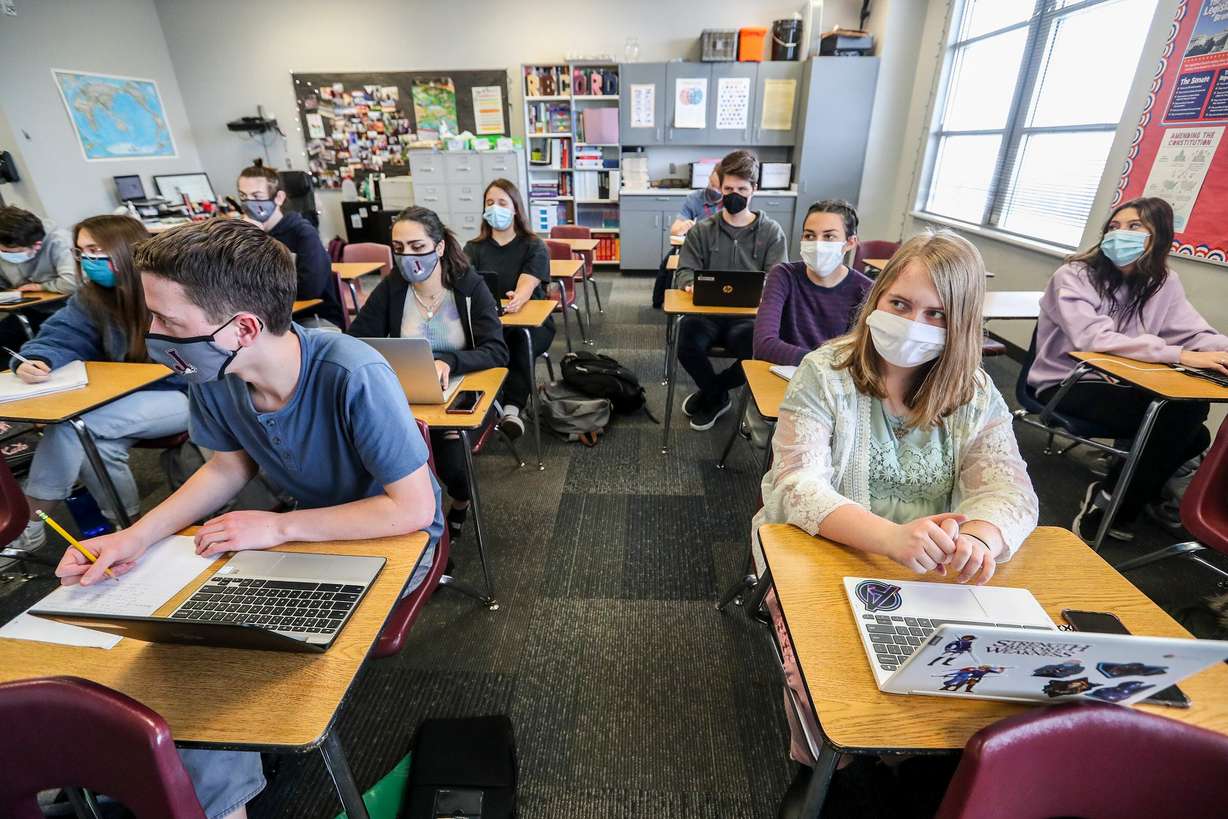
The release of this week's ACT scores further suggests Utah's public schools continue to make measured progress since the COVID-19 pandemic.
In a year when Utah policymakers and educators are pushing hard for literacy growth in K-12, recent USBE 2025-2026 statewide assessments of core subjects show improvements in English language arts and math, with science results reaching record highs.
Across all core subjects, according to the USBE, student performance has increased year-over-year since the pandemic.
The assessments cited by USBE are not school-specific, instead focusing on overall student learning and achievement levels.
Single-year growth of 1.2% to 2.6% in subject categories "reflect sustained, healthy progress rather than statistical noise — providing a strong indicator of systemic academic recovery statewide," according to USBE.
In the most recent statewide assessments, 45.4% of Utah's K-12 students reached "proficiency" in English language arts levels. That's up 1.5% from last year and 2.3% higher than the pandemic "trough" year in 2021.
But it's still more than a full percentage point less than the ELA proficiency baseline number of 46.8% when the state began administering the Readiness Improvement Success Empowerment and Utah Aspire Plus Assessments in 2019.
Meanwhile, 42.5% of Utah students recorded proficiency marks in math — up 1.2% from 2025 and 3.5% from the trough year. The most recent math proficiency figure is still more than two percentage points below the 2019 baseline figure.
But science scores in 2026 marked a positive milestone. Almost half of Utah students (49.8%) reached proficiency standards — a record high since the baseline of 47% was established in 2019.
The recent USBE assessment revealed that 70.6% of K-3 students scored "at or above benchmark" on end-of-year assessments. And 65.1% of K-3 kids scored at or above benchmarks on the early numeracy assessment measuring foundational math skills.
Related:
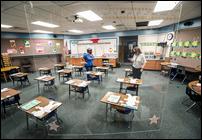
COVID classroom rebound? K-12 schools showing signs of pandemic-era recovery
Statewide assessments show Utah students have improved in English Language Arts and math, with science results reaching record highs.But ELA proficiency numbers for Utah students in grades 3-8 are sure to amplify the call for early literacy training. Less than half from that age group (45.3%) were ELA proficient.
The math proficiency numbers for students in grades 3-8 — 45.4% — are almost identical to the reading numbers, although more than half of Utah students in grades 3-4 were performing at proficiency levels.
And 52.3% of students in the grades 3-8 category are proficient in science, with sixth grade students reaching almost 60%.
More than half of Utah high school students taking the computerized Utah Aspire Plus assessment test scored below proficiency in ELA, math and science, with the lowest number — 34.5% in the state — recorded in math.