- President Donald Trump on Thursday criticized Utah's mail-in voting system, claiming it benefits Democrats unfairly.
- Utah officials defended the system, noting reforms for increased ballot security.
- Reforms include stricter deadlines and additional voter ID requirements, though critics say it could slow result processing more.
SALT LAKE CITY — President Donald Trump accused Utah of moving toward a universal vote-by-mail election system in a post on Thursday, suggesting the Republican Party should stop it by passing Utah Sen. Mike Lee's SAVE America Act.
"We should stop Utah from doing this," his Truth Social Post said. "All Mail In Ballots, dishonestly handled, are a big advantage for Dumocrats (sic), whose only Road to Victory, because their Policies are so insane, is CHEATING."
Lt. Gov. Deidre Henderson responded to Trump's allegations with a statement defending Utah's unique status as a Republican supermajority state with mail-in voting, which she said is the preferred method for more than 90% of voters.
Utah is one of just eight states — and the only red one — that automatically sends mail-in ballots to all registered voters. This became the practice statewide in 2019.
Trump's post puzzled Utah election officials and election integrity activists alike because the state, particularly over the past two years, has taken steps in the opposite direction, toward a more secure version of mail-in ballots.
Many reforms were prompted by the 2024 GOP primary in the 2nd Congressional District, which ended in a recount that may have been decided by ballots that were not counted because of a late postmark or incorrect signature.
Lawmakers have since strengthened the rules around when ballots can be accepted and how they are to be verified. But as conservatives continue to criticize Utah's process as being slow, these added measures could delay results even more.
How have elections changed?
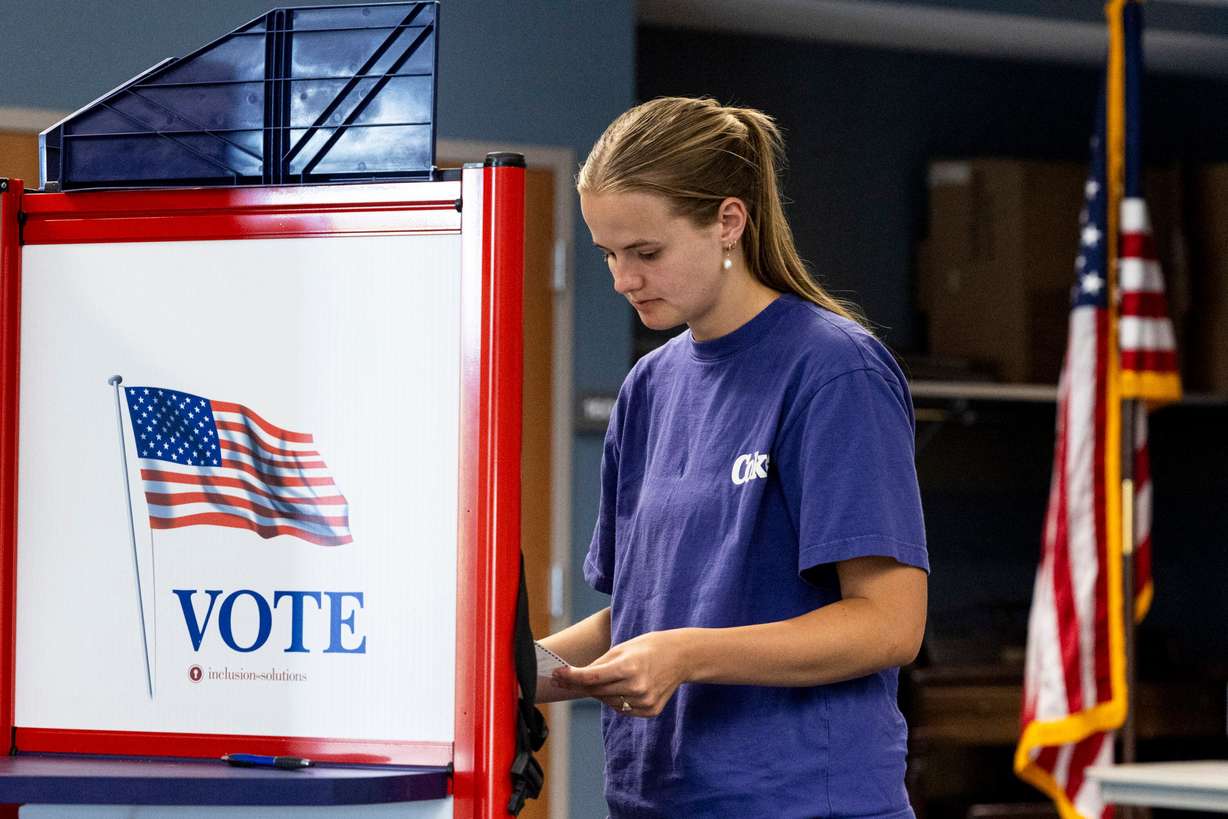
Voters will not see a major difference in their voting experience, but the reforms made during the 2025 and 2026 legislative sessions amount to a reimagining of mail-in voting in Utah, according to state election director Ryan Cowley.
"I don't know if it's just tweaking; it definitely is trying to alter the vote-by-mail process," he said.
Citing the 2nd District race, legislators decided ballots will only be counted if they are in a dropbox or the clerk's office by 8 p.m. on election night. Previously, ballots could be counted up to two weeks later if they were postmarked by Election Day.
This will not speed up election results in most cases because outcomes are almost always clear on election night anyway, Cowley told the Deseret News. But unless voters mail their ballots earlier, those caught in the postal system will be rejected.
"It definitely means less ballots will be counted," Cowley said.
Another change the Legislature approved in response to the 2nd District debacle is an additional method of voter identification to reduce reliance on county clerks comparing signature affidavits to those on record, which is subject to human error.
Starting this year, ballots include an option to enter four digits of a Social Security Number or driver's license. More than 90% of voters are completing both measures even though it is not required until 2029, Weber County Clerk Ricky Hatch said.
In 2024, Utah was among the last states to release election results, along with California, which has more relaxed timelines for ballot processing.
However, adding a second check on voters' identity on Utah ballots will take even more time: "It's slowed down our voter verification process," Hatch told the Deseret News. "It's not overly dramatic of an impact, but definitely we can feel it a little bit."
The ballot cure process, where clerks let voters remedy incorrect signatures, will also expand to include incorrect numbers from a government ID.
More change on the way?
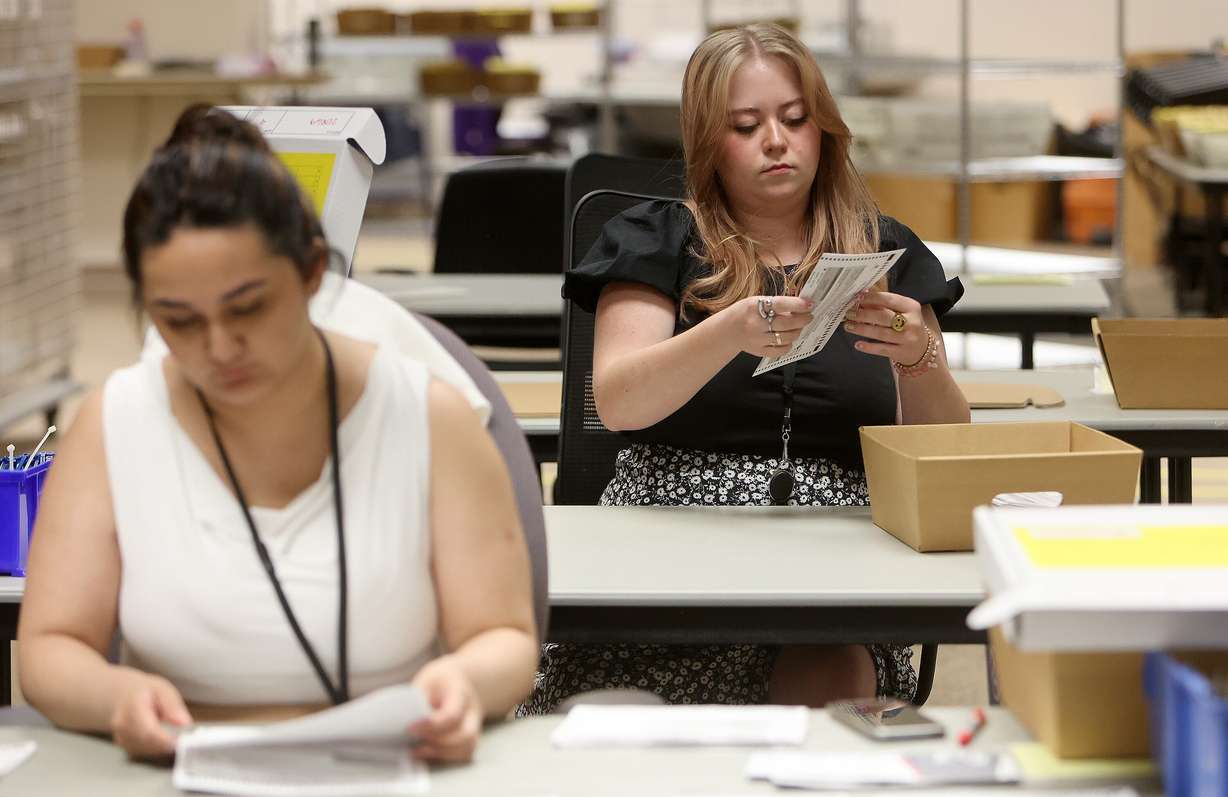
Republican state lawmakers responded to other concerns associated with mail-in voting by requiring voters to opt in every eight years, starting in 2029, to receive a mail-in ballot, and by requiring clerks to require proof of citizenship for voter registration.
A piecemeal approach does not go far enough, according to Alexis Ence, a founding member of the newly created Utah Election Integrity Network.
A national group, the Election Integrity Network, was founded by Cleta Mitchell, a former campaign attorney for Lee, who worked with the senator to explore legal pathways to overturn the results of the 2020 presidential election.
There is something "uniquely problematic with mail-in voting in Utah elections," Ence said. Ballots dropped in the mail, especially in southern Utah, are sent to post offices out of state, where they sometimes receive unclear time stamps.
"I think there's a lot of mistrust there, and I think it's for good reason," she told the Deseret News.
The delays inherent in a vote-by-mail system with a two-week cure period produce "unnecessary suspicion," Ence said.
Problems with late ballots, voter identification and slow results would be resolved if the Legislature had approved House Republicans' plan to create a default of voters returning the ballots they received by mail in person with photo identification, Ence said.
Instead, Senate leadership settled on a $100,000 study on the security of in-person voting compared to voting by mail. While Ence believes the answer is clear, she said she agrees that political figures should act on accurate information.
"There is a balance to be struck here," said Ence, who is the president of Washington County Republican Women.
Following Trump's post, Utah Election Integrity Network released a statement emphasizing the importance of state control over election administration and how Utah has already stepped away from universal mail-in voting in recent years.
"I like President Trump highlighting Utah because we definitely have room to improve here," Ence said. "I just wish whoever had given him the information had given him accurate information."