'%3e%3cpath%20d='M34.1406%205.85938C30.3906%202.10547%2025.3047%200%2020%200C14.6953%200%209.60938%202.10547%205.85938%205.85938C2.10938%209.61328%200%2014.6953%200%2020C0%2025.3047%202.10547%2030.3906%205.85938%2034.1406C9.61328%2037.8906%2014.6953%2040%2020%2040C25.3047%2040%2030.3906%2037.8945%2034.1406%2034.1406C37.8906%2030.3906%2040%2025.3047%2040%2020C40%2014.6953%2037.8945%209.60938%2034.1406%205.85938ZM37.0117%2023.543H31.1602V13.5391H27.6328V19.9414C28.1211%2020.6914%2028.3711%2021.582%2028.3711%2022.5625V22.625C28.3711%2023.668%2028.1172%2024.6055%2027.6328%2025.4297V26.6094H36.082C33.4883%2032.9375%2027.2891%2037.3789%2020.0039%2037.3789C10.3711%2037.3789%202.62109%2029.6289%202.62109%2020C2.62109%2010.3711%2010.3711%202.62109%2020%202.62109C29.6289%202.62109%2037.3789%2010.3711%2037.3789%2020C37.3789%2021.1484%2037.2617%2022.2656%2037.0508%2023.3477C37.0391%2023.4141%2037.0234%2023.4766%2037.0117%2023.543Z'%20fill='white'/%3e%3cpath%20d='M22.3086%2018.5352C20.4336%2018.125%2019.9531%2017.8398%2019.9766%2017.1836V17.1406C19.9766%2016.6992%2020.3477%2016.2148%2021.4023%2016.2148C22.582%2016.2148%2023.8867%2016.6797%2025.0781%2017.4766L26.8516%2015.0195C25.4453%2013.8906%2023.707%2013.3398%2021.5547%2013.3398C18.5195%2013.3398%2016.4375%2015%2016.4063%2017.4766V17.5352C16.3633%2020.2617%2018.5859%2020.9805%2021.293%2021.6016C23.0391%2021.9766%2023.5703%2022.3164%2023.5703%2022.9609L23.5469%2022.9766C23.5469%2023.3906%2023.2578%2023.7031%2022.7852%2023.8359C22.5742%2023.9062%2022.1289%2023.9727%2021.5156%2023.9727C20.7617%2023.9727%2019.7539%2023.8633%2018.6328%2023.4844C18.0898%2023.2891%2017.4727%2023.0039%2016.8047%2022.6133L20.1406%2026.625C20.2813%2026.6602%2021.0977%2026.8516%2021.7734%2026.8516C25.0039%2026.8516%2027.0859%2025.2461%2027.1094%2022.6328V22.5703C27.1602%2020.1133%2025.2148%2019.1719%2022.3086%2018.5352Z'%20fill='white'/%3e%3cpath%20d='M5.24219%2013.5664V26.6133H8.75391V23.7578L10.2969%2021.9531L14.2031%2026.6133H18.3867L12.3555%2019.5195L17.4023%2013.5664H13.4531L8.75391%2019.0586V13.5664H5.24219Z'%20fill='white'/%3e%3c/g%3e%3cdefs%3e%3cclipPath%20id='clip0_97_2430'%3e%3crect%20width='40'%20height='40'%20fill='white'/%3e%3c/clipPath%3e%3c/defs%3e%3c/svg%3e)




- The Senate passed the Protect College Sports Act with a 77-22 vote on Monday night.
- The bill seeks to regulate NIL deals, athlete compensation and media rights.
- It now moves to the House, facing potential changes and opposition from Democrats and Republicans.
SALT LAKE CITY — The Senate overwhelmingly approved a comprehensive reform package targeting college sports as lawmakers look to establish federal guidelines for some of the most controversial issues cropping up in collegiate athletics.
Senators passed the Protect College Sports Act in a 77-22 vote, concluding months of tense debate and bipartisan negotiation on an issue that has ensnared college sports for years. But the framework still has a way to go before it becomes law, as it must now head to the House for approval, where lawmakers are not scheduled to return until after the midterm elections.
The House could return earlier than scheduled in order to vote on the bill, but GOP leaders have not indicated whether they will bring them back. Even if they do, it's likely House members would want time to examine the bill's provisions — and potentially make some changes of their own.
They may not be in a hurry to race back to Washington, especially as lawmakers are busy on the campaign trail. The framework wouldn't take effect for this college sports season even if it passed before the midterms, further decreasing motivation to return swiftly.
Still, the bill's approval in the Senate marks a rare bipartisan win on Capitol Hill — and it gives lawmakers up for reelection some kind of legislative victory to tout on the campaign trail.
"We are here at long last on the verge of something historic," Sen. Ted Cruz, the Republican sponsor of the legislation, said on the floor right before the bill passed. "Wow, how exciting is this."
How is the world of college sports going to change?
The Protect College Sports Act is a sweeping proposal to regulate college athletics by creating a national framework dealing with NIL deals, athlete compensation, media rights, revenue sharing, and more. The bipartisan group of lawmakers behind the legislation has argued federal guidelines are crucial to solve confusion among 50 states operating under different rules.
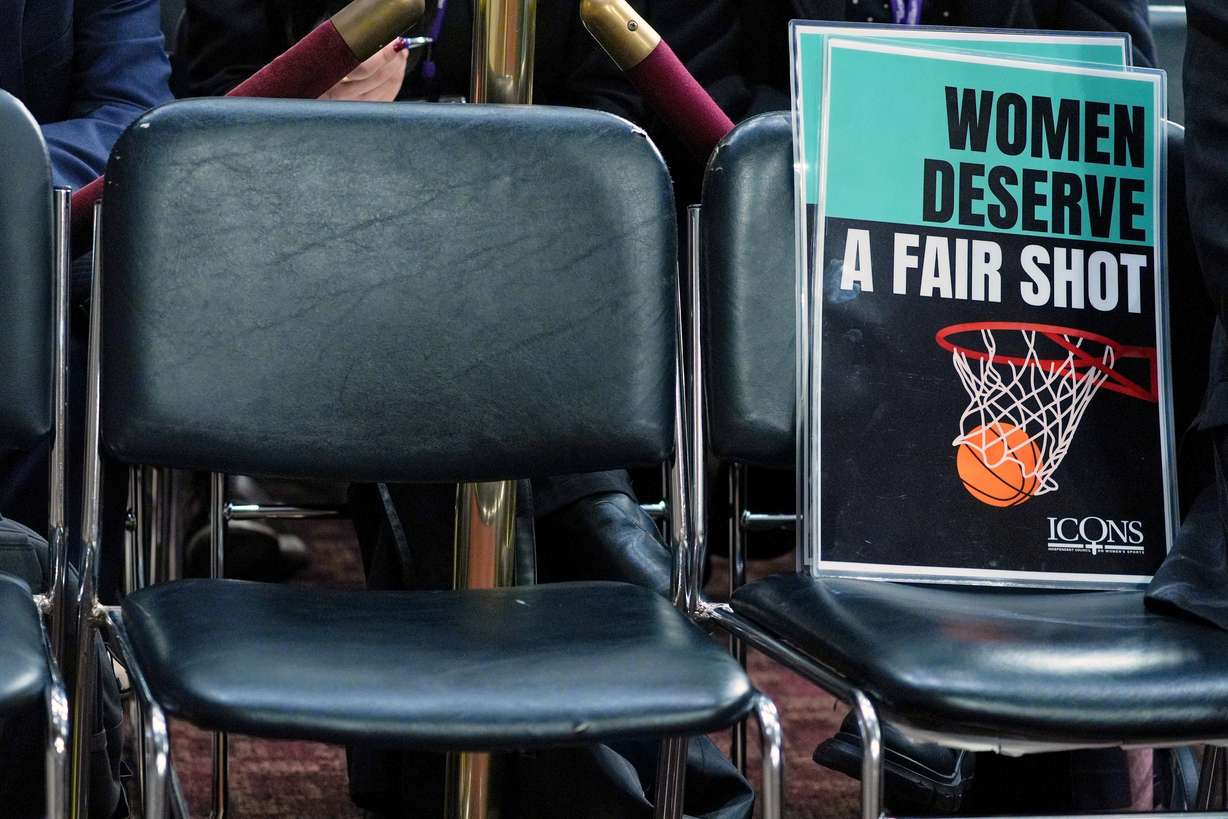
As part of that framework, the legislation offers requirements for student-athletes to be considered eligible to participate in NCAA Division I or Division II athletic competitions. The legislation then blocks states from enforcing laws that interfere with those guidelines.
The framework also tries to streamline the transfer process of student-athletes to different schools and regulate how those students can be compensated. The bill would establish a five-year eligibility limit that is tied to either enrollment or age and it would limit the number of transfers athletes can make. That window would begin the year they turn 19 or the year they finish high school.
This eligibility requirement is identical to the new "five for five" rule adopted by the NCAA in June, and also includes language that exempts missionary service, military stints, and pregnancies from the rule. That maintains current exemptions in Utah, where all of the state's schools' rosters include student-athletes who have served missions for The Church of Jesus Christ of Latter-day Saints.
The bill would prevent Power Four conferences from growing beyond a total of 20 schools, a last-minute change that was approved Monday evening. Currently, the Big 12 and the SEC have 16 teams, while the Big Ten and the ACC have 18 teams.
Any school wishing to move from one Power Four conference to another has to spend at least three years as an independent before joining its new league. However, that required waiting period would end after 2031.
A number of changes were made during amendment votes in the hours leading up to final passage, including provisions to require the disclosure of foreign financing in intercollegiate athletics as well as language that would give states the opportunity to override some provisions in special cases.
What do the rules mean for U of U, BYU athletics?
The bill is of particular interest for the University of Utah and BYU football teams, both of which have risen in prominence to be considered among the top 50 teams in the country with respect to spending on their team rosters.
BYU's football roster budget in 2026 ranges from $21 million to $25 million (third in the Big 12), while Utah's estimated budget is between $18 million and $22 million (middle of the Big 12), according to data analyzed by The Athletic.
Schools do not have to divulge how much is being spent on their entire athletic department rosters, but it is estimated that both BYU and Utah are north of the $30 million range annually. Both schools currently have winning records, with Utah sitting at 4-0 and BYU at 3-0.
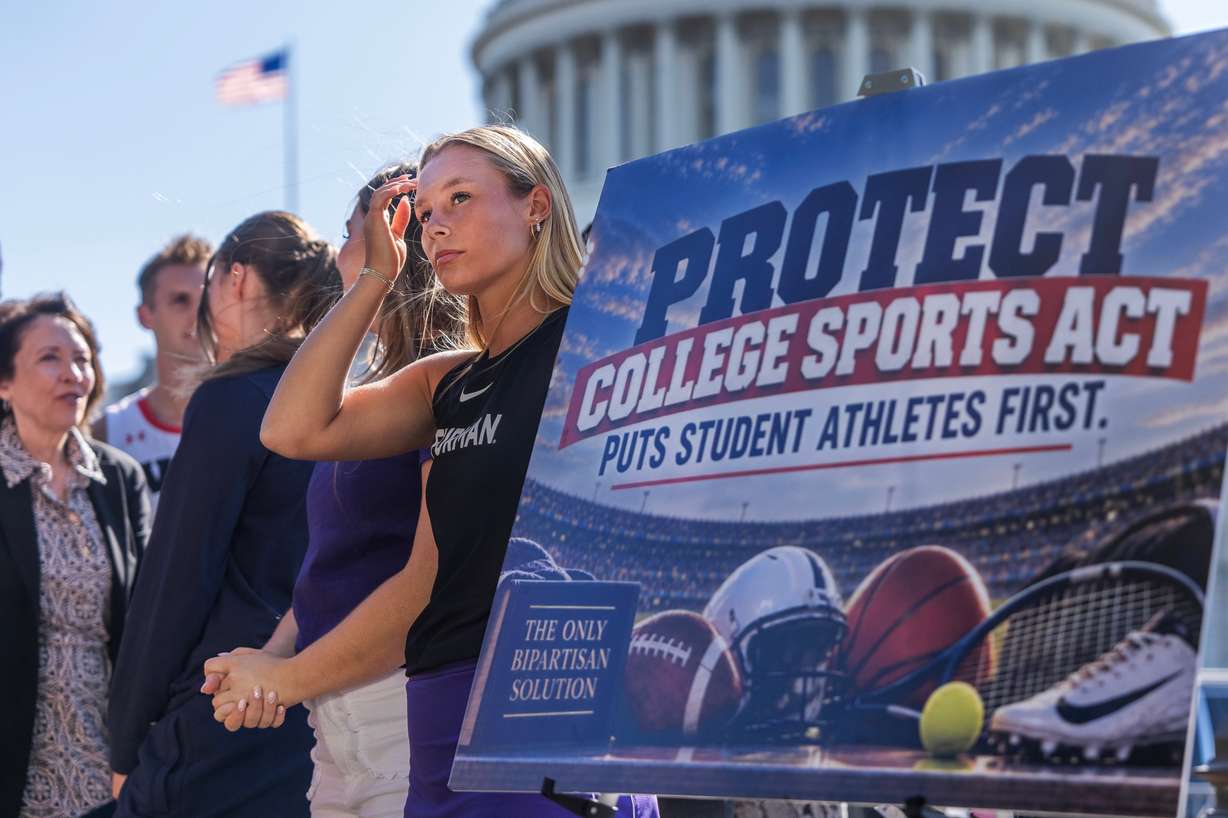
BYU coach Kalani Sitake told the Deseret News earlier this month that his football program was "doing the most with the least" regarding resources and NIL support and called for more investment in the program from the university.
"Just like everything else does, we will see how it works and what comes with it, and then we (will) decide how to make it work so that we can be in alignment with the mission of our school and the mission of our church," Sitake said. "I see some really good things with it. I understand why all the coaches are promoting it, and I can understand why some people would be hesitant towards it."
Neither University of Utah President Taylor Randall nor Utah Athletic Director Mark Harlan has issued public statements explicitly addressing the bill. However, at the Big 12 football media days in July, Big 12 commissioner Brett Yormark said there was "conference-wide" support for the bill, which he labeled as "progress over perfection" and noted that the Big 12 was aligned on the matter with the other three power conferences.
What still needs to happen before it becomes law — and what are the pushbacks?
The successful vote in the Senate on Monday is a good sign for the bill, which has seen some opposition from both sides of the aisle despite its widespread bipartisan support. But it still has a way to go before it can become law.
The Protect College Sports Act now heads to the House for consideration, where it will need approval before being sent to President Donald Trump's desk. The House is not scheduled to come back to Washington until after the midterm elections, with a return date set for Nov. 9.
Trump has said he would like the House to return before the midterm elections to pass the bill, but it's not clear if they will do so. Spokespeople for House Speaker Mike Johnson, R-La., did not respond to a request for comment.
But there is still some disagreement among Democrats who say the framework would disproportionately affect Black student-athletes. The NAACP came out against the bill earlier this year, arguing it strips student-athletes of their bargaining rights and would negatively impact Black student-athletes.

Still, Washington Sen. Maria Cantwell, the Democratic sponsor of the College Sports Act, argued the bill supports historically Black colleges and universities, or HBCUs, and Black athletes.
"I will not let the perfect be the enemy of the essential," Cantwell said in a floor speech on Tuesday before an initial procedural vote. "This is the last best chance to save college sports and put HBCUs at the table where the future gets decided."
Meanwhile, some Republicans argue the federal government should not intervene and instead should leave rules up to the individual school and conference.
'As important as college sports are to students and institutions, they aren't something Congress should micromanage," Sen. Rand Paul, who voted against the bill on Monday, wrote in an op-ed. "Athletes and institutions should be free to make choices about who they want to work and play for, and what rules they should be subject to."
"This bill manages to interfere with college athletics at nearly every level," he added. "It limits the ability of certain employees to freely leave one school and accept a job at another. It decides how students may go about licensing their name, image, and likeness. It even decides when transfer students are eligible to play."
Some House members could also push for changes before they agree to a vote, especially as the lower chamber has been working on its own college sports bill — although that legislation has been stalled for months. It's likely some lawmakers will want to get some of their provisions included in the final package.
Contributing: Jay Drew