
- St. Peter and Paul's Orthodox Church plans to build a new church.
- The current location, a former synagogue, is too small for their rapidly growing congregation.
- A temporary site in Kearns will be used while constructing a larger facility.
SALT LAKE CITY — St. Peter and Paul's Orthodox Church is looking to build their own worship space after outgrowing the former synagogue of Congregation Montefiore where they currently reside.
Congregation Montefiore, an Orthodox Jewish congregation that eventually transitioned to a Conservative Jewish congregation, built the synagogue in 1903 for approximately $9,000 after splitting from Congregation B'nai Israel in 1895.
The congregation met in members' homes until it raised enough funds to build a new synagogue, one of only four synagogues built in Utah during the 19th and 20th centuries. The land was donated to the congregation by Morris Levy.
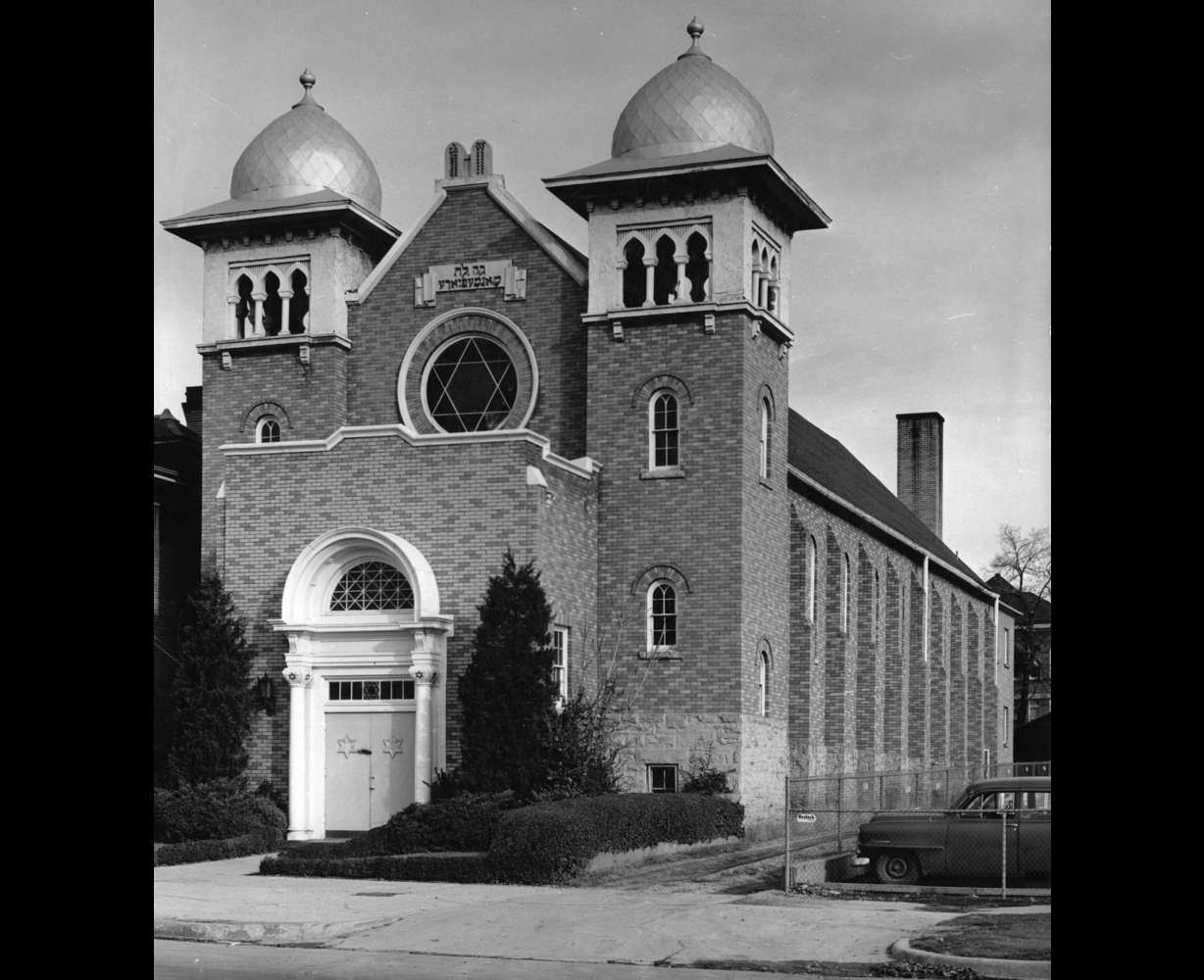
The original architect, Carl Neuhausen, mixed together different architectural styles when building the synagogue, adding Byzantine columns at the entry, Moorish arches in the towers underneath onion-shaped domes, and round-arched windows throughout the building.
The basement to the synagogue was originally unfinished, and the building had no central heating. An addition was added after World War II to the back of the building, adding classrooms.
Congregation Montefiore spent more than 60 years worshipping in the building, located at 355 S. 300 East. In 1972, Congregation B'nai Israel and Congregation Montefiore merged into Congregation Kol Ami.
The former synagogue was eventually sold in 1987 to Metro Fellowship, a Christian church affiliated with the Assemblies of God. The building was renovated before eventually passing into the possession of St. Peter and Paul's Orthodox Church.
Father Paul Truebenbach, the presiding priest of St. Peter and Paul's Orthodox Church, said the transition between the three religions happened before his time, but the renovations were "mainly aesthetic changes" to convert the building into an Orthodox church.
The staircase within the church building splits to either side of the entryway, with a motorized stairlift rising up one side. On the second floor but before the main sanctuary sits a small chapel where Truebenbach occasionally holds services during the week.
The main changes to the original building occurred within the sanctuary. An iconostasis in front of an altar was added, along with a baptismal font. Beyond those two structures, new artwork filled the walls of the church.
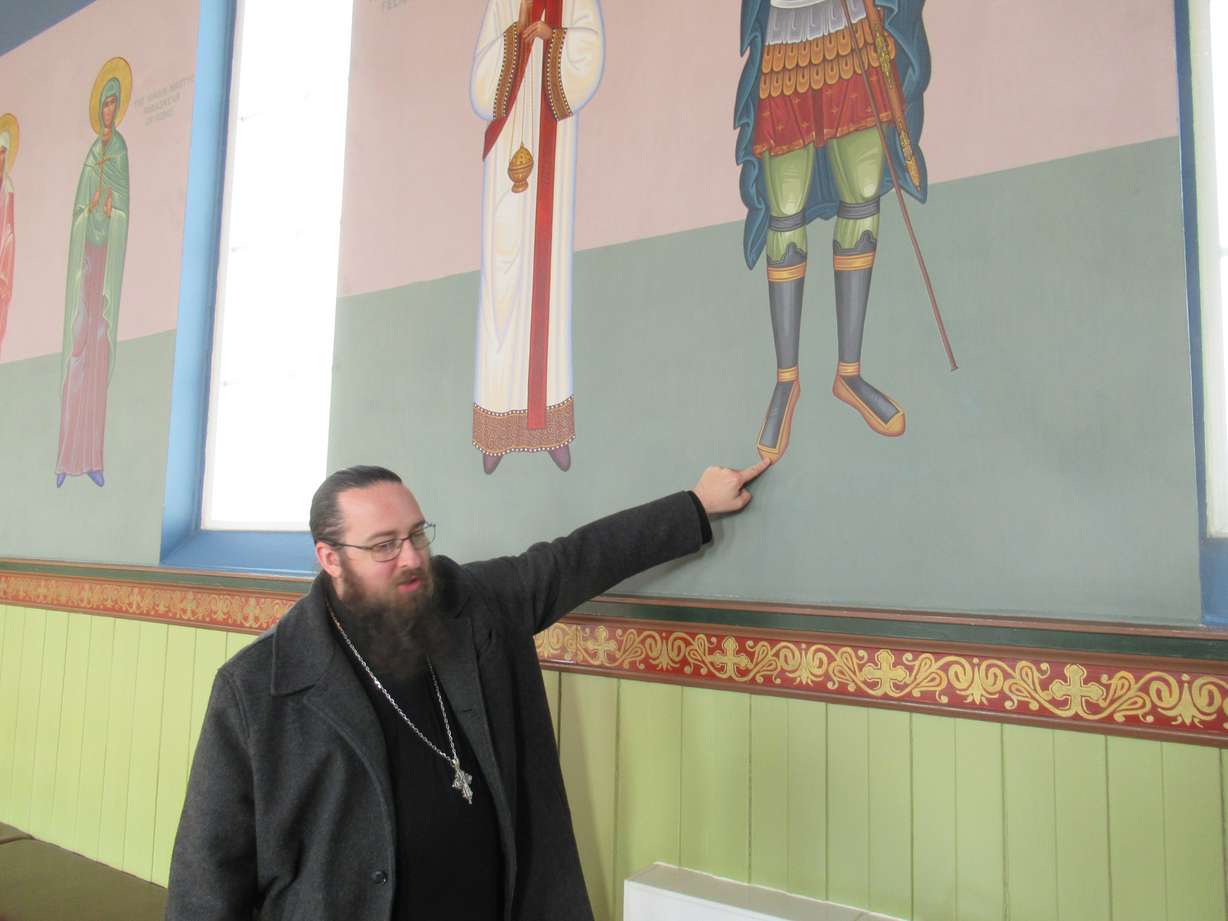
The images were originally painted onto canvas before being carefully cut out and attached to the walls. Saints from across the ages are depicted on the walls and the iconoclast, with podiums holding specific icons on the periphery of the room.
Visitors may be curious about the icons or saints depicted throughout the room. Truebenbach said the icons are not worshiped, but rather serve as a reminder of how the individuals depicted live and serve as an inspiration for parishioners.
"We take it very seriously that Christ has destroyed death," Truebenbach said, quoting Philippians 1:21. "We believe that the line that separates the living from the departed is very, very thin."
Just as a person may ask their family and friends to pray for them during a difficult time, Truebenbach said parishioners reach out to those who are still alive in Christ and ask them to also pray for the parishioners.
With more than 400 attendees each Sunday, the sanctuary is literally standing room only. Benches line the walls for those who need places to sit, but there are no pews. A "cry room" at the back gives parents a place to take their fussy children while still participating.
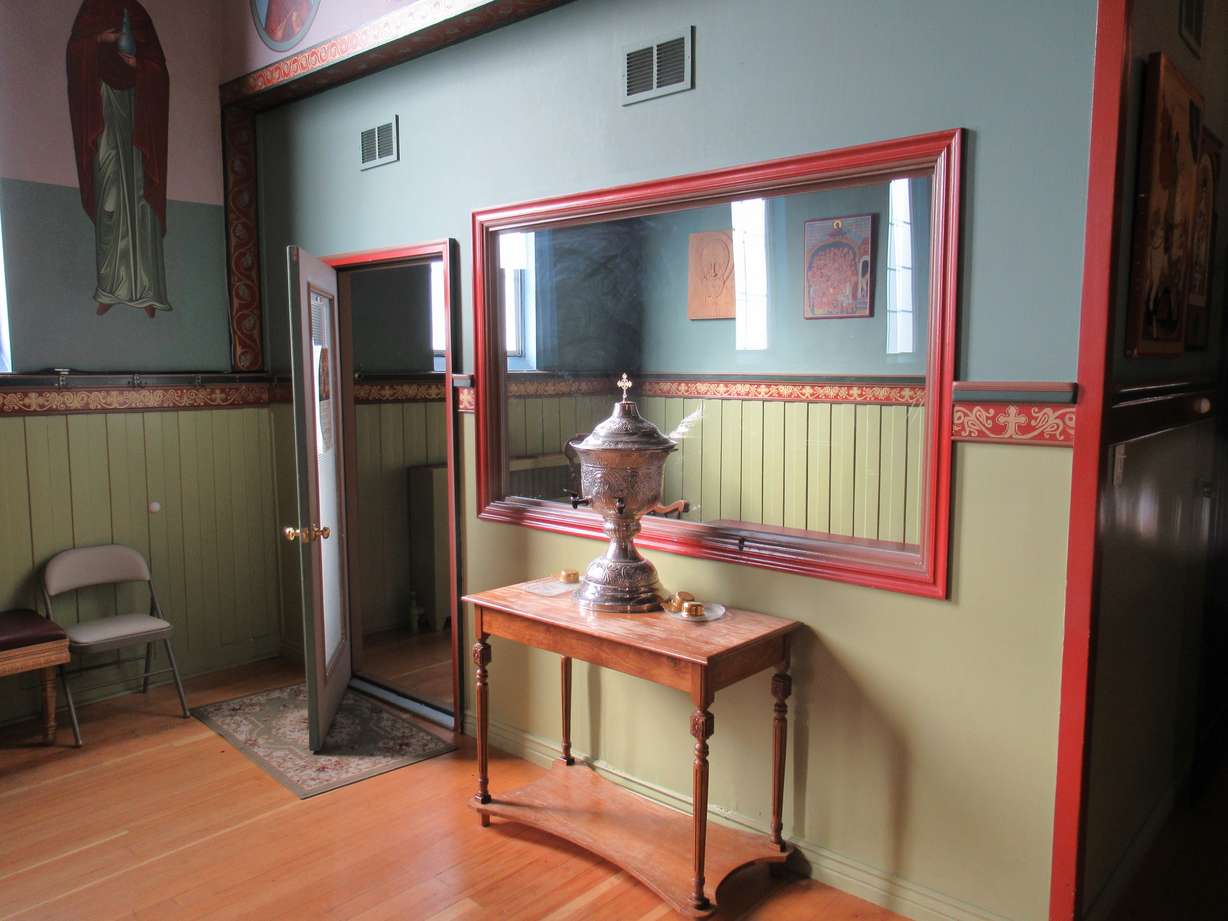
The basement contains church offices for Truebenbach and other leaders, along with the fellowship hall, a small church store and a kitchen. Truebenbach said his office becomes incredibly hot during the summer, but they have not been able to add air conditioning to it.
Children's classrooms and storage spaces are at the back of the building, accessed by narrow staircases. Recent water damage from a leaking HVAC system took a small chunk of plaster out of the ceiling in one of the staircases, but the leak was stopped and the damage is on track to be repaired soon.
While the building has served the church well, Truebenbach is already planning on expansions. The current building meets some of the church's needs, but the parking situation makes things difficult.
"We have almost 200 people looking to join the parish right now," Truebenbach said. "It's just not enough space."
The St. Xenia Orthodox Church in Payson was founded five years prior with support from St. Peter and Paul's Orthodox Church to provide another location for people to worship, and another church was recently started in Ogden.
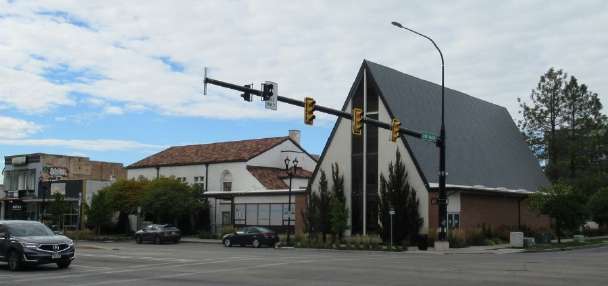
The church is looking to expand to a new location in Kearns. After more than three years of searching, a suitable location was found. The building, a former meetinghouse for The Church of Jesus Christ of Latter-day Saints, will be used temporarily while a new building is built on the attached lot.
The new building is expected to hold between 800 and 1,000 parishioners, easing the strain on the smaller building in Salt Lake City. The current church will likely serve as a Sunday-only church while the other location will offer services throughout the week.
"Orthodox architecture is very intentional," Truebenbach said. "Everything in the Orthodox Church has meaning. There's symbolism in everything. The best thing to do is just come and see."