'%3e%3cpath%20d='M34.1406%205.85938C30.3906%202.10547%2025.3047%200%2020%200C14.6953%200%209.60938%202.10547%205.85938%205.85938C2.10938%209.61328%200%2014.6953%200%2020C0%2025.3047%202.10547%2030.3906%205.85938%2034.1406C9.61328%2037.8906%2014.6953%2040%2020%2040C25.3047%2040%2030.3906%2037.8945%2034.1406%2034.1406C37.8906%2030.3906%2040%2025.3047%2040%2020C40%2014.6953%2037.8945%209.60938%2034.1406%205.85938ZM37.0117%2023.543H31.1602V13.5391H27.6328V19.9414C28.1211%2020.6914%2028.3711%2021.582%2028.3711%2022.5625V22.625C28.3711%2023.668%2028.1172%2024.6055%2027.6328%2025.4297V26.6094H36.082C33.4883%2032.9375%2027.2891%2037.3789%2020.0039%2037.3789C10.3711%2037.3789%202.62109%2029.6289%202.62109%2020C2.62109%2010.3711%2010.3711%202.62109%2020%202.62109C29.6289%202.62109%2037.3789%2010.3711%2037.3789%2020C37.3789%2021.1484%2037.2617%2022.2656%2037.0508%2023.3477C37.0391%2023.4141%2037.0234%2023.4766%2037.0117%2023.543Z'%20fill='white'/%3e%3cpath%20d='M22.3086%2018.5352C20.4336%2018.125%2019.9531%2017.8398%2019.9766%2017.1836V17.1406C19.9766%2016.6992%2020.3477%2016.2148%2021.4023%2016.2148C22.582%2016.2148%2023.8867%2016.6797%2025.0781%2017.4766L26.8516%2015.0195C25.4453%2013.8906%2023.707%2013.3398%2021.5547%2013.3398C18.5195%2013.3398%2016.4375%2015%2016.4063%2017.4766V17.5352C16.3633%2020.2617%2018.5859%2020.9805%2021.293%2021.6016C23.0391%2021.9766%2023.5703%2022.3164%2023.5703%2022.9609L23.5469%2022.9766C23.5469%2023.3906%2023.2578%2023.7031%2022.7852%2023.8359C22.5742%2023.9062%2022.1289%2023.9727%2021.5156%2023.9727C20.7617%2023.9727%2019.7539%2023.8633%2018.6328%2023.4844C18.0898%2023.2891%2017.4727%2023.0039%2016.8047%2022.6133L20.1406%2026.625C20.2813%2026.6602%2021.0977%2026.8516%2021.7734%2026.8516C25.0039%2026.8516%2027.0859%2025.2461%2027.1094%2022.6328V22.5703C27.1602%2020.1133%2025.2148%2019.1719%2022.3086%2018.5352Z'%20fill='white'/%3e%3cpath%20d='M5.24219%2013.5664V26.6133H8.75391V23.7578L10.2969%2021.9531L14.2031%2026.6133H18.3867L12.3555%2019.5195L17.4023%2013.5664H13.4531L8.75391%2019.0586V13.5664H5.24219Z'%20fill='white'/%3e%3c/g%3e%3cdefs%3e%3cclipPath%20id='clip0_97_2430'%3e%3crect%20width='40'%20height='40'%20fill='white'/%3e%3c/clipPath%3e%3c/defs%3e%3c/svg%3e)



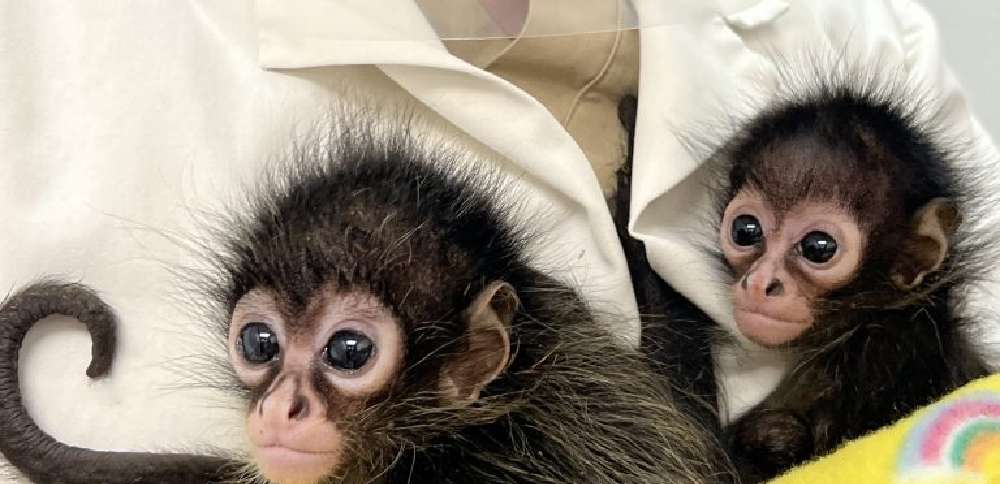
- Utah's Hogle Zoo welcomed two rescued spider monkeys, Romina and Eve.
- The monkeys were saved from wildlife trafficking and are now being integrated into the zoo's habitat.
- Their story highlights the risks of wildlife trafficking and warns against exotic pet ownership.
SALT LAKE CITY — Utah's Hogle Zoo announced Monday they have taken in two young spider monkeys who were rescued from wildlife traffickers.
Romina, about 2 years old, and Eve, about 1 year old, are now settling into their new home in the zoo's Primate Forest habitat. The two monkeys came from Gladys Porter Zoo in Brownsville, Texas, through the Association of Zoos and Aquariums' spider monkey species survival plan.
The monkeys were rescued by the Wildlife Confiscation Network, which helps place confiscated animals with organizations that can meet their specialized needs.
"Our colleagues at the Gladys Porter Zoo performed the initial round-the-clock work required to save these infants immediately following their confiscation at the border, treating their initial trauma, medical needs and hand-rearing them. Our role now is to welcome them into their permanent home, integrate them into an appropriate social troop and ensure they continue to thrive," Hogle associate director of animal care Clair Hallyburton said.
When the two female infants first arrived at Hogle Zoo, the care team's top priority was making them feel safe, secure and at home, the zoo said. The keepers focused on building trust by encouraging the monkeys to take food from their hands and helped them navigate their new spaces.
"Once that bond formed, the pair felt confident enough to begin exploring their new indoor spaces. The team also added more perching options so the monkeys can climb higher, along with additional vines that encourage them to move through their habitat in ways that reflect their natural behaviors," the zoo said.
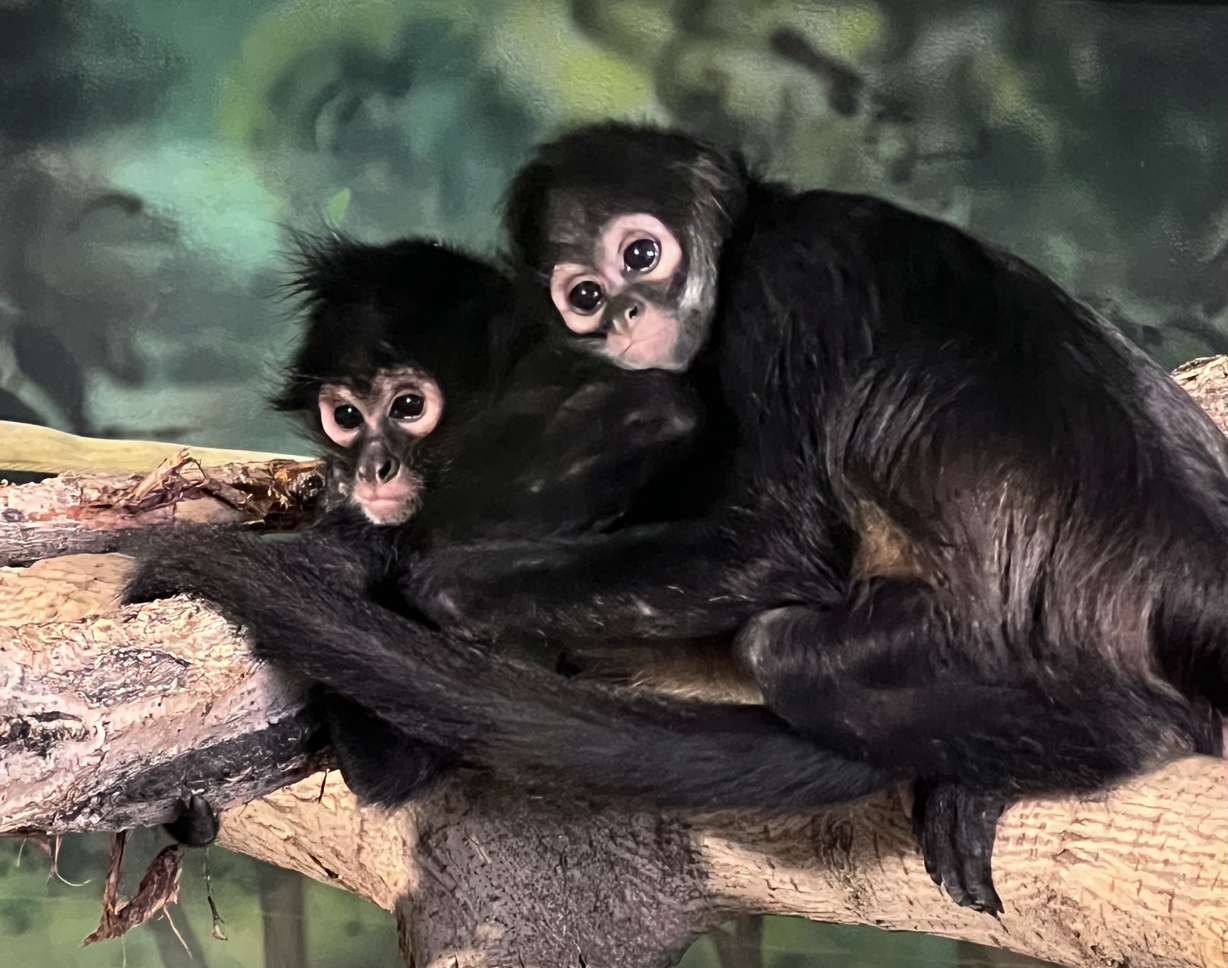
When Eve and Romina had settled in, the two monkeys were introduced to resident spider monkeys Lemon and Ebony through a process called "howdy," where they are placed in neighboring spaces separated by mesh. The monkeys are given time to get used to seeing, hearing and smelling each other before touching while the care teams monitor them.
The four monkeys are now sharing indoor spaces and are interacting positively, the zoo said.
"Romina is described as showing more confidence than Eve. She's often first to investigate her environment with curiosity and even a little mischief. Eve is more reserved and prefers spending time in the tallest parts of her habitat, carefully observing everything," the zoo said in a statement.
The demand for baby spider monkeys is growing, making the species much more vulnerable to wildlife trafficking, the zoo said. For the first two years of its life, a spider monkey acutely relies on its mother, rarely separating from her and riding piggyback as they move through the forest.
Being separated from their mothers at a young age can have lifelong consequences for orphaned animals like Eve and Romina.
"I have been struck by how clear it is that Eve should still be with her mother. She will often hold onto Romina's back for comfort, as she would with her mother," Hallyburton said. "While they get along well and Eve is learning to adjust, it's obvious these monkeys should have been with their mothers. What a mother provides isn't easily replicable with just any other monkey."
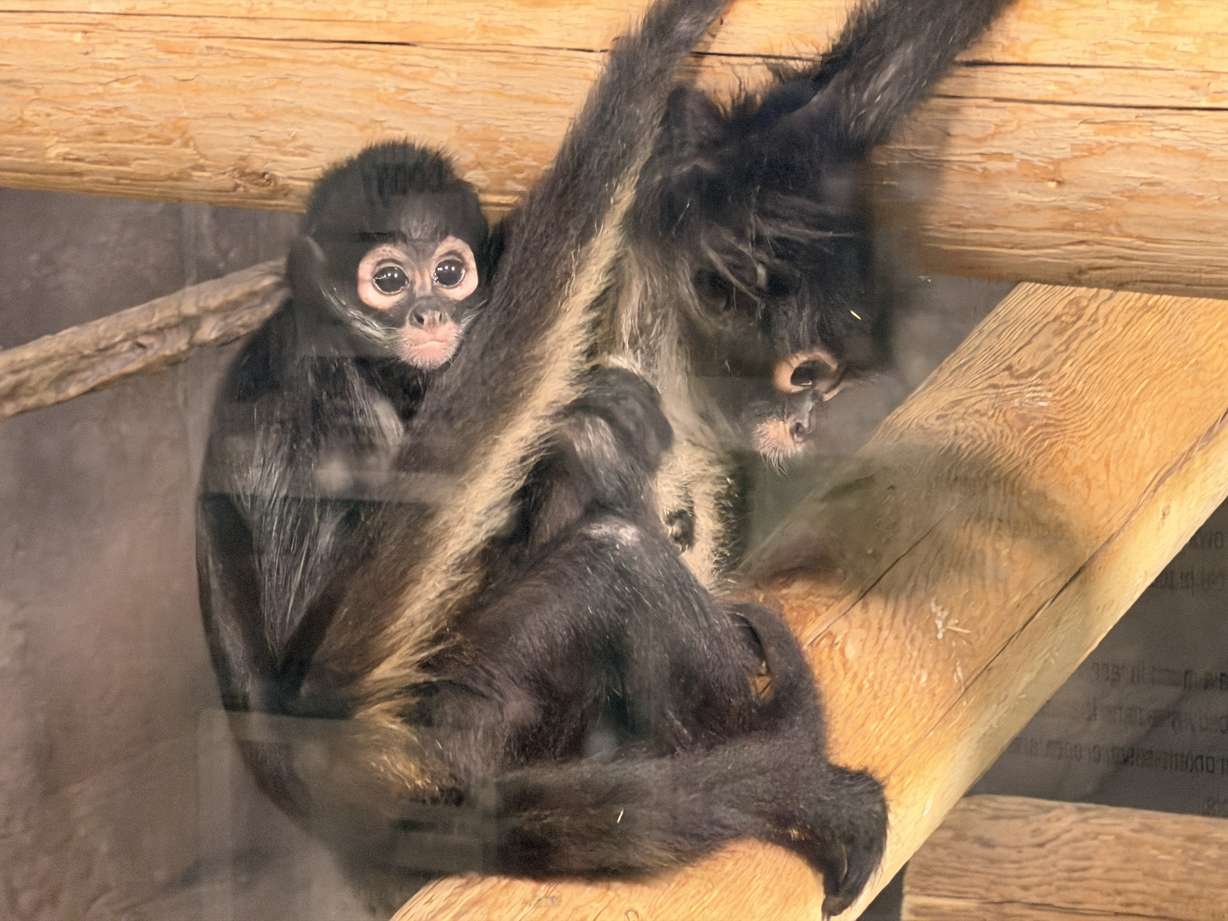
Poachers often kill mothers or other troop members who try to protect the young when the infants are being captured.
"The journey from their natural habitat can be traumatic for young spider monkeys. They may be concealed in bags or cars, exposing them to disease, dehydration, malnutrition and injury," the zoo said.
The zoo reminds people that monkeys do not make good pets as they are intelligent, social animals with specialized diets, complex relationships and needs that a typical human home can't provide. When the monkeys become mature, they can also become territorial, unpredictable and aggressive, the zoo said.
Spider monkeys also can live for decades. Even if there are potentially positive intentions, exotic pet owners may realize too late they cannot afford the space, care costs, or financial obligations of housing wild animals as pets, the zoo said.
"Social media can make exotic pets appear cute and harmless, increasing interest in animals taken from their natural habitats. People can help reduce demand by avoiding likes, comments and shares on content that promotes wild animals as pets. Instead, report social media posts that depict wild animals being dressed up, kept as pets or used as photo props," the zoo said.
Additionally, it is especially critical every time an infant spider monkey is removed from its natural habitat because the species only gives birth to one infant at a time. This further threatens and endangers the species' population, the zoo said.
"Romina and Eve help us show our guests why primates don't make good pets and why protecting them in their natural habitat matters," Hallyburton said. "Their story highlights the consequences of wildlife trafficking and how people can help prevent it."
Resident monkeys Lemon and Ebony also spent their early lives as pets in private homes before coming to the Hogle Zoo in the late 1970s.
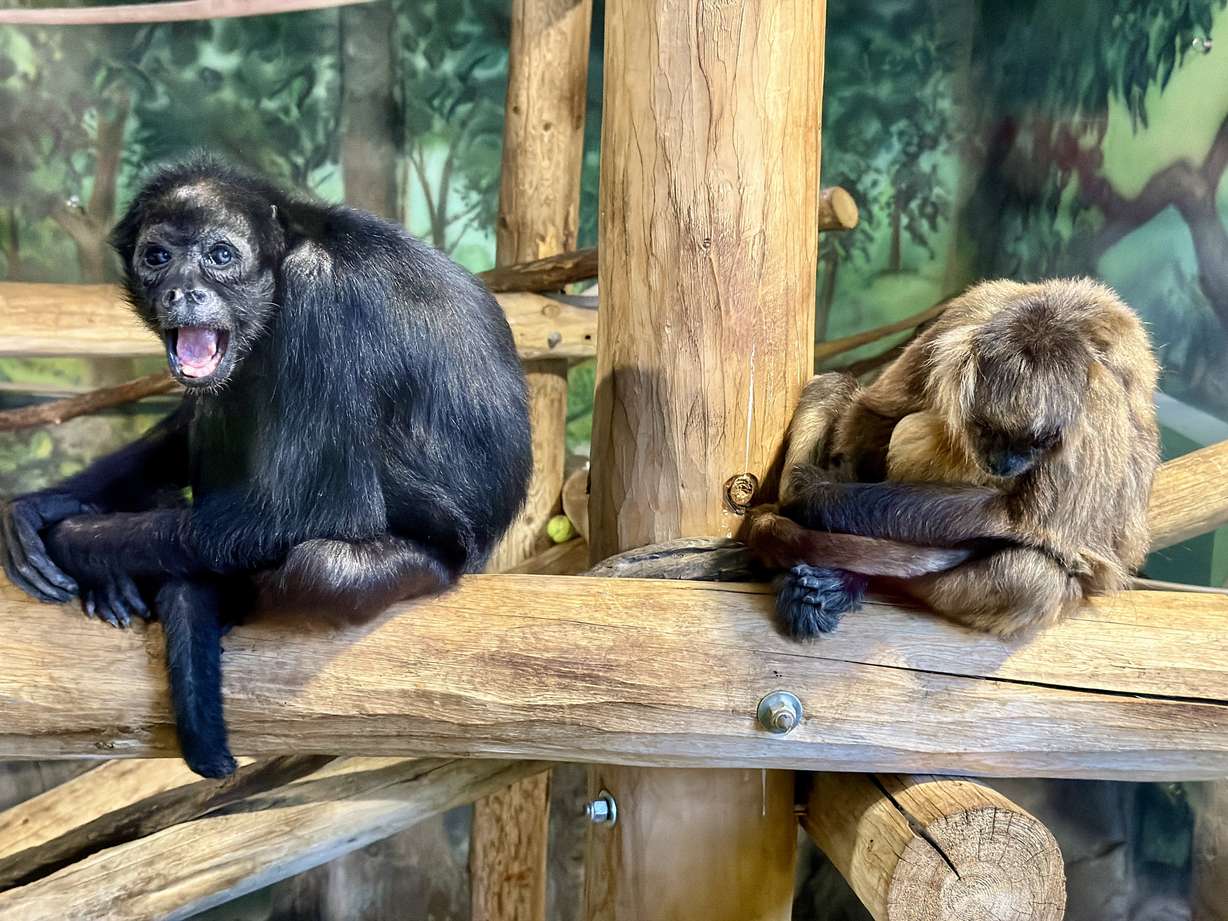
"As surrendered pets, they may also have missed maternal care and the chance to learn skills from other monkeys. They tend to spend more time closer to the ground, swing less and form stronger attachments to their caregivers. As two of Hogle Zoo's beloved senior residents, their stories show the lifelong commitment required to care for primates who have experienced private ownership," the zoo said.
Romina and Eve now have the opportunity to grow together and build relationships with other spider monkeys while receiving lifelong care, the zoo said.
"These monkeys are ambassadors for sharing an important, multifaceted story and encouraging our guests to understand why primates do not make good pets. Given the growing wildlife trade, this story is more important than ever," Hallyburton said.