'%3e%3cpath%20d='M34.1406%205.85938C30.3906%202.10547%2025.3047%200%2020%200C14.6953%200%209.60938%202.10547%205.85938%205.85938C2.10938%209.61328%200%2014.6953%200%2020C0%2025.3047%202.10547%2030.3906%205.85938%2034.1406C9.61328%2037.8906%2014.6953%2040%2020%2040C25.3047%2040%2030.3906%2037.8945%2034.1406%2034.1406C37.8906%2030.3906%2040%2025.3047%2040%2020C40%2014.6953%2037.8945%209.60938%2034.1406%205.85938ZM37.0117%2023.543H31.1602V13.5391H27.6328V19.9414C28.1211%2020.6914%2028.3711%2021.582%2028.3711%2022.5625V22.625C28.3711%2023.668%2028.1172%2024.6055%2027.6328%2025.4297V26.6094H36.082C33.4883%2032.9375%2027.2891%2037.3789%2020.0039%2037.3789C10.3711%2037.3789%202.62109%2029.6289%202.62109%2020C2.62109%2010.3711%2010.3711%202.62109%2020%202.62109C29.6289%202.62109%2037.3789%2010.3711%2037.3789%2020C37.3789%2021.1484%2037.2617%2022.2656%2037.0508%2023.3477C37.0391%2023.4141%2037.0234%2023.4766%2037.0117%2023.543Z'%20fill='white'/%3e%3cpath%20d='M22.3086%2018.5352C20.4336%2018.125%2019.9531%2017.8398%2019.9766%2017.1836V17.1406C19.9766%2016.6992%2020.3477%2016.2148%2021.4023%2016.2148C22.582%2016.2148%2023.8867%2016.6797%2025.0781%2017.4766L26.8516%2015.0195C25.4453%2013.8906%2023.707%2013.3398%2021.5547%2013.3398C18.5195%2013.3398%2016.4375%2015%2016.4063%2017.4766V17.5352C16.3633%2020.2617%2018.5859%2020.9805%2021.293%2021.6016C23.0391%2021.9766%2023.5703%2022.3164%2023.5703%2022.9609L23.5469%2022.9766C23.5469%2023.3906%2023.2578%2023.7031%2022.7852%2023.8359C22.5742%2023.9062%2022.1289%2023.9727%2021.5156%2023.9727C20.7617%2023.9727%2019.7539%2023.8633%2018.6328%2023.4844C18.0898%2023.2891%2017.4727%2023.0039%2016.8047%2022.6133L20.1406%2026.625C20.2813%2026.6602%2021.0977%2026.8516%2021.7734%2026.8516C25.0039%2026.8516%2027.0859%2025.2461%2027.1094%2022.6328V22.5703C27.1602%2020.1133%2025.2148%2019.1719%2022.3086%2018.5352Z'%20fill='white'/%3e%3cpath%20d='M5.24219%2013.5664V26.6133H8.75391V23.7578L10.2969%2021.9531L14.2031%2026.6133H18.3867L12.3555%2019.5195L17.4023%2013.5664H13.4531L8.75391%2019.0586V13.5664H5.24219Z'%20fill='white'/%3e%3c/g%3e%3cdefs%3e%3cclipPath%20id='clip0_97_2430'%3e%3crect%20width='40'%20height='40'%20fill='white'/%3e%3c/clipPath%3e%3c/defs%3e%3c/svg%3e)




- Five people died in Cache County from carbon monoxide poisoning prompting safety reminders.
- The American Red Cross urges installing alarms and inspecting fuel-burning appliances regularly.
- Carbon monoxide is undetectable without alarms; symptoms include headaches and dizziness, often mistaken.
SALT LAKE CITY — After five people, including four children, died in an apparent carbon monoxide poisoning incident in Cache County, the American Red Cross is reminding families to install working alarms and take steps to prevent exposure.
Carbon monoxide is colorless and odorless, making it difficult to detect without a working alarm. Exposure can be dangerous, and symptoms may not appear until someone is already being affected.
"You can't see it, you can't taste it, you can't smell it," said Benjamin Donner, executive director of the American Red Cross Central and Southern Utah chapter.
Carbon monoxide can come from fuel-burning appliances, generators and vehicles. Symptoms of exposure can include headaches, dizziness and nausea, which can sometimes be mistaken for the flu. "It's much better to have a detector that would notify you if that's the case because oftentimes you won't know just because of the symptoms you're experiencing," Donner said.
The American Red Cross recommends installing carbon monoxide alarms on every level of a home and near sleeping areas. Families should also have fuel-burning appliances inspected regularly, never run a vehicle in an attached garage and check their alarms' expiration dates.
Donner said carbon monoxide alarms can sound different from smoke alarms. Typically, smoke alarms have 3 long beeps while carbon monoxide detectors have 4 long beeps. However, alarm signals can vary by model, so residents should check their device's instructions to understand what each alert means.
Combination smoke and carbon monoxide alarms are also available. But most of the time sold separately.
Related:
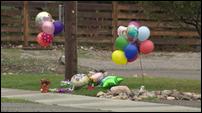
Investigators working to determine what led to fatal carbon monoxide poisoning in Richmond
Five people died in an apparent carbon monoxide poisoning incident at a Richmond home on Saturday. Investigators are still working to determine what led to the tragedy.If you suspect carbon monoxide exposure, get everyone outside into fresh air immediately and call 911 from outside. Do not reenter the building until emergency responders say it is safe.
A working carbon monoxide alarm can provide an early warning when the gas cannot be detected by sight or smell.