'%3e%3cpath%20d='M34.1406%205.85938C30.3906%202.10547%2025.3047%200%2020%200C14.6953%200%209.60938%202.10547%205.85938%205.85938C2.10938%209.61328%200%2014.6953%200%2020C0%2025.3047%202.10547%2030.3906%205.85938%2034.1406C9.61328%2037.8906%2014.6953%2040%2020%2040C25.3047%2040%2030.3906%2037.8945%2034.1406%2034.1406C37.8906%2030.3906%2040%2025.3047%2040%2020C40%2014.6953%2037.8945%209.60938%2034.1406%205.85938ZM37.0117%2023.543H31.1602V13.5391H27.6328V19.9414C28.1211%2020.6914%2028.3711%2021.582%2028.3711%2022.5625V22.625C28.3711%2023.668%2028.1172%2024.6055%2027.6328%2025.4297V26.6094H36.082C33.4883%2032.9375%2027.2891%2037.3789%2020.0039%2037.3789C10.3711%2037.3789%202.62109%2029.6289%202.62109%2020C2.62109%2010.3711%2010.3711%202.62109%2020%202.62109C29.6289%202.62109%2037.3789%2010.3711%2037.3789%2020C37.3789%2021.1484%2037.2617%2022.2656%2037.0508%2023.3477C37.0391%2023.4141%2037.0234%2023.4766%2037.0117%2023.543Z'%20fill='white'/%3e%3cpath%20d='M22.3086%2018.5352C20.4336%2018.125%2019.9531%2017.8398%2019.9766%2017.1836V17.1406C19.9766%2016.6992%2020.3477%2016.2148%2021.4023%2016.2148C22.582%2016.2148%2023.8867%2016.6797%2025.0781%2017.4766L26.8516%2015.0195C25.4453%2013.8906%2023.707%2013.3398%2021.5547%2013.3398C18.5195%2013.3398%2016.4375%2015%2016.4063%2017.4766V17.5352C16.3633%2020.2617%2018.5859%2020.9805%2021.293%2021.6016C23.0391%2021.9766%2023.5703%2022.3164%2023.5703%2022.9609L23.5469%2022.9766C23.5469%2023.3906%2023.2578%2023.7031%2022.7852%2023.8359C22.5742%2023.9062%2022.1289%2023.9727%2021.5156%2023.9727C20.7617%2023.9727%2019.7539%2023.8633%2018.6328%2023.4844C18.0898%2023.2891%2017.4727%2023.0039%2016.8047%2022.6133L20.1406%2026.625C20.2813%2026.6602%2021.0977%2026.8516%2021.7734%2026.8516C25.0039%2026.8516%2027.0859%2025.2461%2027.1094%2022.6328V22.5703C27.1602%2020.1133%2025.2148%2019.1719%2022.3086%2018.5352Z'%20fill='white'/%3e%3cpath%20d='M5.24219%2013.5664V26.6133H8.75391V23.7578L10.2969%2021.9531L14.2031%2026.6133H18.3867L12.3555%2019.5195L17.4023%2013.5664H13.4531L8.75391%2019.0586V13.5664H5.24219Z'%20fill='white'/%3e%3c/g%3e%3cdefs%3e%3cclipPath%20id='clip0_97_2430'%3e%3crect%20width='40'%20height='40'%20fill='white'/%3e%3c/clipPath%3e%3c/defs%3e%3c/svg%3e)



Estimated read time: 5-6 minutes
- Ben McAdams and Riley Owen debated for Utah's 1st Congressional District seat.
- McAdams sought to position himself in opposition to President Donald Trump.
- A political newcomer, Owen pitched himself as a fresh, young conservative.
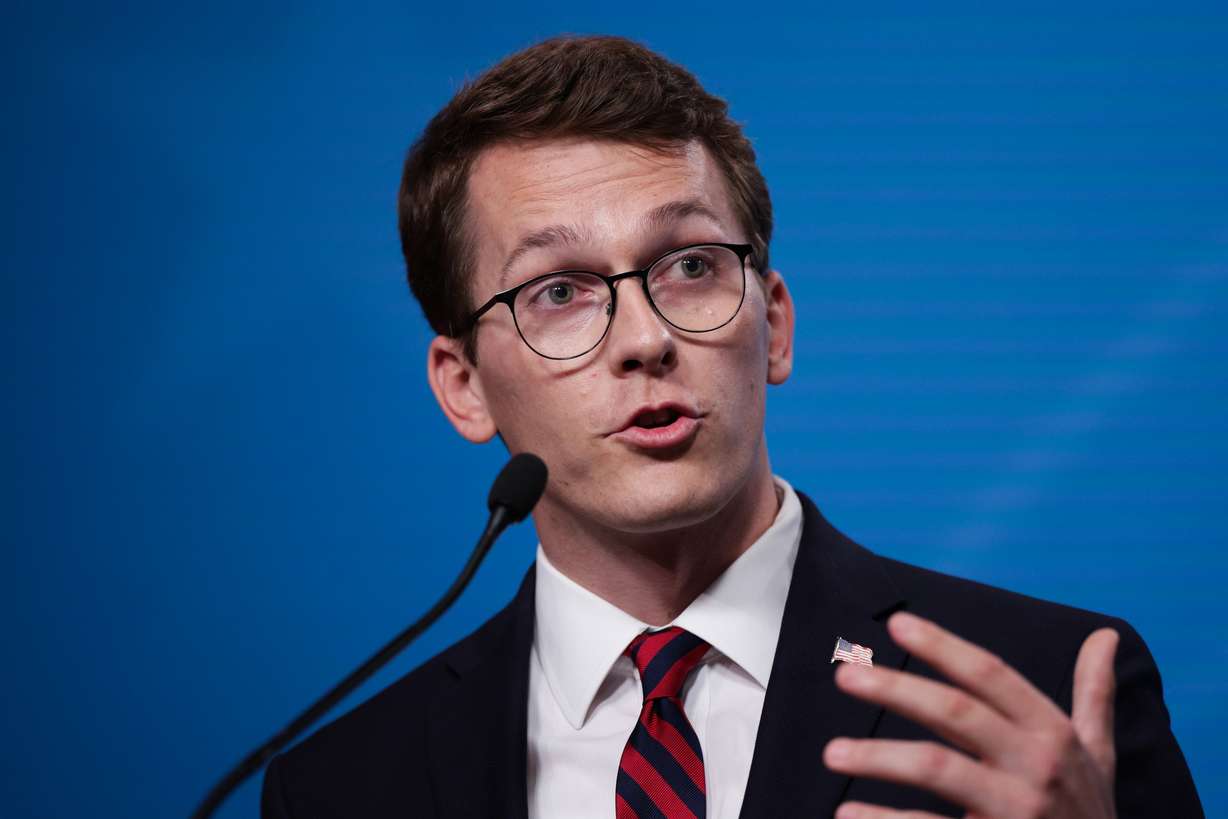
SALT LAKE CITY — Democrat Ben McAdams and Republican Riley Owen found a fair amount to agree on, but disagreed on tariffs and clashed over gerrymandering during a debate Tuesday evening between candidates for Utah's 1st Congressional District.
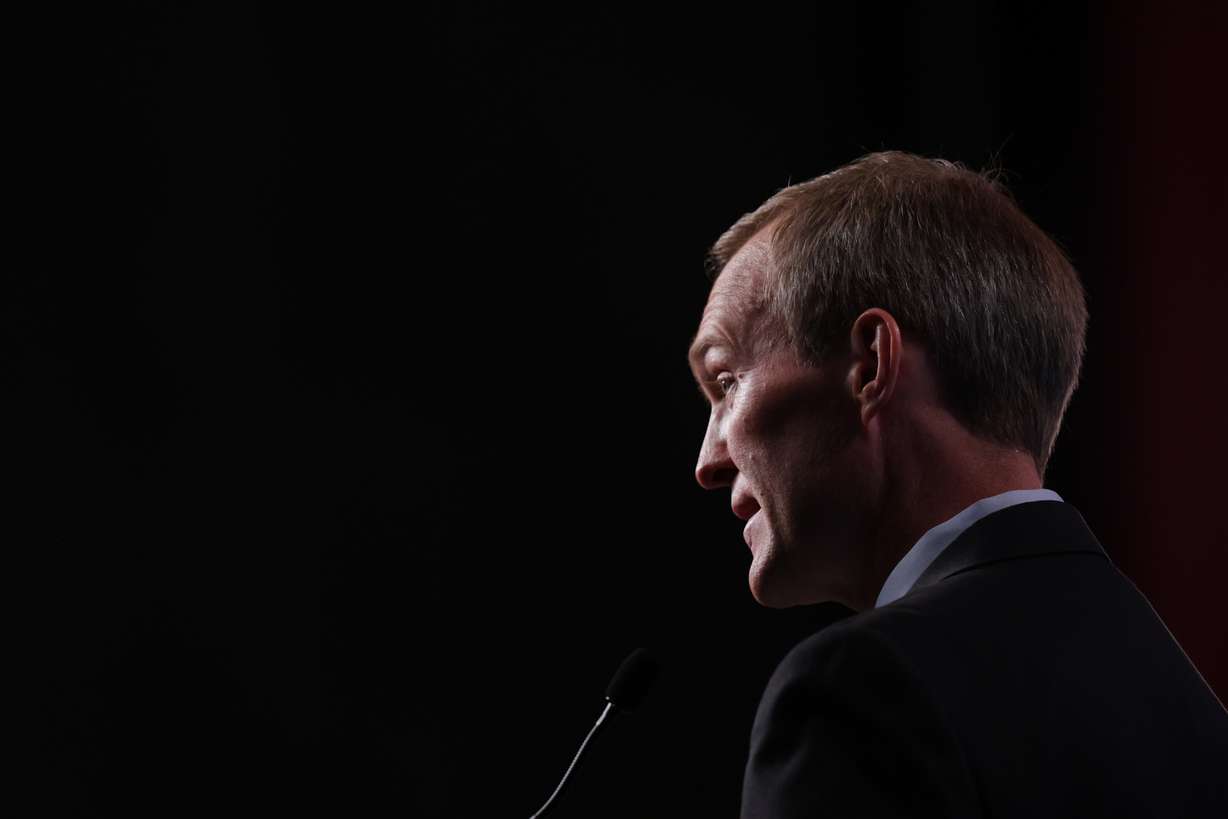
McAdams, a former Salt Lake County mayor who also served in Congress for one term last decade, sought to position himself in opposition to President Donald Trump, blaming the president's tariffs and war in Iran for high prices. He said congressional Republicans have done too little to rein in the president and promised to be a check on the executive.
A political newcomer, Owen pitched himself as a fresh, young conservative, calling for nationwide regulations on social media and suggesting tax credits to incentivize maternity leave and other policies he said would help families.
He disagreed that there was much agreement between him and McAdams.
"I think there was a pretty clear distinction," he told reporters after the debate. "One of us wanted bigger taxes and more taxation and bigger government, and I want creative solutions, market-based incentives, making services more efficient."
McAdams said it's easy to agree on things.
"It's great that we had a lot to agree on, but it's not just about what people say; it's what they actually do," he said. "I would hope that if he were elected, he would follow through on the person that appeared at this debate tonight. So, we can hope for the best, but I've been disappointed to see many of Utah's public officials say one thing and not follow through."
Reforming Congress
The most contentious moment of the night came late in the hourlong debate, hosted by the Utah Debate Commission at Salt Lake Community College, when moderator Natalie Gochnour asked both candidates what they would change about Congress to make it better able to solve problems.
McAdams blamed gerrymandering, saying disproportionate maps have made politicians answer to only the extremes in each party. He said he was grateful for Proposition 4, which created standards for redistricting, and said the new court-ordered map gives Utahns a say over who represents them.
"Thanks to Better Boundaries, voters have a chance now to choose their elected officials rather than politicians dictating the outcome of an election," he said.
But Owen disagreed, saying Utahns "should be concerned with the maps we have." He acknowledged that the 1st Congressional District leans blue and said the other three are "three of the most red districts in America."
"That creates a breeding ground for extremism, and I don't think any Utahn, whether you're a Republican or Democrat, wants that on either side," he said. "And Ben saw this in his own primary with three progressive challengers attacking him and pulling him farther to the left where I know he said things he probably didn't want to or didn't fully believe in, but needed to change his position on things like abortion or immigration."
McAdams fired back, saying Utah's Republican-controlled Legislature failed to follow Proposition 4 while drawing new maps last year, resulting in a judge selecting a map submitted by plaintiffs instead. Judge Diana Gibson ruled that the Legislature's new map illegally gave the GOP an advantage in the state's congressional elections.
"I wish nothing more than this Legislature would have done their job when the voters asked them to create fair boundaries to do that," McAdams said. "But they refused, and they litigated, and when they were ordered to comply with the law, they again refused, and the judge had no alternative but to look to the plaintiffs in the case to draw a fair map."
Still, the candidates found much to agree on when it comes to reforming Congress, including overturning a Supreme Court ruling that bars certain restrictions on political donations, banning members of Congress from trading stocks and implementing term limits.
Economy and affordability
Both candidates agreed that affordability is a top issue for voters. But while Owen called for building more housing and expanding the business tax credit for companies that offer maternity leave, McAdams laid the blame at the president's feet.
"I don't think it takes a Ph.D. in economics to understand that this ill-begotten war has driven up the cost of gasoline. It's driven up the cost of food," he said. "And so the first thing we should do is get out of endless wars that President Trump promised would not happen."
He also labeled Trump's tariffs as another "self-inflicted" wound on the nation's economy. McAdams said the tariffs were enacted in a "haphazard" manner.
"It seems that they've been ego- and vengeance-driven and not focused on shoring up key segments of the U.S. economy," he said.
Owen said he believes free trade is the best economic policy, but said tariffs can be a tool used to "punish bad actors" or to incentivize or grow domestic industries.
"I want to evaluate the effectiveness of a tariff by asking a few questions: Is it actually helping American workers get employed? Is it helping investment come to American businesses?" he said. "I don't think we should be levying tariffs just to make foreign goods more expensive."
He said bringing jobs and manufacturing back to the U.S. is harder than just simply imposing tariffs, and it should come with deregulation and with the knowledge that it may cause some short-term pain.
"I'm optimistic that with tactical, tailored tariffs, we can see some industries revive and create more American jobs," Owen said. "But it's painful, and we need to have other legislation paired with deregulation, permitting reform, job training at the same time."
What's next?
McAdams and Owen were the only two candidates to qualify for Tuesday's debate by meeting the 10% polling threshold set by the Utah Debate Commission.
McAdams earned nearly 63% support among the 515 respondents the commission polled, while Owen earned just over 21%. A pair of other candidates — Libertarian Jesse West, 4.7%, and unaffiliated candidate Elias Henry Montgomery, 3.3% — did not qualify for the debate stage.
Election Day is Nov. 3.