'%3e%3cpath%20d='M34.1406%205.85938C30.3906%202.10547%2025.3047%200%2020%200C14.6953%200%209.60938%202.10547%205.85938%205.85938C2.10938%209.61328%200%2014.6953%200%2020C0%2025.3047%202.10547%2030.3906%205.85938%2034.1406C9.61328%2037.8906%2014.6953%2040%2020%2040C25.3047%2040%2030.3906%2037.8945%2034.1406%2034.1406C37.8906%2030.3906%2040%2025.3047%2040%2020C40%2014.6953%2037.8945%209.60938%2034.1406%205.85938ZM37.0117%2023.543H31.1602V13.5391H27.6328V19.9414C28.1211%2020.6914%2028.3711%2021.582%2028.3711%2022.5625V22.625C28.3711%2023.668%2028.1172%2024.6055%2027.6328%2025.4297V26.6094H36.082C33.4883%2032.9375%2027.2891%2037.3789%2020.0039%2037.3789C10.3711%2037.3789%202.62109%2029.6289%202.62109%2020C2.62109%2010.3711%2010.3711%202.62109%2020%202.62109C29.6289%202.62109%2037.3789%2010.3711%2037.3789%2020C37.3789%2021.1484%2037.2617%2022.2656%2037.0508%2023.3477C37.0391%2023.4141%2037.0234%2023.4766%2037.0117%2023.543Z'%20fill='white'/%3e%3cpath%20d='M22.3086%2018.5352C20.4336%2018.125%2019.9531%2017.8398%2019.9766%2017.1836V17.1406C19.9766%2016.6992%2020.3477%2016.2148%2021.4023%2016.2148C22.582%2016.2148%2023.8867%2016.6797%2025.0781%2017.4766L26.8516%2015.0195C25.4453%2013.8906%2023.707%2013.3398%2021.5547%2013.3398C18.5195%2013.3398%2016.4375%2015%2016.4063%2017.4766V17.5352C16.3633%2020.2617%2018.5859%2020.9805%2021.293%2021.6016C23.0391%2021.9766%2023.5703%2022.3164%2023.5703%2022.9609L23.5469%2022.9766C23.5469%2023.3906%2023.2578%2023.7031%2022.7852%2023.8359C22.5742%2023.9062%2022.1289%2023.9727%2021.5156%2023.9727C20.7617%2023.9727%2019.7539%2023.8633%2018.6328%2023.4844C18.0898%2023.2891%2017.4727%2023.0039%2016.8047%2022.6133L20.1406%2026.625C20.2813%2026.6602%2021.0977%2026.8516%2021.7734%2026.8516C25.0039%2026.8516%2027.0859%2025.2461%2027.1094%2022.6328V22.5703C27.1602%2020.1133%2025.2148%2019.1719%2022.3086%2018.5352Z'%20fill='white'/%3e%3cpath%20d='M5.24219%2013.5664V26.6133H8.75391V23.7578L10.2969%2021.9531L14.2031%2026.6133H18.3867L12.3555%2019.5195L17.4023%2013.5664H13.4531L8.75391%2019.0586V13.5664H5.24219Z'%20fill='white'/%3e%3c/g%3e%3cdefs%3e%3cclipPath%20id='clip0_97_2430'%3e%3crect%20width='40'%20height='40'%20fill='white'/%3e%3c/clipPath%3e%3c/defs%3e%3c/svg%3e)


- Utah water managers are urging residents to adjust their irrigation habits to prevent wasteful overwatering as temperatures cool.
- The director of the Utah Division of Water Resources suggests adjusting irrigation timers or simply turning them off.
- Utah's reservoirs are at 50% capacity amid ongoing severe drought and low snowpack.
SALT LAKE CITY — Utah water managers are urging people to begin to adjust their irrigation routines as the 2026 water year comes to a close, especially as nighttime temperatures continue to cool down.
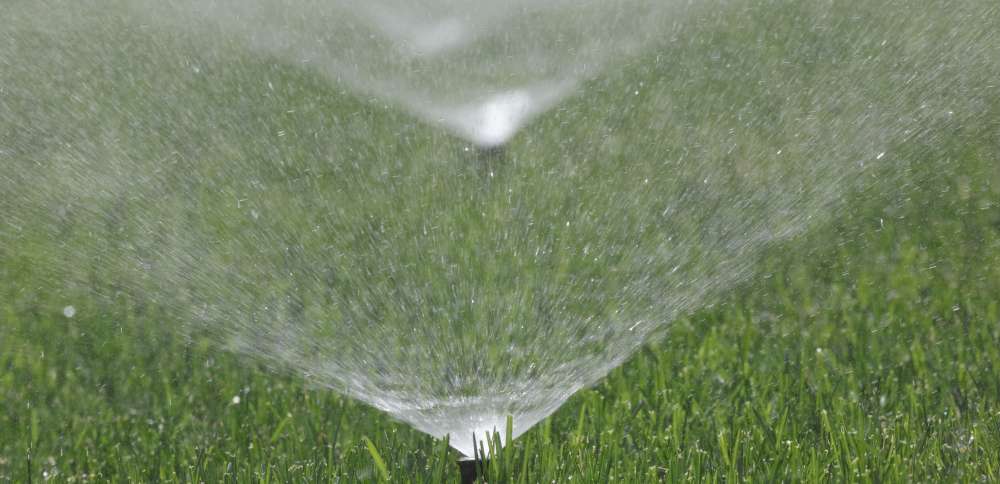
Residents should adjust irrigation timers to water less or simply turn them off, said Joel Williams, the director of the Utah Division of Water Resources, in an update on Thursday. Leaving automatic sprinklers on summer schedules, he added, typically leads to "wasteful overwatering."
"With shorter days and cooler evening temperatures, landscape water requirements decrease significantly," he said, noting that people should consider viewing the division's weekly lawn watering guide for recommendations as the irrigation season nears its end.
The guide currently recommends two waterings a week for most of Utah, though that can change with recent rain and more storms in the seven-day forecast.
An update on Utah's drought
Utah's drought situation hasn't changed much since meteorological fall began. All parts of the state remain in drought, including over 90% in severe or worst categories, the U.S. Drought Monitor also reported on Thursday.
The state's reservoir system sits at 50% capacity after tumbling over the summer. It's 9 percentage points below the median average for the final month of the water year and 13 percentage points below where it was at this time last year.
This summer's robust monsoonal moisture didn't help much because the system primarily relies on capturing mountain snowpack, and this year's record-low snowpack — impacted heavily by a record-warm winter — didn't provide any favors. Record-warm summer temperatures also didn't help, increasing evaporative demand and loss.
The 2026 water year will all but certainly be Utah's warmest on record. Utah's average statewide temperature for the first 11 months of the water year was 52.9 degrees, putting it on pace to be 2 degrees above the first 11 months of any other water year dating back to 1895, per federal climate data.
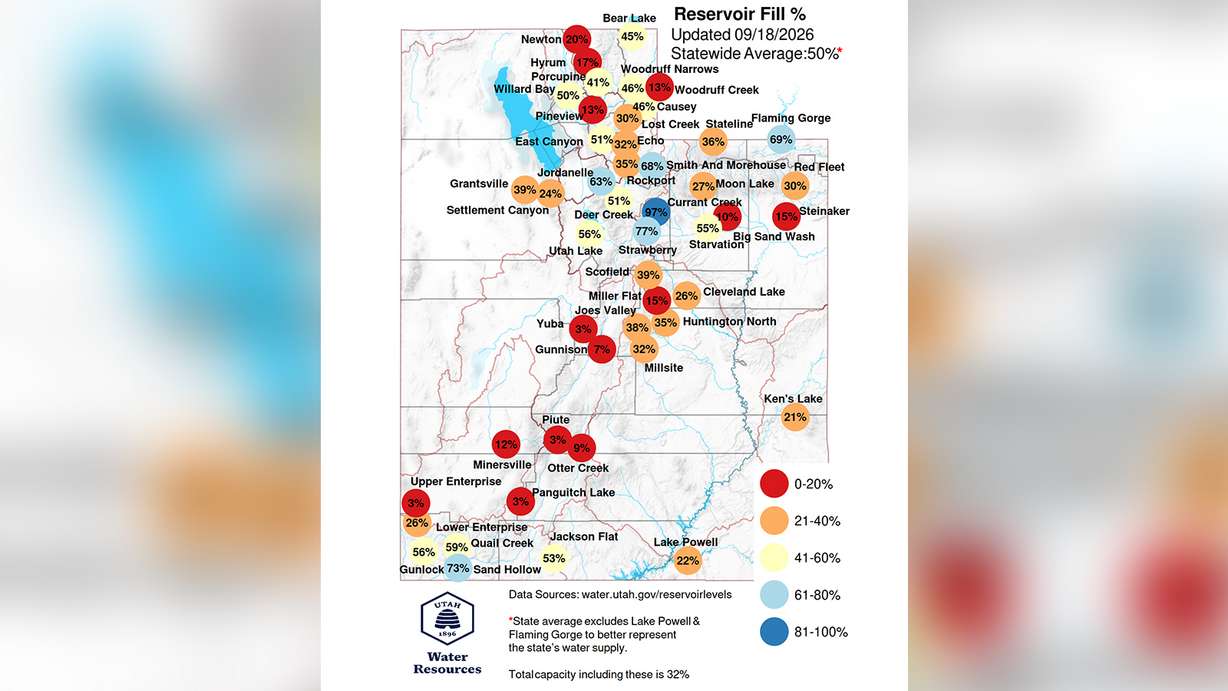
Over a dozen of the state's larger reservoirs have fallen to 20% or lower, although not all of that is tied to drought. Pineview Reservoir in Weber County is now 13% full as it's drained for a water pipe project.
The statewide average also doesn't account for Flaming Gorge or Lake Powell, since neither are considered key pieces of the state's water supply. Lake Powell is just 22% full after dropping to its lowest point on record again this summer, prompting more releases from Flaming Gorge since it is 69% full.
Glen Canyon National Recreation Area officials issued an update to Lake Powell recreation this week, writing that they have worked to improve ramp access in the Stateline, Bullfrog and Antelope Point areas in response to the reservoir's decline.
"These efforts are designed to preserve and maximize boating access wherever conditions permit," officials said in a news release.