'%3e%3cpath%20d='M34.1406%205.85938C30.3906%202.10547%2025.3047%200%2020%200C14.6953%200%209.60938%202.10547%205.85938%205.85938C2.10938%209.61328%200%2014.6953%200%2020C0%2025.3047%202.10547%2030.3906%205.85938%2034.1406C9.61328%2037.8906%2014.6953%2040%2020%2040C25.3047%2040%2030.3906%2037.8945%2034.1406%2034.1406C37.8906%2030.3906%2040%2025.3047%2040%2020C40%2014.6953%2037.8945%209.60938%2034.1406%205.85938ZM37.0117%2023.543H31.1602V13.5391H27.6328V19.9414C28.1211%2020.6914%2028.3711%2021.582%2028.3711%2022.5625V22.625C28.3711%2023.668%2028.1172%2024.6055%2027.6328%2025.4297V26.6094H36.082C33.4883%2032.9375%2027.2891%2037.3789%2020.0039%2037.3789C10.3711%2037.3789%202.62109%2029.6289%202.62109%2020C2.62109%2010.3711%2010.3711%202.62109%2020%202.62109C29.6289%202.62109%2037.3789%2010.3711%2037.3789%2020C37.3789%2021.1484%2037.2617%2022.2656%2037.0508%2023.3477C37.0391%2023.4141%2037.0234%2023.4766%2037.0117%2023.543Z'%20fill='white'/%3e%3cpath%20d='M22.3086%2018.5352C20.4336%2018.125%2019.9531%2017.8398%2019.9766%2017.1836V17.1406C19.9766%2016.6992%2020.3477%2016.2148%2021.4023%2016.2148C22.582%2016.2148%2023.8867%2016.6797%2025.0781%2017.4766L26.8516%2015.0195C25.4453%2013.8906%2023.707%2013.3398%2021.5547%2013.3398C18.5195%2013.3398%2016.4375%2015%2016.4063%2017.4766V17.5352C16.3633%2020.2617%2018.5859%2020.9805%2021.293%2021.6016C23.0391%2021.9766%2023.5703%2022.3164%2023.5703%2022.9609L23.5469%2022.9766C23.5469%2023.3906%2023.2578%2023.7031%2022.7852%2023.8359C22.5742%2023.9062%2022.1289%2023.9727%2021.5156%2023.9727C20.7617%2023.9727%2019.7539%2023.8633%2018.6328%2023.4844C18.0898%2023.2891%2017.4727%2023.0039%2016.8047%2022.6133L20.1406%2026.625C20.2813%2026.6602%2021.0977%2026.8516%2021.7734%2026.8516C25.0039%2026.8516%2027.0859%2025.2461%2027.1094%2022.6328V22.5703C27.1602%2020.1133%2025.2148%2019.1719%2022.3086%2018.5352Z'%20fill='white'/%3e%3cpath%20d='M5.24219%2013.5664V26.6133H8.75391V23.7578L10.2969%2021.9531L14.2031%2026.6133H18.3867L12.3555%2019.5195L17.4023%2013.5664H13.4531L8.75391%2019.0586V13.5664H5.24219Z'%20fill='white'/%3e%3c/g%3e%3cdefs%3e%3cclipPath%20id='clip0_97_2430'%3e%3crect%20width='40'%20height='40'%20fill='white'/%3e%3c/clipPath%3e%3c/defs%3e%3c/svg%3e)



Estimated read time: 5-6 minutes
When you're eating less, what you eat matters more than ever.
Smaller meals may mean fewer opportunities to get the protein, fiber, vitamins and minerals your body needs.
And if you've ever eaten a meal only to find yourself tired, unsatisfied or downright "hangry" not long afterward, you know that not all meals and snacks keep you going in the same way.
That's where making every bite count comes in.
Whether you're working toward a healthy weight, changing your eating habits or managing a reduced appetite from a GLP-1 medication, choosing nutrient-rich foods can help you get more nutrition from the foods you eat.
The goal isn't to make eating complicated or create a long list of foods to avoid, it's about building meals and snacks that give your body more of what it needs.
Here are five practical ways to make your meals and snacks work a little harder for you.
Prioritize protein and fiber
Protein has become the star of the health world lately. From protein-packed products in grocery aisles to viral recipes on social media, it's seemingly everywhere.
Jaclyn St. John, MS, RDN, LD, Director of Nutrition Partnerships for Dairy West, says including protein with every meal and snack can be particularly important when shedding pounds.
"When someone is losing weight, we don't want the focus to be solely on the number on the scale. Supporting and maintaining muscle matters, too, which is why including high-quality protein throughout the day can be so important," St. John says.
While protein deserves attention for its role in supporting and maintaining muscle, fiber shouldn't be overlooked. Fiber-rich foods can help you feel satisfied longer and support overall health.
Protein and fiber can also work well together when building satisfying meals and snacks. Pair protein-rich foods such as Greek yogurt, cottage cheese, milk, lean meats and eggs with fiber-rich fruits, vegetables, whole grains and legumes. Beans and lentils can even provide both protein and fiber.
Consider smaller, more frequent meals
If your appetite is minimal, think about how you can make each meal or snack work harder for you.
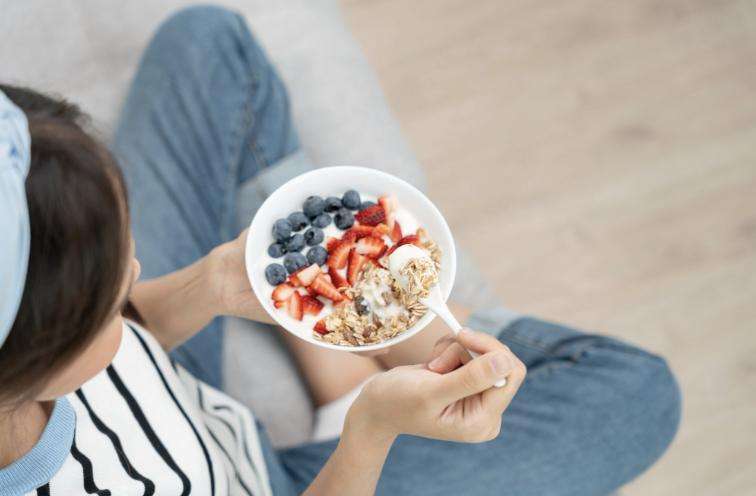
Rather than prescribing a certain number of meals each day, find an eating pattern that works for your appetite and lifestyle. For some people, that may mean smaller, more frequent meals or adding balanced snacks between typical meal times.
Dairy products provide important nutrients and pair easily with fruits, vegetables and whole grains to create simple meals and snacks. Try combinations like:
- Greek yogurt with berries and granola
- Cottage cheese with peaches and whole-grain toast
- Cheese slices with apple slices and whole-grain crackers
- Cottage cheese with vegetables and pita chips
- Milk with a banana and muffin
The goal isn't to make every meal complicated. It's to combine foods in a way that provides more nutrition, even when you're eating a smaller amount.
Hydrate, hydrate, hydrate
Don't forget about what you're drinking. Staying hydrated is an important part of supporting your overall health, especially when you're eating less.
Water is always an easy place to start. Keep it nearby throughout the day and sip regularly. Foods with a high water content, including fruits, vegetables, milk and soups, can also contribute to your daily fluid intake.
And hydration can sometimes do more than quench your thirst. Milk is naturally hydrating while also providing protein and important nutrients. Chocolate milk can pack even more into one convenient serving, providing carbohydrates and high-quality protein along with fluids and electrolytes such as potassium and sodium. That's one reason chocolate milk is often used as a post-workout recovery option.
The goal isn't to make hydration complicated. Keep fluids within reach and look for choices that can help meet your hydration and nutrition needs at the same time. Be aware of empty calories in sugar-sweetened beverages and limit intake to maximize nutrition from real food.

Take a balanced approach
It's easy to approach weight management with a list of foods to eliminate. But a restrictive approach does not build lifelong healthier habits.
"Healthy weight management is not about eliminating entire food groups," St. John says. "It's about building a balanced, sustainable eating pattern that includes protein, fiber, hydration and a variety of nutrient-rich foods that you can enjoy for a lifetime."
Instead of focusing solely on what you should eat less of, consider what optimizes your meals and snacks. That could mean adding another dairy serving to your day, fruit to breakfast, pairing a snack with a source of protein or incorporating more vegetables and whole grains into meals you already enjoy.
Small changes can help build an eating pattern that works for the long term without requiring a complete overhaul.
Choose nutrient-rich foods
When you're eating less, every bite matters. This can be especially important for people taking GLP-1 medications, since a reduced appetite may mean fewer opportunities throughout the day to get the nutrition your body needs.
That's where nutrient-rich foods come in. Rather than simply focusing on eating smaller portions, consider how much nutrition you're getting from the foods you do eat.
"When you're eating less, you want the foods you choose to deliver meaningful nutrition," St. John says. "Dairy foods like milk, yogurt and cheese can provide high-quality protein along with important nutrients like calcium and potassium, making them an easy addition to balanced meals and snacks."
This doesn't mean every bite has to be perfect. It's about being intentional with the foods you choose and finding simple ways to get more nutrition from the amount you're able to eat.
If you're taking a GLP-1 medication or making significant changes to your eating pattern, work with your physician and a registered dietitian to develop a nutrition plan that meets your individual needs.
Make every bite count
Healthy weight management doesn't have to mean changing everything at once.
Prioritizing protein, choosing fiber-rich and nutrient-dense foods, staying hydrated and finding an eating pattern that works for your appetite are small steps that can add up over time.
For more practical tips, meal and snack ideas and resources to help support a healthy weight, visit Dairy West's Making Every Bite Count page.