'%3e%3cpath%20d='M34.1406%205.85938C30.3906%202.10547%2025.3047%200%2020%200C14.6953%200%209.60938%202.10547%205.85938%205.85938C2.10938%209.61328%200%2014.6953%200%2020C0%2025.3047%202.10547%2030.3906%205.85938%2034.1406C9.61328%2037.8906%2014.6953%2040%2020%2040C25.3047%2040%2030.3906%2037.8945%2034.1406%2034.1406C37.8906%2030.3906%2040%2025.3047%2040%2020C40%2014.6953%2037.8945%209.60938%2034.1406%205.85938ZM37.0117%2023.543H31.1602V13.5391H27.6328V19.9414C28.1211%2020.6914%2028.3711%2021.582%2028.3711%2022.5625V22.625C28.3711%2023.668%2028.1172%2024.6055%2027.6328%2025.4297V26.6094H36.082C33.4883%2032.9375%2027.2891%2037.3789%2020.0039%2037.3789C10.3711%2037.3789%202.62109%2029.6289%202.62109%2020C2.62109%2010.3711%2010.3711%202.62109%2020%202.62109C29.6289%202.62109%2037.3789%2010.3711%2037.3789%2020C37.3789%2021.1484%2037.2617%2022.2656%2037.0508%2023.3477C37.0391%2023.4141%2037.0234%2023.4766%2037.0117%2023.543Z'%20fill='white'/%3e%3cpath%20d='M22.3086%2018.5352C20.4336%2018.125%2019.9531%2017.8398%2019.9766%2017.1836V17.1406C19.9766%2016.6992%2020.3477%2016.2148%2021.4023%2016.2148C22.582%2016.2148%2023.8867%2016.6797%2025.0781%2017.4766L26.8516%2015.0195C25.4453%2013.8906%2023.707%2013.3398%2021.5547%2013.3398C18.5195%2013.3398%2016.4375%2015%2016.4063%2017.4766V17.5352C16.3633%2020.2617%2018.5859%2020.9805%2021.293%2021.6016C23.0391%2021.9766%2023.5703%2022.3164%2023.5703%2022.9609L23.5469%2022.9766C23.5469%2023.3906%2023.2578%2023.7031%2022.7852%2023.8359C22.5742%2023.9062%2022.1289%2023.9727%2021.5156%2023.9727C20.7617%2023.9727%2019.7539%2023.8633%2018.6328%2023.4844C18.0898%2023.2891%2017.4727%2023.0039%2016.8047%2022.6133L20.1406%2026.625C20.2813%2026.6602%2021.0977%2026.8516%2021.7734%2026.8516C25.0039%2026.8516%2027.0859%2025.2461%2027.1094%2022.6328V22.5703C27.1602%2020.1133%2025.2148%2019.1719%2022.3086%2018.5352Z'%20fill='white'/%3e%3cpath%20d='M5.24219%2013.5664V26.6133H8.75391V23.7578L10.2969%2021.9531L14.2031%2026.6133H18.3867L12.3555%2019.5195L17.4023%2013.5664H13.4531L8.75391%2019.0586V13.5664H5.24219Z'%20fill='white'/%3e%3c/g%3e%3cdefs%3e%3cclipPath%20id='clip0_97_2430'%3e%3crect%20width='40'%20height='40'%20fill='white'/%3e%3c/clipPath%3e%3c/defs%3e%3c/svg%3e)


Estimated read time: 2-3 minutes
- Intermountain Medical Center uses AI-powered MRI for clearer images and faster scans.
- It is the second hospital in the U.S. to begin using the new machine manufactured by GE HealthCare.
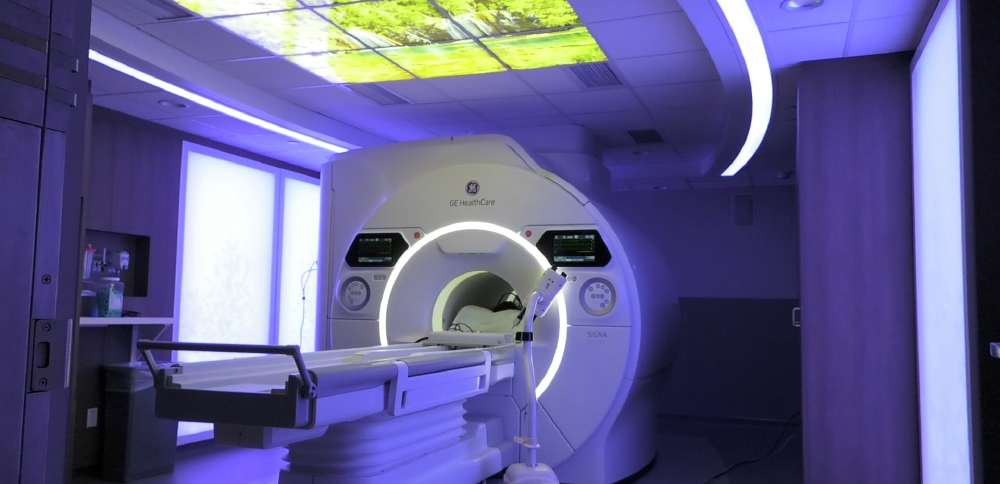
MURRAY — For the last few months, a new MRI machine has helped some Utah patients get improved diagnoses and treatments by using advanced technology and AI software.
Intermountain Medical Center is the second hospital in the U.S. to begin using GE HealthCare's Signature Sprint Elite MRI, which reduces scan times while producing clearer images for doctors to look at for heart and cancer patients, a statement released on Thursday said.
Dr. Brent Wilson, a cardiologist with Intermountain Health, said it is hard to get a clear image of a moving heart without taking a long time.
"These clearer images allow us to use new approaches to mapping out injured areas of heart tissue, which improves our treatments. This is a big leap forward in cardiac MRI, and we're excited to be one of the first in the United States using it," he said.
Cardiac patients receiving an MRI with other machines are asked to hold their breath for extended periods of time, but that is not necessary with the new machines. Amy Warnick, MRI coordinator at Intermountain Medical Center, said this can be taxing for a person with heart issues.
She said this machine provides better images while improving patient comfort — "we're already seeing a difference."
The AI technology reduces the signal to noise ratio, which can impact image quality. Needing less time in the machine is nice for the patient, but also means that the hospital can provide MRI's to more patients reducing delays in diagnosis.
Joel Christensen with GE HealthCare said it is grateful to hope bring the technology to Utah's clinicians and patients.
"Our goal is to help clinicians get the information they need to make timely, confident care decisions for patients facing serious conditions," he said.
The first hospital to begin using the new MRI machine in the U.S. is located in Virginia. One is also in use at a hospital in Belgium, according to the GE HealthCare website.