'%3e%3cpath%20d='M34.1406%205.85938C30.3906%202.10547%2025.3047%200%2020%200C14.6953%200%209.60938%202.10547%205.85938%205.85938C2.10938%209.61328%200%2014.6953%200%2020C0%2025.3047%202.10547%2030.3906%205.85938%2034.1406C9.61328%2037.8906%2014.6953%2040%2020%2040C25.3047%2040%2030.3906%2037.8945%2034.1406%2034.1406C37.8906%2030.3906%2040%2025.3047%2040%2020C40%2014.6953%2037.8945%209.60938%2034.1406%205.85938ZM37.0117%2023.543H31.1602V13.5391H27.6328V19.9414C28.1211%2020.6914%2028.3711%2021.582%2028.3711%2022.5625V22.625C28.3711%2023.668%2028.1172%2024.6055%2027.6328%2025.4297V26.6094H36.082C33.4883%2032.9375%2027.2891%2037.3789%2020.0039%2037.3789C10.3711%2037.3789%202.62109%2029.6289%202.62109%2020C2.62109%2010.3711%2010.3711%202.62109%2020%202.62109C29.6289%202.62109%2037.3789%2010.3711%2037.3789%2020C37.3789%2021.1484%2037.2617%2022.2656%2037.0508%2023.3477C37.0391%2023.4141%2037.0234%2023.4766%2037.0117%2023.543Z'%20fill='white'/%3e%3cpath%20d='M22.3086%2018.5352C20.4336%2018.125%2019.9531%2017.8398%2019.9766%2017.1836V17.1406C19.9766%2016.6992%2020.3477%2016.2148%2021.4023%2016.2148C22.582%2016.2148%2023.8867%2016.6797%2025.0781%2017.4766L26.8516%2015.0195C25.4453%2013.8906%2023.707%2013.3398%2021.5547%2013.3398C18.5195%2013.3398%2016.4375%2015%2016.4063%2017.4766V17.5352C16.3633%2020.2617%2018.5859%2020.9805%2021.293%2021.6016C23.0391%2021.9766%2023.5703%2022.3164%2023.5703%2022.9609L23.5469%2022.9766C23.5469%2023.3906%2023.2578%2023.7031%2022.7852%2023.8359C22.5742%2023.9062%2022.1289%2023.9727%2021.5156%2023.9727C20.7617%2023.9727%2019.7539%2023.8633%2018.6328%2023.4844C18.0898%2023.2891%2017.4727%2023.0039%2016.8047%2022.6133L20.1406%2026.625C20.2813%2026.6602%2021.0977%2026.8516%2021.7734%2026.8516C25.0039%2026.8516%2027.0859%2025.2461%2027.1094%2022.6328V22.5703C27.1602%2020.1133%2025.2148%2019.1719%2022.3086%2018.5352Z'%20fill='white'/%3e%3cpath%20d='M5.24219%2013.5664V26.6133H8.75391V23.7578L10.2969%2021.9531L14.2031%2026.6133H18.3867L12.3555%2019.5195L17.4023%2013.5664H13.4531L8.75391%2019.0586V13.5664H5.24219Z'%20fill='white'/%3e%3c/g%3e%3cdefs%3e%3cclipPath%20id='clip0_97_2430'%3e%3crect%20width='40'%20height='40'%20fill='white'/%3e%3c/clipPath%3e%3c/defs%3e%3c/svg%3e)


- Utah's soil moisture generally improved in July, reducing some drought and fire risks statewide.
- South-central and southeastern Utah saw significant gains; Uinta Basin remained dry amid storm variability.
- Utah's reservoirs are 55% full; drought persists despite monsoonal storm benefits.
SALT LAKE CITY — Utah's statewide soil moisture surged, a sign that monsoonal storms had started to chip away at the state's drought in July.
However, federal hydrologists say some regions fared better than others during the summer's first monsoonal wave, while some essentially missed out altogether, as the state eagerly waits for storms to return.
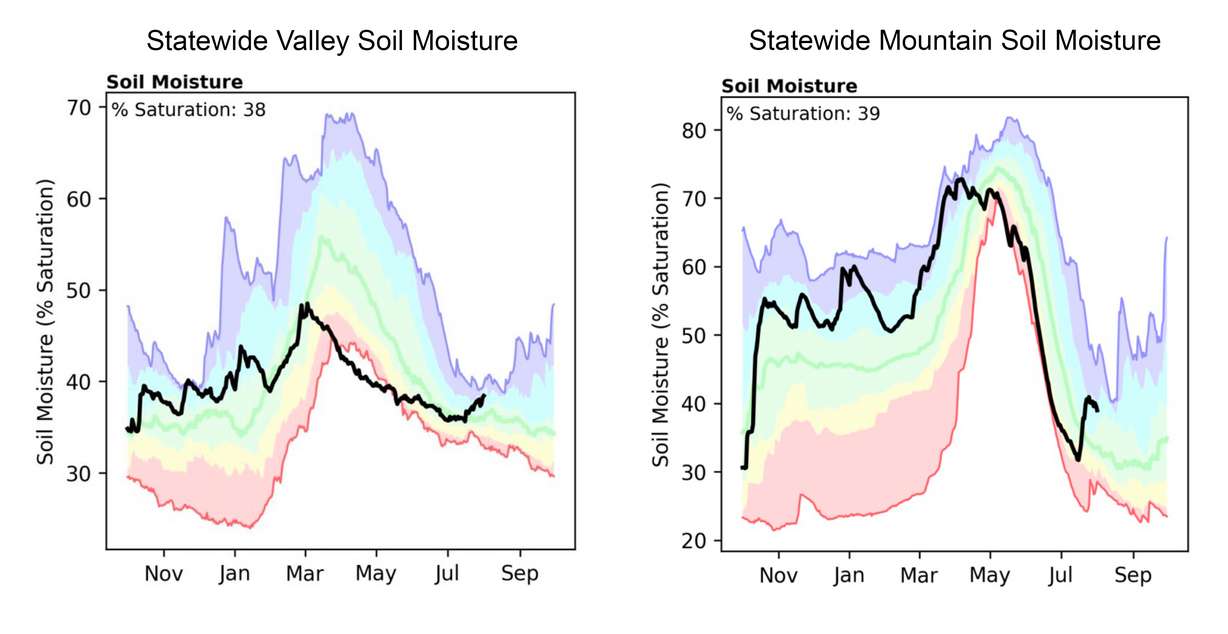
Utah's valley soil moisture averaged approximately 38% of saturation at the start of August on Saturday, similar to mountain averages, Jordan Clayton, a hydrologist for the Natural Resources Conservation Service, wrote in a water conditions update that the agency published on Tuesday.
Both numbers entered August above normal, which generally helps reduce evaporative loss and fire risk, while improving forage availability, he noted. Higher soil moisture levels before winter can also help with snowpack efficiency during the following spring.
But Clayton cautions that some regions didn't receive much, while it only left a dent in some especially dry areas.
"The statewide picture glosses over important geographic variability," he wrote. "Soils in the Uinta Basin and southwestern corner of the state are hovering around record dryness, while south-central and southeastern Utah soils are in the top 10th percentile or above for moisture," he added.
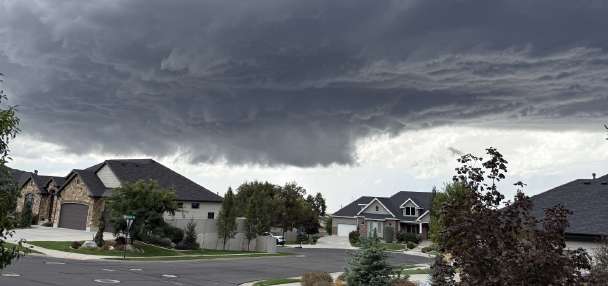
The increased soil moisture levels coincide with a spike in moisture that began in the middle of July, as extreme heat gave way to monsoonal flows that dominated the second half of the month.
Utah's mountain sites, on average, gained 2.1 inches of precipitation between July 14 and the end of July, after the sites had averaged just 0.6 inches of precipitation between June 1, the start of the meteorological summer, and mid-July.
Utah's valleys averaged 143% of normal precipitation throughout July, but rain totals were scattered across the place leading to the geographic variability that Clayton described. Precipitation totals in the St. George region were nearly triple the region's average, while Uinta Basin precipitation averages were almost a quarter of normal.
Both had some of the state's driest soil moisture levels to begin August, though, as record temperatures persisted and St. George's soils were just so dry before July's storms.
Valley in south-central Utah averaged 1.2 inches of precipitation, translating into its high levels. Southeast Utah's levels were near record-high too, while they were closer to or slightly above average everywhere else, including along the Wasatch Front.
South-central's mountain sites were also big precipitation winners, even if it created more challenges in some communities. A site at Panguitch Lake in Garfield County received more than 7 inches last month, while many others in central and southern Utah ended up with over 4 inches.
Beaver Canyon received 3.5 inches, a large chunk of which resulted in serious flooding after falling on the Cottonwood Fire burn scar on July 19. The sudden moisture also led to record-high mid-July soil moisture levels within the Beaver River basin, per Conservation Service data.
Room for improvement
Nearly 95% of the state remains in at least severe drought despite the storms.
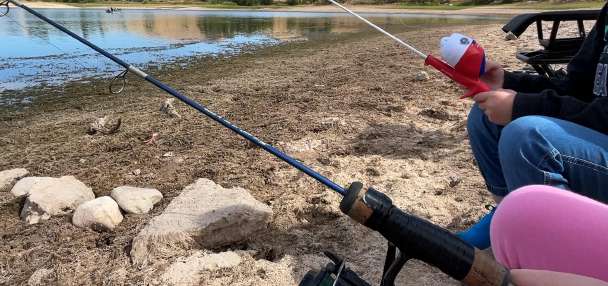
Although most of Utah benefited from soil moisture improvements, its reservoirs still struggled, Clayton added. Utah's reservoir system is currently 55% full, down 12 percentage points from its August median and 15 percentage points below this point last year.
Wildfire risk is also different across various parts of the state after the storm variations. Most of southern Utah returned to having normal fire potential this month, while the rest of the state still has above-normal risk, according to the National Interagency Coordination Center.
That doesn't mean no risk during what has been one of Utah's worst fire seasons on record. Clayton wrote that the Widemouth 2 Fire in Millard County, which has now burned more than 84,000 acres, exemplifies the "extremely high fire risk" that persists in areas that benefited from storms.
Utah is in the middle of another hot and dry week, which has aided fire potential, but long-range forecasts suggest monsoonal moisture could return next week. The odds still lean in favor of Utah receiving above-normal precipitation this month, too.
That could further improve drought conditions.
"Hopefully some areas of the state will have the chance to catch up a bit," Clayton wrote.