'%3e%3cpath%20d='M34.1406%205.85938C30.3906%202.10547%2025.3047%200%2020%200C14.6953%200%209.60938%202.10547%205.85938%205.85938C2.10938%209.61328%200%2014.6953%200%2020C0%2025.3047%202.10547%2030.3906%205.85938%2034.1406C9.61328%2037.8906%2014.6953%2040%2020%2040C25.3047%2040%2030.3906%2037.8945%2034.1406%2034.1406C37.8906%2030.3906%2040%2025.3047%2040%2020C40%2014.6953%2037.8945%209.60938%2034.1406%205.85938ZM37.0117%2023.543H31.1602V13.5391H27.6328V19.9414C28.1211%2020.6914%2028.3711%2021.582%2028.3711%2022.5625V22.625C28.3711%2023.668%2028.1172%2024.6055%2027.6328%2025.4297V26.6094H36.082C33.4883%2032.9375%2027.2891%2037.3789%2020.0039%2037.3789C10.3711%2037.3789%202.62109%2029.6289%202.62109%2020C2.62109%2010.3711%2010.3711%202.62109%2020%202.62109C29.6289%202.62109%2037.3789%2010.3711%2037.3789%2020C37.3789%2021.1484%2037.2617%2022.2656%2037.0508%2023.3477C37.0391%2023.4141%2037.0234%2023.4766%2037.0117%2023.543Z'%20fill='white'/%3e%3cpath%20d='M22.3086%2018.5352C20.4336%2018.125%2019.9531%2017.8398%2019.9766%2017.1836V17.1406C19.9766%2016.6992%2020.3477%2016.2148%2021.4023%2016.2148C22.582%2016.2148%2023.8867%2016.6797%2025.0781%2017.4766L26.8516%2015.0195C25.4453%2013.8906%2023.707%2013.3398%2021.5547%2013.3398C18.5195%2013.3398%2016.4375%2015%2016.4063%2017.4766V17.5352C16.3633%2020.2617%2018.5859%2020.9805%2021.293%2021.6016C23.0391%2021.9766%2023.5703%2022.3164%2023.5703%2022.9609L23.5469%2022.9766C23.5469%2023.3906%2023.2578%2023.7031%2022.7852%2023.8359C22.5742%2023.9062%2022.1289%2023.9727%2021.5156%2023.9727C20.7617%2023.9727%2019.7539%2023.8633%2018.6328%2023.4844C18.0898%2023.2891%2017.4727%2023.0039%2016.8047%2022.6133L20.1406%2026.625C20.2813%2026.6602%2021.0977%2026.8516%2021.7734%2026.8516C25.0039%2026.8516%2027.0859%2025.2461%2027.1094%2022.6328V22.5703C27.1602%2020.1133%2025.2148%2019.1719%2022.3086%2018.5352Z'%20fill='white'/%3e%3cpath%20d='M5.24219%2013.5664V26.6133H8.75391V23.7578L10.2969%2021.9531L14.2031%2026.6133H18.3867L12.3555%2019.5195L17.4023%2013.5664H13.4531L8.75391%2019.0586V13.5664H5.24219Z'%20fill='white'/%3e%3c/g%3e%3cdefs%3e%3cclipPath%20id='clip0_97_2430'%3e%3crect%20width='40'%20height='40'%20fill='white'/%3e%3c/clipPath%3e%3c/defs%3e%3c/svg%3e)


Estimated read time: 7-8 minutes
- The Salt Lake Buddhist Temple, built in 1912, serves Japanese immigrants in Utah.
- Troy Watanabe highlights the temple's role in preserving Japanese American history.
- The temple plans to remain a community hub, celebrating over 100 years in Salt Lake.
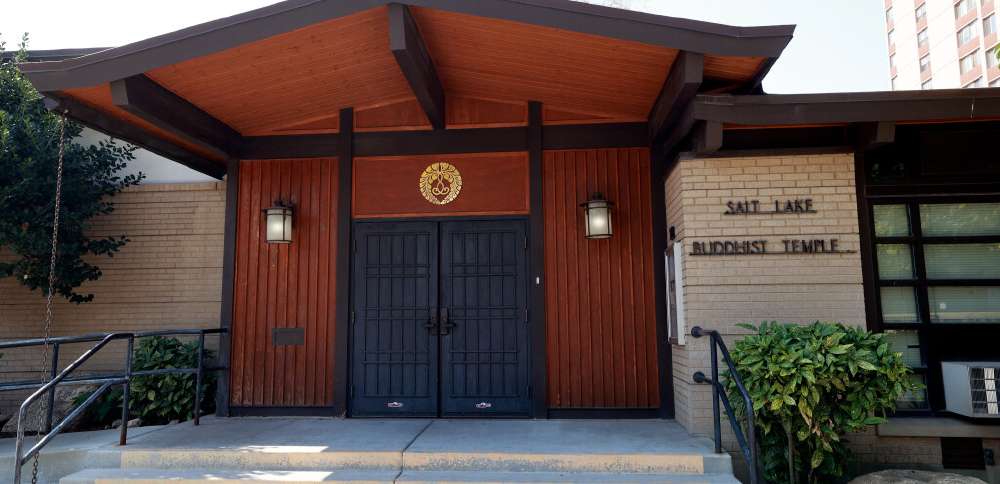
SALT LAKE CITY — A group of people, originally from far away, settled in the Salt Lake Valley and pooled their funds to build a temple. The Salt Lake Buddhist Temple now stands in downtown Salt Lake City, a monument to the hard-working individuals who first gathered there to worship.
The history aligns closely with that of the first members of The Church of Jesus Christ of Latter-day Saints who settled in the valley, and it also follows the history of the first Buddhists, who arrived in the early 1900s to serve immigrant Japanese workers who settled in Utah.
Historic temple design
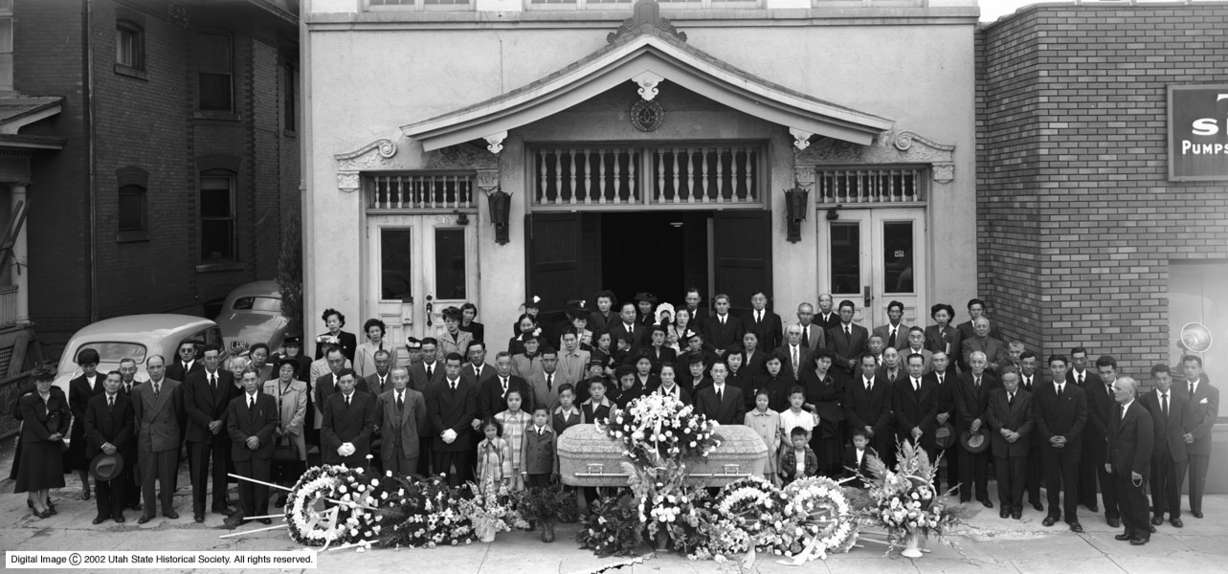
Troy Watanabe, president of the Salt Lake Buddhist Temple, said the facility was designed to be a gathering place for Japanese immigrants across Utah.
Buddhist temples were common sites in communities in Japan and across Asia, built so worshippers could visit the temple daily. However, Japanese immigrants who came to work in the mines, on the railroad and in orchards and farms were scattered across the state and unable to worship in the traditional way.
"The very first Japanese American leaders went out to the other churches, Christian churches and observed what they did," Watanabe said. "All the immigrants got Sundays off. That's the day we'll go to temple."
While smaller Buddhist temples already existed in Syracuse and Ogden, the Japanese immigrant community built a centralized location in Salt Lake City in 1912. The temple joined other Japanese buildings in Salt Lake to help form the local Japantown.
The original temple served Japanese immigrants for 50 years, but temple leaders knew that growth was likely in the future. After all, Watanabe said there had been a boom of Japanese immigrants during the 1930s and 1940s, and they needed additional space to allow worshippers to gather.
The large number of Japanese Americans in Salt Lake City comes in part from the impact that World War II had on their community. More than 120,000 Japanese Americans were forcibly taken to the Topaz War Relocation Center during the 1940s, according to the Salt Lake City Arts Council. Following the end of World War II, Watanabe said many of those Japanese Americans settled in Japantown and they needed a larger place to worship.
Through extensive fundraising efforts, the temple gathered enough money to build the current structure, located across the street from the old location. It was completed in 1962.
Inside the century-old temple
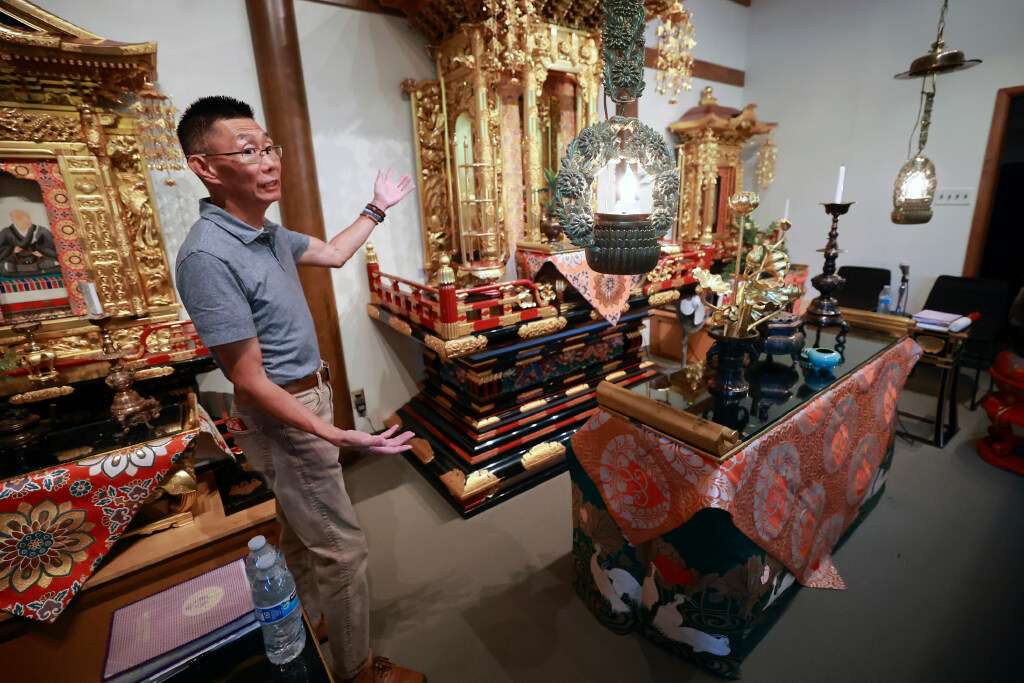
A naijin or sacred inner altar covered in gold dominates the hondo, the main hall within the temple. A representation of Buddha resides within, with two auxiliary shrines honoring sacred individuals venerated by the temple. Pews stretch across the room, allowing attendees a place to sit while they listen and worship.
The building was designed by Taka Kida, who worked as an architect in Utah to build many different structures, including chapels for The Church of Jesus Christ of Latter-day Saints. The interior of the building, while distinct from other chapels in the area, does utilize similar building techniques, including storage for tables and chairs underneath a stage in the attached gym.
The temple saw its heyday in the 1980s, with at least 100 worshippers gathered together each Sunday. While attendance dropped in the 90s and early 2000s, Watanabe said they now see an average of 70 worshippers on a regular basis, though not all are Japanese American.
"Buddhism as a whole is becoming a more popular thing again," he said. "Probably 25% of (attendees) are Japanese American."
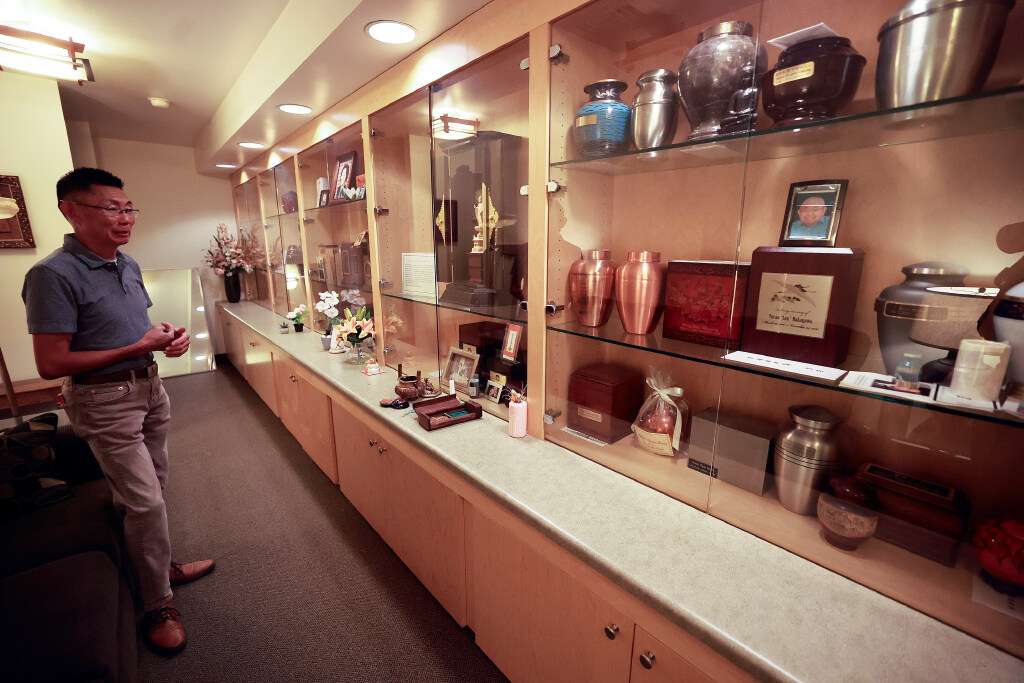
At the back of the hondo, behind the naijin, a long thin room houses a modest cemetery called a nokotsudo. The ashes of dozens of former attendees reside in containers secured behind glass panels, allowing visitors to honor those who came before them.
Watanabe said the ashes of hundreds of Japanese immigrant workers were originally housed in the temple, but the temple began a campaign nearly 30 years prior to let surviving family members know where the remains of their loved ones were. They sent ashes to families located in Japan, California, Oregon, Washington and Chicago.
The temple was unable to locate the family members of all of the individuals entombed there, while other families requested that their loved ones' ashes remain in the custody of the temple. Their ashes continue to reside in the nokotsudo, along with the ashes of prominent members of the Salt Lake Buddhist Temple.
"The hope is that we can maybe expand it somehow to bigger and have more people back there," Watanabe said.
'Bells and gongs'
On Sundays in Salt Lake City, residents and visitors near the temple may be startled to hear the rhythmic pounding of a bell, hand-struck by mallets more than 100 times.
The bell was originally donated by the Mitsunaga family, with their names inscribed along the side of the bell. Hung on a stand built by Boy Scouts associated with the temple, the bell calls worshippers to assemble, announcing the beginning of Sunday services with 108 chimes.
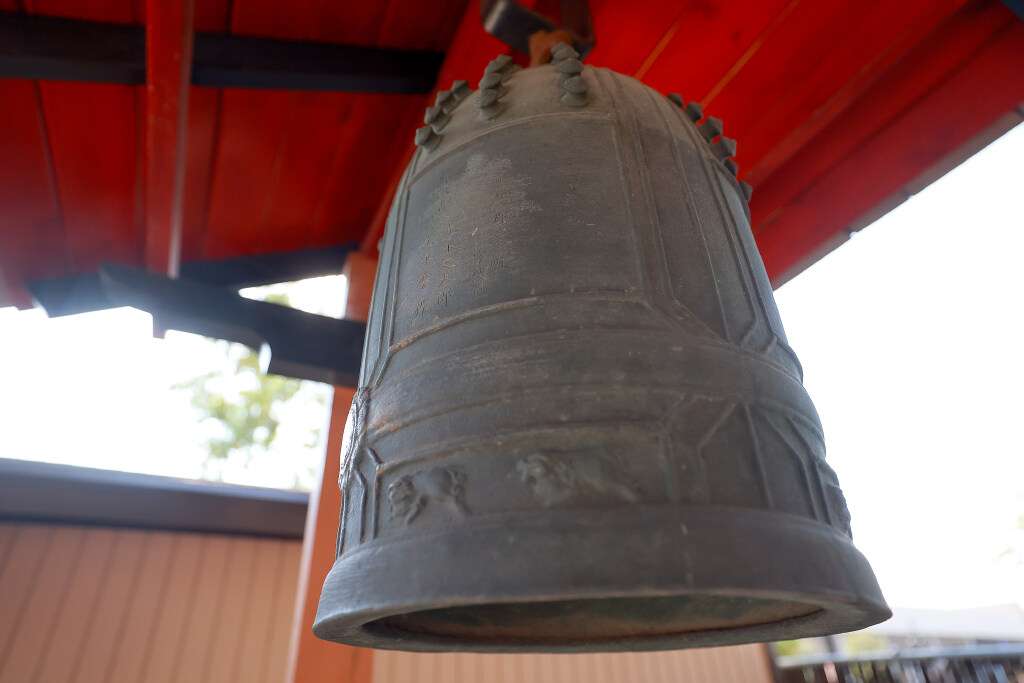
"Bells and gongs are rung in Japan and all over Asia, really to signify the beginning of something or the ending of something," Watanabe explained. "This is a bell we ring at the beginning of service."
He said the number of chimes signifies the overcoming of 108 "human defilements" within an individual. These defilements, which include emotions such as greed, anger and ignorance, can be combatted by focusing on being compassionate towards others.
"In Buddhism, the hardest part is ... being compassionate, because compassion is really what Buddhism is all about, being compassionate all the time," Watanabe said.
Members of the temple pay dues to help fund the operation of the temple, but another source of funding comes from within the building next to the temple. Called Lumbini's Garden, the building houses a meeting room for the leadership of the temple, a meditation space and a store filled with Japanese and Buddhist items.
"All the money goes to the building funds," Watanabe said. The funds help the temple maintain the facilities used by worshippers.
The Japanese Church of Christ and the Salt Lake Buddhist Temple have hosted events for the city, including the Obon Festival in July that brought more than a thousand people to Japantown. These events have also helped to fund the temple through food sales by vendors outside the temple and items from the store.
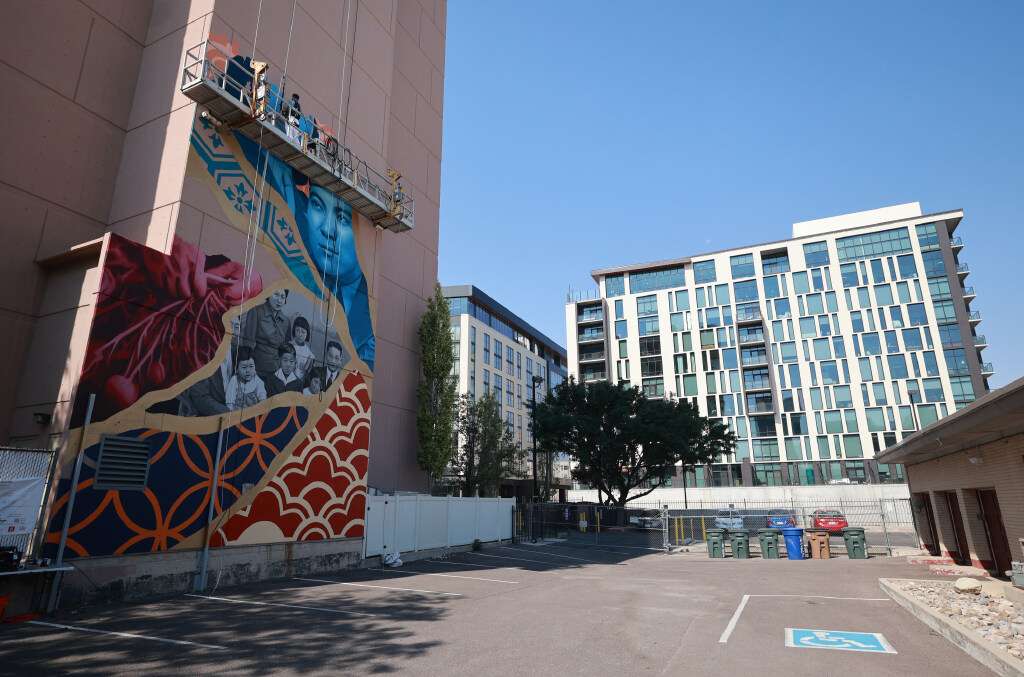
Behind the temple and store, the Multi-Ethnic Senior Highrise dominates the skyline. The community-based Japantown Art Committee, of which Watanabe is a part, hired Cole Eisenhour to paint a mural on the north-facing wall of the skyscraper.
The mural, a composite of 22 different patterns, photographs and drawings, is themed around the Japanese style of Kintsugi. If a bowl or other ceramic container is broken, Japanese artists use gold to repair the damage, adding beauty to what was once broken. The images are bordered with gold in the same style.
"The history is what we want to try to preserve," Watanabe said. "That's what we're trying to do in these Japan town talks, you know, to find a way to keep that history here on the street so that the story can be told."
Eisenhour said the lower section of the mural took him a little less than a week, with three days spent on the lowest portrait on the wall. He estimates the rest of the mural will take him to the end of August.
"I'm on a pretty good pace right now," Eisenhour said from the scaffolding. "I've just got to keep it for 30 days."
The mural, which will stand proudly over Japantown and the Salt Lake Buddhist Temple, is a memorial to the experiences of Japanese Americans in Salt Lake City.
Watanabe said Japantown, the Japanese Church of Christ and the Salt Lake Buddhist Temple have been in Salt Lake more than 100 years; and "We plan to be here for maybe another hundred years.
"We're always welcoming and would love people to come and see what we do."