'%3e%3cpath%20d='M34.1406%205.85938C30.3906%202.10547%2025.3047%200%2020%200C14.6953%200%209.60938%202.10547%205.85938%205.85938C2.10938%209.61328%200%2014.6953%200%2020C0%2025.3047%202.10547%2030.3906%205.85938%2034.1406C9.61328%2037.8906%2014.6953%2040%2020%2040C25.3047%2040%2030.3906%2037.8945%2034.1406%2034.1406C37.8906%2030.3906%2040%2025.3047%2040%2020C40%2014.6953%2037.8945%209.60938%2034.1406%205.85938ZM37.0117%2023.543H31.1602V13.5391H27.6328V19.9414C28.1211%2020.6914%2028.3711%2021.582%2028.3711%2022.5625V22.625C28.3711%2023.668%2028.1172%2024.6055%2027.6328%2025.4297V26.6094H36.082C33.4883%2032.9375%2027.2891%2037.3789%2020.0039%2037.3789C10.3711%2037.3789%202.62109%2029.6289%202.62109%2020C2.62109%2010.3711%2010.3711%202.62109%2020%202.62109C29.6289%202.62109%2037.3789%2010.3711%2037.3789%2020C37.3789%2021.1484%2037.2617%2022.2656%2037.0508%2023.3477C37.0391%2023.4141%2037.0234%2023.4766%2037.0117%2023.543Z'%20fill='white'/%3e%3cpath%20d='M22.3086%2018.5352C20.4336%2018.125%2019.9531%2017.8398%2019.9766%2017.1836V17.1406C19.9766%2016.6992%2020.3477%2016.2148%2021.4023%2016.2148C22.582%2016.2148%2023.8867%2016.6797%2025.0781%2017.4766L26.8516%2015.0195C25.4453%2013.8906%2023.707%2013.3398%2021.5547%2013.3398C18.5195%2013.3398%2016.4375%2015%2016.4063%2017.4766V17.5352C16.3633%2020.2617%2018.5859%2020.9805%2021.293%2021.6016C23.0391%2021.9766%2023.5703%2022.3164%2023.5703%2022.9609L23.5469%2022.9766C23.5469%2023.3906%2023.2578%2023.7031%2022.7852%2023.8359C22.5742%2023.9062%2022.1289%2023.9727%2021.5156%2023.9727C20.7617%2023.9727%2019.7539%2023.8633%2018.6328%2023.4844C18.0898%2023.2891%2017.4727%2023.0039%2016.8047%2022.6133L20.1406%2026.625C20.2813%2026.6602%2021.0977%2026.8516%2021.7734%2026.8516C25.0039%2026.8516%2027.0859%2025.2461%2027.1094%2022.6328V22.5703C27.1602%2020.1133%2025.2148%2019.1719%2022.3086%2018.5352Z'%20fill='white'/%3e%3cpath%20d='M5.24219%2013.5664V26.6133H8.75391V23.7578L10.2969%2021.9531L14.2031%2026.6133H18.3867L12.3555%2019.5195L17.4023%2013.5664H13.4531L8.75391%2019.0586V13.5664H5.24219Z'%20fill='white'/%3e%3c/g%3e%3cdefs%3e%3cclipPath%20id='clip0_97_2430'%3e%3crect%20width='40'%20height='40'%20fill='white'/%3e%3c/clipPath%3e%3c/defs%3e%3c/svg%3e)




- Scam victims in Utah may face criminal charges for unknowingly aiding fraudsters.
- Authorities struggle to distinguish between willing participants and manipulated victims in scams.
- AI advancements complicate scams; victims should preserve records and contact authorities immediately.
SALT LAKE CITY — Getting scammed can cost victims more than money. Some Utahns who believed they had found a job or romantic partner have instead found themselves holding stolen money, stolen merchandise and potentially facing criminal charges.
A bogus work-from-home gig
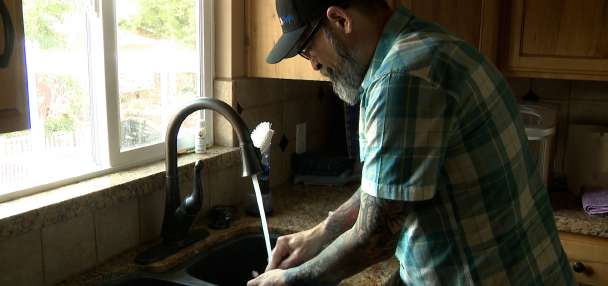
"They're saying, 'We're going to take legal action against you,'" one Utah woman told KSL Investigators.
The woman believed she had found an easy work-from-home job. Packages arrived at her home, and she was instructed to place new labels on them and ship them elsewhere.
"So I was like, 'OK ... this sounds like the easiest job ever,'" she said.
Only later did she learn the merchandise had been purchased using stolen financial information.
A bogus love connection
Another Utah woman believed she was helping a man she loved start a business.
"You fell in love?" KSL Investigator Matt Gephardt asked her.
"I was. I was in love, absolutely," she responded.
Nearly $1 million passed through her accounts. Unbeknownst to her, the money was stolen. She was arrested and spent three nights in jail.
Prosecutors don't always know
They are two Utah examples of a nationwide problem, according to National Bar Association President Ashley Upkins.
"They will go with charging first and figure it out later," Upkins said.
Scammers recruit people to receive and transfer stolen money or merchandise. Law enforcement commonly refers to those people as "money mules."
But authorities may not immediately know whether a person knowingly participated in the crime or was manipulated by the scammer.
"How is law enforcement to determine the willing participant from the true victim?" Upkins said.
Federal data illustrates the dilemma.
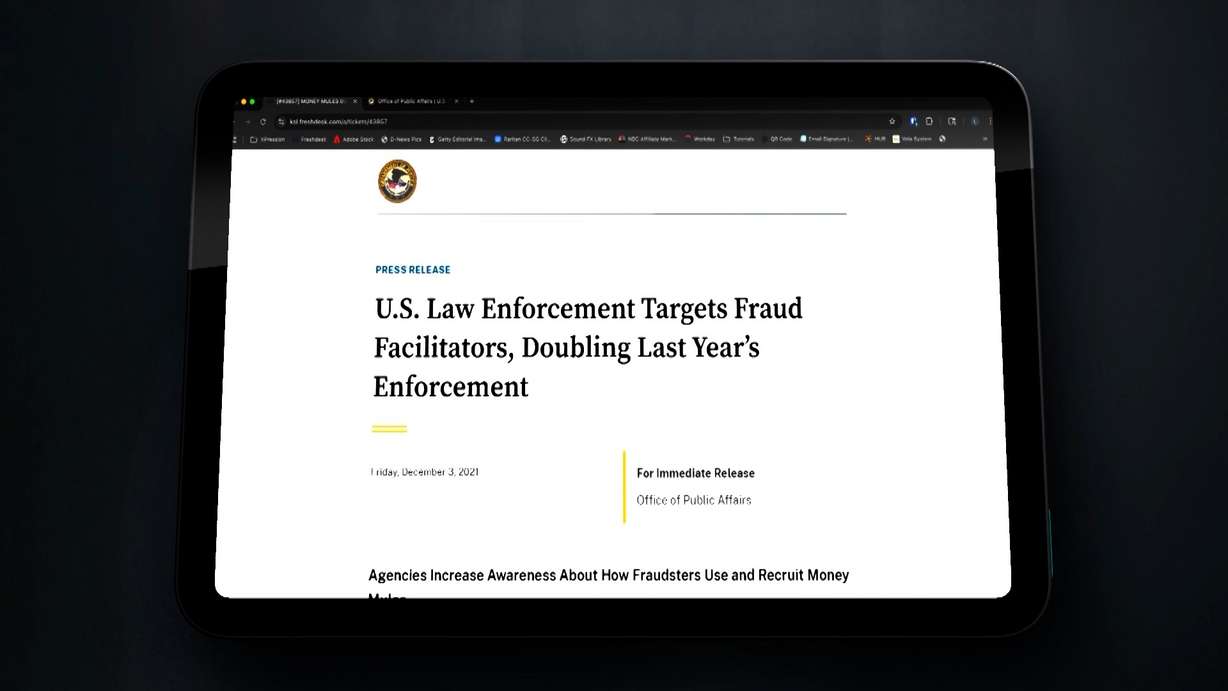
During a 10-week nationwide enforcement effort, authorities contacted 4,750 suspected money mules accused of receiving and transferring illicit funds.
The U.S. Department of Justice noted that most money mules first become involved with fraud schemes as victims and may not realize their actions are helping criminals.
Most of the suspected money mules received warning letters, but more than 30 were criminally charged. The government did not specify how many of those charged claimed they were also scam victims.
Legal Protections exist for victims, but it's still a hassle
"I like to remind people that just because we have new technology doesn't mean the old laws don't apply and go out the window," Upkins said.
Under Utah law, prosecutors generally must prove that a person knew, or believed, the money or property being handled was probably stolen.
But proving that someone was an unwitting victim can still involve court dates, months of stress and significant legal bills.
AI makes scams harder to detect
Artificial intelligence is also making it easier for scammers to create convincing identities, messages, voices and images.
"Nowadays, we're moving from an era of seeing is believing to where verification is believing," Upkins said.
Anyone who believes they may have been used by a scammer should immediately stop shipping packages or transferring money.
They should preserve all messages, receipts and other records, then contact their bank, local police and the FBI.