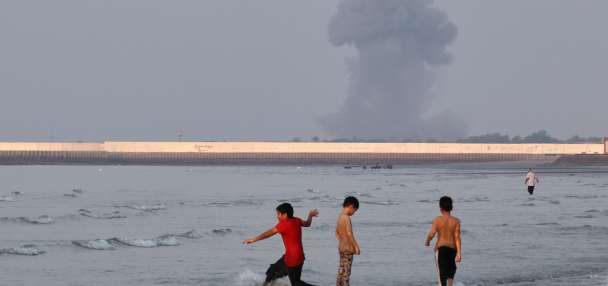
- The U.S. military launched new airstrikes against Iran's Revolutionary Guard on Saturday.
- The strikes aim to degrade Iran's control over the Strait of Hormuz and its oil traffic.
- Iran warned of "unforgettable lessons" for the U.S. in a speech read on state television earlier Saturday.
DUBAI, United Arab Emirates — The military said Saturday that it launched new airstrikes against Iran to "swiftly punish" the country's Revolutionary Guard for an attack in Jordan that killed two American service members, left one missing and four requiring hospitalization.
The strikes were designed to further degrade Iran's ability to restrict the traffic of oil tankers through the Strait of Hormuz, the Central Command said. The waterway accounted for roughly 20% of global oil supplies before the war.
The new strikes came after the U.S. military announced its first troop deaths due to direct Iranian fire since the opening days of the war, following a drone and missile attack on a base in Jordan on Friday. The dead were not identified.
Since the war began, 16 U.S. service members have been killed and over 430 wounded.
Iran's supreme leader warned of 'unforgettable lessons'
Minutes before the U.S. announced the troop deaths earlier Saturday, Iran's supreme leader warned of "unforgettable lessons" if the U.S. keeps attacking the Islamic Republic.
The remarks read out on state TV and attributed to Mojtaba Khamenei, still unseen since the war began, also called President Donald Trump's signature "worthless and invalid." An Iranian negotiator said Tehran was suspending its commitments to the interim deal signed about a month ago and aimed at permanently ending the fighting.
Tehran's declarations snapped another fragile thread as the war shows no end in sight. Now Khamenei warns of "lessons" not only from Iran but also its armed proxies in the region, calling them the "Axis of Resistance." The U.S. issued a global travel alert over the rising tensions.
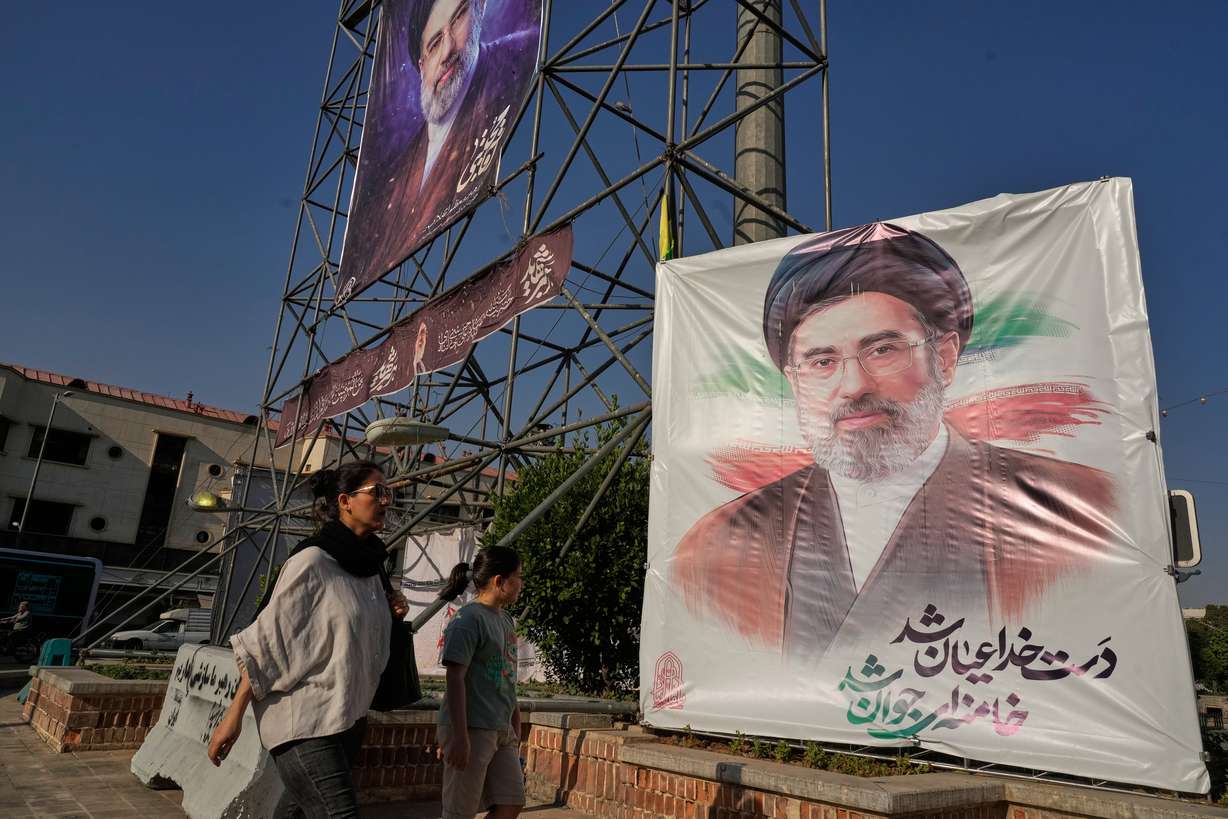
The battle has focused on control of the Strait of Hormuz. The widening strikes now threaten civilians and infrastructure, including desalination plants for drinking water, while the global economy again is on alert.
The U.S. has violated its commitments under the deal and now Iran is "no longer implementing them," Kazem Gharibabadi, Iran's deputy foreign minister, told state TV.
There was no new word on mediation efforts.
US soldiers face growing risks
The previous recorded death of a U.S. service member was that of a helicopter pilot who crashed in the Arabian Sea earlier this month. Early in the war, an Iranian drone strike on a command center in Kuwait killed six soldiers. One soldier died after an attack on a base in Saudi Arabia. Six were killed when a refueling aircraft crashed in Iraq.
On Saturday, the most significant damage from Iranian strikes occurred in Kuwait, where a water desalination plant and an oil facility were hit, according to the Kuwait authorities and the Kuwait Petroleum Corporation. Both declined to provide locations.
It was the second attack against a desalination plant in two days in the tiny desert nation that depends on desalination for 90% of its drinking water. The strikes injured several people at the oil facility and caused a fire at the desalination plant, forcing several power generation units offline.
Several firefighters and a worker were injured while battling two other blazes sparked by Iranian strikes, according to the Kuwait Fire Force. Kuwait briefly closed its airspace due to missile threats, and Kuwait Airways said it was rescheduling most flights to and from the capital.
Meanwhile, Iraq said it shot down attack drones over the city of Irbil. Jordan's state-run Petra news agency said the kingdom's air defense systems had downed Iranian missiles, while air sirens sounded multiple times in Bahrain throughout the day and in Saudi Arabia in the morning, according to their governments.
The secretary general of the six-nation Gulf Cooperation Council, Jasem Mohamed al-Budaiwi, accused Iran of war crimes for strikes on infrastructure and civilian facilities.
US strikes hit infrastructure in Iran
Central Command said early Saturday that its seventh straight night of strikes hit "surveillance sites, military logistics infrastructure, underground weapons storage, and maritime capabilities."
U.S. airstrikes hit an electricity and desalination plant in Iran's southern Hormozgan province, Iranian state TV reported. State-run news agency IRNA said the Bonji desalination plant was destroyed, cutting off water supplies to about 10,000 people, and a desalination plant on strategic Qeshm Island inside the strait was damaged.
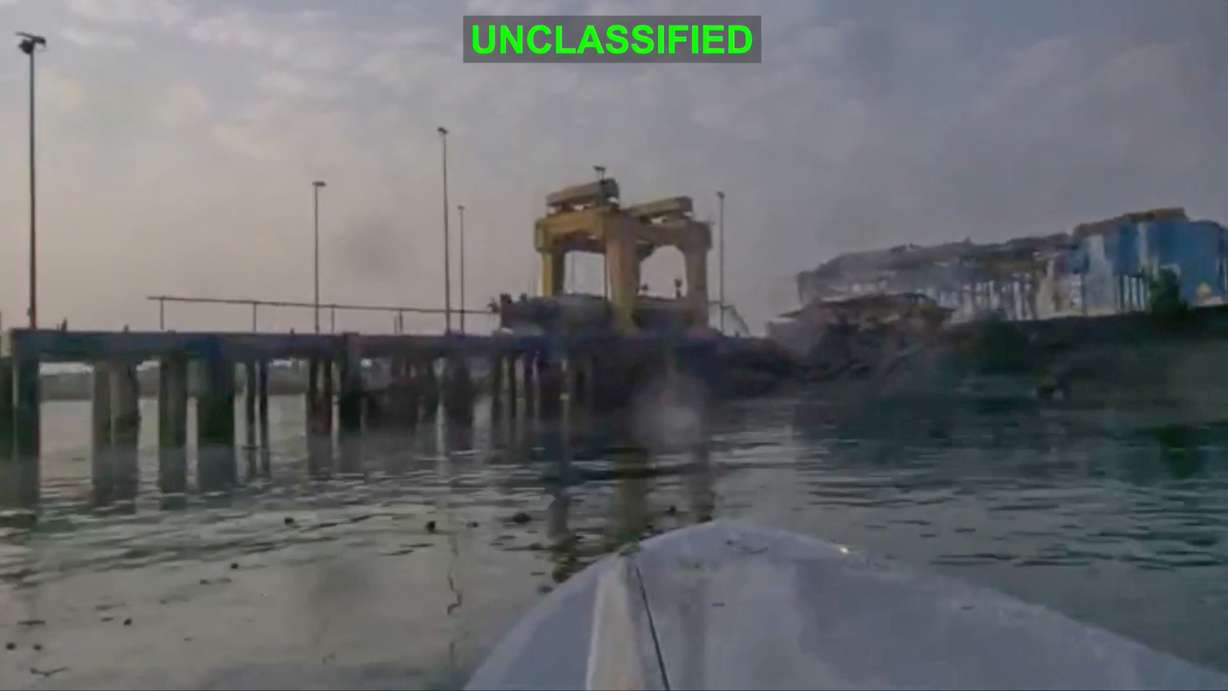
Overnight strikes damaged two tunnels and a bridge, disrupting a main highway toward Bandar Abbas, Iran's main port that sits near the narrowest part of the strait, according to IRNA. It said three bridges were hit Saturday, including one on a route to Bandar Abbas.
Iran acknowledged "attacks on power infrastructure" during the U.S. airstrikes for the first time Friday when its Energy Ministry urged people to use less power in southern provinces "experiencing extreme heat." It did not specify what was hit.
Iranian authorities said at least 50 people have been killed and more than 500 wounded in U.S. strikes in the past three weeks, including eight killed in a strike on a bridge Friday.
Iran and US vie for Strait of Hormuz
Iran effectively closed the strait to shipping traffic after the war started with U.S. and Israeli strikes on Feb. 28. That has given Tehran significant leverage in negotiations.
Iran has said the strait must be under its sole control and that vessels should pay fees to Tehran, even though the world for decades has considered it an international waterway. Iran fired on ships on recent days and transits fell to a three-week low, according to an international shipping tracker.
Trump has resumed threats to target Iran's power stations and bridges to try to compel Tehran to loosen its hold. The U.S. in the past week reimposed a naval blockade on Iranian ports to halt its shipments of crude oil, and the military on Saturday said it had redirected five ships and disabled one since then.
Before the war began, the U.S. had been in talks with Iran over its nuclear program. Trump now faces political pressure to end the war and avoid the kind of prolonged Middle East conflict he had campaigned against.
Contributing: Amir Vahdat, Melanie Lidman, Stella Martany and Matt Lee