'%3e%3cpath%20d='M34.1406%205.85938C30.3906%202.10547%2025.3047%200%2020%200C14.6953%200%209.60938%202.10547%205.85938%205.85938C2.10938%209.61328%200%2014.6953%200%2020C0%2025.3047%202.10547%2030.3906%205.85938%2034.1406C9.61328%2037.8906%2014.6953%2040%2020%2040C25.3047%2040%2030.3906%2037.8945%2034.1406%2034.1406C37.8906%2030.3906%2040%2025.3047%2040%2020C40%2014.6953%2037.8945%209.60938%2034.1406%205.85938ZM37.0117%2023.543H31.1602V13.5391H27.6328V19.9414C28.1211%2020.6914%2028.3711%2021.582%2028.3711%2022.5625V22.625C28.3711%2023.668%2028.1172%2024.6055%2027.6328%2025.4297V26.6094H36.082C33.4883%2032.9375%2027.2891%2037.3789%2020.0039%2037.3789C10.3711%2037.3789%202.62109%2029.6289%202.62109%2020C2.62109%2010.3711%2010.3711%202.62109%2020%202.62109C29.6289%202.62109%2037.3789%2010.3711%2037.3789%2020C37.3789%2021.1484%2037.2617%2022.2656%2037.0508%2023.3477C37.0391%2023.4141%2037.0234%2023.4766%2037.0117%2023.543Z'%20fill='white'/%3e%3cpath%20d='M22.3086%2018.5352C20.4336%2018.125%2019.9531%2017.8398%2019.9766%2017.1836V17.1406C19.9766%2016.6992%2020.3477%2016.2148%2021.4023%2016.2148C22.582%2016.2148%2023.8867%2016.6797%2025.0781%2017.4766L26.8516%2015.0195C25.4453%2013.8906%2023.707%2013.3398%2021.5547%2013.3398C18.5195%2013.3398%2016.4375%2015%2016.4063%2017.4766V17.5352C16.3633%2020.2617%2018.5859%2020.9805%2021.293%2021.6016C23.0391%2021.9766%2023.5703%2022.3164%2023.5703%2022.9609L23.5469%2022.9766C23.5469%2023.3906%2023.2578%2023.7031%2022.7852%2023.8359C22.5742%2023.9062%2022.1289%2023.9727%2021.5156%2023.9727C20.7617%2023.9727%2019.7539%2023.8633%2018.6328%2023.4844C18.0898%2023.2891%2017.4727%2023.0039%2016.8047%2022.6133L20.1406%2026.625C20.2813%2026.6602%2021.0977%2026.8516%2021.7734%2026.8516C25.0039%2026.8516%2027.0859%2025.2461%2027.1094%2022.6328V22.5703C27.1602%2020.1133%2025.2148%2019.1719%2022.3086%2018.5352Z'%20fill='white'/%3e%3cpath%20d='M5.24219%2013.5664V26.6133H8.75391V23.7578L10.2969%2021.9531L14.2031%2026.6133H18.3867L12.3555%2019.5195L17.4023%2013.5664H13.4531L8.75391%2019.0586V13.5664H5.24219Z'%20fill='white'/%3e%3c/g%3e%3cdefs%3e%3cclipPath%20id='clip0_97_2430'%3e%3crect%20width='40'%20height='40'%20fill='white'/%3e%3c/clipPath%3e%3c/defs%3e%3c/svg%3e)


- Morgan Scalley, Utah's first-year head coach, focuses on building a strong team culture.
- He emphasizes individualized recruiting, in-state talent, and open communication with his staff.
- Scalley aims to foster a supportive environment, aiming for a national championship.
SALT LAKE CITY — As he reclines in an office chair at the head of a conference table in the Spence & Cleone Eccles Football Center, Morgan Scalley leans back enough to rest his feet, which are in Under Armour shoes, on the table in front of him.
He's relaxed and free as he begins a staff meeting on a Thursday morning in late June. It's already the second meeting of a busy day that started at 6 a.m. with a private workout with strength and conditioning coach Steve Saunders.
It's the offseason, but a typical day for the first-year head coach of the University of Utah football program — there are no true off days.
As he begins the meeting, he interjects his patented levity at times — like joking about the small font size of a handout he couldn't read well (most couldn't, either) — but is equally decisive in the discussed workings of the football program.
To Scalley, no point is too small to the overall operation, though he entrusts all around him to fulfill their role without reproach. He's in charge, but there are many smart and capable people around him, and he accepts each with an open willingness to learn more as he takes on his first season as head coach to a program he's loved since he was a young boy.
His two coordinators flank him on either side of the rectangular table, with laptops in front of each. Other position coaches fill up the seating around the table, and various staffers sit or stand along the walls of a room in the central area of the coaches' offices of the facility.
On this Thursday morning, a busy weekend awaits — the final weekend of official visits for the Class of 2027 recruits coming onto campus for a three-day showcase of the university and the football program.
The recruiting staff reviews the loaded schedule for each incoming recruit and details specific ways to make the weekend special for each. There's nine recruits for the weekend and each gets a specialized experience to help showcase their fit in the community and within the football program.
If a family member goes by something other than their given name, Scalley wants all to know to help make it a personal experience for that family member. It's a small part of the individualized approach to the details that matter to Scalley as he works to provide a connection with all he interacts with as head coach.
At the same time, he's the first to say the football program isn't his or about him; he simply wants to provide a welcoming atmosphere for all as the leader of the operation.
College sports can be a cutthroat business, at times, but he believes it's possible to establish a true culture and connection as Utah works to compete for a national championship — a point Scalley doesn't shy away from in his program aspirations and conversations.
But obtaining such a lofty goal begins in those staff meetings, where Scalley stresses to all that he wants to provide full support to the athletes who trust the university and the coaching staff, while emphasizing a call to loyalty to each other and the university. The whole intent of the meeting is backed up by that cause.
Beyond the recruiting weekend plans, the staff took time to review expected eligibility changes that would eventually be passed by the NCAA a week later and how they would affect the makeup of the roster — like, what happens if star quarterback Devon Dampier comes back for another season? It's a welcomed problem but one that could have an impact on roster building for 2027 and beyond.
What's the balance the coaching staff strikes with roster retention and working to improve various positions, while still maintaining a strong connection and culture?
The messaging in those meetings has to be on point, and Scalley is clear in the direction he'd like to pursue.
"I've always been an advocate of, hey, if you see how we can improve things, I want to know about it," Scalley told KSL Sports as part of day spent with the head coach. "I want feedback and coaching, just like I'm telling you to want feedback and coaching. I'm a big show me guy: 'I want to do things a different way here.' OK, show me the benefit, tell me why, explain to me why you want to do it.
"I'm not a big believer in, 'No, this is how we're doing it — end of story.' Because then you've essentially shut down possible good communication, possible solutions that could be better than your own. If our culture needs improvement, I'm all for it. Show me, tell me why, tell me what we can be doing better. I just am a firm believer in I'm not the smartest guy. If you feel that there's a better way to do it, let's talk about it."
'Don't give away what you've earned'
Players and coaches make their way to the team room in the facility for an 8:45 a.m. meeting, and it's clear there's a deep connection among all — each joking with another as they make their way to their seats.
There's an assigned seating chart, and it's divided in a way to bring players from different position groups together — with coaches scattered throughout the room, too. In large part, it's to break down the inherent connections players share within their own room.
To create a team-wide culture, Scalley believes, it's important offensive and defensive players should be intermixed as much as possible.
The meeting itself is the last of its kind before a month-long break in July. The players officially report back to school for fall camp the week of Aug. 2, though many will stay in and around the facility during the break for player-run practices and training sessions.
Scalley opens the meeting with an impassioned wake-up call, injecting the room with energy. It's a light, casual and fun interaction, but there's a call to action from the head man. Each player is reminded of the loyalty to the program they should share and the respect that should be given — the conversations within the team are considered sacred and breaking that hurts the team.
There should also be deference and respect given to the coaches and staffers who help to make Utah function. A simple "yes sir" goes a long way.
After turning time over to Dr. Jonathan Ravarino, the team's sports psychologist, who encourages the players to treat their mental health with care and highlights various issues that could harm them in that realm, Scalley returns to teach the players about "delusional self belief," or an inflated self confidence that is exhibited in one's own potential.
He shares a snippet of actor and comedian Adam Sandler, who is taking part in an interview with podcaster Joe Rogan. The famous comedian describes the delusional self belief he held early on in his career and how that helped him become the great actor he is today.
The ultimate message Scalley hoped to convey was that believing in yourself "counts for a lot," even if there's an understanding that there's a long way to go to being a finished product.
The coaches at Utah won't take the belief away, he reminds. Nobody in the room needs to be as good as offensive tackle Spencer Fano, the No. 9 pick in the 2026 NFL draft, but as a collective unit the team can help make each player better. The belief, though, has to start with the player.
Before sending the players off for the summer, Scalley reminds them of the potential dangers lurking during the break — or the casual opportunities that could hurt the players' opportunities in the fall. They've worked so hard to build for the 2026 season — including a promising spring camp and subsequent offseason — and a mistake over the break could ruin all that work.
"Don't give away what you've earned by not being smart," he cautions.
It's as much a protection for the player as it is for the team in general.
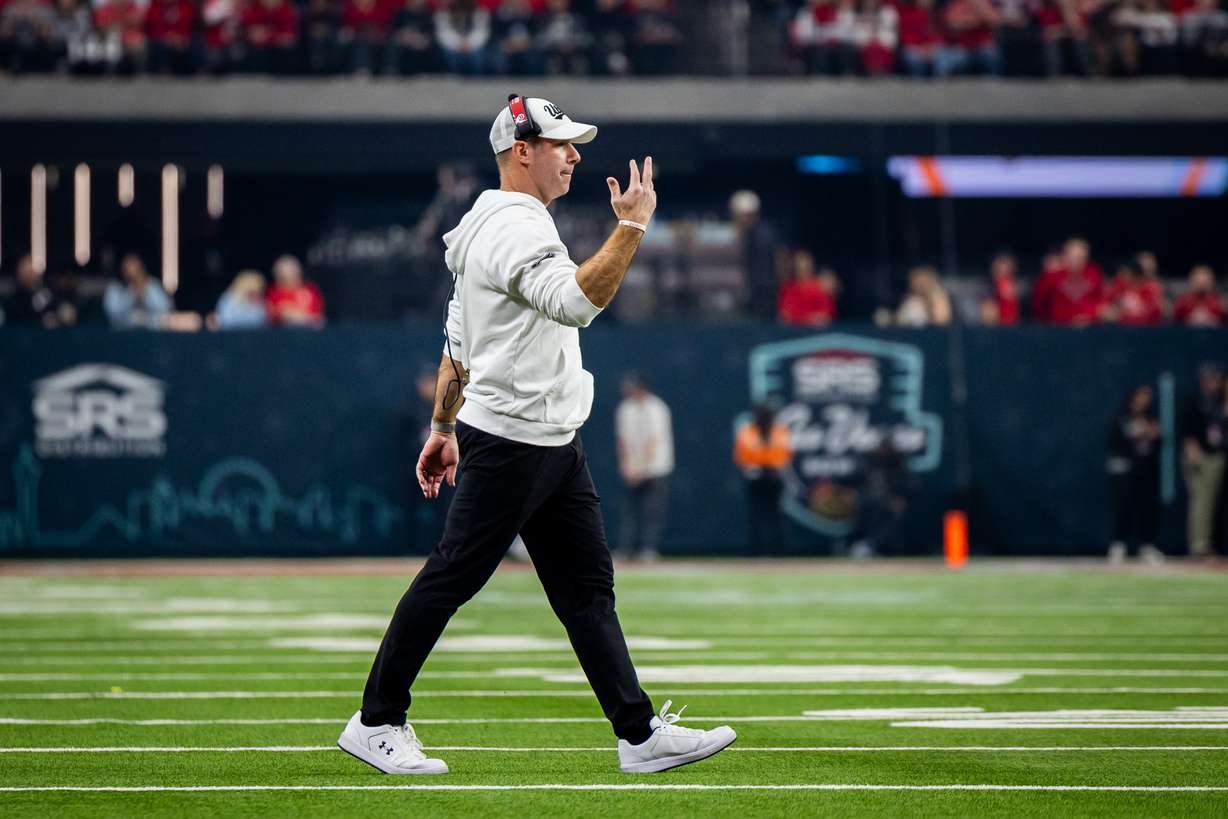
Recruiting as the lifeblood
With the morning staff meeting over, Scalley is informed of an in-state recruit who wants to FaceTime him that afternoon — an official decision was the expected reason for the call, though anything is on the table in the recruitment of talent. The recruit, who made an official visit the week before, announced publicly on social media of his commitment to Utah after the call.
A done deal.
The recruit became the second of what is currently eight in-state athletes from the 2027 recruiting class who have announced a commitment to Utah, starting a snow-balling effect for local talent. That momentum with in-state talent is exactly the direction Scalley wants to go in his philosophy of recruiting.
Recruiting should always begin with who is in the backyard, especially in Utah.
"My whole message is: Why would you need to leave this place? You've got a fan base that is incredible, you've got support, you've got everything you need here," Scalley said. "And look at the quality of football in state. Every program in the country comes to Salt Lake City to recruit kids, so it's not like we don't have talent, we've got plenty of it.
"It's helping them see the vision of what can be accomplished here."
That vision includes more face time with the head man — a bit of a shift from his predecessor. Having spent years recruiting in Texas and other places around the United States, Scalley has grown to love the recruiting process and connecting with athletes and their families in the early part of their journey.
At the end of the day, Scalley is a people's person and he wants to build lasting relationships. The recruits aren't just a checklist item or a responsibility to rebuild a roster; it's finding quality young talent he and his coaching staff can help mold into men ready for a potential NFL dream or life beyond football.
And though Scalley is the ultimate say for the football program, he hopes to have more communication with his staff when it comes to identifying and prioritizing talent. It's not an isolated approach, with position coaches working independently from what he — or others — are trying to accomplish.
"I'm much more involved in talking to players, talking to recruits," he said. "If the defense has these guys ranked differently, I want to know why — the communication. I don't ever want to get to the point where we have a kid scheduled for an official visit, and it's like, 'Oh wait, I don't like this kid.'"
Much like he expects his staff to do, Scalley studies up on the recruits and then comes together with members of his team to create a unified approach to recruiting.
On that Thursday, following the morning staff meeting, Scalley broke off with recruiting director Mason Yellico and football general manager Joe D'Orazio to watch film of in-state 2028 recruits.
Scalley had already done his research coming into the meeting and had watched film for most of the athletes being discussed, but occasionally he asks to go deeper on a recruit to learn more. As the film is brought up, he quickly evaluates aspects of the athlete's game he likes or where he'd like to see improvement.
Yellico offers up several facts he and the recruiting staff have surfaced about each kid, and seemingly has an answer for everything Scalley questions — mostly basic questions, but each one looking to learn more about the recruit.
After years of recruiting, it's easy for Scalley to highlight various traits quickly. More homework and consideration will be given throughout the athlete's junior and senior seasons, but it's a start to a long process to evaluate talent to bring into the program. And one Scalley hopes to ramp up with in-state players.
Before watching film of another recruit, Scalley shouts out a priority order, with Yellico ordering the player in a list for all in the room to see. It's a fluid list, and one that will likely change several times over the coming weeks and months, but it's the beginning to the communication process that will continue as the recruits move into their senior season.
Like every aspect of his staffing, Scalley entrusts those around him on the recruiting team to make the whole operation better.
"Hiring people that are smarter than me — it's not hard — was a big priority to me," Scalley said. "Like hiring Joe. Like, what type of recruiting strategy should we have? Brian Stacy, our director of recruiting strategy, is incredibly intelligent, making sure I'm up to date on the recruiting rules and the landscape of college football, where it's heading."
At the end of the day, it's about creating the right fit — as a member of the staff and as a player on the team.
"We don't pay for popularity," Scalley said. "We don't pay for you, we pay for a winning product. It's great to get eyes, it's great to have people interested in your program, but if you don't win, no one will be interested in your program."
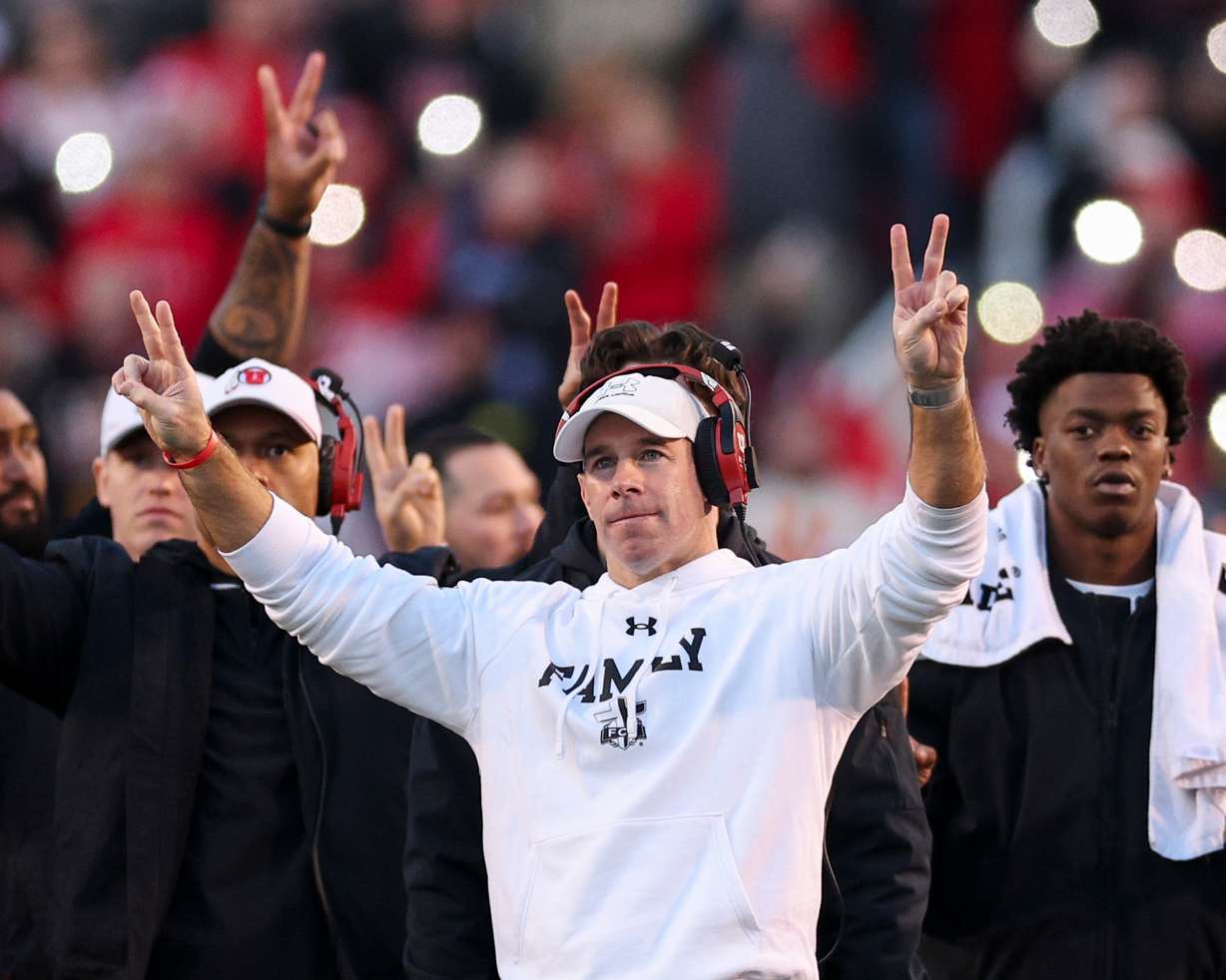
'Culture still matters'
Winning is the name of the game, and Scalley isn't shy about his ambitions as a new head coach. Having taken over a successful product built before him, Scalley believes the best for Utah is still to come — and he hopes he's there to see it realized.
As a football coach, what happens on the field will always matter most — wins and losses — but Scalley approaches his new role with bigger ambitions, and that's building out a strong culture that will go beyond the football field. He sees himself as the ultimate teacher, and one that manages less of the X's and O's of the game.
"I'm managing people and making sure the culture is what it needs to be," he said.
And to Scalley, culture isn't just a buzzword used like many around the sports world to talk about team connection; it's a heartfelt belief and commitment to each other and the program. It evolves and grows, with it being the connective fiber to helping a team be successful in all aspects of life — not just football.
"To have strong culture, you have to practice it every day," Scalley said. "It can't be just a one day you're talking about, and all of a sudden, a couple weeks go by. It's an everyday deal.
"If you see behavior that's asked for by your culture, promote it, so the guys know, 'Oh, that's awesome, I need to do that again.' Promote the behavior that you're calling for, because if you don't, it's like, why am I doing that? And then the experience has to be good. ... And then don't permit anything that's counter to your culture. Don't allow behavior that I didn't ask for that."
It's a mindset, he says, where players should feel "good vibes" because everyone in the program is doing something to reinforce the culture. It's living it to the best of their ability, while recognizing that everyone will make a mistake in the process.
"If I'm not living it, they'll know," he adds. "If culture is not happening in you, it will never happen through you. And that's what I love about our staff, is they get that too. But allowing for mistakes, allowing for we didn't do that right — that's OK, let's learn from it, let's get better. Breathing belief into people, and you can do this, and let's get you there."
It could be better summarized as a "get-better mindset," a constant reminder to the players and coaches that they're human. That mindset adorns the wall of the team meeting room for all to see and be reminded of when they enter.
Scalley doesn't expect perfection, but he wants to see you making the effort to improve — even if marginal.
"Embrace discomfort. It's OK to make mistakes," Scalley said. "Let those mistakes teach you, and always look for feedback and coaching. How can I be better? How can I improve? Your behavior will tell me what is important to you. ... It's just a product of everyone buying into the way we do things; and if there's a better way, there's safety in questioning that."
The true test of that culture will come this fall as the team works together a collective goal to win the Big 12 and earn a spot in the College Football Playoff. All the hard work that has been put in — from January to August — will quickly manifest itself come September and beyond.
"I want the season to start, because you can have a great offseason, everyone can be getting good grades, and then if you're losing, no one cares," Scalley said. "But where culture shows up, how you know you have healthy culture, is when it shows up during your worst times.
"The 5-7 season a couple years ago, I think I was most proud of that defense than any defense I've ever coached, because they kept showing up week after week after week, when it would have been very easy for them to be like, 'Oh.' They kept showing up, and that told me we've got good culture here. Now it's team wide. Yeah, you have to have players to win, but I'm on a mission to prove culture still matters, will always matter."
And so far, that culture has been a noticeable difference for the many players who have highlighted Scalley's commitment to them as individuals. They see him living the culture and being genuine in how he approaches his interactions with them. It's a large reason why star quarterback Devon Dampier returned to Utah to help lead out Scalley's first season.
"I've never seen him change up the loyalty, the love, the belief, the confidence," Dampier said at Big 12 media days. "That's never changed through him; and, if anything, I've seen more of that when times were tough for me.
"He came through every single time, and just the amount of effort he's put to make me feel like I belong here has been crazy, and that follows the staff. I have a close relationship with literally every single staff member — like OC, offensive side, defensive side, special teams, like the coaches; they mean a lot to me. They're so genuine, and that's why I'm here at Utah."
Now comes the tough part: seeing how it all comes together in fall in Scalley's first season as head coach. But if the first seven months of his tenure are any indication, Utah has potentially another program builder on its hands to lift it to greater heights.