'%3e%3cpath%20d='M34.1406%205.85938C30.3906%202.10547%2025.3047%200%2020%200C14.6953%200%209.60938%202.10547%205.85938%205.85938C2.10938%209.61328%200%2014.6953%200%2020C0%2025.3047%202.10547%2030.3906%205.85938%2034.1406C9.61328%2037.8906%2014.6953%2040%2020%2040C25.3047%2040%2030.3906%2037.8945%2034.1406%2034.1406C37.8906%2030.3906%2040%2025.3047%2040%2020C40%2014.6953%2037.8945%209.60938%2034.1406%205.85938ZM37.0117%2023.543H31.1602V13.5391H27.6328V19.9414C28.1211%2020.6914%2028.3711%2021.582%2028.3711%2022.5625V22.625C28.3711%2023.668%2028.1172%2024.6055%2027.6328%2025.4297V26.6094H36.082C33.4883%2032.9375%2027.2891%2037.3789%2020.0039%2037.3789C10.3711%2037.3789%202.62109%2029.6289%202.62109%2020C2.62109%2010.3711%2010.3711%202.62109%2020%202.62109C29.6289%202.62109%2037.3789%2010.3711%2037.3789%2020C37.3789%2021.1484%2037.2617%2022.2656%2037.0508%2023.3477C37.0391%2023.4141%2037.0234%2023.4766%2037.0117%2023.543Z'%20fill='white'/%3e%3cpath%20d='M22.3086%2018.5352C20.4336%2018.125%2019.9531%2017.8398%2019.9766%2017.1836V17.1406C19.9766%2016.6992%2020.3477%2016.2148%2021.4023%2016.2148C22.582%2016.2148%2023.8867%2016.6797%2025.0781%2017.4766L26.8516%2015.0195C25.4453%2013.8906%2023.707%2013.3398%2021.5547%2013.3398C18.5195%2013.3398%2016.4375%2015%2016.4063%2017.4766V17.5352C16.3633%2020.2617%2018.5859%2020.9805%2021.293%2021.6016C23.0391%2021.9766%2023.5703%2022.3164%2023.5703%2022.9609L23.5469%2022.9766C23.5469%2023.3906%2023.2578%2023.7031%2022.7852%2023.8359C22.5742%2023.9062%2022.1289%2023.9727%2021.5156%2023.9727C20.7617%2023.9727%2019.7539%2023.8633%2018.6328%2023.4844C18.0898%2023.2891%2017.4727%2023.0039%2016.8047%2022.6133L20.1406%2026.625C20.2813%2026.6602%2021.0977%2026.8516%2021.7734%2026.8516C25.0039%2026.8516%2027.0859%2025.2461%2027.1094%2022.6328V22.5703C27.1602%2020.1133%2025.2148%2019.1719%2022.3086%2018.5352Z'%20fill='white'/%3e%3cpath%20d='M5.24219%2013.5664V26.6133H8.75391V23.7578L10.2969%2021.9531L14.2031%2026.6133H18.3867L12.3555%2019.5195L17.4023%2013.5664H13.4531L8.75391%2019.0586V13.5664H5.24219Z'%20fill='white'/%3e%3c/g%3e%3cdefs%3e%3cclipPath%20id='clip0_97_2430'%3e%3crect%20width='40'%20height='40'%20fill='white'/%3e%3c/clipPath%3e%3c/defs%3e%3c/svg%3e)


Estimated read time: 4-5 minutes
- The Cottonwood Fire in Beaver County has spread over 70,000 acres, destroying livestock and infrastructure.
- Very light rain in the area did very little to stop the fire.
- Volunteers are aiding responders; a community meeting is scheduled at Beaver High School.
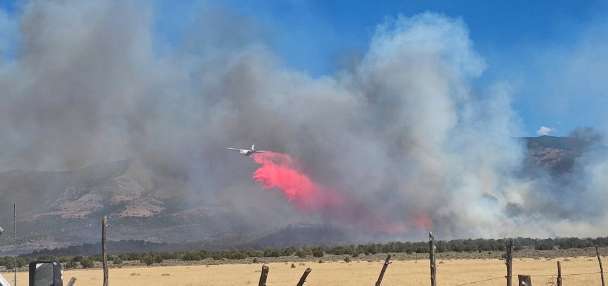
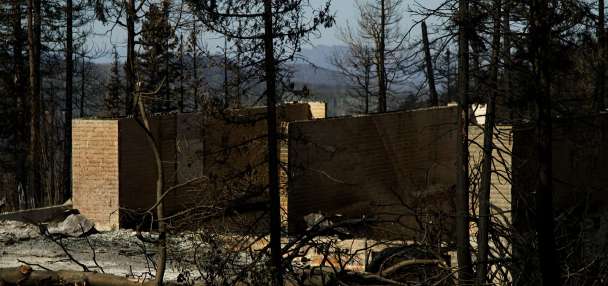
BEAVER — State officials believe that a fast-moving wildfire burning east of Beaver has likely destroyed dozens of structures.
It's also killed countless livestock and likely will set the region's timber industry back several decades, a legislator who lives in the region told colleagues on Thursday as the Cottonwood Fire rages on.
The wildfire grew to 70,992 acres by Thursday morning, according to Alyssa Mason, a public information officer for Great Basin Team 5, which is now assigned to fight the massive blaze.
While some rain fell overnight, officials estimate it was just 0.1 inches across the fire area and wasn't enough to begin any fire containment. The fire — one of many currently raging in the state — might be one of the most destructive blazes in Utah's history, said Gov. Spencer Cox, who was in Beaver on Wednesday.
That's due to the losses at Eagle Point Resort and hundreds of primary and secondary homes in the area. The damage in the area is "extensive," and the number of structures lost is likely "more than dozens," said Jamie Barnes, director of the Utah Division of Forestry, Fire and State Lands, and the state's forester.
An official number could be determined in the coming days.
While Eagle Point's owner said on Wednesday that the resort suffered "significant property loss," the resort posted photos of several structures standing on Thursday. These include chairlift buildings, lodges and cabins scattered throughout the property.
"These current images symbolize the resilience of the mountain, our team and this incredible community," resort officials said. "There is still a long road ahead, and our hearts remain with every owner, firefighter and first responder affected by the Cottonwood Fire."
The fire also burned infrastructure and other recreation areas; it took out livestock and likely impacted wildlife in an area that's vital for agriculture, hunting and fish, too, said Rep. Carl Albrecht, R-Richfield, as he described the scene to his colleagues during a legislative Federalism Commission meeting at the Utah Capitol on Thursday,
"We're in unprecedented territory right now," he said, joining the commission meeting remotely through video conference.
"Ranchers lost cows," he said. "They kind of thought, 'Well, we got a fire on the Beaver side, we got some time here,' but the way that fire moved, they didn't have time. So, a lot of cows were lost, recreation areas, power lines were disrupted; I'm sure a lot of wildlife. That's prime hunting for elk and deer. It's really going to hurt the economies in those two counties for some time."
The region likely lost "40 to 50 years" of forest timbering, as well, he added.
How conditions got so bad
Most of the fire is within the Beaver snowpack basin, which was one of many in the state that recorded a record-low snowpack this winter. However, it followed three straight years of near-normal or above-normal snowpacks, including a record high in 2023, per Natural Resources Conservation Service data.
Other parts of central and southern Utah had back-to-back years of record-low or near-record-low snowpack collections.
That meant years of vegetation growth quickly dried out, especially since the Beaver basin's snowpack reached 0 inches in early May, over a month earlier than normal and weeks earlier than the previous record.
There has been "very, very low" fuel moisture in the area, while low relative humidity in the area has helped the fire spread quickly, Barnes said. Albrecht added that conditions led to the moisture content in trees being "unheard of," causing trees to explode when they spark.
"Everything is so dry that the trees burn like cheatgrass," he said. "It's unprecedented and very, very scary. Disheartening. I feel bad for the people who have lost businesses, lost family cabins and a lot of memories."
Beaver's snowpack story is similar to many other parts of the state, including northern Utah. That has state officials on edge while they hope for a robust summer monsoon season.
"I'm concerned about the whole state right now," Barnes said. "This was something we were warned about. ... It's really picked up in the last couple of weeks."
Of course, monsoons could also introduce new challenges, including potential flooding and mudslides. She said her division is already planning out post-fire rehabilitation to address those issues once the fire is out.
Donations sought
Volunteers in Beaver gathered donated supplies Wednesday night for the frontline responders to use while tackling the fire, including food, water and care for eye irritation and ash.
Donations to support the efforts can be posted to the Cottonwood account at the Utah Independent Bank*.
A community meeting is scheduled for 7 p.m. Thursday night at the Beaver High School auditorium to provide an update on the situation.
"We're tough people. We'll get through it," Albrecht said. "This is the fourth fire in my house district in four years."
*KSL.com does not assure that the money deposited to the account will be applied for the benefit of the persons named as beneficiaries. If you are considering a deposit to the account, you should consult your own advisers and otherwise proceed at your own risk.