'%3e%3cpath%20d='M34.1406%205.85938C30.3906%202.10547%2025.3047%200%2020%200C14.6953%200%209.60938%202.10547%205.85938%205.85938C2.10938%209.61328%200%2014.6953%200%2020C0%2025.3047%202.10547%2030.3906%205.85938%2034.1406C9.61328%2037.8906%2014.6953%2040%2020%2040C25.3047%2040%2030.3906%2037.8945%2034.1406%2034.1406C37.8906%2030.3906%2040%2025.3047%2040%2020C40%2014.6953%2037.8945%209.60938%2034.1406%205.85938ZM37.0117%2023.543H31.1602V13.5391H27.6328V19.9414C28.1211%2020.6914%2028.3711%2021.582%2028.3711%2022.5625V22.625C28.3711%2023.668%2028.1172%2024.6055%2027.6328%2025.4297V26.6094H36.082C33.4883%2032.9375%2027.2891%2037.3789%2020.0039%2037.3789C10.3711%2037.3789%202.62109%2029.6289%202.62109%2020C2.62109%2010.3711%2010.3711%202.62109%2020%202.62109C29.6289%202.62109%2037.3789%2010.3711%2037.3789%2020C37.3789%2021.1484%2037.2617%2022.2656%2037.0508%2023.3477C37.0391%2023.4141%2037.0234%2023.4766%2037.0117%2023.543Z'%20fill='white'/%3e%3cpath%20d='M22.3086%2018.5352C20.4336%2018.125%2019.9531%2017.8398%2019.9766%2017.1836V17.1406C19.9766%2016.6992%2020.3477%2016.2148%2021.4023%2016.2148C22.582%2016.2148%2023.8867%2016.6797%2025.0781%2017.4766L26.8516%2015.0195C25.4453%2013.8906%2023.707%2013.3398%2021.5547%2013.3398C18.5195%2013.3398%2016.4375%2015%2016.4063%2017.4766V17.5352C16.3633%2020.2617%2018.5859%2020.9805%2021.293%2021.6016C23.0391%2021.9766%2023.5703%2022.3164%2023.5703%2022.9609L23.5469%2022.9766C23.5469%2023.3906%2023.2578%2023.7031%2022.7852%2023.8359C22.5742%2023.9062%2022.1289%2023.9727%2021.5156%2023.9727C20.7617%2023.9727%2019.7539%2023.8633%2018.6328%2023.4844C18.0898%2023.2891%2017.4727%2023.0039%2016.8047%2022.6133L20.1406%2026.625C20.2813%2026.6602%2021.0977%2026.8516%2021.7734%2026.8516C25.0039%2026.8516%2027.0859%2025.2461%2027.1094%2022.6328V22.5703C27.1602%2020.1133%2025.2148%2019.1719%2022.3086%2018.5352Z'%20fill='white'/%3e%3cpath%20d='M5.24219%2013.5664V26.6133H8.75391V23.7578L10.2969%2021.9531L14.2031%2026.6133H18.3867L12.3555%2019.5195L17.4023%2013.5664H13.4531L8.75391%2019.0586V13.5664H5.24219Z'%20fill='white'/%3e%3c/g%3e%3cdefs%3e%3cclipPath%20id='clip0_97_2430'%3e%3crect%20width='40'%20height='40'%20fill='white'/%3e%3c/clipPath%3e%3c/defs%3e%3c/svg%3e)


- O'Leary Digital will keep pursuing its Box Elder County data center project, notwithstanding the apparent backlash faced by three politicians who backed the plans.
- Utah Senate President Stuart Adams and two Box Elder County commissioners lost Tuesday in their re-election bids, according to preliminary vote totals.
- The three officials had voted in favor of measures allowing the project to proceed.
SALT LAKE CITY — After the defeat of three Utah leaders who helped move the Stratos data center project forward, a rep from O'Leary Digital, the firm spearheading the plans, says the efforts will continue.
"From our perspective, it's business as usual," said Paul Palandjian, the O'Leary Digital co-founder and chief executive officer. "Our MIDA designation and master-developer status are in place and unaffected by the election, and we're continuing to move through the established regulatory, permitting and design-and-engineering process. Elections change personnel, they don't change the work in front of us."
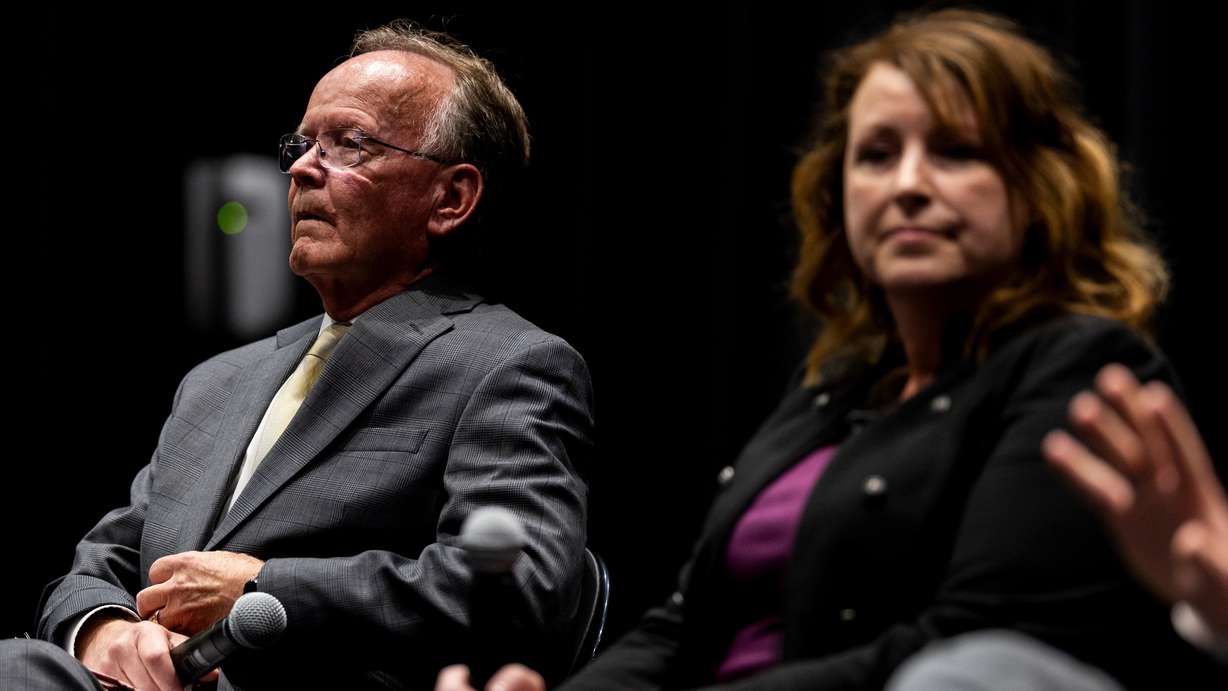
In a rebuke by voters to the data center initiative, Utah Senate President Stuart Adams, who leads the board of Utah's Military Installation Development Authority, or MIDA, was ousted in his Senate re-election bid in primary voting that culminated Tuesday. Box Elder County voters on Tuesday also pushed out Box Elder County Commissioners Boyd Bingham and Lee Perry, according to preliminary vote totals, tabbing their Republican challengers on the primary ballot instead.
The MIDA Board on April 24 approved four resolutions and a tax ordinance central to the Stratos Project Area plans, as the data center proposal is called. Box Elder County commissioners followed up on May 4, approving two additional resolutions key to the project, which has sparked strong opposition from critics worried it will adversely impact the environment.
Critics of the plans and other observers chalked up the losses by Adams, Bingham and Perry at least in part to voter discontent over their role in moving the project forward. In a statement to KSL, Palandjian acknowledged the voters and vowed to listen to the varied players involved in the initiative, even if Tuesday's results don't cause them to slow down.
"We have real respect for the voters of Box Elder County and for the process, and we're going to keep doing what we've done from day one — listen and learn," Palandjian said.
O'Leary Digital reduced the project area in response to calls from Adams, and Palandjian said the company would continue to work with MIDA, Box Elder County and others in addressing concerns about the project's potential impact to the environment, water availability and the Great Salt Lake. At the same time, he lamented misinformation about the project that he said has circulated since word of the plans publicly emerged in April.
The electoral campaigning "saw a fair amount of misinformation — including a development footprint described as far larger than what's actually planned and claims about heat that simply aren't how the technology works," he said. "That had an effect, and politics is politics. But the facts haven't changed, and neither have we. We're steadfast, and we're moving forward."
'Keep up the battle'
Just as O'Leary Digital is committed to moving forward, Brenna Williams of Box Elder Accountability Referendum, or BEAR, which has fought the plans, won't let up. BEAR members are involved in two lawsuits aimed at halting the data center plans.
"We'll keep up the battle," she said.
There's a lot of money behind the data center project and she doesn't expect Tuesday's election results to slow O'Leary Digital, named for celebrity businessman Kevin O'Leary, chairman of the board of the company. "It's not going to change anything, I don't think. O'Leary's totally tone deaf on the project and so are the people that are pushing the project," she said.
At the same time, while voter discontent with Bingham and Perry over the data center issue may have led voters to oust them, she worries the preliminary winners in the two races are more inclined to support the project. Vance Smith defeated Bingham in the Republican primary for one county commission seat, according to preliminary vote totals, while Nathan Tueller defeated Perry in the GOP primary for another.
The two challengers, though, countered that characterization, offering a skeptical view of the data center plans and their evolution. Smith will face Alan Williams, an unaffiliated candidate and the wife of Brenna Williams, in the November general election, while Tueller won't face an opponent.
"I completely disagree with how it came about, how it was handled," Smith said, citing pressure on Box Elder County officials from state leaders to allow the data center plans to proceed. The county "was kind of bullied in by the state."
Indeed, both Perry and Bingham defended their May votes for the data center plans, saying Box Elder County officials had limited sway in the matter given the earlier MIDA action. The best they could do, they have argued, was to insert provisions into the accords protecting the county and establishing guidelines for development.
Smith said he wants to gather more information on the data center plans and acknowledged the strong opposition to the proposal.
"The biggest trick with this particular project is the amount of control the state has given themselves, and so halting the project is really tricky," he said. "It's less of telling them they can't do it and more of either just being completely disagreeable so they kind of go away because they're just not getting what they want out of us or just really pushing back and making sure that there's a lot of protections in place."
Offering his view of the data center plans, Tueller said he's pro-business and favors growth. But he doesn't want to "give special deals away," he said, adding that if development plans aren't transparent, "I'm not for that type of stuff."
He particularly questioned the property tax and energy tax breaks MIDA granted the project developers, but also said many details of the plans have yet to emerge.
"I'm for growth and moving forward, but if it's … backdoor deals or if it's non-transparent, which I think is the key phrase used in this process, I would be very against that until we get everything out in the front," he said.

Related stories
Most recent Business stories
Related topics
 Tim Vandenack