'%3e%3cpath%20d='M34.1406%205.85938C30.3906%202.10547%2025.3047%200%2020%200C14.6953%200%209.60938%202.10547%205.85938%205.85938C2.10938%209.61328%200%2014.6953%200%2020C0%2025.3047%202.10547%2030.3906%205.85938%2034.1406C9.61328%2037.8906%2014.6953%2040%2020%2040C25.3047%2040%2030.3906%2037.8945%2034.1406%2034.1406C37.8906%2030.3906%2040%2025.3047%2040%2020C40%2014.6953%2037.8945%209.60938%2034.1406%205.85938ZM37.0117%2023.543H31.1602V13.5391H27.6328V19.9414C28.1211%2020.6914%2028.3711%2021.582%2028.3711%2022.5625V22.625C28.3711%2023.668%2028.1172%2024.6055%2027.6328%2025.4297V26.6094H36.082C33.4883%2032.9375%2027.2891%2037.3789%2020.0039%2037.3789C10.3711%2037.3789%202.62109%2029.6289%202.62109%2020C2.62109%2010.3711%2010.3711%202.62109%2020%202.62109C29.6289%202.62109%2037.3789%2010.3711%2037.3789%2020C37.3789%2021.1484%2037.2617%2022.2656%2037.0508%2023.3477C37.0391%2023.4141%2037.0234%2023.4766%2037.0117%2023.543Z'%20fill='white'/%3e%3cpath%20d='M22.3086%2018.5352C20.4336%2018.125%2019.9531%2017.8398%2019.9766%2017.1836V17.1406C19.9766%2016.6992%2020.3477%2016.2148%2021.4023%2016.2148C22.582%2016.2148%2023.8867%2016.6797%2025.0781%2017.4766L26.8516%2015.0195C25.4453%2013.8906%2023.707%2013.3398%2021.5547%2013.3398C18.5195%2013.3398%2016.4375%2015%2016.4063%2017.4766V17.5352C16.3633%2020.2617%2018.5859%2020.9805%2021.293%2021.6016C23.0391%2021.9766%2023.5703%2022.3164%2023.5703%2022.9609L23.5469%2022.9766C23.5469%2023.3906%2023.2578%2023.7031%2022.7852%2023.8359C22.5742%2023.9062%2022.1289%2023.9727%2021.5156%2023.9727C20.7617%2023.9727%2019.7539%2023.8633%2018.6328%2023.4844C18.0898%2023.2891%2017.4727%2023.0039%2016.8047%2022.6133L20.1406%2026.625C20.2813%2026.6602%2021.0977%2026.8516%2021.7734%2026.8516C25.0039%2026.8516%2027.0859%2025.2461%2027.1094%2022.6328V22.5703C27.1602%2020.1133%2025.2148%2019.1719%2022.3086%2018.5352Z'%20fill='white'/%3e%3cpath%20d='M5.24219%2013.5664V26.6133H8.75391V23.7578L10.2969%2021.9531L14.2031%2026.6133H18.3867L12.3555%2019.5195L17.4023%2013.5664H13.4531L8.75391%2019.0586V13.5664H5.24219Z'%20fill='white'/%3e%3c/g%3e%3cdefs%3e%3cclipPath%20id='clip0_97_2430'%3e%3crect%20width='40'%20height='40'%20fill='white'/%3e%3c/clipPath%3e%3c/defs%3e%3c/svg%3e)


- A controversial Box Elder County data center proposal helped unseat Utah's Senate president and two county commissioners.
- Two other state lawmakers lost primaries Tuesday to well known challengers.
- Two incumbent Republicans and a former Democratic congressman cruised to primary wins in congressional races.
SALT LAKE CITY — The controversial data center project in Box Elder County figured big in Tuesday's primary elections, factoring in the defeat of Senate President Stuart Adams and two Box Elder County commissioners.
Adams, R-Layton, who conceded Tuesday night to Republican challenger Stephanie Hollist, helped shepherd the project forward as head of Utah's Military Installation Development Authority, or MIDA. Box Elder County Commissioners Boyd Bingham and Lee Perry, who conceded Wednesday to their GOP challengers, Vance Smith and Nathan Tueller, voted in May for two resolutions allowing the data center plans to proceed.
"Everybody who touched the data center went down," said Brenna Williams, a member of a group that has fought the data center plans, Box Elder Accountability Referendum, or BEAR. "People just wanted to send a message."
Adams' stunning defeat on Tuesday is the only time in modern Utah history that a sitting Senate president or House speaker has lost in a primary reelection bid.
And while Adams' role in advancing the Stratos data center project likely tipped his campaign into the losing column, some experts say angst about the status quo in Utah politics has been bubbling up long before the data center took center stage this year.
The president faced bipartisan backlash last year over claims that he helped influence a new law that was inspired by a criminal case involving his step-granddaughter, who was accused of having sex with a 13-year-old when she was 18 and in high school.
Taylor Morgan, a partner with Morgan and May Public Affairs, called Tuesday's result a "referendum by the voters on President Adams and all of the anxiety among voters over the last two years," saying GOP leadership in the Legislature has "not (done) a great job of communicating with voters." He pointed to "snowballing" issues in recent years, such as fights over redistricting, public unions and other issues.
"Then, of course, the data center really pushed it all over the top and Stuart became the focal point of that," he said. "It is a huge, huge shakeup and it is sending shock waves throughout the state, and frankly, the nation, on the data center issue. Utah legislators of both parties, but especially Republican leadership, are taking notice and they, I think, have learned a very important lesson because of Stuart's loss that they need to do a much better job of engaging with their voters."
Leah Murray, director of Weber State University's Walker Institute of Politics and Public Service, agreed, saying Adams' loss reflects a building disconnect some voters feel with state government.
"For Stuart Adams, it's not just the data center," she said. "It is the data center, (and) it is, 'We are done. We have been annoyed at state legislative leadership for a while. You are the incumbent we can make pay for that.' And so he pays for it."
Hollist did a good job of capitalizing on the outcry over the data center en route to unseating Adams, which could have played into existing concerns voters had about how they were being represented, according to University of Utah political science professor Matthew Burbank. And although Adams tried to soften the blow by coming out in support of shrinking the data center's footprint, it was too little, too late.
"That really cemented people in that race looking for another candidate to say, 'I'm willing to make a change now,'" Burbank said. "Usually incumbents don't run into that problem, particularly when you're the president of the Senate, but I think this was a case where there were so many things and (the data center) really kind of solidified opposition."
Two other prominent state lawmakers lost their reelection bids on Tuesday night: Sen. Dan McCay, R-Riverton, and Rep. Trevor Lee, R-Layton. Morgan said those results don't necessarily reflect any anti-incumbent sentiment among the Utah electorate, but rather are the result of strong challenges from state Rep. Doug Fiefia, R-Herriman, and Davis County Commissioner Bob Stevenson, respectively.
Morgan said McCay and his wife, Tawnee McCay, a former Riverton city councilwoman, are "institutions" in the city.
"Honestly, I think that race really came down to Doug Fiefia being a really strong challenger, Doug Fiefia raising money and spending his money well, and frankly, Doug Fiefia worked harder than any Senate legislative candidate I've seen in a very long time," Morgan said.
Lee's personal scandals, including allegations he tried to leverage his office to benefit a former employer in exchange for money to help build his new house, likely dragged him down in his race against Stevenson.
Murray agreed that specific dynamics played a large role in both incumbents losing, but said she sees a "real anti-incumbency wave" underway, which led to so many incumbents facing strong challengers in the first place.
Paired with the anger over the data center, she believes the results of Tuesday's election send a message to those in power.
"It shows that voters are paying attention," Murray said. "You never know when an issue is going to land. Most of the time, as a political person, you're probably getting it right, but you never know. … There are humans out here who are voting for you. So, behave. Everyone needs to be taking into account being held accountable by their constituents and what it shows is that it's happening."
Box Elder incumbents fall flat
Both Smith and Tueller attributed their showing to a desire for change among Box Elder County voters. Bingham and Perry both offered concessionary remarks on Wednesday, meaning Smith will face Alan Williams, an unaffiliated candidate, in the November general election, while Tueller won't face an opponent.
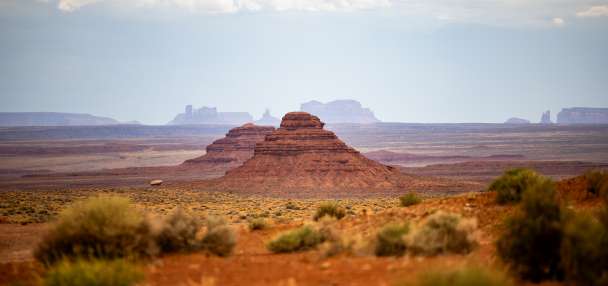
However, they also said the data center project factored in their showings against the incumbents, who were both seeking their second terms. The long-range proposal, which has sparked concern among those worried about its potential environmental impact, calls for a data center in the Hansel Valley area of Box Elder County and the development of up to 9 gigawatts of power-generating capacity to serve it.
"There's definitely some votes out there that are mad about the data center," Smith said. "But also just kind of a pattern of behavior and history over the last few years just drove some folks to be willing to try something new."
Tueller, currently serving on the Perry City Council, said he was "shocked" that voter turnout in Box Elder County, around 33%, wasn't higher given the strong sentiments the data center plans generated. Still, many people asked him questions about the project as he campaigned and it factored in his race.
What the congressional results say about Utah politics
Tuesday's congressional primaries went largely the way many expected, with former Rep. Ben McAdams emerging from a four-man Democratic primary in Utah's 1st Congressional District and Reps. Blake Moore and Celeste Maloy are surviving primary challenges in the 2nd and 3rd Districts.
What was surprising was the margin of victories in two of those races.
Maloy had a particularly strong showing, trouncing former state Rep. Phil Lyman with more than two-thirds of the vote. It's a far cry from two years ago when she found herself in a nail-biter primary that was decided by fewer than 200 votes and required a recount.
Although she was the incumbent, the 3rd Congressional District was significantly changed from where she ran in 2024, meaning most of the voters in the district had never seen Maloy's name on a primary ballot before.
"I think her margin of victory in that new district — that's really significant," Morgan said. "I think she has some staying power and she has some appeal among rural voters, and really further-right conservative voters and mainstream Republicans. She definitely has a bright future."
That race also signals a weakening in the support for Lyman, whose strong base of support hasn't been enough to get him over the finish line in races for governor in 2024 and party chairman last year.
"Phil Lyman's power is not just waning, I would say Phil Lyman's power has evaporated," Morgan said. "Frankly, he burned a lot of bridges among all kinds of Republicans, even Republicans in his home county, during and after his gubernatorial loss. … He chose a brand of politics that was appealing to too small of a set of voters in the Republican Party."
McAdams, a moderate Democrat, faced three opponents to his left — a dynamic that was expected to benefit him as the trio of Nate Blouin, Liban Mohamed and Michael Farrell split the progressive vote. Blouin even called on his fellow progressives to drop out of the race after an internal poll showed him in second behind McAdams, hoping a one-on-one matchup would give Utah progressives the best chance of victory.
But rather than eke out a win with a mere plurality of the vote, McAdams looks to have secured a dominant victory with more than 56% support, as of Wednesday afternoon. The results of a four-person race can't be extrapolated to assume the vote share in a hypothetical one-on-one matchup, but it appears McAdams didn't need any extra help.
"You would have thought a possible narrative coming out of CD1 was going to be the progressive split, so Ben McAdams wins as a result of that spoil, but he won pretty handily," Murray said.
And although some expected Utah's new congressional map — which gave Democrats an advantage in the 1st Congressional District and increased the GOP's advantage in the remaining districts — to empower candidates further to either end of the political spectrum, McAdams, Maloy and Moore all advanced against opponents trying to outflank them on the left and the right.
"I am intrigued (by) what that means for national parties and where they're moving," Murray said. "Are (voters) signaling we want more centrist or moderate or reasonable people? Maybe they are. Even when you design the district that should benefit a far-left or far-right person, that the more centrist people come through as powerfully as I think McAdams and Maloy did, that I thought was interesting."

Related stories
Most recent Politics stories
Related topics

 Tim Vandenack