'%3e%3cpath%20d='M34.1406%205.85938C30.3906%202.10547%2025.3047%200%2020%200C14.6953%200%209.60938%202.10547%205.85938%205.85938C2.10938%209.61328%200%2014.6953%200%2020C0%2025.3047%202.10547%2030.3906%205.85938%2034.1406C9.61328%2037.8906%2014.6953%2040%2020%2040C25.3047%2040%2030.3906%2037.8945%2034.1406%2034.1406C37.8906%2030.3906%2040%2025.3047%2040%2020C40%2014.6953%2037.8945%209.60938%2034.1406%205.85938ZM37.0117%2023.543H31.1602V13.5391H27.6328V19.9414C28.1211%2020.6914%2028.3711%2021.582%2028.3711%2022.5625V22.625C28.3711%2023.668%2028.1172%2024.6055%2027.6328%2025.4297V26.6094H36.082C33.4883%2032.9375%2027.2891%2037.3789%2020.0039%2037.3789C10.3711%2037.3789%202.62109%2029.6289%202.62109%2020C2.62109%2010.3711%2010.3711%202.62109%2020%202.62109C29.6289%202.62109%2037.3789%2010.3711%2037.3789%2020C37.3789%2021.1484%2037.2617%2022.2656%2037.0508%2023.3477C37.0391%2023.4141%2037.0234%2023.4766%2037.0117%2023.543Z'%20fill='white'/%3e%3cpath%20d='M22.3086%2018.5352C20.4336%2018.125%2019.9531%2017.8398%2019.9766%2017.1836V17.1406C19.9766%2016.6992%2020.3477%2016.2148%2021.4023%2016.2148C22.582%2016.2148%2023.8867%2016.6797%2025.0781%2017.4766L26.8516%2015.0195C25.4453%2013.8906%2023.707%2013.3398%2021.5547%2013.3398C18.5195%2013.3398%2016.4375%2015%2016.4063%2017.4766V17.5352C16.3633%2020.2617%2018.5859%2020.9805%2021.293%2021.6016C23.0391%2021.9766%2023.5703%2022.3164%2023.5703%2022.9609L23.5469%2022.9766C23.5469%2023.3906%2023.2578%2023.7031%2022.7852%2023.8359C22.5742%2023.9062%2022.1289%2023.9727%2021.5156%2023.9727C20.7617%2023.9727%2019.7539%2023.8633%2018.6328%2023.4844C18.0898%2023.2891%2017.4727%2023.0039%2016.8047%2022.6133L20.1406%2026.625C20.2813%2026.6602%2021.0977%2026.8516%2021.7734%2026.8516C25.0039%2026.8516%2027.0859%2025.2461%2027.1094%2022.6328V22.5703C27.1602%2020.1133%2025.2148%2019.1719%2022.3086%2018.5352Z'%20fill='white'/%3e%3cpath%20d='M5.24219%2013.5664V26.6133H8.75391V23.7578L10.2969%2021.9531L14.2031%2026.6133H18.3867L12.3555%2019.5195L17.4023%2013.5664H13.4531L8.75391%2019.0586V13.5664H5.24219Z'%20fill='white'/%3e%3c/g%3e%3cdefs%3e%3cclipPath%20id='clip0_97_2430'%3e%3crect%20width='40'%20height='40'%20fill='white'/%3e%3c/clipPath%3e%3c/defs%3e%3c/svg%3e)


- Utah attorney Steve Burton said much of the outrage in the viral Lego saga could be better directed at Utah's code.
- Burton suggests there could be constitutional violations behind Schneider's Utah charges, but vague statutes may hinder his defense.
- Schneider is a YouTuber known as Reckless Ben whose videos seeking to return an allegedly stolen Star Wars Lego collection have gone viral.
SALT LAKE CITY — It's rare that misdemeanor cases in Utah catch attention like the case filed against Ben Schneider, better known as "Reckless Ben," and one Utah lawyer thinks some of the public's outrage over what is shown in the videos featuring American Fork police may be better directed towards Utah law.
The YouTuber was attempting to get justice for a man who said his family's Star Wars Lego collection had been stolen when an Oregon franchise of the Utah-based company, Bricks and Minifigs, changed hands. Videos spiraled into lawsuits and criminal charges as Schneider had multiple encounters with the American Fork Police Department while confronting the new franchise owner.
Steve Burton, a Utah attorney and director of the Utah Defense Attorney Association, was pulled into the Lego saga like many others — but as someone who focuses on advocating for defendants, he hopes attention on this case could lead to some changes.
He said he would encourage Schneider to get a good attorney, well-versed in constitutional violations, to represent him. Burton said the American Fork case has some constitutional violations and a "treasure trove of crazy legal issues."
"There's a lot to work with there," Burton said.
This week, Schneider said his next video in the series is complete, but he cannot post it due to a temporary order from Utah 4th District Judge Tony Graf Jr. in a civil defamation lawsuit filed by Bricks and Minifigs. In a hearing on June 30, Graf will reconsider the order after hearing from both sides; at this point, he has only heard from Bricks and Minifigs. The company also announced it cut ties with the new owners of the Oregon franchise and closed the location.
Body camera footage
In his videos, Ben Schneider calls on his followers to ask the American Fork Police Department to release its full body camera footage, but Burton said at least some of the audio redactions are legal under Utah statutes. Specifically, any conversations between officers are not required to be recorded.
The attorney said he has seen people online pointing to that as evidence that the police are "dirty cops." He said the legislature allowed it so that officers, especially new ones, could ask questions privately and not look incompetent.
"Everybody, when they see this, thinks that's like wrong and shady and underhanded … is that a problem with the Utah statute that we essentially allow police officers to cover up their discussions with other police officers and actually hide what they were thinking and what they were talking about in the moment?" Burton questioned.
As a defense attorney, he said that if the government is going to try to prove someone is guilty beyond a reasonable doubt, he would want jurors to hear whether there are conversations in which officers say they are not sure a crime has been committed.
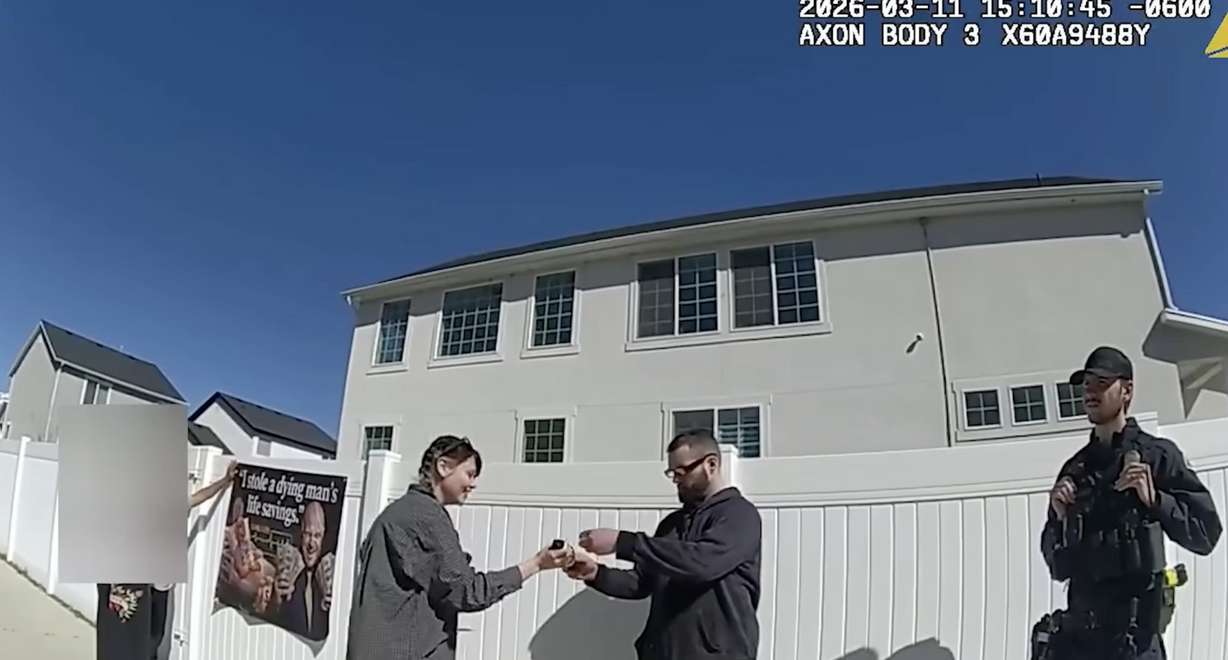
Utah's body camera law also doesn't require departments to use them, although most do at this point. At the time it was passed, Burton said the infrastructure and storage costs for body cameras were a significant investment, but now they are less of a barrier.
The course of Schneider's case could change, however, with a lot of high-quality footage from his point of view.
Burton said people should record as many of their interactions with police as possible and have the right to do so — but he also said to follow officers' directions because there are "tons of exceptions." For example, officers are allowed to restrict the time, manner and place of recording to protect victims or ensure safety.
The American Fork Police Department released much of the body camera footage they had of the interactions publicly and a video where the department's chief, Cameron Paul, went through their records from four days of interactions with Schneider. He said Schneider's videos were "presented in a way that calls into question some of the actions of our department," to explain why he decided to speak out.
He emphasized that many people have strong feelings about the Lego dispute, but the American Fork Police Department's actions did not support anyone involved in that separate dispute.
"Our responsibility was to respond to conduct reported here in our community, evaluate the facts available to our officers at the time, and enforce Utah law as officers established probable cause that a crime had occurred. The fact that someone may have believed they were wronged financially does not exempt any individual from the laws governing harassment, trespassing, stalking or other conduct within our jurisdiction," Paul said.
Is stalking the right charge?
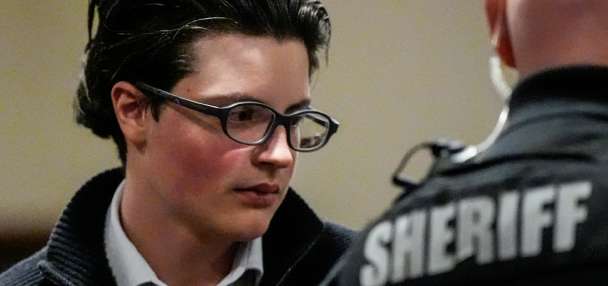
Schneider has been charged in the 4th District Court with stalking, a class A misdemeanor, and targeted residential picketing, a class B misdemeanor, based on interactions with the American Fork Police Department in March, when he tried to serve the Bricks and Minifigs franchise owner, Josh Johnson, with an Oregon lawsuit.
Burton said the Utah Defense Attorney Association tried to change the stalking statute about five years ago, arguing that someone should need to fear for their physical safety for an action to qualify as stalking, but currently, only "emotional distress" is required. He said the law also requires a "course of conduct," which can be interpreted as simply more than one action.
According to the attorney, it was written so police and prosecutors could charge stalking in each of the cases they wanted to, but a broad statute is easier to abuse.
"It's crazy how broadly that statute is written," Burton said. "It allows the government to have the power to charge that and potentially convict people when it's a situation where the public themselves don't see it as stalking.
In his video, Paul said officers arrested Schneider for stalking after he showed up at Johnson's home three days in a row and admitted to filming Johnson, asking others to film Johnson, sending a package of rubber ducks in an attempt to get a signature, and being asked to leave by officers multiple times.
In response to those charges, 4th District Judge Thomas Low ordered Schneider to not have any contact with Johnson. Serving court documents, however, is an exception to that order.
Schneider was also charged in Provo Justice Court on April 7 with disorderly conduct, a class C misdemeanor, and trespassing, a class B misdemeanor, based on actions at the Bricks and Minifigs corporate office on Dec. 10, 2025.
Burton said Utah's statute for disorderly conduct is also vague and broad.
The residential picketing law was enacted recently, and Burton said it may be so broad as to violate First Amendment rights.
With the information currently available, he is unsure whether Schneider's actions constitute residential picketing. Videos show police arriving while Schneider is posting a sign but do not show people there "picketing" — being stationed there or marching back and forth.
Legal liability?
One example is a vehicle Schneider was in being pulled over for running a stop sign, when the video looks like the driver did "exactly what he was required to do," according to Burton.
He said that from the questions officers asked, it is obvious the stop sign was just a reason for the stop, which is not illegal, but he said it will "almost certainly" be ruled an unconstitutional seizure violating the rights of each person in the car. He noted there is no evidence the car did not stop.
Burton said this opens up the American Fork Police Department to legal liability.
"There's lots of seemingly glaring problems with the way that the police are approaching the situation," he said.
Paul said the car Schneider was in was pulled over both "for failing to stop before the stop line at a stop sign and failing to stop completely at that stop sign."
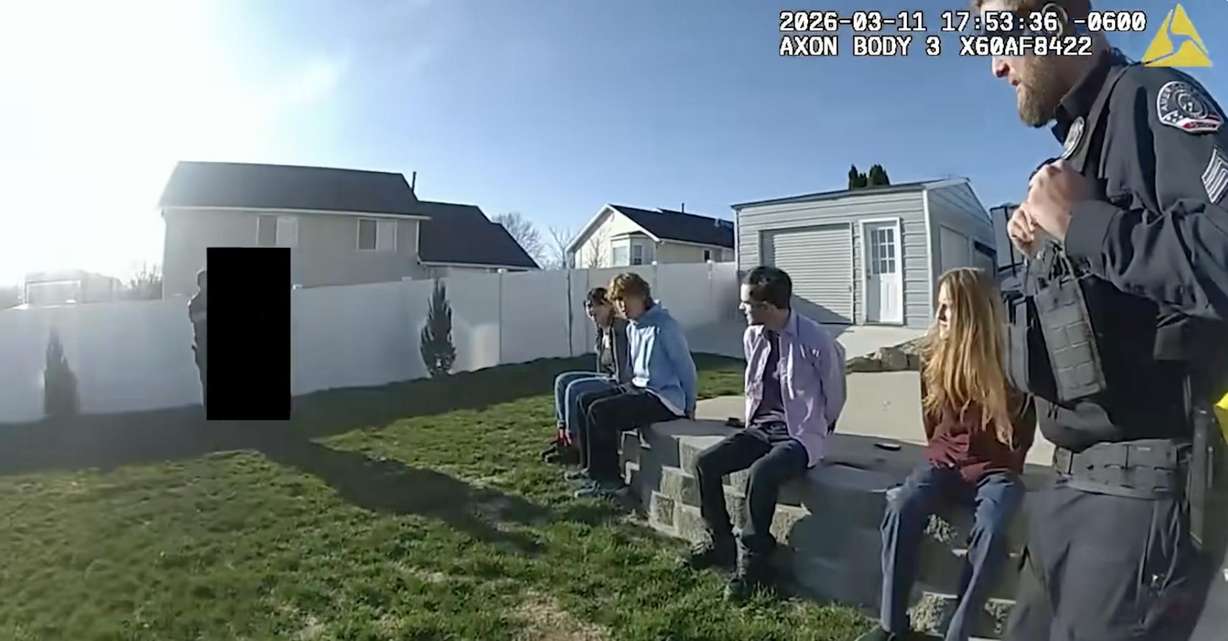
The search warrant that brought police to Schneider's Airbnb also has some problems, Burton said. It states it is investigating stalking, but it said officers are looking for stolen Legos as evidence of the crime, which does not make sense. He also says that while serving the warrant, they refer to Schneider as the "target," when the target of a search warrant should be property.
"They were clearly using a search warrant ... in order to effectuate an arrest," Burton said.
He said it is fine with a valid search warrant, but he does not think there was one in this case. He also said someone can be detained during a search, but only if there is evidence they committed a crime, which officers did not have for the other guests at Schneider's Airbnb.
Paul's statement says officers went to the Airbnb to arrest Schneider for stalking after he was on a video call with people placing a sign near Johnson's home a day after he had been booked for stalking. He said they asked for a search warrant after the property owner said they had overheard the group talking about stolen Legos, and they included that in the search warrant. The officer said all five people with Schneider at the Airbnb were transported to the police station, and the four adults were interviewed but Schneider was the only one booked or arrested.
If defense attorneys always had the resources to look at each case in detail, Burton said they would likely find more issues like these, but he does believe a "clear majority" of police officers are trying to follow the law. He said some departments are better at prioritizing constitutional rights; at other times, interoffice pressure to reach a specific result can override constitutional duties.