'%3e%3cpath%20d='M34.1406%205.85938C30.3906%202.10547%2025.3047%200%2020%200C14.6953%200%209.60938%202.10547%205.85938%205.85938C2.10938%209.61328%200%2014.6953%200%2020C0%2025.3047%202.10547%2030.3906%205.85938%2034.1406C9.61328%2037.8906%2014.6953%2040%2020%2040C25.3047%2040%2030.3906%2037.8945%2034.1406%2034.1406C37.8906%2030.3906%2040%2025.3047%2040%2020C40%2014.6953%2037.8945%209.60938%2034.1406%205.85938ZM37.0117%2023.543H31.1602V13.5391H27.6328V19.9414C28.1211%2020.6914%2028.3711%2021.582%2028.3711%2022.5625V22.625C28.3711%2023.668%2028.1172%2024.6055%2027.6328%2025.4297V26.6094H36.082C33.4883%2032.9375%2027.2891%2037.3789%2020.0039%2037.3789C10.3711%2037.3789%202.62109%2029.6289%202.62109%2020C2.62109%2010.3711%2010.3711%202.62109%2020%202.62109C29.6289%202.62109%2037.3789%2010.3711%2037.3789%2020C37.3789%2021.1484%2037.2617%2022.2656%2037.0508%2023.3477C37.0391%2023.4141%2037.0234%2023.4766%2037.0117%2023.543Z'%20fill='white'/%3e%3cpath%20d='M22.3086%2018.5352C20.4336%2018.125%2019.9531%2017.8398%2019.9766%2017.1836V17.1406C19.9766%2016.6992%2020.3477%2016.2148%2021.4023%2016.2148C22.582%2016.2148%2023.8867%2016.6797%2025.0781%2017.4766L26.8516%2015.0195C25.4453%2013.8906%2023.707%2013.3398%2021.5547%2013.3398C18.5195%2013.3398%2016.4375%2015%2016.4063%2017.4766V17.5352C16.3633%2020.2617%2018.5859%2020.9805%2021.293%2021.6016C23.0391%2021.9766%2023.5703%2022.3164%2023.5703%2022.9609L23.5469%2022.9766C23.5469%2023.3906%2023.2578%2023.7031%2022.7852%2023.8359C22.5742%2023.9062%2022.1289%2023.9727%2021.5156%2023.9727C20.7617%2023.9727%2019.7539%2023.8633%2018.6328%2023.4844C18.0898%2023.2891%2017.4727%2023.0039%2016.8047%2022.6133L20.1406%2026.625C20.2813%2026.6602%2021.0977%2026.8516%2021.7734%2026.8516C25.0039%2026.8516%2027.0859%2025.2461%2027.1094%2022.6328V22.5703C27.1602%2020.1133%2025.2148%2019.1719%2022.3086%2018.5352Z'%20fill='white'/%3e%3cpath%20d='M5.24219%2013.5664V26.6133H8.75391V23.7578L10.2969%2021.9531L14.2031%2026.6133H18.3867L12.3555%2019.5195L17.4023%2013.5664H13.4531L8.75391%2019.0586V13.5664H5.24219Z'%20fill='white'/%3e%3c/g%3e%3cdefs%3e%3cclipPath%20id='clip0_97_2430'%3e%3crect%20width='40'%20height='40'%20fill='white'/%3e%3c/clipPath%3e%3c/defs%3e%3c/svg%3e)




KEY TAKEAWAYS
- Some 373 new laws took effect in Utah on Wednesday.
- Restrictions on kratom sales and changes to voter privacy are among them.
- They also include helmet requirements for e-bike riders under 21 and data center water use reporting.
SALT LAKE CITY — A majority of the 541 laws approved by the Utah Legislature this year took effect Wednesday, including changes to the state's privacy options for voters, restrictions on the sale of kratom and helmet requirements for younger e-bike riders.
Wednesday marks 60 days since the end of Utah's legislative session, the typical effective date for new laws that don't involve new spending for the next fiscal year, which begins in July. Some 373 laws are now effective.
While many make minor or technical changes to state code, some will impact a broader swath of Utahns. A full list of new laws can be found at the Legislature's website.
Here are just a few of the new laws taking effect and how they might impact you:
Transportation
- HB128 removes the requirement that drivers signal their intention to turn when they enter or exit a roundabout.
- HB381 requires e-bike riders under the age of 21 to wear a helmet, and allows police to take possession of e-bikes ridden by minors who don't follow the law. E-bike riders who are intoxicated can also be charged with a DUI under the new law.
- SB242, an omnibus transportation bill, limits Salt Lake City's ability to implement lane-reduction projects on most of the city's biggest roads without the state's buy-in.
Outdoors and environment
- HB12 enables Utah's state parks to use certain grant money to make improvements to increase access for visitors with disabilities.
- HB60 changes what the state engineer can factor in when considering protests to water rights claims. The law directs the engineer to consider the claim's impact on "the beneficial use of water; or the quantity, quality or availability of water," but not the "detriment to the public welfare."
- HB76 requires the operators of large data centers to regularly provide the government with information about water use and efforts made to reduce water consumption. A proposed large data center in Box Elder County has recently raised concerns from some who worry that the project will sap water resources and harm the health of the Great Salt Lake.
Health and family
- HB15 changes the timeline for lawmakers to respond to any future congressional changes to the Medicaid insurance program, and tells the state Department of Health and Human Services to come up with plans for the state to respond if federal Medicaid funds are reduced.
- HB21 requires assisted living facilities to notify the state before closing or being sold. It also prevents them from taking in new clients after filing a notice of closure, and from closing or changing their use before "all affected residents have been relocated to an appropriate alternative setting."
- HB23 requires the state to post on a public website information for Utahns to learn more about laws regarding public accommodations for service animals.
- HB50 makes several changes to the child protection ombudsman program, which was created to investigate and resolve complaints made against the Division of Child and Family Services. The law requires online information about parental rights and state responsibilities for children. It also requires caseworkers or law enforcement to inform parents of the child protection ombudsman when removing a child from the parent's custody.
- HB51 makes several changes to adoption and adoption agencies, including clarifying the rights of birth and adoptive parents, clarifying that birth parents can revoke consent in limited circumstances and requiring that adoption agencies include certain disclosures in advertisements.
- HB71 directs the state to begin studying the "feasibility and cost" of creating a database of behavioral health providers in the state, which would allow Utahns to search for providers, see what services they offer and which insurers they contract with. Initial findings from the study will be presented to lawmakers in November.
- SB45 restricts the sale of the drug kratom, except in pure leaf form, and bans companies from selling the drug in gas stations and other convenience stores. An Oklahoma-based kratom manufacturer sued over the law in March, but it will take effect after a federal judge denied the company's request for a preliminary injunction blocking the law on Monday.
- SB174 allows healthcare providers to opt out of performing certain services that violate their religious beliefs or conscience. The law requires providers to give their employers advance notice of any services they will not provide.
- SB201 prohibits animal shelters from euthanizing dogs or cats in the shelter, unless there are "no reasonable alternatives to euthanasia." It requires shelters to notify other shelters and rescue groups and meet several other requirements before proceeding with euthanasia.
Government and elections
- HB19 addresses drinking water security by requiring community water systems to create emergency response plans and to report any security breaches to the Utah Cyber Center within two hours of discovering the breach.
- HB26 requires election officers to make sure that voting equipment — with a few exceptions — is not capable of wireless communication.
- HB32 requires an online training course for those gathering signatures in order to help a candidate or initiative qualify for the ballot. It also makes several other changes to the process of gathering and verifying signatures.
- HB33 expands criminal penalties for altering or defacing political signs in a way that blocks, conceals, or misrepresents the intended message of the sign.
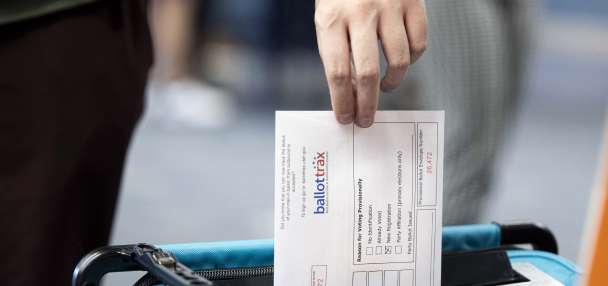
- SB153 makes several changes to elections, but most notably, it prevents voters from listing their name, address, party affiliation and voter status as private unless they qualify as an "at-risk" voter. At-risk voters include those who are the victim of domestic or dating violence, law enforcement officers, members of the military, a public figure who has received threats, someone protected by a court order, or someone who lives with someone who fits any of those categories.
- SB194 requires the lieutenant governor to make a plan to avoid conflicts of interest when they are on the ballot. It includes similar requirements for county clerks and requires poll workers to verify voter signatures in addition to the last four digits of an identification number written on a ballot returned by mail.
Criminal justice, law enforcement and firearms
- HB24 reduces the offense level of driving a vehicle over 20 mph in a school zone from a class C misdemeanor to an infraction if the person is driving between 21 to 29 mph. It similarly reduces the penalty for careless driving to an infraction.
- HB48 allows a judge to order a person to be held in an adult correctional facility if the person was convicted of aggravated murder committed when they were 17, if they are 18 years or older at the time of sentencing and if the court believes the person would present a security risk to other individuals at a juvenile facility.
- HB72 aims to crack down on cryptocurrency fraud by creating some transaction limits, fraud warnings and other disclosures for cryptocurrency ATMs.
- HB84 prohibits the open carry of loaded firearms at K-12 schools and college campuses, unless the person is responding to an active threat. It also allows people to carry concealed weapons on college campuses without a concealed carry permit if they are 21 or older.
- HB101 exempts someone from needing to go through a background check in order to purchase a firearm that is regulated by the National Firearms Act if they have already passed a background check in the past 30 days, or if they have a federal firearms license.
- HB102 allows certain victims of crimes to request to be identified only by their initials in public court records.
- HB103 makes it a third-degree felony to unlawfully marry a minor, to transport a minor out of state for an illegal marriage, to travel out of state to marry a minor, or to fraudulently act as a parent or guardian for the marriage of a minor. The law also invalidates out-of-state marriages involving a minor, unless the minor had parental consent, voluntarily entered the marriage and had an age gap of less than four years with their spouse.
- HB136 directs law enforcement officers to impound vehicles driven by people without licenses. Debate on the bill focused on the potential impact to Utah's immigrant community.
- HB158 makes it a class A misdemeanor to track someone by placing an electronic tracking device on their person or property and following their movements using an app. The law exempts licensed private investigators and law enforcement officials in certain circumstances, parents or legal guardians of a minor and caretakers of a vulnerable adult. It also allows rental car companies and other vehicle owners to track the vehicles they own.
- SB63 clarifies that using a chokehold on another person while participating in martial arts, wrestling or another similar practice does not constitute assault.
Business and taxes
- HB77 makes a slew of changes to tax credits and other tax provisions.
- HB190 expands tax credits for businesses providing child care benefits to employees.
- HB243 clarifies that proposition bets — or bets placed on specific players or events during games — fall under the state's constitutional ban on gambling. Kalshi, one of the nation's largest prediction markets, sued over the law in February, arguing the industry is regulated by the U.S. Commodity Futures Trading Commission and not subject to state laws.
- HB290 expands eligibility for Utah's child tax credit. The law is retroactive to the beginning of this year and raises the income thresholds for qualifying.
- SB287 applies an additional tax on large companies that deliver targeted advertising to Utahns. The additional taxes will likely target advertising giants like Facebook and Google.
×
The Key Takeaways for this article were generated with the assistance of large language models and reviewed by our editorial team. The article, itself, is solely human-written.