Estimated read time: 4-5 minutes
- Ancient carbonized papyrus scrolls from Herculaneum are displayed at Utah Valley University this week.
- Advanced AI and computer imaging techniques allow scholars to read these previously unreadable scrolls.
- The UVU conference highlights the intersection of ancient texts and modern technology in academia.
OREM — When Mount Vesuvius erupted in 79 CE, volcanic ash and debris buried Pompeii, as well as the Roman town of Herculaneum.
The intense heat at Herculaneum carbonized and preserved hundreds of handwritten papyrus scrolls, unlike in neighboring Pompeii, where such scrolls were destroyed.
In the centuries that followed, these scrolls — potentially containing rare, lost works by pre-Socratic philosophers — remained sealed and unread, as attempting to physically unravel them would almost certainly lead to their destruction.
But that isn't the case anymore.
By harnessing advanced imaging, artificial intelligence, and computational analysis, scholars have been able to begin looking inside these scrolls without breaking them open — detecting ink, tracing letters, and reconstructing passages hidden for nearly 2,000 years.
On Tuesday, four of the original, carbonized papyri were on display at Utah Valley University for the Herculaneum Papyri and AI Conference — a four-day event featuring leading international scholars exploring how the latest technologies are being used to decipher texts previously thought lost to history.
"We could have these little charcoal scrolls be turned into full books of original writing that's been lost for like, 2,500 years," said Michael Shaw, a philosophy professor and classical studies coordinator at UVU.
The event also marks the second time the four scrolls have been exhibited publicly in the U.S.
As for UVU's involvement in the historical moment, Shaw said it all started in 2023 during a UVU study abroad program to Pompeii and Herculaneum.
Orpheus Isom, a UVU senior majoring in philosophy with a minor in classical studies, was one of the students on that trip. She said it catalyzed UVU hosting the conference, a process that has been "a storm of confidence and passion."
"The group of students who went just got really excited, and we made a great impression on some of the people there and built this reputation and connection that was able to be used to contact people and reach out, and just sort of through sheer force of will, gathered them all here together," Isom said.
"It's not that it's UVU, it's that it's the people here at UVU who care so much about what's going on. And we also have the AI institute. When we told them that we wanted to do this, they also got excited, because it's not just, 'Oh, these are ancient scrolls with old Greek writing.' These are ancient scrolls with old Greek writing that we can only read because of machine learning programs. It's really cool," Isom added.
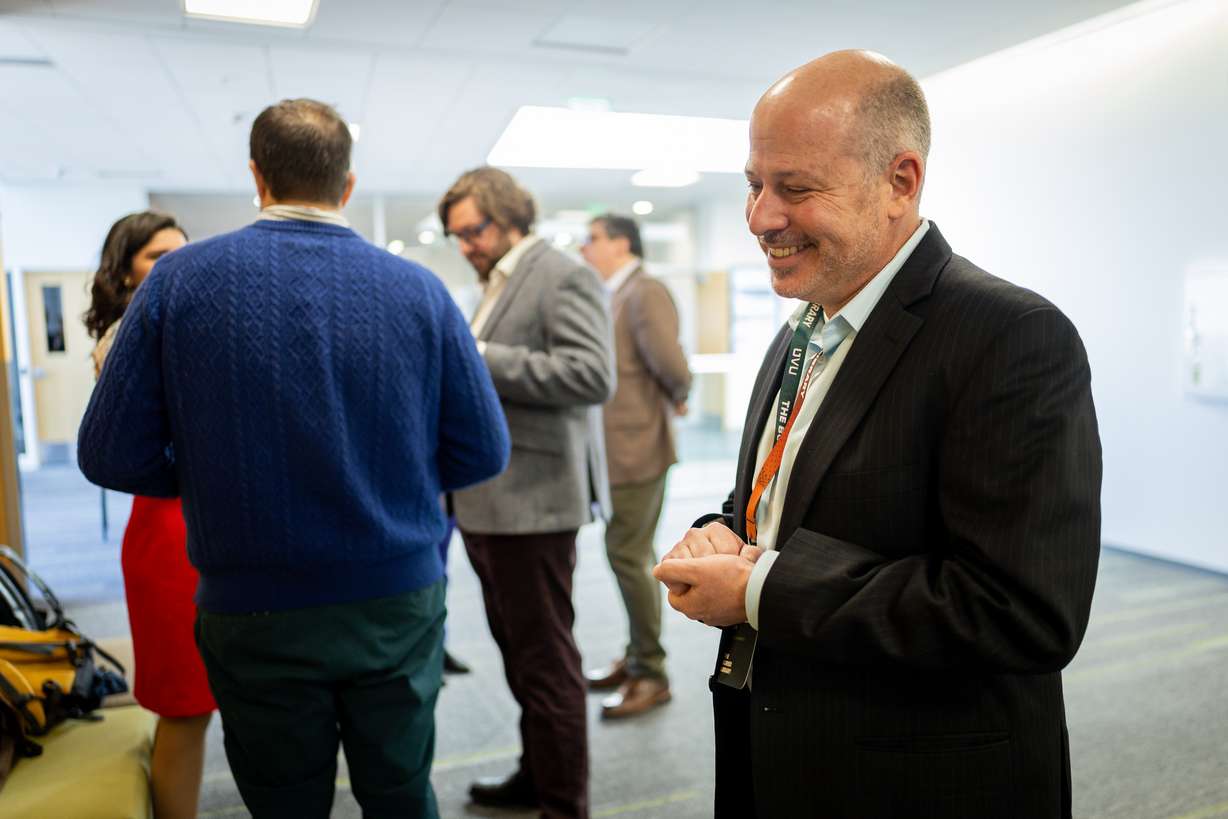
Gianluca Del Mastro, a faculty member at the University of Campania Luigi Vanvitelli and member of the Vesuvius Challenge Papyrology Team, was one of the experts who traveled to the Beehive State for the conference.
He credited the Vesuvius Challenge — a competition offering substantial prize money to anyone who can harness machine learning and computer vision to read these Herculaneum scrolls — with kickstarting interest in deciphering these ancient texts.
"Thanks to the Vesuvius Challenge, we are able to find the new texts in the unopened papyri for the first time, thanks to virtual unrolling," Del Mastro said.
So, how is this "virtual unrolling" done?
The scrolls look like charcoal, and that's because they kind of are.
Isom said the first step in the unrolling process involves performing a high-quality scan of the scrolls using a particle accelerator to produce high-resolution X-ray images of the scroll.
"They're just blocks of carbon, and the ink used on them is also carbon — this is the biggest problem in trying to read the scrolls," Isom said, adding that if the ink were metal-based, it would be easy to differentiate between written words and the carbonized scrolls.
After the X-ray images are created, advanced AI is harnessed to detect ink on the pages.
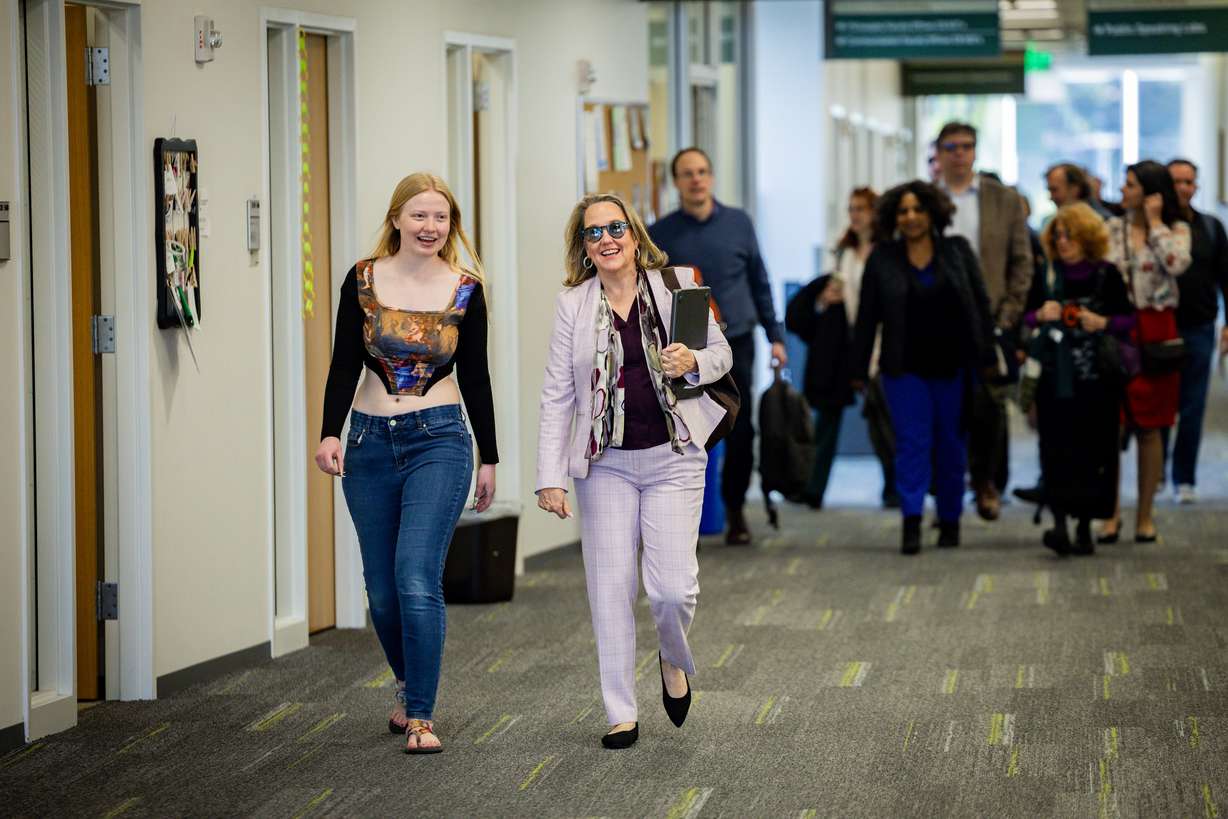
"With the machine learning, they were able to be trained on an open piece of scroll that had evident visual text that a person could identify, and then just show it to a program that could identify the difference between papyrus and papyrus with ink, because there's a tiny, tiny difference," Isom said. "You apply that to the scan, and it's able to go like, voxel by voxel, like 3D pixels, and just identify ink, no ink, and just go through."
At the end of the day, it's the intersection of ancient, philosophical texts and the use of modern machine learning to read what was once lost to history that excites Shaw the most.
"There aren't enough people trained in Greek papyrology studies, classics, philosophy and also the proper use of narrow AI — not like ChatGPT or something — but very specialized use of this that requires some training as well," Shaw said.
Andrew Adams, KSLHe hopes this conference can help change that.
"What we really want to do is show our students the kind of work that is being done here with these scholars and let them see firsthand what the possibilities are," Shaw said. "Both for the most ancient study, like you've got to study ancient Greek to be able to do this stuff, but then you also have to be really versed in incredibly technical uses of AI and machine learning."
The conference, which runs from Tuesday to Friday, and the scroll exhibition are free for anyone to attend with registration.
More information can be found here.