Estimated read time: 6-7 minutes
- Pamela Atkinson, a prominent Utah advocate, inspired leaders to discuss Jesus' teachings.
- Atkinson, hospitalized at 93, urged action over discussion, emphasizing community support.
- Faith leaders explored collaboration, kindness and active caring to honor Atkinson's legacy.
SALT LAKE CITY — As seven community leaders gathered Wednesday to discuss "What would Jesus do?" and how they might further the legacy of Pamela Atkinson — Utah's best-known advocate for those who struggle — she was present in the conversation and absent from the room.
Atkinson convened the group of faith and government leaders as a result of what she called a "heavenly shove," a sense of urgency that she said felt like a heaven-sent assignment. She asked them to talk about the actions they could take to foster connections between people, embrace the needs of those who are disenfranchised and let the principles Christ taught guide actions toward others.
But Atkinson, who was to host the discussion, could not attend. She was hospitalized the night before.
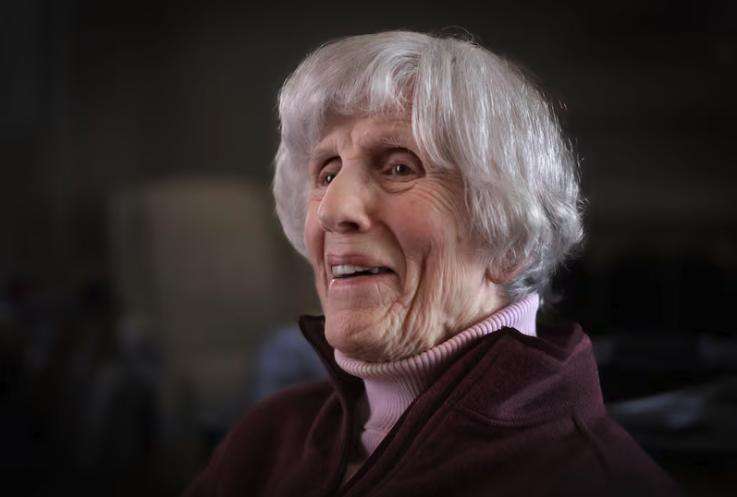
At 93, the woman who has counseled five Utah governors and long worked with those who are homeless, refugees, and those who are impoverished or ill, has become increasingly frail herself.
Sharon Eubank, director of humanitarian services for The Church of Jesus Christ of Latter-day Saints, quoted Atkinson, whom she'd visited in the hospital just prior to the event: "I don't care what you all talk about; you have to act," Atkinson told her.
To prepare for the discussion, each panelist read the book "In His Steps," written by Charles M. Sheldon more than 100 years ago. In it, a fictional community decides to make every decision they face based on what Jesus would do. The Utah panel's charge was to explore "Christian kindness, dignity and the power of faith to lift communities in times of joy and stress."
You can catch the whole discussion on the Deseret Voices podcast, which posts on Thursdays. This one will be released April 9.
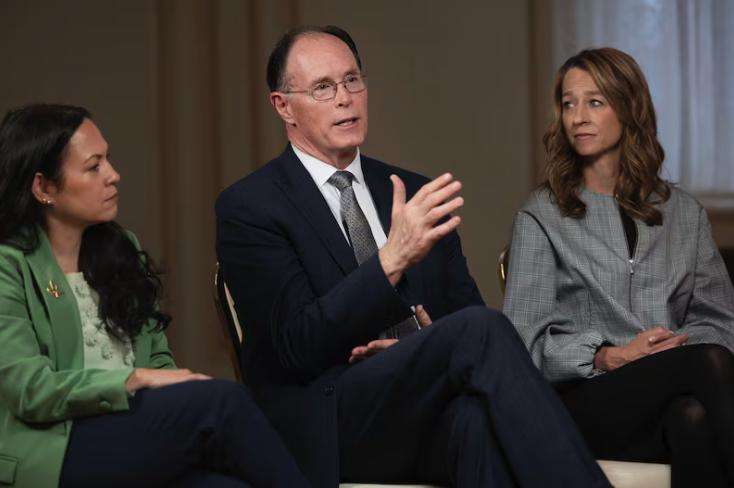
Hosted by Jane Clayson Johnson, the roundtable included Utah first lady Abby Cox; Sophia DiCaro, executive director of the Utah Governor's Office of Planning and Budget; Michael Edwards, director of youth and young adults for the Catholic Diocese of Salt Lake City; the Rev. Corey Hodges, lead pastor of the Point Church; Bishop W. Christopher Waddell, presiding bishop of The Church of Jesus Christ of Latter-day Saints; and the Rev. Jamie White, lead pastor of First Presbyterian Church in Salt Lake City, which is Atkinson's longtime church. Eubank co-hosted the event.
Thoughts on what Jesus would do
In a wide-ranging discussion, here's a sample of what each said:
White described the question of what Jesus would do as "pressing," but wondered whether "many people live with a 'Christ consciousness' that compels them to ask that before they act. People spend too much time worrying about a checklist of beliefs, but this question pushes you right to the practical. If Christ were in my shoes, what might he do?
She suggested a need "to learn who Jesus was to try and get a real sense" of who it is we claim as our faith, just the love of our lives and the purpose of our being."
White said that conflict in the world has shattered some religious partnerships and different faiths have found themselves separated by global issues. She said it's "beautiful" to see faith leaders who have long-standing friendships who've acknowledged the pain and stayed in relationship. "It requires years to build that trust."
Edwards said the book "In His Steps," while old, has a message for today. "It goes to the core of what we're about: corporal works of mercy, taking care of the poor and the needy and being the person Jesus wants us to be not only in our thoughts, but in our actions."
Bishop Waddell said approaching others with genuine concern and caring is not "just focused on those who were poor and in need; the focus was across the board. It's what you can do whatever your circumstances are, not just with money, but with your talents." He suggested that "sacrificing for Jesus' sake" is a better way to couch the idea of "suffering for Jesus' sake."
"I see a lot of that — of people that will sacrifice their time, their energy, their resources to be able to help other people," he said.
And he noted that collaboration seems better today than it was years ago. "Part of it is people getting to know one another. ... We recognize we have more in common than we have that separates us."
Living out loud
Rev. Hodges agreed. "Communication is a practical reason. A lot of our fears are ignorance. If I don't know about another faith, then a fear grows. With more information and technology, we're learning more about people of other faiths."
He also called active caring crucial. Having built a church in Kearns where community issues are obvious — food and housing insecurity — he said action matters. "We have lots of inspiration, right? We feel good about our faith. We feel good about the music that we sing, that it reinforces our faith. But this congregation actually has a conscience. ... We can't just be a big building in the middle of a neighborhood that's needy and not do anything."
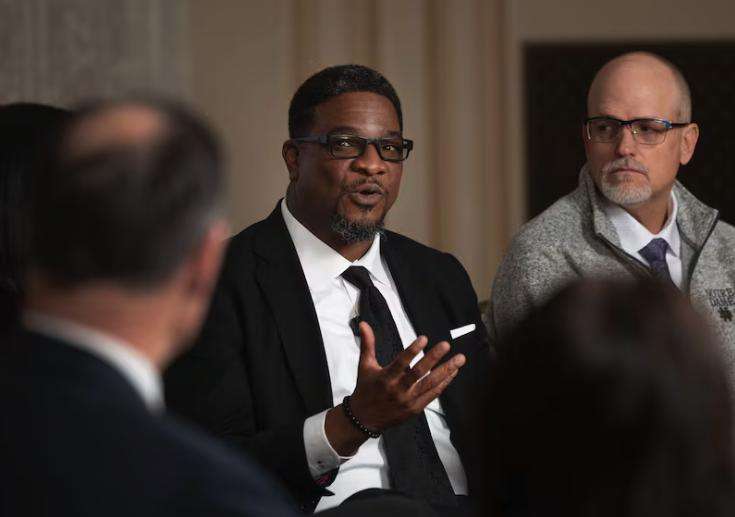
The church, he said, created a program called "For Kearns" to let the community know it is there for them. He said his church adopted an elementary school and buys clothes and gifts for children. "We call it 'living out loud.'"
Cox highlighted sacrifice. "To follow Christ really does ask something of us; we can't just be hearers only, we have to be doers. It's easy to sit in the pews and feel the spirit, but it's much harder to be the doer of the word."
She also added a warning: "We need to be very intentional about making sure those politics don't affect the way we believe and the way we think about other people. ... It's very dangerous when we allow politics to sort of guide how we think about other people."
Honoring Pamela Atkinson's legacy
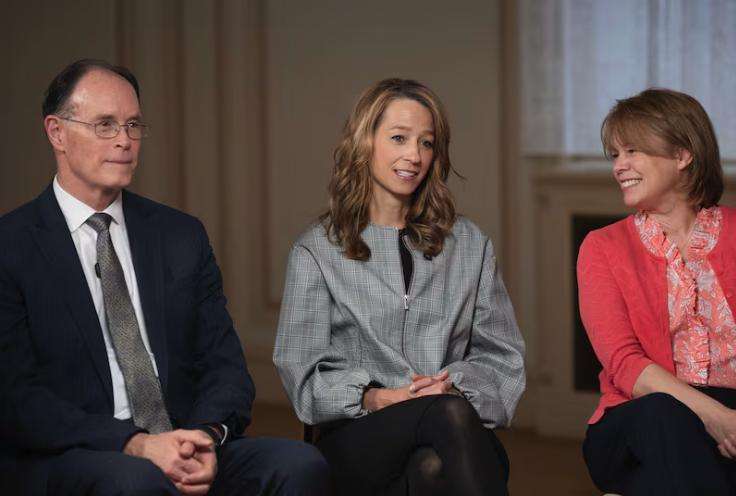
Eubank said different faiths can help each other. And helping ease pain benefits both the doer and the recipient. "There is so much we have in common with an inconvenient or an uncomfortable faith for people who follow other faith traditions." She noted that "When one of us hurts, all of us hurt" and pointed out a "powerful symbol in northern Iraq" where they asked the Muslim community to help rebuild the Catholic church and the Christian community to help rebuild the mosque.
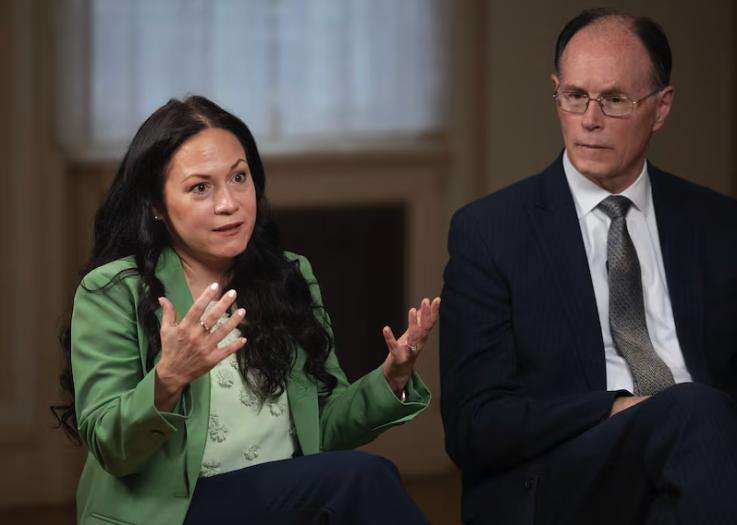
DiCaro heralded Utah as "a big small town. That makes all of this possible. And I do think we are uniquely positioned to do more of this and collaborate really well with one another. And it makes magic happen."
The discussion closed with thoughts on honoring Atkinson's legacy. DiCaro promised to lean into vulnerability. "That's what makes us most effective, to look out for the vulnerable and make sure everyone matters."
Asking and answering "what would Jesus do" regularly would be a fitting way to carry on Atkinson's work, according to Waddell, while Eubank suggested inviting other people to what she has called "Pamela's table." She said, "Let's go out into the hedgerows and bring other people to this table because I think a lot of power that is still untapped."
Edwards said Atkinson always found a way around obstacles. "We need to say 'yes' to Christ ... and the things Pamela said 'yes' to."

Most recent Politics stories
Related topics
 Lois M. Collins