- Six American service members have died in the U.S.-Israeli strikes on Iran as instability in the Middle East increases.
- Embassies have closed, nonessential personnel were evacuated and travel and communication have been disrupted.
- As the war continues, Iranian Americans in Utah, like Maryam Radpour, expressed concern as to what will happen next.
SALT LAKE CITY — Six American service members have been killed in the U.S. strikes on Iran or in the aftermath, intensifying regional instability and triggering rapid diplomatic and travel fallout across the Middle East.
The U.S. has temporarily closed its embassies in Saudi Arabia, Kuwait and Lebanon, while ordering all nonessential personnel to leave immediately. As many commercial flights are canceled and severely limited, many Americans in the region are struggling to find a way out.
Communication with those inside Iran and neighboring countries also remains difficult, adding to the anxiety for families stateside.
A guided tour group from Utah‑based Morris Columbus Travel is currently in Jordan and attempting to return to the United States ahead of schedule due to rising tensions.
Wendy Fracchia, group travel operations manager for Morris Columbus, said many travelers are eager to visit the Middle East.
"A lot of people save their entire lives to take a trip like this, and we just want it to be as magical and special for them as they want," Fracchia said.
Morris Columbus Travel sends about one group to the Middle East per week, visiting destinations like Israel, Jordan and Egypt. The group in Jordan originally had confirmed flights home, but those flights were canceled as airlines began reducing service throughout the region.
"So we had to go through and rebook everybody on different airlines in some cases. But we're getting everybody home," said Fracchia.
So far, Morris Columbus has canceled only this next week's scheduled tour. The company is monitoring developments before deciding whether to halt upcoming trips.
"We are going to take a wait‑and‑see approach for the next week," Fracchia said, noting that industry reports warn the disruption could last for weeks.
How the conflict affects Iranian Americans
For Iranian Americans in Utah, the crisis is personal.
Maryam Radpour, who moved to Utah in 2016 with her immediate family, said communication with relatives in Iran is now severely limited due to widespread internet outages and government filtering.
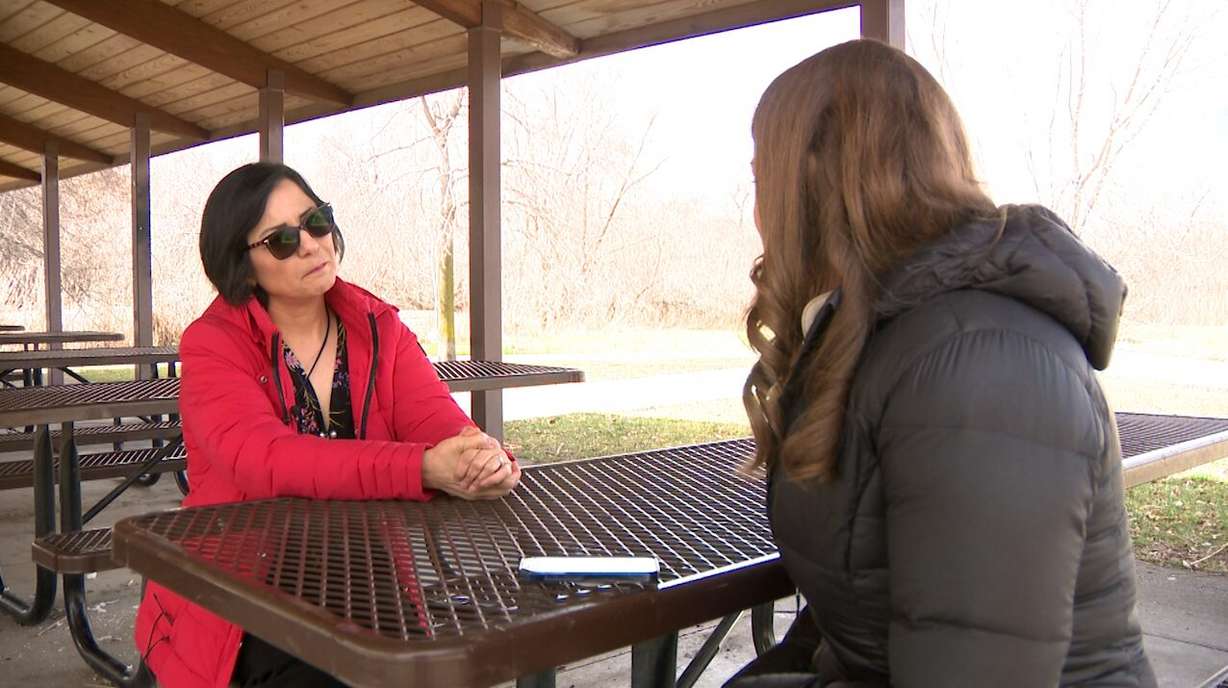
"My concern is, every time they call, I don't know if it's going to be the last time or not," Radpour said. "Even through the phone or the internet — there is an internet blackout again."
She said some families trying to flee are traveling by road to neighboring countries like Turkey or Afghanistan because commercial flights are unavailable. Even that route is slow and heavily monitored.
"They are filtering everything. It is a very slow process for them to pass the border line," she said.
Radpour also worries about the safety of the political prisoners in Iran, an issue she has long advocated for.
"They have arrested thousands of people, especially a lot of young underage people," she said. "They have been dislocated. (The government) has been moving them around, and (families) don't know where. The families are publicly talking about it; they are asking the media to be their voice. But there has not been any update from the government."
Radpour is also concerned for the next stage of the war.
"Using them as human shields. That's my biggest, biggest concern," she said. "They have this in their history. They have done it many, many times. And they are capable of doing brutal things."