- Federal officials praise Utah's efficient infrastructure, using minimal federal funds for projects.
- Rep. Owens and Administrator Molinaro highlight Utah's economic benefits from public transit investments.
- Plans include expanding FrontRunner tracks and increasing train frequency for future infrastructure growth.
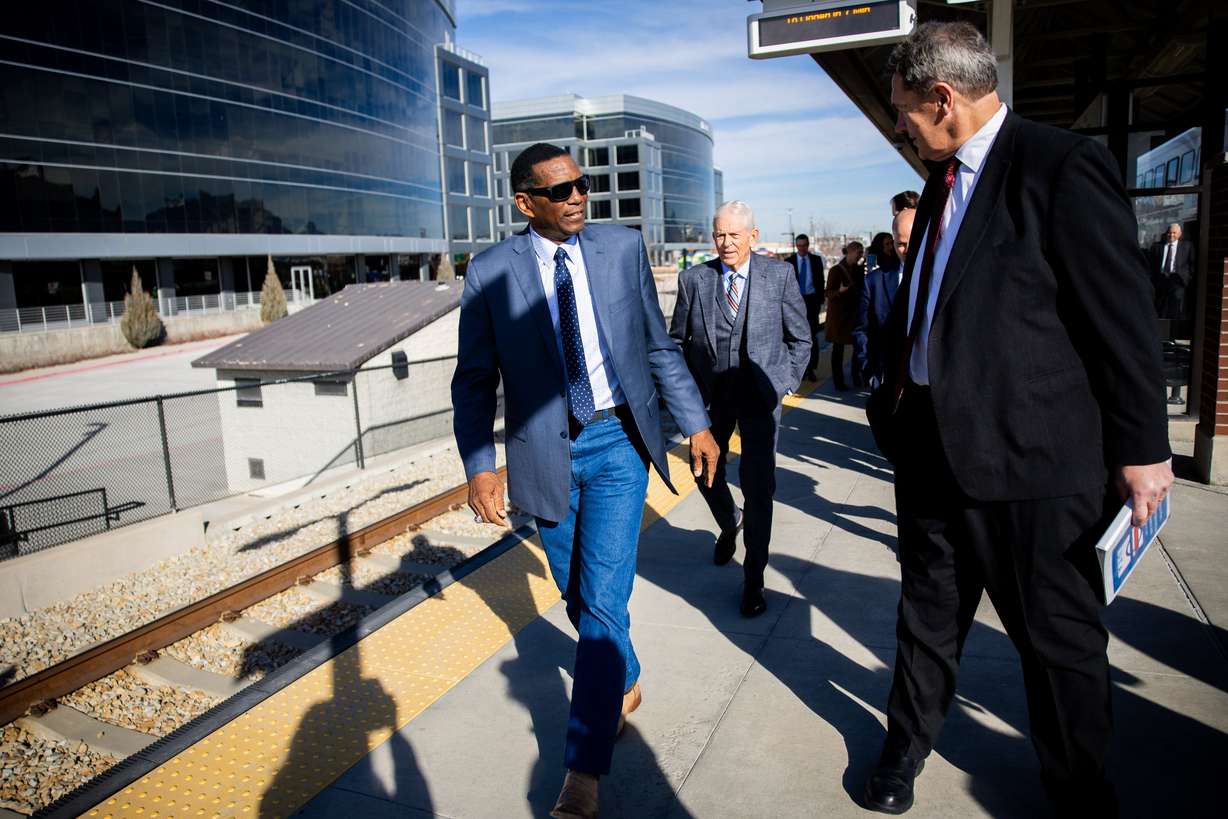
SOUTH JORDAN — Saying the White House is in builder mode, Rep. Burgess Owens discussed future plans for Utah's transportation infrastructure with federal, state and local leaders Friday morning at the South Jordan FrontRunner station.
Although the state has an extensive network of buses and trains — and plans for trams — Utah uses the least amount of federal money of any state in its transportation projects, South Jordan Mayor Dawn Ramsey said as she welcomed Owens and Federal Transportation Administrator Marc Molinaro as they arrived by FrontRunner.
"We've worked hard to be efficient here in Utah — to use money very wisely," she said.
Ward MacCarragher, an American Public Transportation Association official, similarly praised the state's infrastructure for its positive effect on Utah's economy. "For every dollar invested in public transit, more than $5 in economic return is generated," he said.
How is Utah's infrastructure changing under President Trump?
As Owens began his remarks, he said, "We're in a very, very special window where we have a builder as a president and we have a House and Senate that are America first."
Molinaro, the current administrator of the Federal Transit Administration and a longtime friend of Owens, also praised President Donald Trump's Cabinet for their attention to the country's transportation infrastructure.
Molinaro said the Trump administration's move to eliminate social cost of carbon tools has removed roadblocks and made planning infrastructure more efficient. The social cost of carbon is an estimate, typically expressed in dollars, of the economic damages associated with emitting one additional ton of carbon dioxide into the atmosphere.
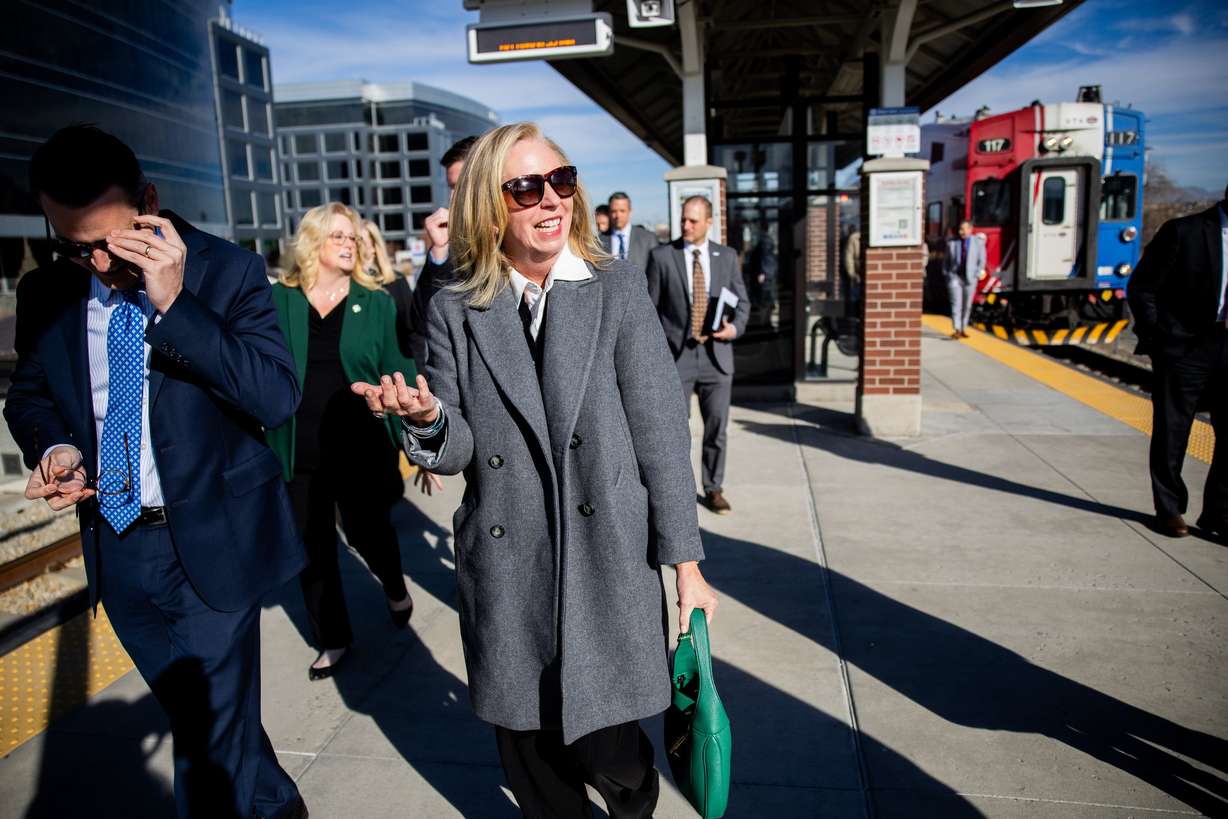
Eliminating the social cost of carbon "ensures we're trying to distribute dollars equitably," Molinaro said. "We don't want just the big, major cities to be the only ones that get to compete for some of the largest dollars we want growing and emerging cities, villages and hamlets around the country to be able to compete for those dollars."
Without the added social cost of carbon playing into infrastructure financing, states can move faster on delayed projects, and transportation is judged more on mobility and economic value.
How will the FrontRunner grow in the near future?
Ben Huot, the director of planning and investment at Utah's Department of Transportation, said the current FrontRunner project "is one of the most significant investments in transportation in Utah history."
The FrontRunner's track, which currently runs from Provo to Ogden, has a single-track system along 74% of its route. UDOT is planning on adding double-track segments and providing additional cars to increase the train's frequency.
Huot added that the FrontRunner's ridership grew by about 10% in 2024.
And while Owens didn't divulge any details, he said he has a map in his office that shows what Utah's transportation infrastructure "is going to look like in 2050."
Molinaro added that he hopes the House of Representatives' transportation committee "learns a few lessons from the Utah way" of doing transportation infrastructure.