Estimated read time: 5-6 minutes
- Salt Lake County District Attorney Sim Gill deemed officers legally justified in shooting and killing a man in May.
- Dustin Pearson, 32, was shot after approaching officers with a knife in Midvale.
- Officers deployed two Tasers, but Pearson pulled the probes out and kept walking toward police, Gill said.
MIDVALE — Three Unified police officers were legally justified in shooting and killing a man armed with a knife in May, Salt Lake County District Attorney Sim Gill announced Friday.
But the family of Dustin Steven Pearson, 32, of West Jordan, says there is something wrong with a system in which a person who wants to commit "suicide by cop" is obliged.
"They believe that there is something wrong with a system where somebody who may want to harm themselves, that we comply by actually harming them," Gill said during a press conference Friday announcing his findings, "To them, that is an indication of a broken system."
At 2:20 a.m. on May 23, police were called to the area near 165 W. 7200 South on a report of an armed robbery. A large parking lot for a Sportsman's Warehouse, which was closed at the time, is at that address.
Pearson had called 911 and claimed he had just been robbed outside the store. According to a recording of Pearson's 911 call, he tells dispatchers, "Some guy took a knife out and (pause) he took my wallet and stuff."
Pearson then gives a description of the "suspect," but actually tells police what he is wearing. Investigators later confirmed this by syncing his call with surveillance video from the store that shows Pearson walking around the parking lot while on the phone and no one else is around. When the emergency dispatcher asks Pearson to describe what he is wearing, Pearson does not answer.
During the call, Pearson sounds lethargic and his speech is slurred.
The first officer quickly arrives on scene and spots Pearson, "but then advised that (he) might actually be the suspect," according to Gill's report.
The officer, who watched Pearson from a distance while still in her patrol car, said that when crime victims call police, they typically come over to speak with the officer. "I was like, wait, take a second. You know, he's still walking away, why?" she asked herself.
"The individual kept walking and rounded the corner (of the store). And so that threw me off, I think in my head a little bit. So I went back to the details and I saw the suspect description matched that guy who had just rounded the corner. So then I (called dispatch) and said, 'This might be the suspect, matches the suspect description,'" the officer later told the district attorney's office.
Four more officers arrived on scene soon after and ordered Pearson to put his hands up as he continued to walk away from them. After pausing, Pearson then turned toward the officers.
"The male then began walking toward them and raised a knife up in his right hand and officers began giving commands to 'drop it' and 'drop the knife,'" the report states.
The officer who identified Pearson as the possible culprit then deployed a Taser on him twice, but he continued walking toward police. A second officer then used his Taser, but again with no effect. Sgt. Zack Young and officers Hunter Monsen and Josh Rowell then opened fire, shooting Pearson.
"The guy never said anything. He just, we kept telling him to stop. We shoot our Tasers, he removes the probes and he still keeps walking. Like, at no point did he stop, he kept coming toward us," said another officer who was on scene but did not shoot.
Gill's report says Pearson took an estimated 14 steps toward the officers before being shot. He said Friday that Pearson got within about 10 feet of the officers before they opened fire.
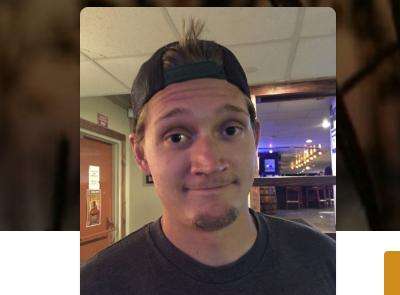
"After shots were fired and called out over the radio, (Pearson) said, 'Do it again' before continuing to roll over and putting the knife to the ground,' according to the report.
Officers gave Pearson medical aid once they kicked the knife away from him, but he died from his injuries at the scene.
None of the three officers who fired their guns agreed to be interviewed for the district attorney's investigation. The officers fired a total of 19 rounds and an autopsy revealed Pearson had 11 gunshot wounds. A toxicology report also concluded that Pearson had alcohol and several prescription drugs in his system at the time of the shooting, the report states.
During Friday's press conference, Gill conveyed that he had spoken with Pearson's family earlier that morning. He said it's the second time they have lost a family member who was shot by police.
The family, according to Gill, is frustrated because Pearson was moving slowly across a large empty parking lot in the middle of the night with no one else around and believed he was clearly in a state of distress.
"What was the urgency that compelled the use of that force?" Gill said the family is asking whether police could have used an alternative tactic to resolve the situation.
But Gill says he also cannot discount that the responding officers felt "beyond a reasonable doubt that their lives were in jeopardy," that there is no expectation for officers to retreat, and that the danger before them was real.
The result was a "tragic culmination of facts that came together," he said.
When asked whether the officers could have done anything different, Gill said it's up to individual police agencies and lawmakers to change policies and procedures. However, he noted that during his time as district attorney, he has reviewed more than 150 police shootings and officer-involved critical incidents.
"The question is, are we learning anything from (those incidents) and what do those (police responses) teach us?" he asked. If police are going to continue to have these types of interactions with people in distress, it might be worth "thinking about the context in which it happens" and "going back and looking more urgently or more thoughtfully or more deliberately" about how those scenarios unfolded and what can be learned from them to help "come up with better responses."