Estimated read time: 7-8 minutes
For decades, Americans were told they were following "healthy" nutrition guidance, yet obesity, type 2 diabetes, and metabolic disease kept rising.
Recently, the FDA and USDA have acknowledged what many health experts have been saying for years: The old food pyramid wasn't working.
The newly updated federal dietary guidance marks one of the most meaningful nutrition resets in modern history.
It shifts focus away from refined carbohydrates and ultra-processed foods and toward protein, healthy fats, whole foods, and metabolic health. This change isn't cosmetic, it's corrective.
Nutrition insider Joel Bikman states that the previous food pyramid failed because it ignored how the body regulates energy and fat storage. "When dietary advice is disconnected from biology and real-world outcomes," he explains, "you get results that look exactly like what we see today - massive health problems at scale."
The problem with the old food pyramid
Carbohydrates at the base
For years, the foundation of the food pyramid was built on grains and carbohydrates.
Bread, cereal, rice, and pasta were framed as dietary essentials, while protein and fats were treated as secondary. In theory, this approach was meant to fuel energy. In practice, it encouraged overconsumption of foods that spike blood sugar and insulin.
High insulin levels promote fat storage, increase hunger, and reduce metabolic flexibility.
Over time, this pattern contributes to insulin resistance - the common thread linking obesity, diabetes, heart disease, and fatty liver disease.
Bikman points out that carbohydrates are the only macronutrient that significantly raises insulin. "Yet they were treated as the foundation of the diet," he says. "That mismatch alone explains a great deal of our modern metabolic crisis."
The war on fat
The old pyramid also reinforced the idea that dietary fat - especially saturated fat - was dangerous, even though an abundance of scientific evidence showed that saturated fats were in fact healthy.
Low-fat foods were celebrated, while whole-food fats were avoided. But removing fat from food usually replaced them with sugar and refined starch to make them palatable.
This fat-phobic guidance had unintended consequences.
People felt hungrier, meals were less satisfying, and ultra-processed foods filled the gap.
Meanwhile, naturally occurring fats from eggs, dairy, nuts, and oils - foods humans had safely eaten for generations - were sidelined without scientific evidence.
According to Bikman, "Healthy fats support digestion and hormone production, and help control appetite. Removing them while increasing carbs was a metabolic disaster."

Calories without context
Perhaps the biggest flaw in the old system was its focus on calories rather than hormonal responses.
Two meals with the same calories can have very different effects on blood sugar, insulin, and hunger.
The previous food pyramid allowed people to technically "eat healthy" while still consuming diets that drove insulin resistance.
That disconnect is why many people followed the rules and still gained weight.
"Calories matter," said Bikman, "but hormones decide what your body does with those calories."
What the new recommendations get right
The updated dietary guidance reflects a growing consensus: Food quality and metabolic impact matter more than rigid macronutrient percentages.
Protein takes center stage
One of the most important shifts is the elevation of protein.
Rather than treating protein as a minimum requirement, the new guidance encourages adequate protein intake at every meal.
Protein supports muscle mass, metabolic rate, satiety, and blood sugar stability. It also reduces overeating by helping people feel full longer - something carbohydrates alone do poorly.
"Protein is the most metabolically protective macronutrient," says Bikman. "By focusing on protein, many other health markers improve naturally."
Healthy fats are reframed
The new approach moves away from blanket fat avoidance and instead emphasizes whole-food fat sources that are supported by science.
This includes fats from oils, eggs, and dairy - foods that promote satiety and energy balance.
This reframing aligns more closely with how human metabolism evolved and reduces reliance on ultra-processed, low-fat products that often contain hidden sugars.
Sugar and ultra-processed foods are demoted
For the first time, the FDA sharply limits how much added sugar and refined carbohydrate can exist in foods labeled "healthy." Highly processed foods are clearly deprioritized.
This is a critical step. Added sugars are among the strongest drivers of insulin spikes and metabolic dysfunction.
Reducing them improves blood sugar control, appetite regulation, and long-term health outcomes.
As Bikman puts it, "If you want to improve metabolic health at scale, reducing sugar exposure is non-negotiable."
Where nutrition guidance meets real life
While the new recommendations represent progress, knowing what to eat and actually doing it consistently are two very different challenges.
Busy schedules, convenience foods, and decision fatigue often get in the way, even for motivated people.
That gap between guidance and execution is where HLTH Code fits naturally into the conversation.
How HLTH Code aligns with the new food pyramid
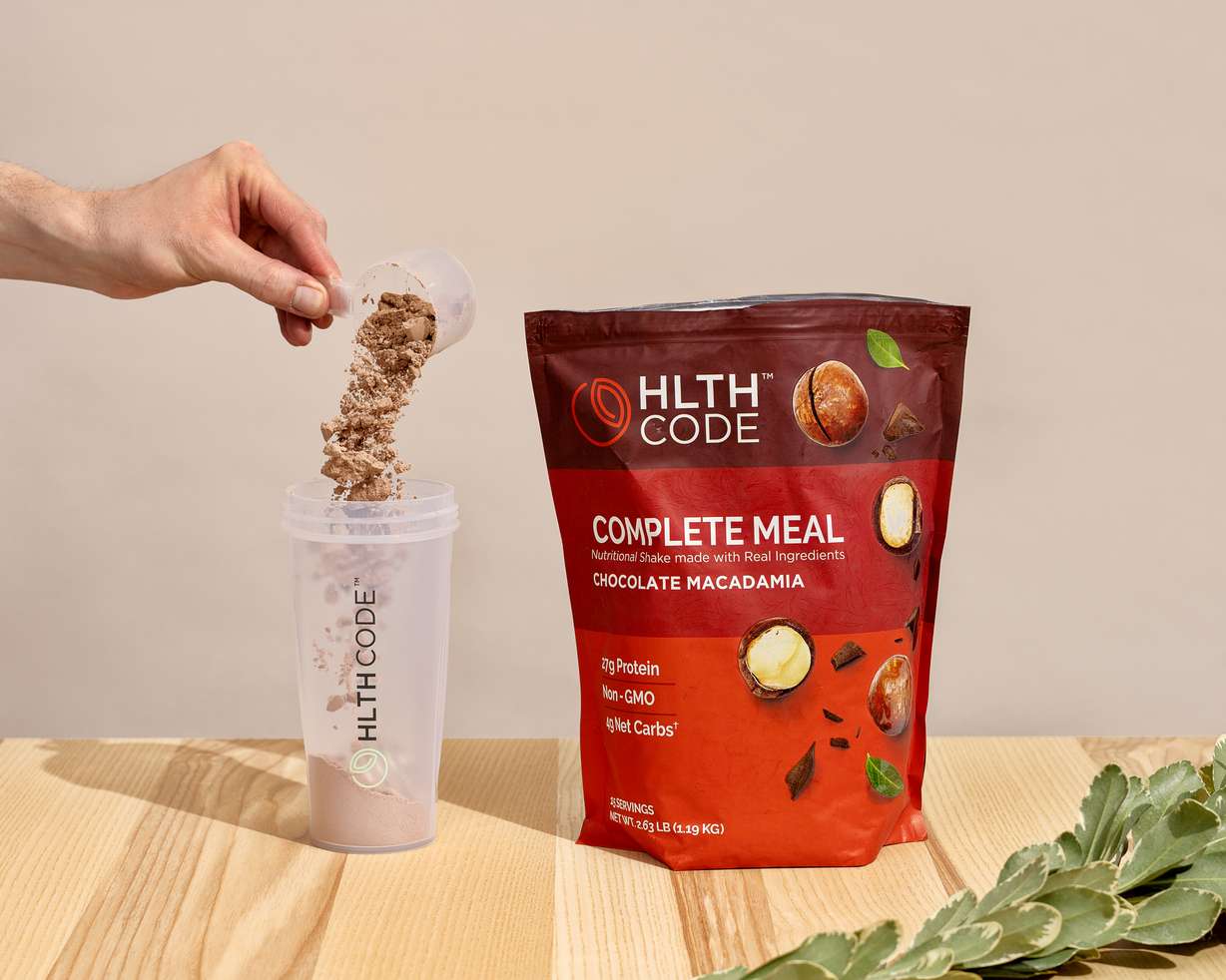
HLTH Code was developed by Bikman and a team of metabolic and nutrition experts based on the same principles now reflected in federal guidance: High-quality protein, healthy fats, controlled carbohydrates, and zero added sugar - delivered in a practical, delicious, everyday format.
Rather than functioning as a typical protein shake, HLTH Code is a complete meal replacement, providing balanced, optimized nutrition that supports blood sugar stability, overall health and satiety.
Bikman explains that the goal was to create something people could rely on consistently, not just occasionally. "Most people don't fail because they don't care," he notes. "They fail because nutrition has become too complicated, expensive or inconvenient."
Built for metabolic health
Each delicious serving of HLTH Code Complete Meal emphasizes protein as the nutritional anchor, supported by healthy fats that improve protein bioavailability and support metabolic and brain health, along with probiotics and prebiotic fiber that support gut health, plus vitamins and much more.
The result is a meal that avoids sharp glucose spikes and keeps energy levels steady, which are key outcomes emphasized in the new dietary framework.
Simplicity without compromise
One of the strengths of HLTH Code is that it reduces friction.
Instead of planning, prepping, and tracking every meal, people can incorporate a nutritionally complete option that aligns with modern dietary science.
"For most people – from young moms, to athletes, to office workers, to senior citizens – a HLTH Code shake will be the easiest, most convenient and healthiest meal of the day," said Bikman.
That simplicity matters. Consistency — not perfection — is what drives long-term health improvements.

A course correction years in the making
If you've struggled with your weight, your energy, or your health, it's likely not your fault. We've all been misled by outdated food guidelines and quick-fix diets.
But there is a better way, and thousands of people are now proving it every day. Try HLTH Code today, risk-free.
For exclusive savings on your first order, visit getHLTH.com now.
The opinions and conclusions expressed in this article are the sponsor's own and do not reflect the views or opinions of KSL.com. This Site Does Not Provide Medical Advice. Any content on this Site, such as text, graphics, images, information obtained from, or contained on this Site are for informational purposes only. The content is not intended to be a substitute for professional medical advice, diagnosis, or treatment. Always seek the advice of your physician or other qualified health provider with any questions you may have regarding a medical condition. Never disregard professional medical advice or delay in seeking it because of something you have read on this site! The owner and operator of this site do not recommend or endorse any specific tests, physicians, products, procedures, opinions, or other information that may be mentioned on the site. Reliance on any information provided by the Operator, including their employees, contractors or others appearing on the Site at the invitation of the Operator, or other visitors to the Site is solely at your own risk. If you think you may have a medical emergency, call your doctor or 911 immediately.