Estimated read time: 3-4 minutes
- A 2,500-pound petroglyph stone has been returned to the Utah-Idaho border after 80 years.
- The Church of Jesus Christ of Latter-day Saints coordinated the return after it was removed in the 1940s.
- The rock, sacred to the Shoshone Nation, was restored and celebrated in a ceremony.
TREMONTON — A 2,500-pound stone containing prehistoric petroglyphs that was hauled from Utah's wildlands to a Latter-day Saint meetinghouse in northern Utah approximately 80 years ago has returned home, following years of coordination.
The petroglyph rock was brought back to an undisclosed location near the Utah-Idaho border last week, where Utah's Northwestern Band of Shoshone held a sacred ceremony to celebrate the return of the prehistoric artwork.
"It's rebuilding our history," said Brad Perry, vice chairman of the Northwestern Band of the Shoshone Nation, in a statement through the church on Wednesday.
The petroglyphs — sacred prehistoric engravings — date back approximately 1,200 years from the Native Americans who have called Utah home for thousands of years. They were on a boulder removed by either a group of men or Boy Scouts in the 1940s and brought to a meetinghouse of The Church of Jesus Christ of Latter-day Saints in Tremonton for unknown reasons, according to Ryan Saltzgiver, history sites curator for the Church History Department.
Chances are, the rock was taken from "a lack of proper understanding" of its history at the time, added David Bolinbroke, a historian at the department. While there was some historic preservation in the U.S. by the 1940s, it wouldn't be until the passage of the National Historic Preservation Act of 1966 that programs like the National Register of Historic Places and other preservation programs would be established to make it more prevalent.
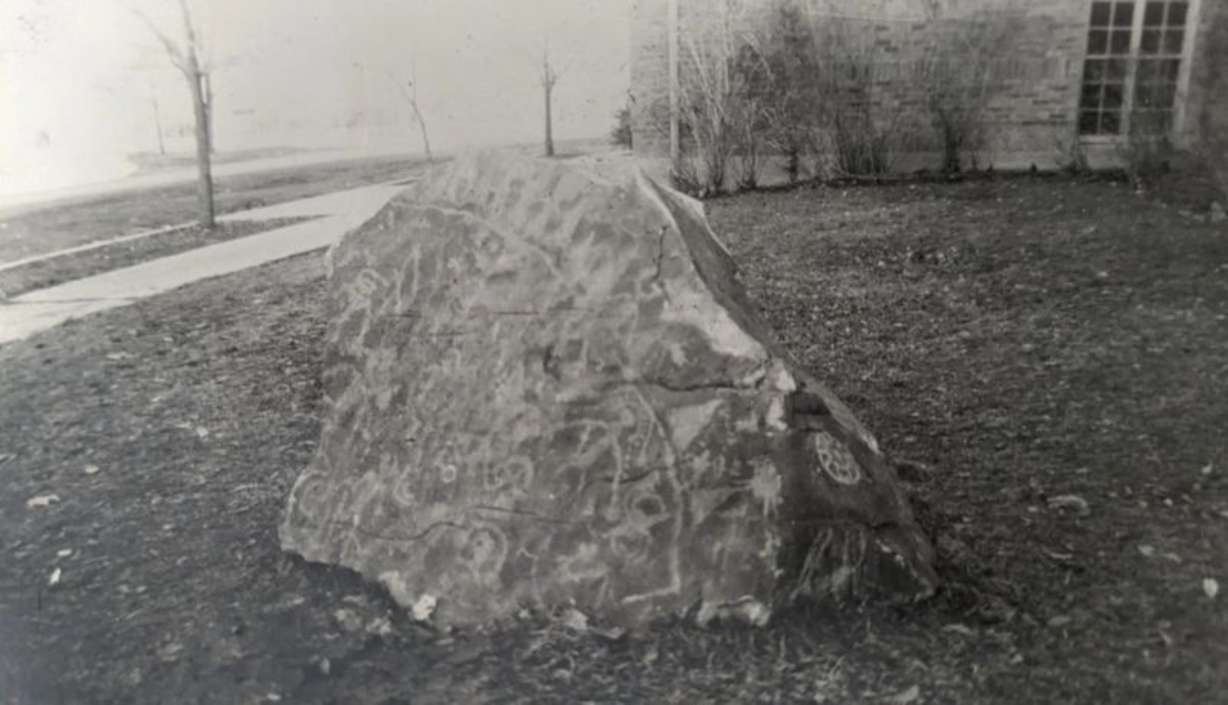
The rock sat outside the Tremonton church for decades when amateur archaeologists began working to determine its origins in 2011, ultimately linking it to an area near the Utah–Idaho border using a 1937 rock-art survey. That ignited conversations between the church, the Northwestern Band of the Shoshone Nation and state historians over how to preserve the stone and return it.
"The church really has no legal obligation to do anything like this, but we do have a moral and ethical obligation to care for things like this that are in our possession — and in particular to return those things that are, in this case, very sacred objects to those rightful owners," Saltzgiver said in a statement.
The Utah State Historic Preservation Office assisted in coordination efforts, since it involved a private entity, private lands and a Native American tribe, which factored into why it took over a decade to get the rock back home.

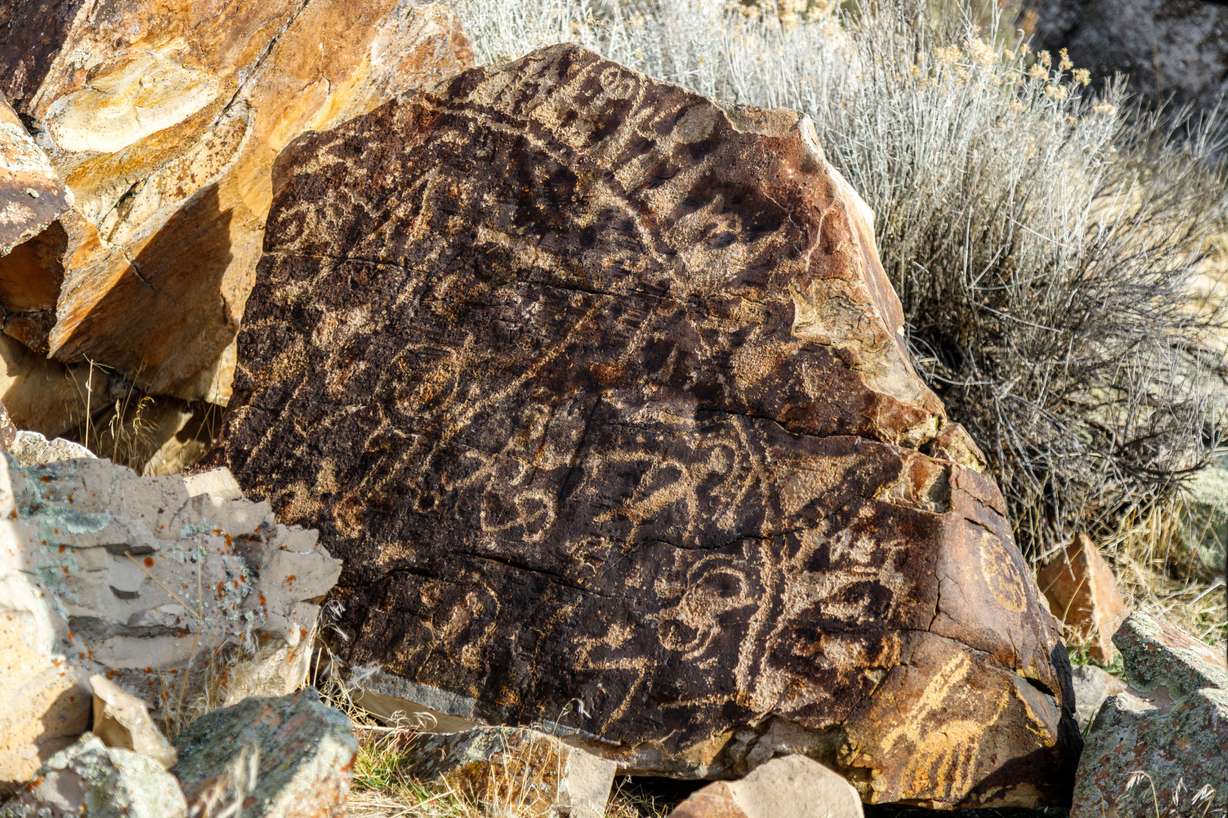
The rock was first freed from concrete and hauled to Provo, where experts cleaned it and began an intricate process to restore the petroglyphs, making sure not to damage them. They carefully removed the lichen that had grown over the years, covering up some of the prehistoric artwork.
They also applied a nontoxic biocide as part of that process, which seeks to help it "clean itself" in the future, said Megan Randall, an objects conservator for Midwest Art Conservation Center, a restoration company based in Minneapolis that assisted in the effort.
"(The stone) has designs that are spiritually connected to the tribe, and we want to make those visible and appreciable by the people who find value in this, which is also us," she said.
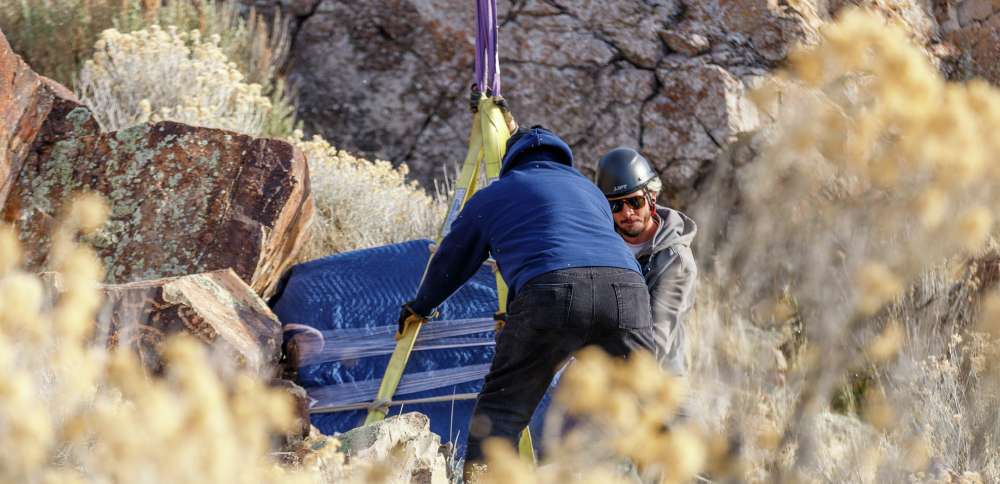
The rock was hauled back to northern Utah, where a helicopter was used to help lower it back to its home, rejoining other petroglyphs in the area.
"(It was) super emotional seeing it get set almost instantly in a perfect setting," Perry said. "(I'm) so grateful for everyone that's been involved. ... That rock wanted to be home."