- A Utah audit found Salt Lake City's police morale at a record low before changes were made.
- The report states that poor leadership from the past police chief led to inefficiencies and issues.
- The city's mayor and new chief say they are implementing more changes to improve the department.
SALT LAKE CITY — Morale within the Salt Lake City Police Department reached the lowest levels state auditors say they've ever seen before swift changes were made this year.
The poor morale stemmed from multiple "poor leadership" practices under the city's former police chief, Mike Brown, which led to several "department inefficiencies," the Utah Office of the Legislative Auditor General wrote in a scathing 48-page report released Tuesday.
Brown, who abruptly retired in February, rose through the department's ranks before he was named police chief in 2015. Salt Lake City Mayor Erin Mendenhall later said she asked him to retire amid mounting pressure from state leaders, who called out the police department's "inadequacies."
Brian Redd, former director of the Utah Department of Corrections, was sworn in as the new police chief in March, and auditors say they're "encouraged" by some of the changes that have taken place since then.
"We're going to keep working hand-in-glove as we undo the challenges that this department faced over the years," the mayor said on Tuesday. "The audit has helped provide great clarity for us."
Low morale woes
The Utah Legislative Audit Subcommittee requested the audit in November 2024, which prioritized Salt Lake City, weeks before state leaders sent Mendenhall a letter outlining their concerns.
A team led by Utah Auditor General Kade Minchey found that many Salt Lake officers work hard and "care deeply about the department's success," but struggled with the department's culture, which led to many issues.
Their findings are based on months of conducting surveys, interviews and other reviews. One survey at the beginning of the audit found that 77% of officers said they disagreed or strongly disagreed when asked whether employee morale was high in their organization.
It was the lowest morale score auditors had ever recorded in a culture survey, prompting them to administer the same survey to neighboring agencies for comparison. Ogden, Sandy and West Valley police were given the same assessment, but 51% to 87% agreed or strongly agreed with the statement within their organizations, showcasing the discrepancy.
This may have factored in the city's high turnover. Despite increases in police funding in recent years, 282 sworn officers left the department, which had almost 600 officers, between 2020 and 2024.
Andrew Adams, KSL-TVAuditors say Salt Lake City's struggles appeared to begin at the top of the department.
Brown and other executive leaders placed officers on administrative leave more frequently and for longer periods than other agencies, according to records they reviewed. Between 2022 and 2024, the average administrative leave within Salt Lake City's police department was close to 90 days, nearly triple Ogden's and almost six times Provo's averages.
The report said Salt Lake City placed officers on leave for unclear reasons that, in some cases, went beyond policy guidelines, ultimately "damaged morale and eroded trust" in senior leadership. It got to a point where officers and leadership each felt that administrative leave decisions were a "punitive knee-jerk reaction."
There weren't "consistent records" either, which left the reasons for discipline to appear "arbitrary." In one instance, an officer was placed on leave for nearly a year and a half for an investigation that ultimately found allegations against the officer were "unfounded." Yet, records given to auditors indicated that the officer remained on leave for another year after being cleared.
"This is concerning, as other officers reported they believed this case was overtly punitive and intended more to avoid embarrassment than to address substantiated misconduct," the report states, adding that the fear of being "indiscriminately placed on leave can be demoralizing and stressful."
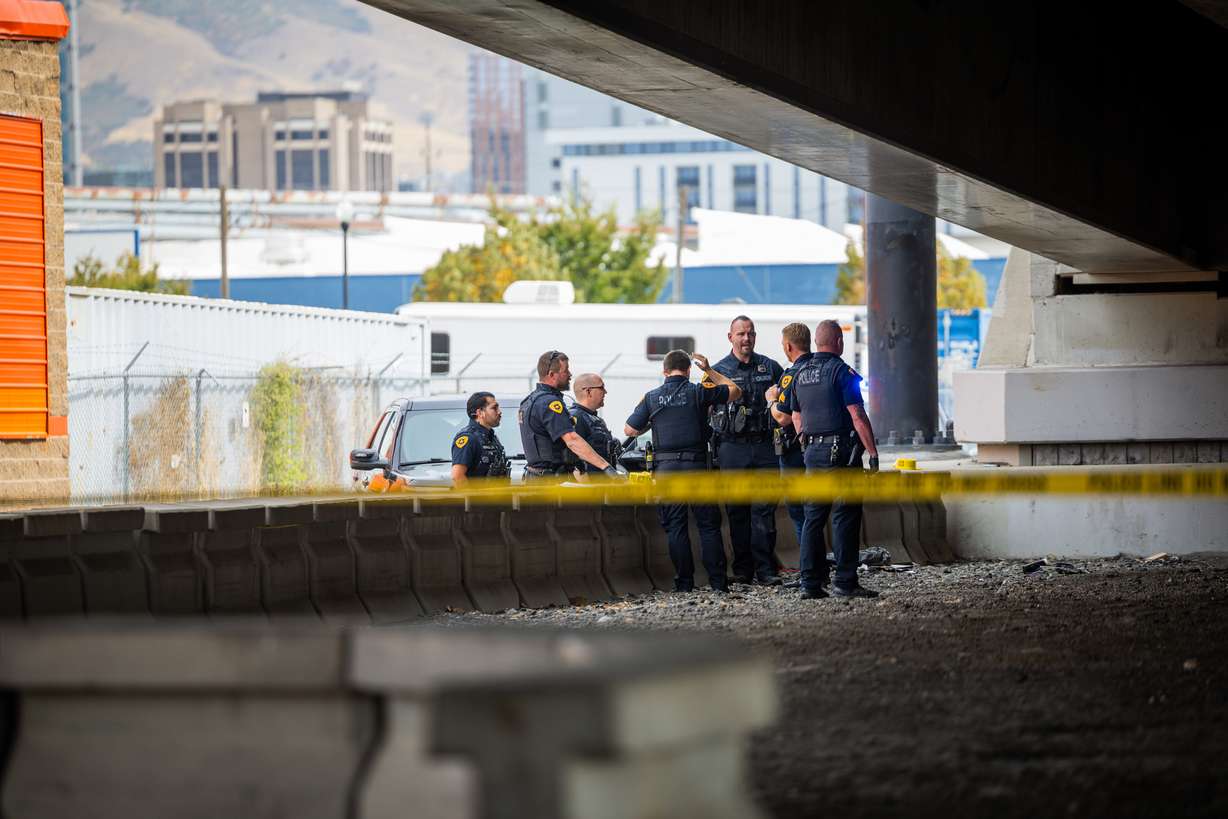
One officer told auditors that employees were "afraid to take action" because of the belief they'd be placed on leave for no reason — something that took a "mental toll" on everyone. Salt Lake City's policies differed from other departments, which tallied reasons for administrative leaves and also explored ways to get officers back from leave as quickly as possible, auditors said.
Nearly 80% of those surveyed said they didn't believe the department had any clear criteria for decisions tied to hiring, promotions or raises, either.
Other key issues outlined
Meanwhile, five officers were also suspended for three months by the Peace Officer Standards and Training Council earlier this year for falsifying their time cards, something that may have been more commonplace because the "prior leadership failed to adequately manage the shift's risks," according to the report.
Auditors said they found evidence of issues dating back months before the one that triggered a review.
The report found communication issues between city leaders and police, as well, which may have factored into effectiveness. For example, in a 2021 interview, Mendenhall said the city's role shouldn't be to enforce camping ordinances, which led to widespread confusion within the department about how to handle the issue until Brown issued a directive two years later, auditors said.
Still, auditors found that illegal camping enforcement only picked up about the time the audit was ordered. Over a quarter of all citations or arrests for illegal camping between 2019 and 2024 came during the final two months of 2024, per a review of city data.
One officer said it was common for goals to be "published externally," but there would be little internal discussion about them. And despite collecting a "wide range of operational data," auditors said prior leadership never established how it would translate into improvements or why certain goals were set.
Officers and senior leaders said Brown often leaned on "key civilian advisers" over senior leaders in "decision-making and operational direction," as he was "overly risk-averse," which they said also fractured trust within the department.
They told auditors that he'd delegate "outsized authority" to human resources, legal counsel and public relations officials, who ultimately "exercised powerful influence in department operations." High-ranking officers reported being excluded from "critical leadership discussions" in some cases, leading to a perception of poor communication within the department that was also evident in the survey.
Civilian positions shouldn't be discouraged, auditors wrote, but they said other departments have "supportive, compliance-focused roles," which help police make decisions rather than making them.
What didn't help is that Salt Lake police disbanded an internal audit function last year, and it appears the department failed to implement multiple recommendations from a previous internal audit, the report added. Auditors said this may have contributed to gaps in "internal improvements and high-risk processes."
Office of the Legislative Auditor General's recommendations for Salt Lake police
- Executive leadership should limit handing down administrative leave to "circumstances listed in internal policy," with consistent record keeping and reasons for each leave.
- Leadership should follow a chain-of-command structure and ensure that staff "have clear and identifiable roles for command" to support "effective communication."
- Leadership should consider more internal audits to identify inefficiencies and improve performance.
- Leadership should also take "an active role" in regularly managing and revising policies to ensure they're updated and staff are "held accountable for understanding them."
- The department should develop and implement a strategic plan "that defines organizational objectives" and a clear direction.
- Senior leadership should "establish and clearly communicate department goals," and assist leaders in tracking performance to provide "enhanced accountability."
- Leadership should "proactively ensure all overtime shifts have adequate supervision."
- Leadership that oversees special assignments, like homeless overtime shifts, should implement "accountability mechanisms" to ensure the shifts reach their "intended outcomes." These include steps to establish supervision and monitor officer performance to avoid future misconduct.
Brown pushes back
Brown blasted the report after its release, telling KSL that he was never contacted directly during the review and that he was never given a chance to respond to its findings, which he says is "more revealing" than its findings.
He pointed to various "innovative policing strategies," which received local and national recognition, that showed how the city was working to create safer streets during his tenure.
"This audit was part of a political attack aimed at the Salt Lake City Police Department under my leadership and, inevitably, Salt Lake City itself," he said. "It functioned as a vehicle to present a manufactured partisan indictment, not a fair and independent inquiry."
Turning things around
State auditors and state leaders say things appear things have improved since Redd took over. He started implementing sweeping changes even before the city received the audit's findings, Mendenhall said.
Redd unveiled a new senior leadership team this summer, and "has started to implement changes within the department" to address morale and culture, including new internal communication practices, auditors pointed out in the report. He's also working on a new strategic plan for goals, which the report recommends.
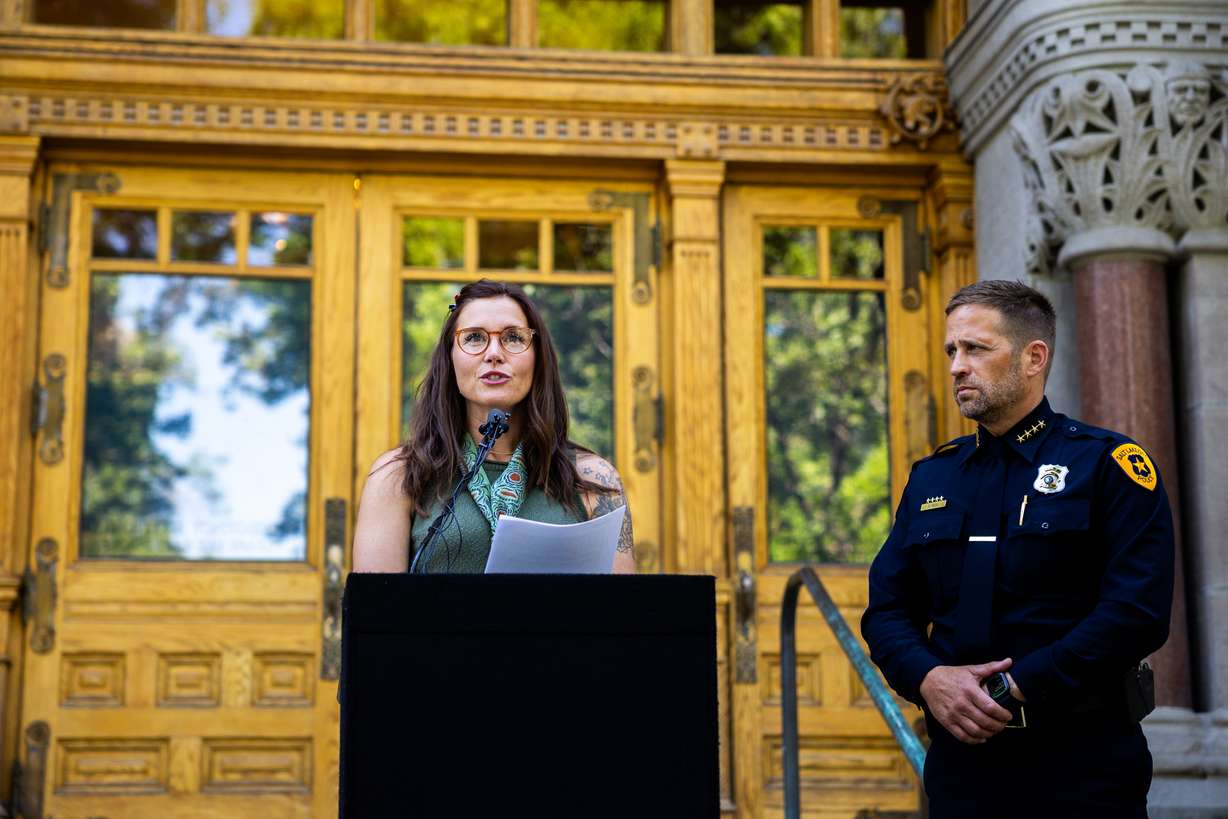
Mendenhall and Redd outlined how they plan to implement every other recommendation in their joint letter responding to the audit. These include new measures to "ensure the appropriate and consistent use of administrative leave," as well as ways to improve the timeliness of reviews.
Ways to improve communication, organizational objectives, timecard supervision and internal reviews are all on track to be implemented within the coming year, they said.
Auditors say they're "encouraged" by the initial steps. They said it's important for the mayor to hold their police chief accountable to lower the risk of "ineffective leadership," as well.
Even some of the city's harshest critics this time last year had positive things to say about the department's direction.
Utah Senate President Stuart Adams, R-Layton, and Utah House Speaker Mike Schultz, R-Hooper, who co-authored the letter calling for a public safety plan, said they have confidence in Redd's leadership and how crime has been addressed this year, during a presentation of the audit on Tuesday.
"You have stepped up," added House Majority Leader Rep. Casey Snider, R-Paradise, who authored a bill that could have penalized the city for not cooperating with the state on criminal issues earlier this year.
"Chief Redd, you have a hand in that, but Madam Mayor, you deserve that credit," he said. "There are clearly still problems in Salt Lake, but clearly some of them are not your fault. So, what I look forward to having a discussion about is the additional tools that are required to be successful."