'%3e%3cpath%20d='M34.1406%205.85938C30.3906%202.10547%2025.3047%200%2020%200C14.6953%200%209.60938%202.10547%205.85938%205.85938C2.10938%209.61328%200%2014.6953%200%2020C0%2025.3047%202.10547%2030.3906%205.85938%2034.1406C9.61328%2037.8906%2014.6953%2040%2020%2040C25.3047%2040%2030.3906%2037.8945%2034.1406%2034.1406C37.8906%2030.3906%2040%2025.3047%2040%2020C40%2014.6953%2037.8945%209.60938%2034.1406%205.85938ZM37.0117%2023.543H31.1602V13.5391H27.6328V19.9414C28.1211%2020.6914%2028.3711%2021.582%2028.3711%2022.5625V22.625C28.3711%2023.668%2028.1172%2024.6055%2027.6328%2025.4297V26.6094H36.082C33.4883%2032.9375%2027.2891%2037.3789%2020.0039%2037.3789C10.3711%2037.3789%202.62109%2029.6289%202.62109%2020C2.62109%2010.3711%2010.3711%202.62109%2020%202.62109C29.6289%202.62109%2037.3789%2010.3711%2037.3789%2020C37.3789%2021.1484%2037.2617%2022.2656%2037.0508%2023.3477C37.0391%2023.4141%2037.0234%2023.4766%2037.0117%2023.543Z'%20fill='white'/%3e%3cpath%20d='M22.3086%2018.5352C20.4336%2018.125%2019.9531%2017.8398%2019.9766%2017.1836V17.1406C19.9766%2016.6992%2020.3477%2016.2148%2021.4023%2016.2148C22.582%2016.2148%2023.8867%2016.6797%2025.0781%2017.4766L26.8516%2015.0195C25.4453%2013.8906%2023.707%2013.3398%2021.5547%2013.3398C18.5195%2013.3398%2016.4375%2015%2016.4063%2017.4766V17.5352C16.3633%2020.2617%2018.5859%2020.9805%2021.293%2021.6016C23.0391%2021.9766%2023.5703%2022.3164%2023.5703%2022.9609L23.5469%2022.9766C23.5469%2023.3906%2023.2578%2023.7031%2022.7852%2023.8359C22.5742%2023.9062%2022.1289%2023.9727%2021.5156%2023.9727C20.7617%2023.9727%2019.7539%2023.8633%2018.6328%2023.4844C18.0898%2023.2891%2017.4727%2023.0039%2016.8047%2022.6133L20.1406%2026.625C20.2813%2026.6602%2021.0977%2026.8516%2021.7734%2026.8516C25.0039%2026.8516%2027.0859%2025.2461%2027.1094%2022.6328V22.5703C27.1602%2020.1133%2025.2148%2019.1719%2022.3086%2018.5352Z'%20fill='white'/%3e%3cpath%20d='M5.24219%2013.5664V26.6133H8.75391V23.7578L10.2969%2021.9531L14.2031%2026.6133H18.3867L12.3555%2019.5195L17.4023%2013.5664H13.4531L8.75391%2019.0586V13.5664H5.24219Z'%20fill='white'/%3e%3c/g%3e%3cdefs%3e%3cclipPath%20id='clip0_97_2430'%3e%3crect%20width='40'%20height='40'%20fill='white'/%3e%3c/clipPath%3e%3c/defs%3e%3c/svg%3e)


Estimated read time: 5-6 minutes
- Dr. Ben Carson spoke at Utah Valley University about prayer and resilience.
- He recounted overcoming academic struggles and a violent temper through faith and reading.
- Carson emphasized unity, urging dialogue on shared beliefs amid political divisions.
OREM — When Dr. Ben Carson was a young medical student, he did so poorly on his first set of comprehensive exams that he was summoned to speak to his academic counselor.
The counselor reviewed Carson's records, assured him that there were plenty of ways to earn a living outside of medicine — and then sent him on his way with a sobering conclusion: "You're just not cut out to be a doctor."
Devastated, Carson rushed home, fell to his knees and prayed for direction.
Inspired, he strategized to spend less time in classroom lectures and focus instead on reading, research — and then more reading and more research.
Carson would defy his counselor's opinion, graduate from the University of Michigan Medical School and commence a world-renowned career that included being appointed Johns Hopkins Hospital's director of pediatric neurosurgery when he was just 33 years old.
Years later, he returned to the medical school where he had once struggled. This time, as its commencement speaker.
"I was looking for that counselor because I was going to tell him, 'You're just not cut out to be a counselor,'" recalled Carson, drawing laughter Wednesday from the hundreds who filled Utah Valley University's Ragan Theater for a lecture hosted by the school's Herbert Institute for Public Policy.
Most people recognize Carson for his work outside the neurosurgery community.

A Republican, Carson ran in the 2016 presidential election — ultimately losing his party's nomination to the man who would later become his boss, President Donald Trump. Following Trump's first presidential victory, he appointed Carson to be the country's 17th secretary of Housing and Urban Development.
A bestselling author of several books, Carson remains a public servant — serving as a national adviser for nutrition, health and housing at the Department of Agriculture.
Of course, Carson's appearance at UVU comes at a moment of pain and healing across the Orem campus. Less than two months ago, conservative activist and Turning Point USA co-founder Charlie Kirk was shot and killed while speaking to an outdoor crowd of thousands.
"In the wake of the tragic assassination of Charlie Kirk on Sept. 10, we couldn't have timed (Carson's) visit any better," said Justin Jones, the Herbert Institute's executive director, during his introduction of Carson.
"Dr. Carson is a voice of reason in his personal, professional and political life."
How 'reasonable people' find solutions

In a lecture touching on faith, prayer, resiliency, the promise of America and finding common ground with others, Carson traced his own unexpected path from childhood poverty to renown and influence across multiple communities.
He began Wednesday by paying tribute to Kirk.
"Charlie was an incredible person — and he was really the antidote to the radical leftism that is trying to fundamentally change our country.
"The radical left doesn't mind so much that people speak about it, but they do mind when people listen. That was the issue with Charlie. People were listening — and he understood that the hearts and minds, particularly of our young people, were being indoctrinated, and he couldn't just sit by and let that happen without giving the other side of the story."
Carson added that you could sit the country's most radical left-wing person across from the most radical right-wing person — and they would agree on 80% of their beliefs.
"It's that 20% that they don't agree on that we've allowed to be massaged into hatred and division — and that's what we don't need to do. This is called the United States of America.
"Those who want to fundamentally change us recognize that we cannot be overcome militarily, but we can be overcome internally. And if they can create enough strife and hatred, it will be every bit as effective as a military conqueror."
Carson challenged his audience Wednesday to "sit down at the table" and have discussions that starts with that 80% agreement. Begin by establishing relationships.
"And from there, we can talk about our differences and why we feel the way we do," he said. "Reasonable people will be able to come up with a solution.
"But the thing I can tell you for certain that doesn't work is the 'my way or the highway' philosophy, coming from either side."
Overcoming a violent temper through prayer, scripture

Carson said he's often asked why he's so calm in an anger-fueled world.
"I wasn't always like that," he answered. "There was a time when I got very angry."
As a poor youth growing up in Detroit, he battled a violent temper. He would lash out, even assaulting others.
By the time he was 14, he realized that his temper would ultimately place him in jail, reform school or the grave. "And none of those things appealed to me."
So he locked himself in a bathroom, dropped to his knees and began to pray — asking God to help him control his temper.
He located his family Bible, picked it up, began reading and discovered Proverbs 16:32: "He that is slow to anger is better than the mighty; and he that ruleth his spirit than he that taketh a city."
Young Carson determined then that his anger was fueled by selfishness. He decided to hand his troubles to God.
"When God fixes the problem, he doesn't do a paint job. He fixes it from the inside. That's what you have to understand.
"Develop that relationship with him — and let him work through you."
Soon, Carson found he was doing better in school, even while discovering his lifelong love for reading. He devoured biographies of explorers, entrepreneurs, engineers, scientists and surgeons.
"I began to realize something very important: The person who has the most to do with what happens to you — is you. It's not somebody else.
"And I stopped listening to all the naysayers and the people who were saying, 'You can't do this. You can't do that. Society is against you.'
"I just threw all that stuff in the garbage. I started reading everything I could get my hands on. And in the space of a year and a half, I went from the bottom of the class to the top of the class."

Most recent Charlie Kirk killing stories
Related topics
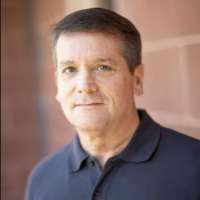 Jason Swensen