'%3e%3cpath%20d='M34.1406%205.85938C30.3906%202.10547%2025.3047%200%2020%200C14.6953%200%209.60938%202.10547%205.85938%205.85938C2.10938%209.61328%200%2014.6953%200%2020C0%2025.3047%202.10547%2030.3906%205.85938%2034.1406C9.61328%2037.8906%2014.6953%2040%2020%2040C25.3047%2040%2030.3906%2037.8945%2034.1406%2034.1406C37.8906%2030.3906%2040%2025.3047%2040%2020C40%2014.6953%2037.8945%209.60938%2034.1406%205.85938ZM37.0117%2023.543H31.1602V13.5391H27.6328V19.9414C28.1211%2020.6914%2028.3711%2021.582%2028.3711%2022.5625V22.625C28.3711%2023.668%2028.1172%2024.6055%2027.6328%2025.4297V26.6094H36.082C33.4883%2032.9375%2027.2891%2037.3789%2020.0039%2037.3789C10.3711%2037.3789%202.62109%2029.6289%202.62109%2020C2.62109%2010.3711%2010.3711%202.62109%2020%202.62109C29.6289%202.62109%2037.3789%2010.3711%2037.3789%2020C37.3789%2021.1484%2037.2617%2022.2656%2037.0508%2023.3477C37.0391%2023.4141%2037.0234%2023.4766%2037.0117%2023.543Z'%20fill='white'/%3e%3cpath%20d='M22.3086%2018.5352C20.4336%2018.125%2019.9531%2017.8398%2019.9766%2017.1836V17.1406C19.9766%2016.6992%2020.3477%2016.2148%2021.4023%2016.2148C22.582%2016.2148%2023.8867%2016.6797%2025.0781%2017.4766L26.8516%2015.0195C25.4453%2013.8906%2023.707%2013.3398%2021.5547%2013.3398C18.5195%2013.3398%2016.4375%2015%2016.4063%2017.4766V17.5352C16.3633%2020.2617%2018.5859%2020.9805%2021.293%2021.6016C23.0391%2021.9766%2023.5703%2022.3164%2023.5703%2022.9609L23.5469%2022.9766C23.5469%2023.3906%2023.2578%2023.7031%2022.7852%2023.8359C22.5742%2023.9062%2022.1289%2023.9727%2021.5156%2023.9727C20.7617%2023.9727%2019.7539%2023.8633%2018.6328%2023.4844C18.0898%2023.2891%2017.4727%2023.0039%2016.8047%2022.6133L20.1406%2026.625C20.2813%2026.6602%2021.0977%2026.8516%2021.7734%2026.8516C25.0039%2026.8516%2027.0859%2025.2461%2027.1094%2022.6328V22.5703C27.1602%2020.1133%2025.2148%2019.1719%2022.3086%2018.5352Z'%20fill='white'/%3e%3cpath%20d='M5.24219%2013.5664V26.6133H8.75391V23.7578L10.2969%2021.9531L14.2031%2026.6133H18.3867L12.3555%2019.5195L17.4023%2013.5664H13.4531L8.75391%2019.0586V13.5664H5.24219Z'%20fill='white'/%3e%3c/g%3e%3cdefs%3e%3cclipPath%20id='clip0_97_2430'%3e%3crect%20width='40'%20height='40'%20fill='white'/%3e%3c/clipPath%3e%3c/defs%3e%3c/svg%3e)


- Utah leaders pledge up to $4M for food banks as SNAP payments end due to shutdown.
- Gov. Spencer Cox criticized federal inaction urging community support for food assistance programs.
- Business and community leaders donated $250,000 to Utah's Child Nutrition Program to aid school meal deficits.
SALT LAKE CITY — State leaders will give up to $4 million to Utah food banks in the coming weeks as tens of thousands of Utahns are set to lose nutritional food assistance due to the federal government shutdown.
Several business and community leaders also announced a donation to help cover school meals in several districts with high school lunch debt.
Blaming congressional Democrats for "playing political games," Gov. Spencer Cox and top Republican lawmakers announced on Thursday that the state would provide $500,000 to the Utah Food Bank, followed by an additional $500,000 each week for the next eight weeks or until the government reopens.
"Washington has failed to do its job," Cox said. "Utah is stepping up so families, especially those in rural communities, can keep food on the table. Because Utah Food Bank serves Utahns in all 29 counties, additional state resources will reach small towns and city neighborhoods alike, including our federal employee neighbors who've gone too long without a paycheck."
The Supplemental Nutritional Assistance Program, or SNAP, is the formal name for food stamps, which provides benefits to some 86,000 Utah families, according to the state's Department of Workforce Services. Although the program is administered by the state, it is funded by the federal government and is set to run out of money at the beginning of November unless Congress approves a new budget.
Utahns with remaining balance on their EBT cards can still use that money until it's gone, but no new balance transfers will be issued starting Saturday.
Utah leaders said the temporary assistance will help Utahns meet their food needs, as demand is expected to increase at food pantries once SNAP funding is depleted. The first $500,000 will be allocated from the Governor's Emergency Program, and, if necessary, additional funds will be drawn from the state's general fund. A legislative spokesperson initially said the funding would come from a small budget surplus, but clarified it would come from the general fund.
Leaders encouraged others to follow the state's example and help those in need.
"Utah is known as the most charitable state in the nation," said Senate President Stuart Adams, R-Layton. "That's the spirit that defines us: We lift each other up and stand united. That's the power of community; that's the Utah way. But the responsibility to end this shutdown lies with our federal partners in Washington. Congress must stop the political games and reopen the government. Every day this shutdown drags on, hardworking Americans are hurt. It's time for Congress to do its job and put the American people first."
Although Republicans control the Senate, they need at least seven Democrats to vote with them to clear the 60-vote threshold to pass legislation. In recent votes, at least 45 Democrats have voted against the GOP plan to keep the government running through Nov. 21.
"It's wrong. And to the (45) senators that keep voting no, to shut the government down, they need to get their act together because real people are hurting," Utah House Speaker Mike Schultz, R-Hooper, told reporters. "I'm frustrated. As a state leader, we are frustrated that Washington, D.C. can't get its act together and that you have 45 people — think about that, 45 people — hurting hundreds of millions of people across the country."
Schultz said keeping SNAP funded in Utah costs about $31 million per month — a "huge number that is really hard for the state to be able to do." Legislative leaders have previously said the state can't backfill the program without the federal government, and Schultz urged business, community and faith leaders to "come together, donate to the food pantry and let's help those get what they need most."
'This crisis is invisible'
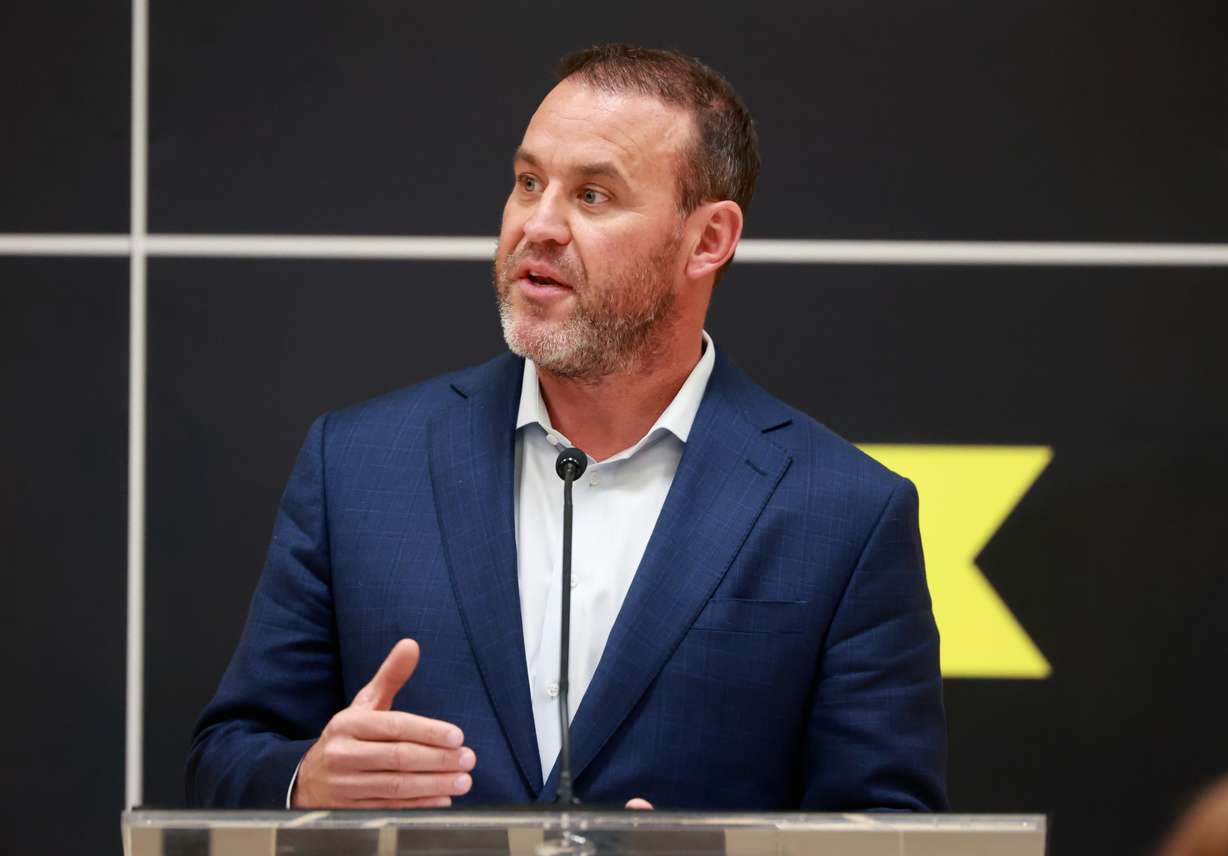
Several business and political leaders — Schultz included — did just that Thursday, announcing a $250,000 donation to Utah's Child Nutrition Program. The money will go to eight school districts — Granite, Salt Lake, Weber and several rural districts — with meal program deficits to help provide meals to children facing food insecurity.
The donation was given by Schultz and his wife Melissa, Utah Jazz and Utah Mammoth owners Ryan and Ashley Smith and several other philanthropists and organizations.
"Across Utah, tens of thousands of children wake up every day unsure if food will be on their table," said Kristin Andrus, with the Andrus Foundation. "These are working families and now with the federal SNAP benefits ending because of the government shutdown, we are facing a real crisis. Now this crisis is invisible unless you walk into the kitchen of these struggling families, or you stand in line with other Utahns in a food pantry or food bank."
The donation was announced in the gym at Lincoln Elementary School in South Salt Lake. Students cheered as the Jazz Bear and Tusky, the Utah Mammoth's new mascot, joined them on the playground and high-fived the furry mascots as they marched down the halls to return to class.
Schultz said the money would be distributed to school districts with the most school lunch debt and the most students in need of school lunch. The funds will supplement a new state law that provides free school meals to some 40,000 students in Utah who previously received "reduced price" meals.
Emily Bell McCormick, the founder and president of the Policy Project, said her group worked with lawmakers on that bill. While she said the donation for school meals is "a drop in the bucket, but it is a drop, and it's the start."
"This is not about politics. This is about children," Andrus added. "We can ensure that these kids, our kids, do not go hungry."