'%3e%3cpath%20d='M34.1406%205.85938C30.3906%202.10547%2025.3047%200%2020%200C14.6953%200%209.60938%202.10547%205.85938%205.85938C2.10938%209.61328%200%2014.6953%200%2020C0%2025.3047%202.10547%2030.3906%205.85938%2034.1406C9.61328%2037.8906%2014.6953%2040%2020%2040C25.3047%2040%2030.3906%2037.8945%2034.1406%2034.1406C37.8906%2030.3906%2040%2025.3047%2040%2020C40%2014.6953%2037.8945%209.60938%2034.1406%205.85938ZM37.0117%2023.543H31.1602V13.5391H27.6328V19.9414C28.1211%2020.6914%2028.3711%2021.582%2028.3711%2022.5625V22.625C28.3711%2023.668%2028.1172%2024.6055%2027.6328%2025.4297V26.6094H36.082C33.4883%2032.9375%2027.2891%2037.3789%2020.0039%2037.3789C10.3711%2037.3789%202.62109%2029.6289%202.62109%2020C2.62109%2010.3711%2010.3711%202.62109%2020%202.62109C29.6289%202.62109%2037.3789%2010.3711%2037.3789%2020C37.3789%2021.1484%2037.2617%2022.2656%2037.0508%2023.3477C37.0391%2023.4141%2037.0234%2023.4766%2037.0117%2023.543Z'%20fill='white'/%3e%3cpath%20d='M22.3086%2018.5352C20.4336%2018.125%2019.9531%2017.8398%2019.9766%2017.1836V17.1406C19.9766%2016.6992%2020.3477%2016.2148%2021.4023%2016.2148C22.582%2016.2148%2023.8867%2016.6797%2025.0781%2017.4766L26.8516%2015.0195C25.4453%2013.8906%2023.707%2013.3398%2021.5547%2013.3398C18.5195%2013.3398%2016.4375%2015%2016.4063%2017.4766V17.5352C16.3633%2020.2617%2018.5859%2020.9805%2021.293%2021.6016C23.0391%2021.9766%2023.5703%2022.3164%2023.5703%2022.9609L23.5469%2022.9766C23.5469%2023.3906%2023.2578%2023.7031%2022.7852%2023.8359C22.5742%2023.9062%2022.1289%2023.9727%2021.5156%2023.9727C20.7617%2023.9727%2019.7539%2023.8633%2018.6328%2023.4844C18.0898%2023.2891%2017.4727%2023.0039%2016.8047%2022.6133L20.1406%2026.625C20.2813%2026.6602%2021.0977%2026.8516%2021.7734%2026.8516C25.0039%2026.8516%2027.0859%2025.2461%2027.1094%2022.6328V22.5703C27.1602%2020.1133%2025.2148%2019.1719%2022.3086%2018.5352Z'%20fill='white'/%3e%3cpath%20d='M5.24219%2013.5664V26.6133H8.75391V23.7578L10.2969%2021.9531L14.2031%2026.6133H18.3867L12.3555%2019.5195L17.4023%2013.5664H13.4531L8.75391%2019.0586V13.5664H5.24219Z'%20fill='white'/%3e%3c/g%3e%3cdefs%3e%3cclipPath%20id='clip0_97_2430'%3e%3crect%20width='40'%20height='40'%20fill='white'/%3e%3c/clipPath%3e%3c/defs%3e%3c/svg%3e)


This archived news story is available only for your personal, non-commercial use. Information in the story may be outdated or superseded by additional information. Reading or replaying the story in its archived form does not constitute a republication of the story.
- Extreme heat could affect nearly 100 million people in U.S. cities this week and into August.
- It comes as heat-related illnesses and deaths are rising, especially over the last seven years, according to research.
- Cooling techniques, hydration, and acclimatization are crucial for preventing such illnesses and deaths.
SALT LAKE CITY — Much of the country is under an extreme heat alert this week, which will affect close to 100 million people in U.S. cities nationwide. It's a dangerous misery expected to last into August in the Midwest and East.
Utah's actually going to drop a few degrees in time for Pioneer Day festivities, but temperatures will still be more than hot enough to cause harm as people spend hours outdoors recreating, running races and watching parades.
The thermometer doesn't have to reach triple digits to spell trouble. People need to pay attention.
High temperatures are dangerous, even deadly. High temperatures can lead to heat stroke or heat exhaustion. They can exacerbate existing medical conditions like heart, respiratory and kidney disease. And it doesn't help that when nature's thermostat inches up, it can cause more ground-level ozone, which can lead to increased risk of illness that negatively affects breathing, metabolism, the nervous system and more.
According to research published in JAMA Network, heat-related death rates increased between 1999 and 2023, especially in the last seven years.
Parades and outdoor events, from fairs and festivals to simply goofing off, can be dangerous because people sometimes stop drinking liquids so they won't have to take a bathroom break, or for fear there are no bathrooms nearby.
Unusually hot temperatures are also cause for concern for athletes, for construction workers and road crews, for employees in poorly ventilated manufacturing plants, for gardeners, for unhoused people, for illicit drug users and people taking certain prescriptions, for agricultural workers, for jailed individuals, for military personnel, for firefighters and police and for low-income individuals without air conditioning, among others. And, of course, for those who care about any of them.
The old, the young and people with chronic medical conditions may not be able to cool themselves well, making them more vulnerable. The Centers for Disease Control and Prevention has reported that if a heat sickness doesn't kill you, it will make you more vulnerable to heat's bad effects in the future.
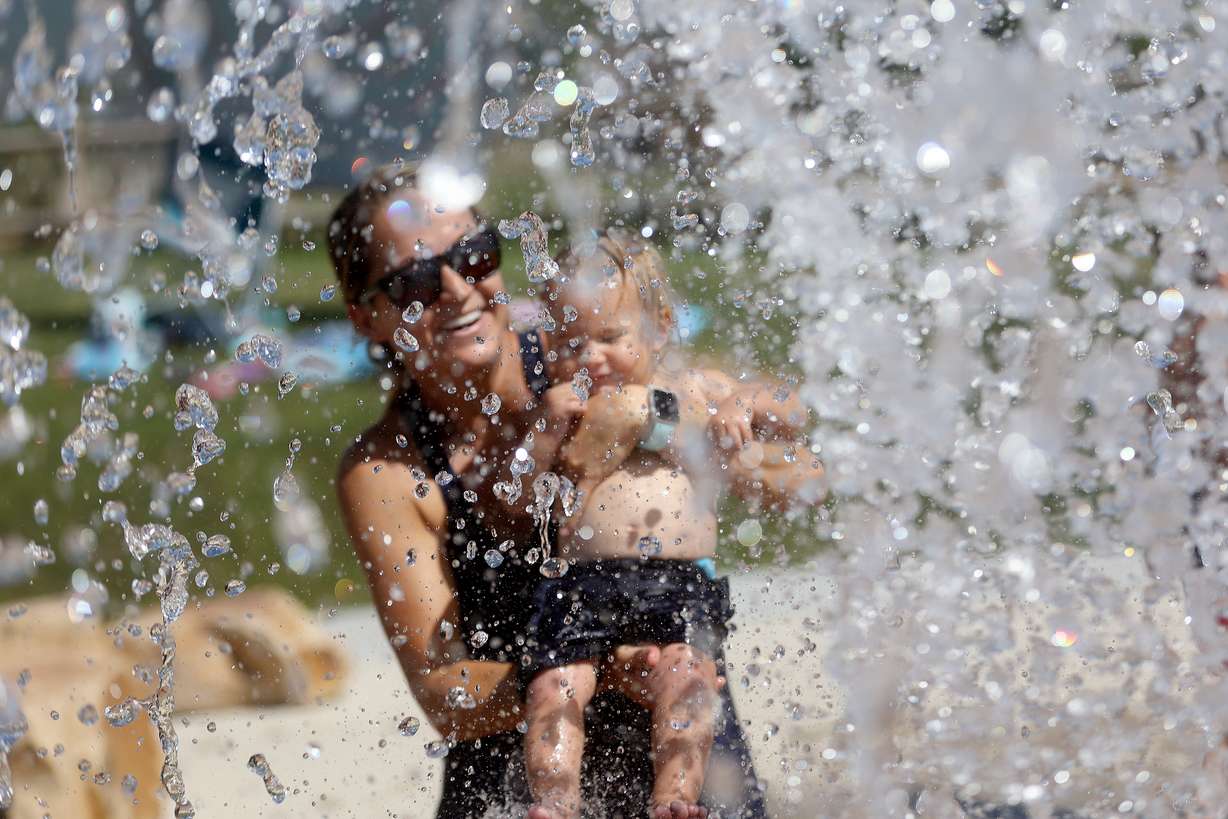
Trouble climbs with the temperature
That heat-related illness and deaths are on the rise is not theoretical. The impact of extreme temperatures is countable: The Alliance for Heat Resilience and Health in a just-released letter to the National Governors Conference reported that more than 600 people died in Maricopa County, Arizona, from heat in 2024. In the Pacific Northwest, there were more than 600 excess deaths in 2021 after a heat dome settled over the region. Texas has seen a tripling of heat-sparked children's emergency room visits in the last decade and 450 heat-related deaths in 2023. The same was true in southern Nevada, with a 30% increase in emergency room visits and more than 500 deaths last year.
The letter, which called extreme heat a "national public health emergency," was signed by 108 groups including the Alliance of Nurses for Healthy Environments, the American Lung Association, the American Public Health Association and the Federation of American Scientists, and endorsed by 32 more.
They wrote that "extreme heat is making us sicker, aging us faster, and is one of the leading causes of weather-related mortality. In 2023 alone, an estimated 2,300 people died from extreme heat. Using excess death attribution, true mortality is likely 10,000-plus annually."
The harm of 'too hot'
Heat illness takes four forms, according to Cleveland Clinic.
When sweat gets trapped under your skin, you may develop heat rash, marked by small, itchy bumps.
Heat cramps usually happen when you're sweating and exerting yourself in hot weather. It's a pretty mild heat illness, but it could get worse if you don't cool down.
Heat exhaustion is more serious, because it can turn into heat stroke fast. Body temperature goes up, and you've lost too much salt and/or water, usually from exertion. Dizziness, nausea, vomiting and headache are among the signs of heat exhaustion.
Heatstroke is a body's critical call for help. You can die. Temperature rises above 104 degrees — sometimes as high as 108 or 109 degrees. You don't have to be exerting, either. Just being in very high temperatures can create a deadly situation.
Using excess death attribution, true mortality (from extreme heat) is likely 10,000-plus annually.
–Alliance for Heat Resilience and Health report
Lifesaving heat stroke strategy
If someone has heatstroke, those around that person have just 30 minutes to bring their temperature down or risk catastrophic consequences, said Dr. Douglas Casa, a professor of kinesiology at the University of Connecticut, whose message is "cool first, then transport."
Faced with someone experiencing heatstroke, he told the Deseret News that waiting for an ambulance, which may not even have what it needs to cool someone down quickly enough, eats valuable minutes. And even first responders may not be trained in how crucial cold-water immersion is, though as the message spreads, more schools, sporting events and other venues that host activities in high temperatures are now prepared with cooling tubs and plenty of ice.
"If there's appropriate medical staff on site and you have an aggressive cooling modality, you finish the cooling on site before you transport them, even if the ambulance has arrived," he said. "This is the standard of care and best practice in sports medicine industries around America and around the world."
He said it can take 15 to 20 minutes to adequately cool someone having heatstroke, but that time is better spent and yields finer results than if you spent it moving them. "You have a 30-minute window to assure survivability without long-term complications. That's why the best practice is to have water immersion tubs set up and why we start cooling them within five minutes of the presentation of heat stroke," Casa said.
But what are you supposed to do if you don't have an immersion tub on hand? Most people don't. He said if you're going somewhere where heatstroke is a possibility, taking a towel and a chest of ice water along can save a life. "You can use that cooling modality while you're waiting for the ambulance."
The most important thing is to cover the entire skin surface area in freezing cold water. Cold water, he added, is more important than shade.
If someone is suffering heat stroke at home, spraying a garden hose carrying cold water could be invaluable if you can't wrestle them into the bathtub.
Casa likens getting started immediately to what you'd do in a heart attack emergency. You'd start chest compressions right away, not wait for the ambulance to get there. "And you wouldn't wait until you get to the hospital, because the survivability rate would be near zero," Casa said. "The same thing applies to heatstroke."
If someone exhibits high temperature and some form of distress like confusion or combativeness, he said to assume it's heatstroke and cool the person down, call 911 and also check what's happening with their heart.
His bottom line? "Heatstroke can be prevented with proper mitigation strategies." But if it's not prevented, "survivability is 100% when they're cooled aggressively."
Don't let heat hurt you
Prevention is clearly better than trying to fix it.
The best ways to prevent heatstroke include ensuring people are properly hydrated. It's the same truth at outdoor events or while working outdoors. You need plenty of breaks and cold water nearby.
Proper acclimatization is key, and many outdoor-in-the-heat activities are predictable. Build up to those activities over seven to 10 days in heat to develop better heat tolerance, Casa said.
Casa noted that those in charge of outdoor activities that happen in the heat, whether a football coach, a work supervisor or a parent, should be "properly versed on cooling techniques." And they need to pay attention to weather conditions and be willing to be flexible.
Survivability is 100% when (someone is) cooled aggressively.
–Dr. Douglas Casa, University of Connecticut
But possibly the most important step is ensuring that what's being done outdoors is appropriate for a person's fitness level, he said. He used football practice to illustrate his point. In the high school setting, every heatstroke death in football since 1995 has involved a lineman, per Casa. That's a specific position that heats up faster than others. When they're not trained and conditioned appropriately, they are placed at risk, he said. Because positions heat up at different rates, team members should be conditioned differently.
Keep your cool and enjoy summer
Matt Johnson, a KSL-TV meteorologist, told the Deseret News there's plenty that families can do to stay safe in the heat and keep the summer fun going. He divides advice into categories: hydration, clothing and environment, and activities and safety.
Besides drinking plenty of water throughout the day, whether or not you feel thirsty, Johnson said to consider using electrolyte drinks to replenish lost salts and minerals, especially during physical activity. He also warns against consuming excessive caffeine and alcohol, as they can dehydrate you.
What you wear matters, he said. To stay cool, choose light-colored, loose-fitting clothing made from breathable fabrics like cotton. "The temperature difference between wearing a white T-shirt versus a black one is about 20 degrees," he said.
And pace yourself. Johnson suggests limiting strenuous physical activity, especially during the hottest part of the day. And he adds that children and pets should never, ever be left unattended in vehicles, where temperatures can quickly become deadly.
Among other tips from the CDC, Weather Channel, World Health Organization and previous Deseret News reporting to stay safe when temperatures are high:
- If temperatures are very high, stay indoors in an air-conditioned location if possible.
- Take breaks and don't overdo activities.
- Cool down with showers or baths.
- Check on friends and neighbors and have someone who'll check on you.
- Pay attention to weather reports and health and safety updates.
- Do not swim alone, because the impact of high temperatures increases the risk of drowning.
- Don't use an electric fan when temperatures are above 104 F. In that circumstance, the WHO says fans will heat the body.
- If you're worried about your electric bill, set the thermostat to 81 F and turn on an electric fan. It will save money and drop how hot it feels significantly, the WHO reports.
- Wet your skin and drink at least a cup or water every hour, whether you feel thirsty or not.
- Don't cover a stroller with dry fabric to provide shade. It creates its own heat dome. Use a damp, thin cloth and rewet it as it dries.
- Know where there are cool locations you can go to if you need one.
Related:

Utah could be in for another hot summer, but will it also be wet or dry?
Utah could be in for another scorching summer, but long-range outlooks offer hope for a productive monsoon season.
Related stories
Most recent Health stories
Related topics
 Lois M. Collins