
Estimated read time: 2-3 minutes
- The People's Union called for a 24-hour economic blackout against large corporations.
- Economist Andrew Keinsley views the blackout as a symbolic flex of consumer power.
- Successful boycotts require sustained efforts and specific demands, Keinsley suggests.
RIVERDALE, Weber County — Despite calls online for an economic blackout, big-name stores like Target and Walmart still had filled parking lots and customers inside on Friday. Results, of course, may vary by area.
A group called The People's Union called for people to avoid spending money at large corporations for 24 hours on Feb. 28.
"For decades, they have told us that we are powerless, that we have no control and that this system is too big, too strong, too unshakable," the People's Union founder John Schwarz said in an Instagram post. "We are the ones who build. We are the ones who buy. And we are the ones who make this country run. Without us, they have nothing."
People around Ogden, like Diana Lopez, agree with the sentiment but are unsure of the impact.
"I think it's quite impossible, with like the numbers that we have, for everyone to actually come together and make that difference," Lopez said. "They're making millions every day, billions per year. We're adding to their wealth while we're still over here struggling."

What makes a successful boycott?
Andrew Keinsley, an associate professor of economics at Weber State University, said typically in order to make an impact, a boycott has to be more sustained and focused.
"This might just be a starting point into something that could be bigger in the future," Keinsley said. "But in terms of this specific one, I think it's a symbolic flex of consumer power."
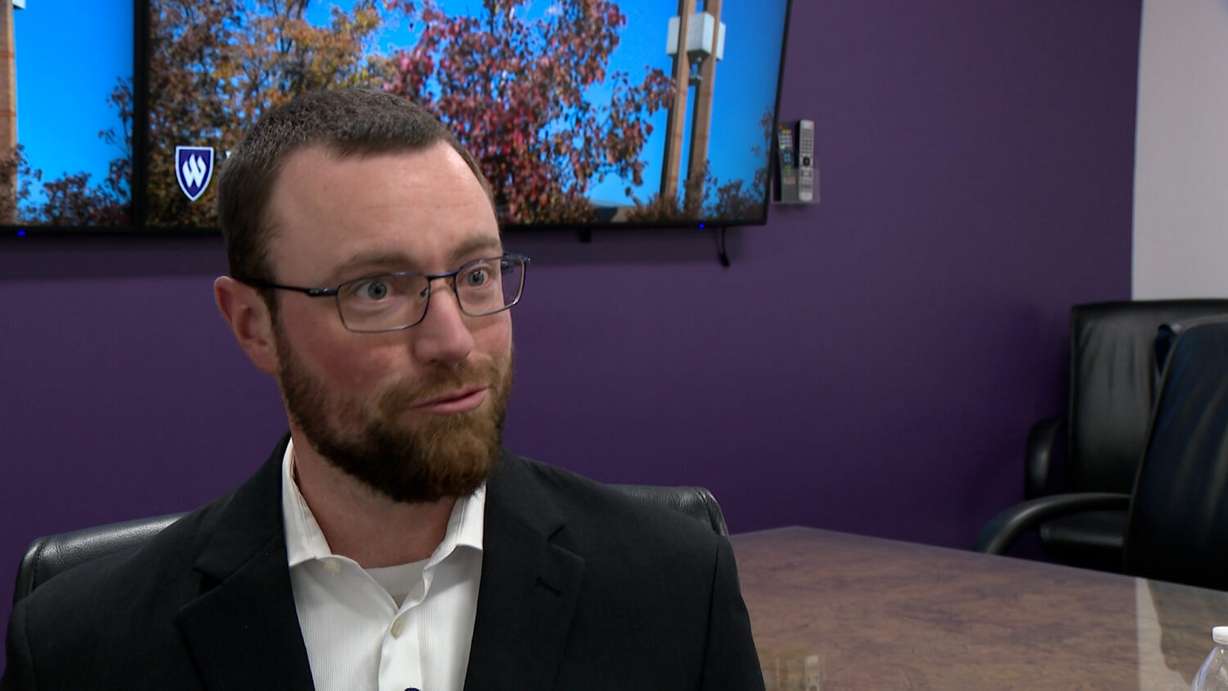
Keinsley adds that successful boycotts in the past have asked for very specific demands.
"We've seen some companies kind of bow to consumer pressure in the past," he explained. "So it's not out of the realm of possibilities that something like this could lead to change."
Keinsley said however in extended boycotts, families often end up having to choose between their budget, and what they're fighting for.
"Eventually you get down to the kitchen table," Keinsley said. "I still need to take my limited amount of money that I have and provide the best life for my family, and that's usually when you start to see that deterioration of that kind of emotional push."
The People's Union is already calling for more boycotts in the coming weeks, including one against Amazon, from March 7 to March 14.
Correction: A photo caption previously misidentified Andrew Keinsley, an associate professor of economics at Weber State University, as being from Utah State University. That has been updated.