'%3e%3cpath%20d='M34.1406%205.85938C30.3906%202.10547%2025.3047%200%2020%200C14.6953%200%209.60938%202.10547%205.85938%205.85938C2.10938%209.61328%200%2014.6953%200%2020C0%2025.3047%202.10547%2030.3906%205.85938%2034.1406C9.61328%2037.8906%2014.6953%2040%2020%2040C25.3047%2040%2030.3906%2037.8945%2034.1406%2034.1406C37.8906%2030.3906%2040%2025.3047%2040%2020C40%2014.6953%2037.8945%209.60938%2034.1406%205.85938ZM37.0117%2023.543H31.1602V13.5391H27.6328V19.9414C28.1211%2020.6914%2028.3711%2021.582%2028.3711%2022.5625V22.625C28.3711%2023.668%2028.1172%2024.6055%2027.6328%2025.4297V26.6094H36.082C33.4883%2032.9375%2027.2891%2037.3789%2020.0039%2037.3789C10.3711%2037.3789%202.62109%2029.6289%202.62109%2020C2.62109%2010.3711%2010.3711%202.62109%2020%202.62109C29.6289%202.62109%2037.3789%2010.3711%2037.3789%2020C37.3789%2021.1484%2037.2617%2022.2656%2037.0508%2023.3477C37.0391%2023.4141%2037.0234%2023.4766%2037.0117%2023.543Z'%20fill='white'/%3e%3cpath%20d='M22.3086%2018.5352C20.4336%2018.125%2019.9531%2017.8398%2019.9766%2017.1836V17.1406C19.9766%2016.6992%2020.3477%2016.2148%2021.4023%2016.2148C22.582%2016.2148%2023.8867%2016.6797%2025.0781%2017.4766L26.8516%2015.0195C25.4453%2013.8906%2023.707%2013.3398%2021.5547%2013.3398C18.5195%2013.3398%2016.4375%2015%2016.4063%2017.4766V17.5352C16.3633%2020.2617%2018.5859%2020.9805%2021.293%2021.6016C23.0391%2021.9766%2023.5703%2022.3164%2023.5703%2022.9609L23.5469%2022.9766C23.5469%2023.3906%2023.2578%2023.7031%2022.7852%2023.8359C22.5742%2023.9062%2022.1289%2023.9727%2021.5156%2023.9727C20.7617%2023.9727%2019.7539%2023.8633%2018.6328%2023.4844C18.0898%2023.2891%2017.4727%2023.0039%2016.8047%2022.6133L20.1406%2026.625C20.2813%2026.6602%2021.0977%2026.8516%2021.7734%2026.8516C25.0039%2026.8516%2027.0859%2025.2461%2027.1094%2022.6328V22.5703C27.1602%2020.1133%2025.2148%2019.1719%2022.3086%2018.5352Z'%20fill='white'/%3e%3cpath%20d='M5.24219%2013.5664V26.6133H8.75391V23.7578L10.2969%2021.9531L14.2031%2026.6133H18.3867L12.3555%2019.5195L17.4023%2013.5664H13.4531L8.75391%2019.0586V13.5664H5.24219Z'%20fill='white'/%3e%3c/g%3e%3cdefs%3e%3cclipPath%20id='clip0_97_2430'%3e%3crect%20width='40'%20height='40'%20fill='white'/%3e%3c/clipPath%3e%3c/defs%3e%3c/svg%3e)


Big 12 commissioner Brett Yormark rarely meets a pitch he cannot sell, a narrative he cannot spin or, it seems, a problem he cannot solve for the conference he serves.
Fresh off his greatest test, a legal beatdown of Texas Tech in the Brendan Sorsby controversy, Yormark will take the stage Tuesday to open the 2026 edition of Big 12 football media days in Frisco, Texas.
The occasion will mark his first question-and-answer session with the media since ending the Sorsby affair. Questions about his relationship with the university, and its billionaire board chair, Cody Campbell, seem inevitable.
But that's hardly the only topic likely to arise Tuesday given that Year 5 of Yormark's tenure features a barrage of momentous issues confronting the Big 12 specifically and college sports generally:
College Football Playoff expansion
Yormark supports a 24-team field presuming the logistics are workable (e.g., placement of games in a crowded December calendar) and the change makes sense financially.
If the CFP doubles in size, conference championship games will be eliminated. The added playoff inventory (12 games) must generate enough new TV revenue for Big 12 schools to offset the loss of their title game on ABC, which carries an approximate value of $50 million annually.
The value proposition could take months to unpack, but the CFP is facing a Dec. 1 deadline to determine the format for the 2027 season.
College Football Playoff success
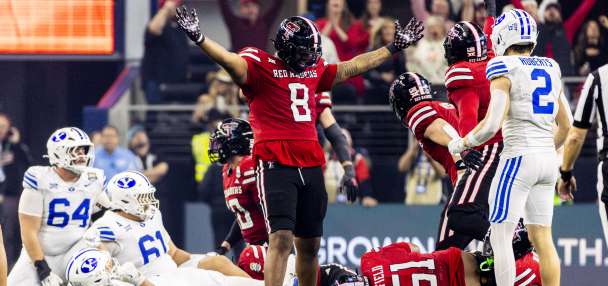
This is a vastly more sensitive subject than the future format, because it speaks to past failures. In two years of the 12-team playoff, the Big 12 is the only power conference that has neither received an at-large bid nor won a game.
Arizona State lost narrowly to Texas in 2024, and Texas Tech belly-flopped against Oregon on Jan. 1.
We suspect Yormark will be candid on this topic.
He's acutely aware of the need for the conference to prove itself and the unavoidable context that accompanies the topic: By working to make sure Sorsby could not play for Texas Tech this fall, Yormark undercut the Big 12's prospects for CFP success.
Then again, there's an easy explanation for his strategy: Nothing matters more than the integrity of Big 12 football, regardless of the player, school or stakes involved.
Private equity and the revenue gap
These issues are intertwined and omnipresent.
Big 12 schools received roughly $30 million less in conference distributions (per campus) in 2025 than their peers in the SEC and Big Ten. And that gap is expected to increase in coming years.
What can be done?
"It's the No. 1 thing I think about when I wake up," Yormark told reporters recently. "We're doing everything we can."
The toolbox includes a partnership with RedBird Capital, which has provided the Big 12 office with access to $12.5 million in seed money to create additional revenue streams and given each school the option to take a $30 million line of credit.
As of late May, none of the schools had accepted RedBird's offer. Has that changed? Yormark could provide insight on Tuesday.
The Protect College Sports Act
Yormark supports the bill, which is co-sponsored by U.S. Sens. Ted Cruz (R-Texas) and Maria Cantwell (D-Washington), and commended "the bipartisan effort to establish a more consistent national framework for college athletics."
At least, that was his position a few weeks ago — before a significant revision to the legislation.
The original version prohibited only the SEC and Big Ten from expanding. The updated version prohibits any conference generating at least $700 million in revenue from expanding — a threshold the Big 12 is expected to officially clear when FY2026 finances are reported next spring.
Sure, the conference wants limitations placed on the SEC and Big Ten to prevent them from either consolidating power over the FBS or breaking away to create a new competitive entity.
But do the Big 12's member schools want their freedom of movement restricted in the process? The revised bill seemingly prevents them from joining the Big Ten or SEC in the future. It would freeze the Power Four structure.
Yormark's comments on the PCSA will be informative.

Most recent Big 12 stories
Related topics
 Jon Wilner
Jon Wilner has been covering college sports for decades and is an AP Top 25 football and basketball voter as well as a Heisman Trophy voter. He was named Beat Writer of the Year in 2013 by the Football Writers Association of America for his coverage of the Pac-12, won first place for feature writing in 2016 in the Associated Press Sports Editors writing contest and is a five-time APSE honoree. You can follow him on Twitter @WilnerHotline or send an email at jwilner@bayareanewsgroup.com.
Pac-12 Hotline: Subscribe to the Pac-12 Hotline Newsletter. Pac-12 Hotline is not endorsed or sponsored by the Pac-12 Conference, and the views expressed herein do not necessarily reflect the views of the Conference.