Estimated read time: 4-5 minutes
- Matt Clark, paralyzed in 1979, overcame adversity to become a metal artist.
- Clark's art, made from discarded metal, symbolizes his personal transformation and resilience.
- His story is featured in "Broken Cowboy," screening Saturday, Nov. 21 at Utah Tech University's Eccles Fine Arts Center
ST. GEORGE — When Matt Clark swings his hammer, there is power behind it.
Smack! The sound rings throughout his metalworking shop.
"I don't have hardly any grip with my spinal damage to my hands," he said. "Even before I started working with metal, I spent a couple months trying to design a hammer that would work. ... People say, 'Well, don't you have something classier than duct tape?' I go, 'Nope.'"
Nearly half a century ago, Clark was working under his pickup truck on a sloped driveway when the truck started rolling and took him with it.
"Once it hit the street at the end of the driveway, it kind of wadded me up, and the tire actually skidded on my head. That's what broke my neck," he said.
The year was 1979. Clark was 17 years old and on track to become a national rodeo champion.
"Six months before the injury, I actually made it to the national finals high school rodeo in calf roping," he said.
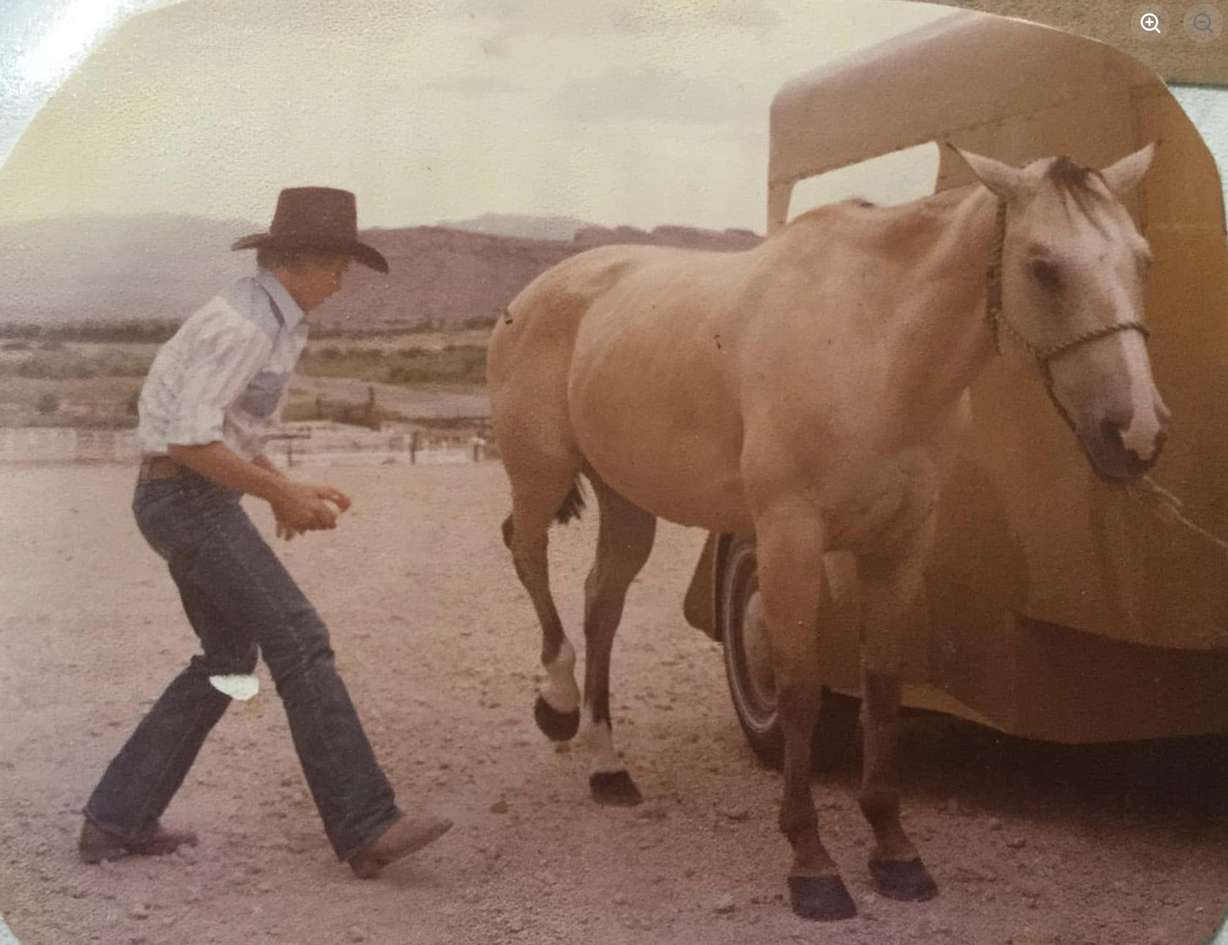
The accident caused a C5-C6 spinal cord injury, leaving Clark "totally paralyzed" and only able to "shrug one shoulder." After several months in the ICU, followed by six more months in rehabilitation, doctors gave him a bleak prognosis.
"After the end of that stay, the doctors basically said it was their unanimous decision that I'd go home and find a rest home to live in ... and I'd probably be lucky to live three years," he said. "But that's not what my parents planned. So we set up our own therapy on the porch of our house."
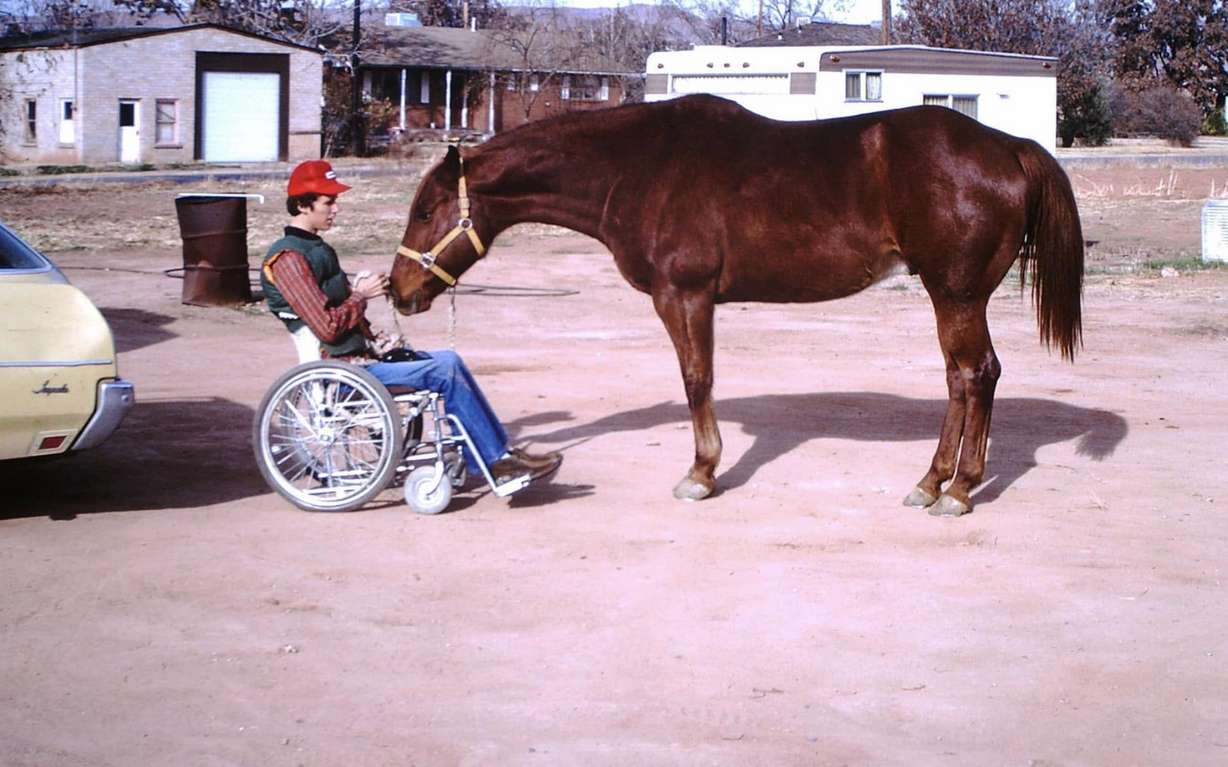
As Clark rehabilitated at home, he decided to revisit something he learned in junior high: welding.
"I actually bought my own welder and was just teaching myself to weld," he recalled. "Three years after my injury, I still had the old welder sitting there. I thought, 'Well, I'll see if I can figure out how to weld again with 85% of my physical capacity compromised.'"
At first, he worked on old wood stoves, trailer hitches and other repairs, often taking on odd jobs to earn money. As the work grew, so did his pile of scraps.
"One day I was bored and just pulled pieces out and welded up a little dinosaur," he said. "My mom later saw it and, being the supportive mom that she is, said, 'That's really good! I think it's art.'"
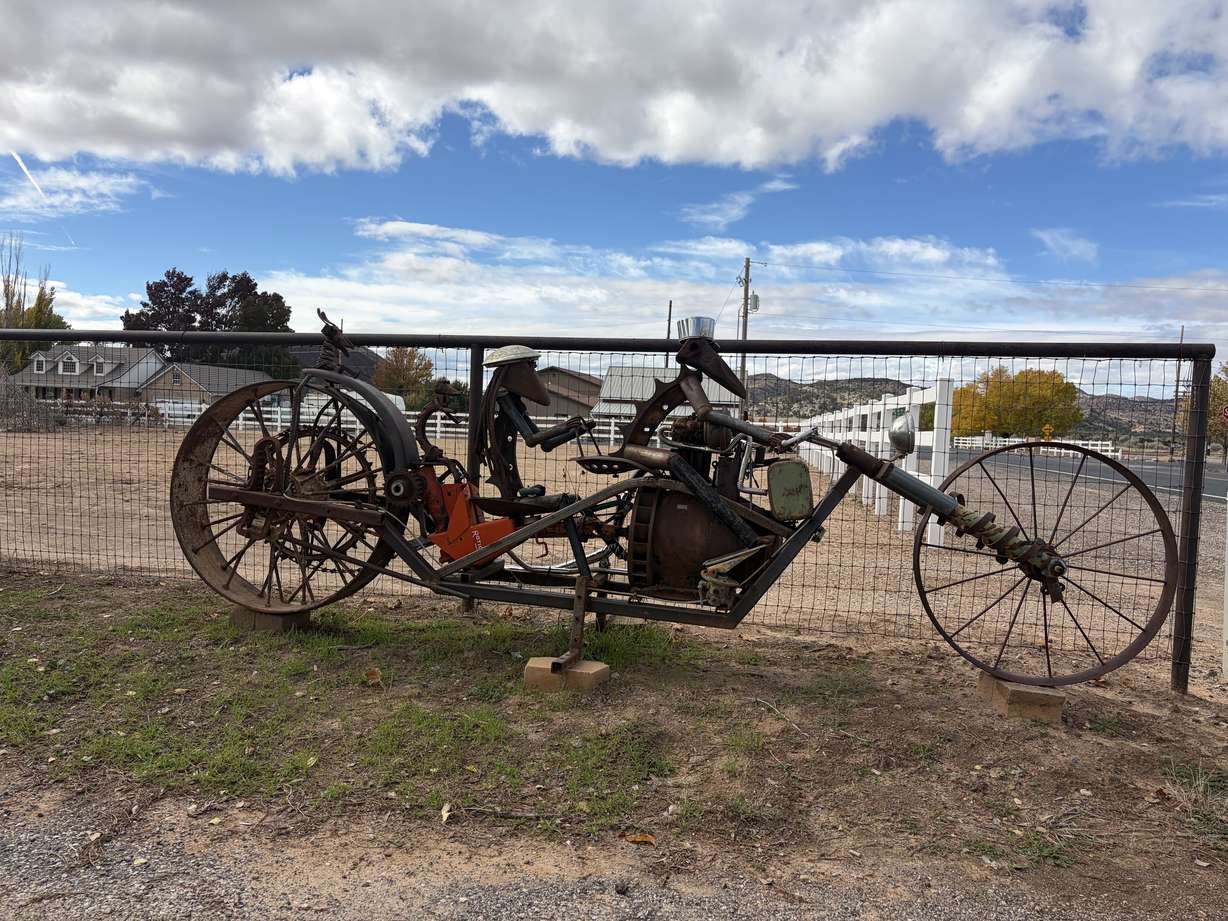
That first dinosaur turned into thousands of art pieces — all made from discarded scraps of metal. Clark said it's a metaphor for life as he looks back at his once "broken" self, who was told his future was dismal.
"I'll take the broken, discarded pieces, and I'm not really concerned about what they were," he said. "Their potential is to become a new entity — the same kind of metamorphosis that I've gone through in my life."
One of his favorite pieces is a horse he modeled and scaled to the size of the one he was riding around the time of his accident. He said 98% of the horse was made from discarded metal.
"The legs are made from drive lines and U-joints to give you a feeling that there's a joint there," he said. "In fact, that's what I was working on when the truck ran over me: a U-joint. I just made that connection.
"There's a chain from an old manure spreader," he added. "There's a flex plate or starter wheel that your starter engages on a motor. The heavier, bigger pipe is a drill stem out of an oil well."
Clark has made several horses over the years and said that despite all the different pieces that make up each one, they all have one thing in common: a heart.
"I'll give it a heart as a final symbol to say it could be its own entity and to go out in the world," he said.
Clark has worked out of his home in Diamond Valley in Washington County for the past several decades, selling art pieces around the country and even into Canada.
His story caught the eye of former football player and Emmy-winning filmmaker Phil Tuckett. Over the past two years, Tuckett directed "Broken Cowboy: The Matt Clark Story," which DOCUTAH will screen on Saturday, Nov. 21 at Utah Tech University's Eccles Fine Arts Center.
Clark said he's honored to have his story shared, adding that his work has always been about conquering life despite whatever odds come your way.
"Life's hard, so just be tough," he said.