Estimated read time: 4-5 minutes
- The International Pez Museum of Erda marks 30 years of collecting with over 3,000 dispensers.
- Owner Brent Beazer has collected various items since his childhood before Pez dispensers piqued his interest.
- Visitors can arrange free tours of the museum; donations are appreciated, but completely optional.
ERDA, Tooele County — The International Pez Museum of Erda, a privately-owned collection of more than 3,000 Pez dispensers, recently celebrated 30 years of continued collecting.
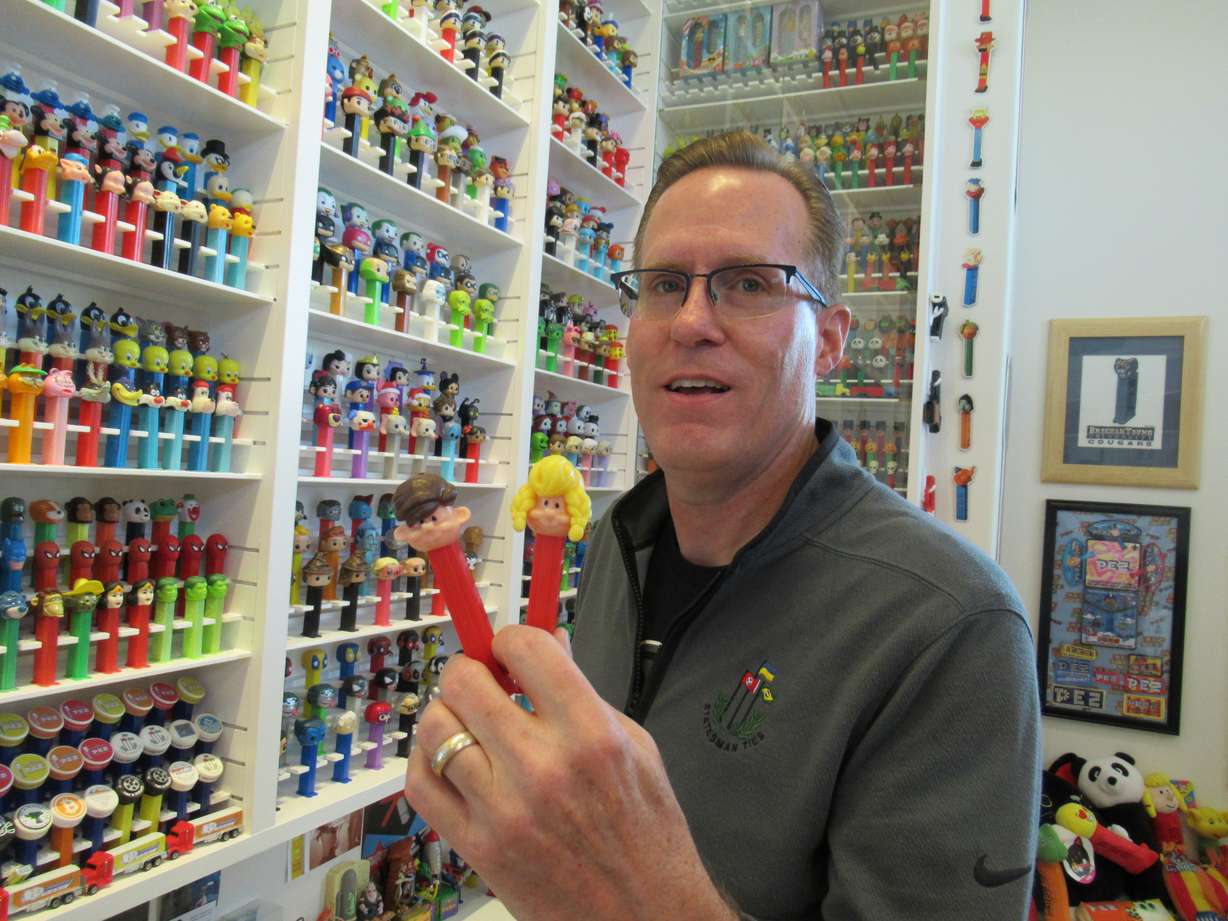
The owner, Brent Beazer, said he started collecting things as a young boy, mainly smashed pennies and patches from national parks and museums. He said he was inspired by his grandmother's collections of coins, stamps and Avon bottles.
In 1996, after marrying his wife and graduating from BYU, he moved to Arizona and was called as the Young Men's president in his local congregation of The Church of Jesus Christ of Latter-day Saints.
One of the young men in his ward collected Pez dispensers and gave Beazer a Sylvester the Cat-themed dispenser.
"I thought it was really cool," he reflected. "It reminded me of my childhood. And I decided I wasn't planning on collecting them."
Fortunately for Erda residents and tourists, Beazer's wife gave him a matching set of Pez dispensers for Valentine's Day.
"Once you have three of anything, you have a collection," Beazer said. "So kind of past the point of no return at that point with three."
History of Pez
According to Beazer, Pez started in Austria in 1927 as a candy alternative to smoking. Originally, the candies were peppermint-flavored and came in tins similar in size to Altoids.
The German word for peppermint is Pfefferminz. The creator, Eduard Haas III, took several letters from the word and coined the name "Pez." The original drop-shaped candies were soon transformed into the still-used bricks of sugar and flavoring.
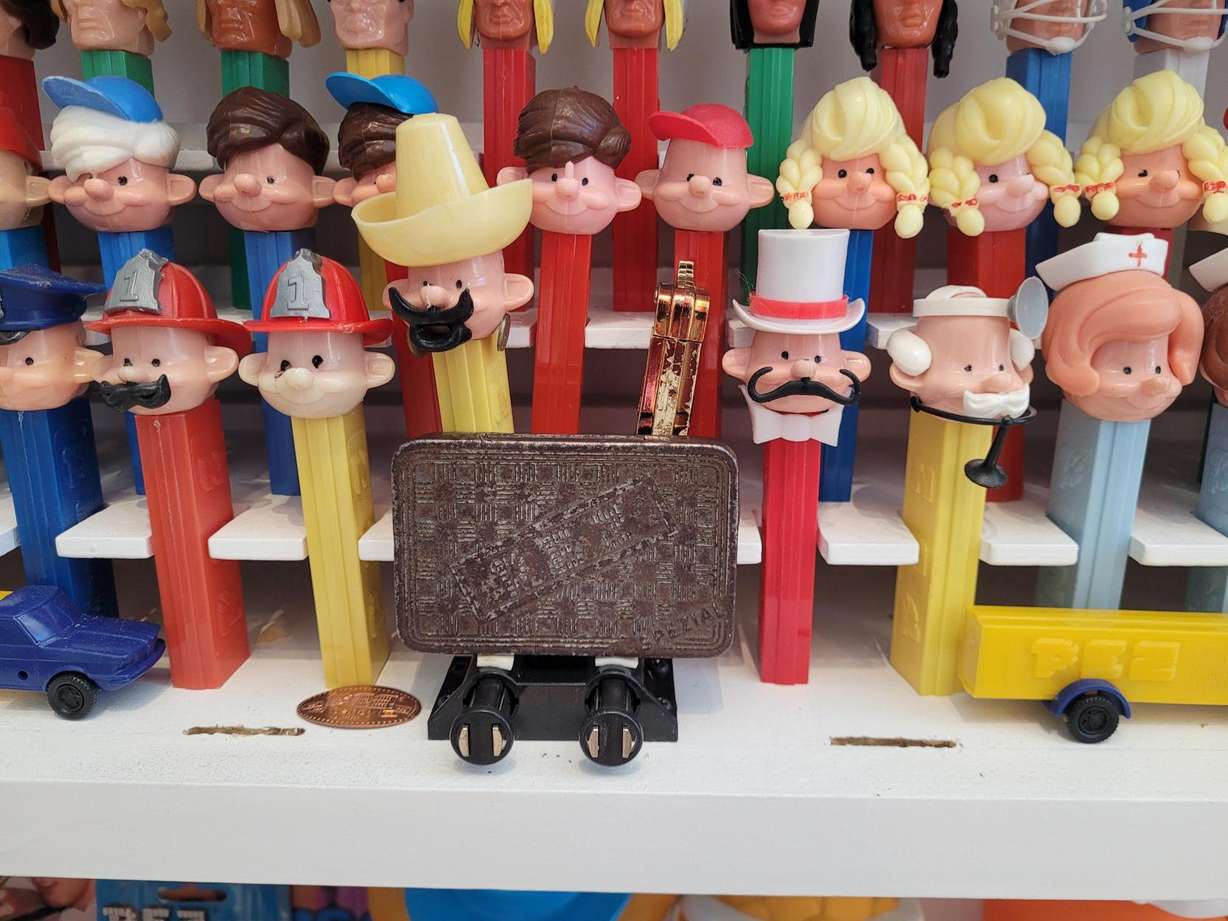
Soon, the packaging changed into a thin dispenser that looked like a cigarette lighter, capitalizing on the square shapes.
"You see the advertising there," Beazer said. "Don't smoke, have some super Pez."
By the 1950s, Pez came to the United States and shifted its marketing to children. The flavor was changed to fruit, and the dispensers were turned into toys.
For Pez, Beazer said it was "all about the candy. The dispenser was simply a vehicle to sell more candy and never really was going to be a collectible."
As time went on, the material of the dispenser's "heads" changed from plastic to rubber, though it was soon returned to the original plastic. In the 1980s, "feet" were added to the bottom of the dispenser to help them stand upright.
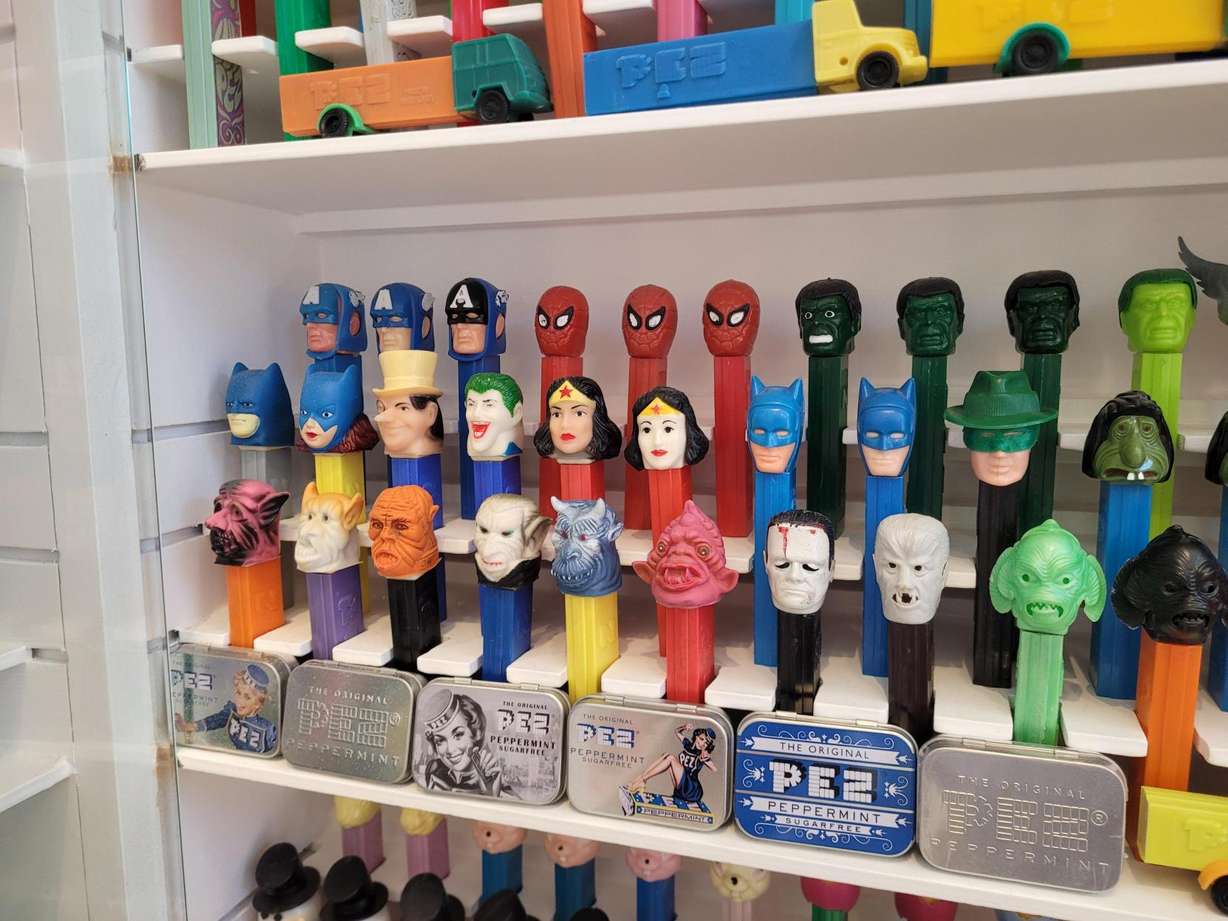
Beazer said there are some serious Pez collectors who only go for the vintage dispensers.
"If it has feet on it, they don't waste their time. They're not interested," he explained.
International Pez Museum of Erda
Beazer's personal collection steadily grew. He said friends and family would gift him Pez dispensers for various holidays, including his birthday and on National Twin Day. He said they'd often call him, asking him if he had a specific dispenser.
He began to jokingly call his collection a "museum" in the 2000s, eventually making it into the local newspaper in 2008. His children would brag about their dad's collection, and word began to spread organically.
During the 2020 earthquake, about a third of his collection fell off the shelves he had built, smashing to the ground. It broke several vintage dispensers, prompting Beazer to look for glass cases to store the most expensive dispensers in.
In 2021, his family moved to Erda and built a home there. One of the designs they looked at had a small building attached by a breezeway to the rest of their house.
"I thought that would be perfect for the museum," he said. "It would be separate from the house; people wouldn't have to go in the house. I can have my office out there. ... We really built the house around this."
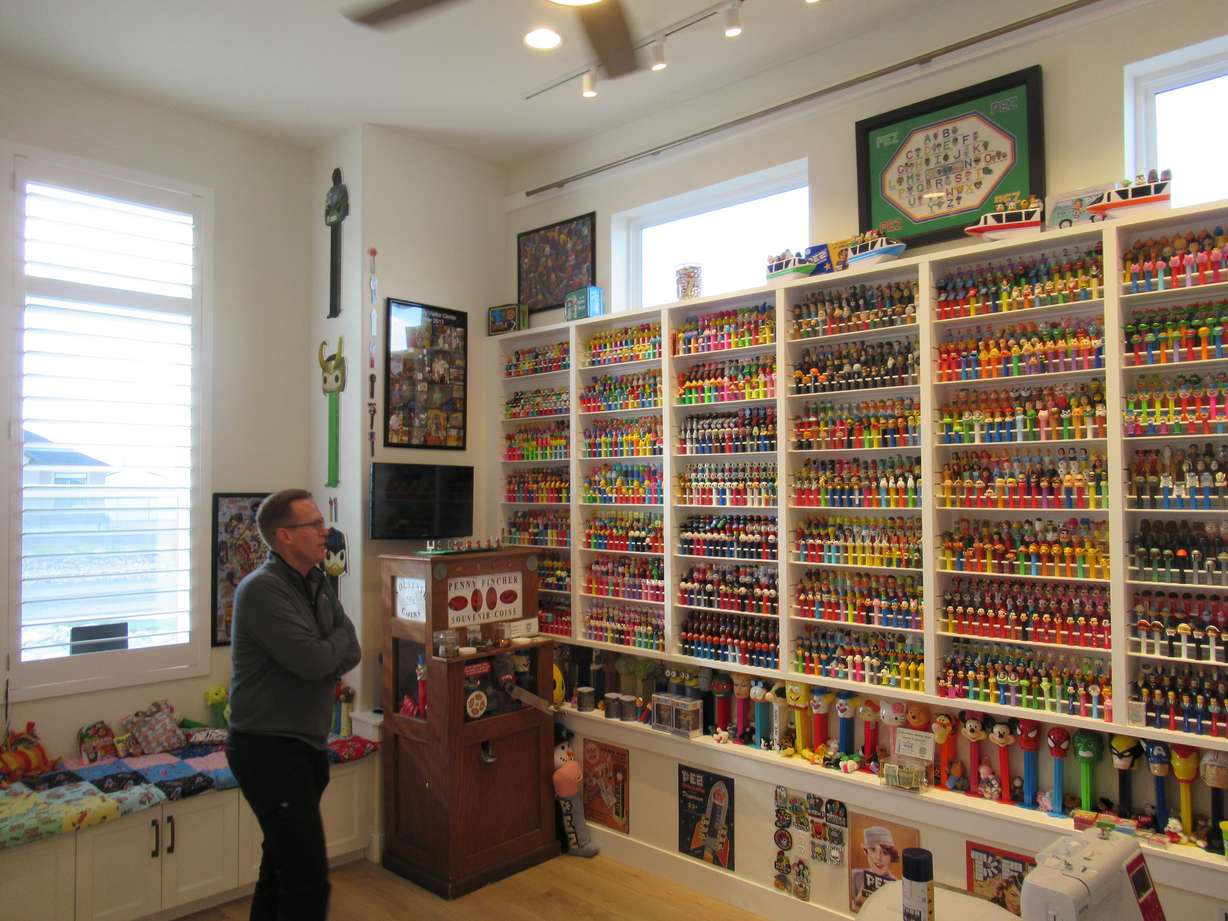
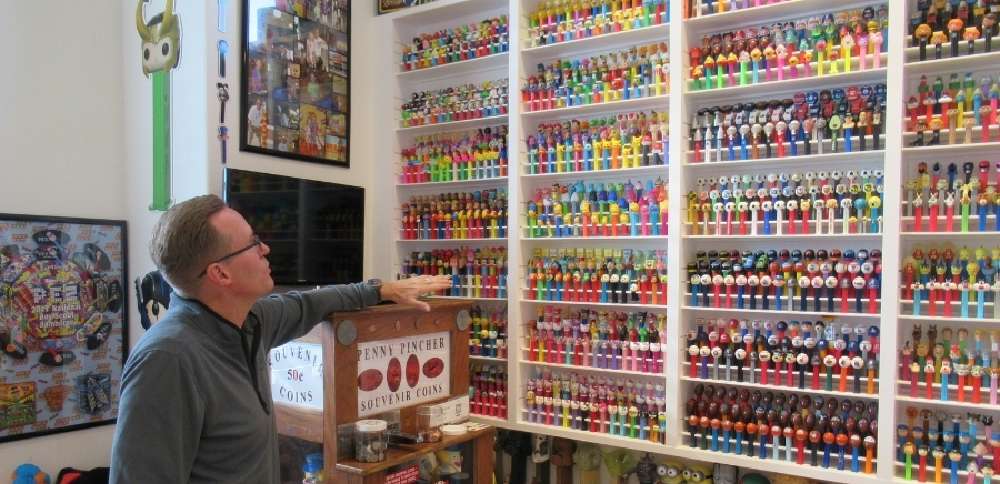
The walls are covered in dispensers, with 45 to a shelf, seven shelves to a column and eight columns to a wall. Two rolling ladders, one on each side of the room, allow access to the higher shelves. Several shelves over the entrance remain open for future dispensers to add to his collection.
Beazer's collection is loosely organized around similar themes, but he said it would take him at least four hours of uninterrupted time to fully curate the museum to "get things in the right spot."
Even with more than 3,000 dispensers, Beazer said his collection is "impressive" — but it is not the biggest privately-owned collection. He said it was something fun that developed a life of its own, and he will occasionally go for long periods of time without collecting any new dispensers.
"Once I die, you know, the kids can do whatever they want with it," he said. "It's just stuff. But it's been fun! It's been a good ride for 30 years, and if I do it for another 30 years, great. But it's never been my sole focus."
Interested visitors can contact Beazer to arrange a free tour to the museum to see his collection. Donations are welcome, but by no means required to visit.
"I enjoy collecting, and so if I'm going to collect, I enjoy sharing it with others," he said. "That's why the museum exists ... to bring happiness to other people."
Correction: In an earlier version, Brent Beazer's name was incorrectly spelled Beezer.
_