'%3e%3cpath%20d='M34.1406%205.85938C30.3906%202.10547%2025.3047%200%2020%200C14.6953%200%209.60938%202.10547%205.85938%205.85938C2.10938%209.61328%200%2014.6953%200%2020C0%2025.3047%202.10547%2030.3906%205.85938%2034.1406C9.61328%2037.8906%2014.6953%2040%2020%2040C25.3047%2040%2030.3906%2037.8945%2034.1406%2034.1406C37.8906%2030.3906%2040%2025.3047%2040%2020C40%2014.6953%2037.8945%209.60938%2034.1406%205.85938ZM37.0117%2023.543H31.1602V13.5391H27.6328V19.9414C28.1211%2020.6914%2028.3711%2021.582%2028.3711%2022.5625V22.625C28.3711%2023.668%2028.1172%2024.6055%2027.6328%2025.4297V26.6094H36.082C33.4883%2032.9375%2027.2891%2037.3789%2020.0039%2037.3789C10.3711%2037.3789%202.62109%2029.6289%202.62109%2020C2.62109%2010.3711%2010.3711%202.62109%2020%202.62109C29.6289%202.62109%2037.3789%2010.3711%2037.3789%2020C37.3789%2021.1484%2037.2617%2022.2656%2037.0508%2023.3477C37.0391%2023.4141%2037.0234%2023.4766%2037.0117%2023.543Z'%20fill='white'/%3e%3cpath%20d='M22.3086%2018.5352C20.4336%2018.125%2019.9531%2017.8398%2019.9766%2017.1836V17.1406C19.9766%2016.6992%2020.3477%2016.2148%2021.4023%2016.2148C22.582%2016.2148%2023.8867%2016.6797%2025.0781%2017.4766L26.8516%2015.0195C25.4453%2013.8906%2023.707%2013.3398%2021.5547%2013.3398C18.5195%2013.3398%2016.4375%2015%2016.4063%2017.4766V17.5352C16.3633%2020.2617%2018.5859%2020.9805%2021.293%2021.6016C23.0391%2021.9766%2023.5703%2022.3164%2023.5703%2022.9609L23.5469%2022.9766C23.5469%2023.3906%2023.2578%2023.7031%2022.7852%2023.8359C22.5742%2023.9062%2022.1289%2023.9727%2021.5156%2023.9727C20.7617%2023.9727%2019.7539%2023.8633%2018.6328%2023.4844C18.0898%2023.2891%2017.4727%2023.0039%2016.8047%2022.6133L20.1406%2026.625C20.2813%2026.6602%2021.0977%2026.8516%2021.7734%2026.8516C25.0039%2026.8516%2027.0859%2025.2461%2027.1094%2022.6328V22.5703C27.1602%2020.1133%2025.2148%2019.1719%2022.3086%2018.5352Z'%20fill='white'/%3e%3cpath%20d='M5.24219%2013.5664V26.6133H8.75391V23.7578L10.2969%2021.9531L14.2031%2026.6133H18.3867L12.3555%2019.5195L17.4023%2013.5664H13.4531L8.75391%2019.0586V13.5664H5.24219Z'%20fill='white'/%3e%3c/g%3e%3cdefs%3e%3cclipPath%20id='clip0_97_2430'%3e%3crect%20width='40'%20height='40'%20fill='white'/%3e%3c/clipPath%3e%3c/defs%3e%3c/svg%3e)


Estimated read time: 6-7 minutes
- Salt Lake City and UDOT are collaborating to help residents displaced by August flooding.
- A proposed emergency fund aims to allocate up to $100,000 for temporary housing assistance and other needs.
- The two sides remain at odds on who is responsible for the break.
SALT LAKE CITY — Leaders of Utah's capital city and state transportation officials are at odds over who is responsible for a water main break that flooded over a dozen Poplar Grove homes in August.
However, they have initiated steps to come together in a way to support affected residents caught in the middle of the disagreement, especially as some remain displaced a month after the incident.
The Salt Lake City Council is working to create a new "emergency household stabilization fund" on Tuesday, seeking to set aside up to $50,000 in available funds to assist affected residents. Utah Department of Transportation leaders signaled that it is willing to match any city money, according to Salt Lake City Mayor Erin Mendenhall.
While the amendment itself is still being sorted out, the City Council informally voted to include the fund in an upcoming budget amendment, authorizing city officials to essentially begin preparing everything as if the money is already there. It seeks to help displaced residents find temporary housing and cover other important expenses.
"There's an immediate need for stabilization," said Salt Lake City Councilman Alejandro Puy, whose district includes Poplar Grove and who proposed the item for the budget amendment.
What happened?
City leaders discussed the measure toward the end of a broader conversation on a proposed amendment to the city's budget. It was initiated a day after KSL spoke to homeowners who still aren't able to move back into their homes following the Aug. 16 water main break near 500 South and 1100 West.
An investigation into what caused the break is still underway, but Salt Lake City believes it may have been tied to a recent bridge project. UDOT received federal funding to replace a bridge in the area, while Salt Lake City paid the differential cost for a UDOT contractor to bury an external water line attached to the bridge.
Related:
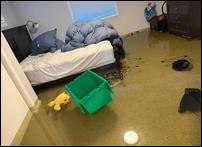
Fund launched as frustrated Salt Lake City residents fume over flooding fiasco
Residents of Salt Lake City's west side are banding together to help a little more than a dozen homeowners who were displaced or affected by flooding.The leading theory is the break may have occurred after the project wrapped up and water service resumed.
"My understanding is when that system was recharged with the new line section repaired, about 50 feet down there was a breakage that affected these homes," Mendenhall said.
Approximately 15 homes were flooded, and at least three homes are still considered unlivable. The Westside Coalition launched a crowdfunding campaign this week, saying that many residents are still struggling from the flooding.
Creating an emergency fund
Usually, organizations like the American Red Cross offer assistance when there's flooding, but that doesn't apply in this case since it's considered a man-made disaster. Some residents learned their insurance won't cover losses, and some have filed claims with UDOT or the city.
Salt Lake City and UDOT agreed to bring in a third party to complete the investigation, which will determine the cause and who the responsible party is. However, it could take several more months to complete everything, including any financial settlements for residents.
Mendenhall met with UDOT Commissioner Carlos Braceras before Tuesday's City Council work session, where she said he pledged a dollar-for-dollar match on a program to assist residents caught in the middle of the drama.
Neither side is willing to admit fault, but Puy proposed the new emergency fund during the meeting. It's a one-time fund that would help displaced residents find housing and pay for needs like food, clothing, transportation and other essential household items, stabilizing their situation, he explained on Wednesday.
He said he had toured the damage the day of the flooding, but shared news coverage to convey the urgency to others.
"I can see how frustrating this is for many neighbors," he told KSL. "While everything is sorted out, the neighbors are left hanging, and I'm hoping this fund helps those neighbors in the meantime to try and mitigate some of the impacts to their lives."
The whole concept was inspired by a disaster loan the city launched last year, for businesses affected by a large fire on downtown Main Street. In this case, city officials pinpointed a source within federal housing program dollars that could be used for the situation some residents are facing.
The program centers around forgivable, deferred or amortizing loans depending on household income, though, meaning there could be strings attached and some may not be eligible.
Puy said he hopes that it's more of a grant for people who can't afford taking on the costs, or at least a forgivable loan. Those are elements still being hashed out, as is the full fund allocation the city sets aside.
It's also unclear if people who weren't displaced will receive any money from the emergency fund.
A public hearing on the full budget amendment is scheduled for the City Council's annual west side meeting, to be held at the Utah State Fairpark on Sept. 22, before a vote that could be held as early as Oct. 6.
It's a great start. We do wish they would have been jumping on this sooner, but we're glad — better late than ever.
–Justice Morath, a spokesman for Westside Coalition
It's not the only effort. UDOT spokesman John Gleason told KSL on Monday that the agency believes its project didn't create the break, but seeing the news coverage of the current conditions a month after the fact ultimately swayed its willingness to help affected residents in coordination with the city.
Agency officials approved restoration processes and planned to meet with displaced residents this week to understand their needs, Gleason said on Wednesday. They have already purchased thousands of dollars worth of gift cards to distribute for various needs.
"Whether it's our responsibility or Salt Lake City's, we'll work that out later. We need to focus on the people," he said. "It's gone on too long, and it needs to stop right now. We need to make sure they're put first."
What happens next?
Willi Graham, one of the residents displaced by the flooding, is cautiously optimistic about the sudden response a month after the incident.
The Westside Coalition is happy that there's been progress; however, there's still contention that it's only happening now, said Justice Morath, a spokesman for the organization, speaking on behalf of the affected residents.
"It's a great start. We do wish they would have been jumping on this sooner, but we're glad — better late than ever," he said. "It's going to be helpful to help all the residents right now, but we also know it's going to be a long road to recovery."
There are also still a lot of questions about how it will work, especially if it becomes a loan rather than a grant.
While the city's proposal is a one-time fund, Puy said the final system could become a blueprint the city can turn to should it find itself in a similar situation again.
"It would be my push that every year we put money aside for these types of issues," he said. "This is a lesson learned, and I do think the city will be more prepared in the future."