'%3e%3cpath%20d='M34.1406%205.85938C30.3906%202.10547%2025.3047%200%2020%200C14.6953%200%209.60938%202.10547%205.85938%205.85938C2.10938%209.61328%200%2014.6953%200%2020C0%2025.3047%202.10547%2030.3906%205.85938%2034.1406C9.61328%2037.8906%2014.6953%2040%2020%2040C25.3047%2040%2030.3906%2037.8945%2034.1406%2034.1406C37.8906%2030.3906%2040%2025.3047%2040%2020C40%2014.6953%2037.8945%209.60938%2034.1406%205.85938ZM37.0117%2023.543H31.1602V13.5391H27.6328V19.9414C28.1211%2020.6914%2028.3711%2021.582%2028.3711%2022.5625V22.625C28.3711%2023.668%2028.1172%2024.6055%2027.6328%2025.4297V26.6094H36.082C33.4883%2032.9375%2027.2891%2037.3789%2020.0039%2037.3789C10.3711%2037.3789%202.62109%2029.6289%202.62109%2020C2.62109%2010.3711%2010.3711%202.62109%2020%202.62109C29.6289%202.62109%2037.3789%2010.3711%2037.3789%2020C37.3789%2021.1484%2037.2617%2022.2656%2037.0508%2023.3477C37.0391%2023.4141%2037.0234%2023.4766%2037.0117%2023.543Z'%20fill='white'/%3e%3cpath%20d='M22.3086%2018.5352C20.4336%2018.125%2019.9531%2017.8398%2019.9766%2017.1836V17.1406C19.9766%2016.6992%2020.3477%2016.2148%2021.4023%2016.2148C22.582%2016.2148%2023.8867%2016.6797%2025.0781%2017.4766L26.8516%2015.0195C25.4453%2013.8906%2023.707%2013.3398%2021.5547%2013.3398C18.5195%2013.3398%2016.4375%2015%2016.4063%2017.4766V17.5352C16.3633%2020.2617%2018.5859%2020.9805%2021.293%2021.6016C23.0391%2021.9766%2023.5703%2022.3164%2023.5703%2022.9609L23.5469%2022.9766C23.5469%2023.3906%2023.2578%2023.7031%2022.7852%2023.8359C22.5742%2023.9062%2022.1289%2023.9727%2021.5156%2023.9727C20.7617%2023.9727%2019.7539%2023.8633%2018.6328%2023.4844C18.0898%2023.2891%2017.4727%2023.0039%2016.8047%2022.6133L20.1406%2026.625C20.2813%2026.6602%2021.0977%2026.8516%2021.7734%2026.8516C25.0039%2026.8516%2027.0859%2025.2461%2027.1094%2022.6328V22.5703C27.1602%2020.1133%2025.2148%2019.1719%2022.3086%2018.5352Z'%20fill='white'/%3e%3cpath%20d='M5.24219%2013.5664V26.6133H8.75391V23.7578L10.2969%2021.9531L14.2031%2026.6133H18.3867L12.3555%2019.5195L17.4023%2013.5664H13.4531L8.75391%2019.0586V13.5664H5.24219Z'%20fill='white'/%3e%3c/g%3e%3cdefs%3e%3cclipPath%20id='clip0_97_2430'%3e%3crect%20width='40'%20height='40'%20fill='white'/%3e%3c/clipPath%3e%3c/defs%3e%3c/svg%3e)


- Utah's new head coach Morgan Scalley praises the team's wide receiver depth.
- Offensive coordinator Kevin McGiven aims to balance Utah's passing and running game.
- McGiven adapts play-calling to personnel strengths, emphasizing flexibility and balance.
SALT LAKE CITY — It's no secret Utah is highly optimistic about the team's talent and depth at wide receiver this season.
New head coach Morgan Scalley even went as far as to say it's the best and deepest room he's seen in his time with the program — nearly 20 years as a position coach and four as a player.
So what? Utah only emphasizes the run game, right? Receivers only go to Utah to block — or so the trope goes.
Well ... maybe not this season with Scalley and his offensive coordinator, Kevin McGiven, calling the shots.
Utah's coaching staff has made it clear they want to open up the passing game, especially with the talent on this year's roster. But will that mean a de-emphasis in what has been the staple of the program — a physical, rushing attack that just broke a school record last season?
Is it run vs. pass or can the two co-exist in McGiven's world?
The makeup of the offense and how the play-calling will be utilized has been one of the most intriguing aspects of the team coming into the 2026 season, especially with McGiven's supposed emphasis toward the pass in his offensive schemes at previous stops.
For McGiven, though, the answer is a bit more nuanced and less black and white.
In short, McGiven isn't tied to one set play-calling style — the Air Raid or an explicit ground and pound offering, for example — it's a compilation of several schemes needed to facilitate whatever is best for the personnel he has to work with on the field.
"I think there's been places where maybe it was a necessity to throw, and we're throwing it more to capitalize on the skill set of your quarterbacks or maybe the receivers that you had — you felt like that was a strength of your offense," McGiven said. "And so to me, it's more just centered around your personnel."
That rings true for his offensive play-calling over the last five years (it likely goes even further but we got tired of compiling the data). Over the last five seasons, McGiven's offenses have thrown the ball 53% of the time and has generated 66% of its overall yardage production through the air.
But that's the aggregate (and passing yards almost always generate more production).
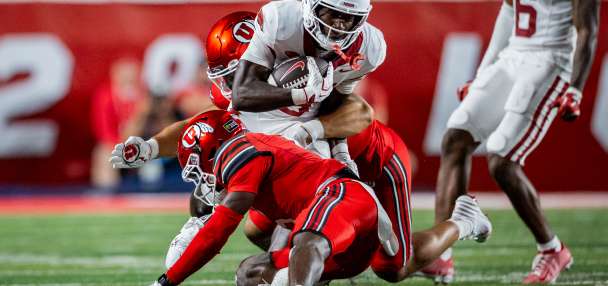
Before we fully jump into the McGiven data further, as a reference point, Utah ran the ball 61% of all play calls last season, while also producing the bulk of the yardage production (3,462 yards vs. 2,816 passing yards). We'll throw out the 2024 season for obvious reasons and jump to the 2023 season, which was even higher at 63%.
OK, but what about Utah's second Rose Bowl season with a healthy Cam Rising and offensive personnel capable of helping spread out the workload? Well, it's a bit more balanced, but Utah still favored the run 56%.
You get it, Utah liked to run the ball. Now back to McGiven ...
In three of the last five seasons, McGiven utilized a fairly balanced offensive system, with neither run or pass taking up more than 53% of all plays called. Within those three seasons, though, two were more geared toward the run:
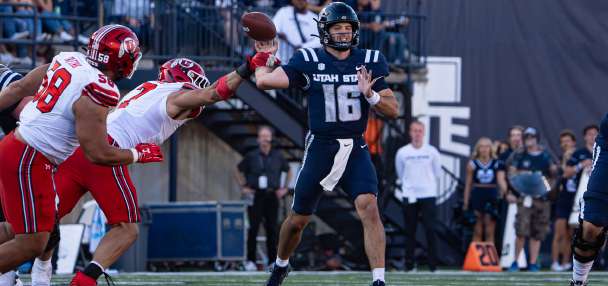
- Utah State (2025): 53% run (449 attempts) vs. 47% pass (403 attempts)
- San Jose State (2023): 53% run (429 attempts) vs. 47% pass (375 attempts)
Outside of those three seasons, the 2022 season was a bit more geared toward the pass at 56%, and the 2024 season — his last at San Jose State — was all the way up to 63% in favor of the pass.
That season, McGiven had two receivers nearly eclipse 1,000 yards, with Nick Nash recording 1,382 yards and 16 touchdowns and Justin Lockhart finishing with 983 yards and five touchdowns. His running back, Floyd Chalk IV, had 721 yards and 10 touchdowns.
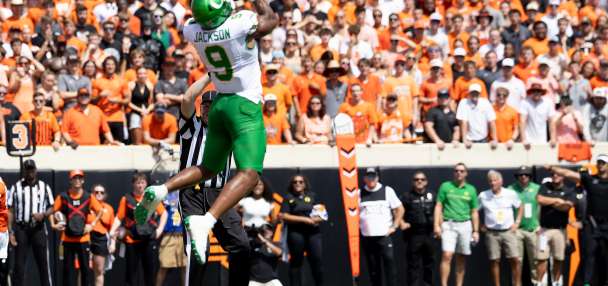
Last season, McGiven relied heavily on Bryson Barnes, who lead the team in rushing at 740 yards and 10 touchdowns, with starting running back Miles Davis a close second at 731 yards and eight touchdowns. But even slightly favoring the run, now current Utah receiver Braden Pegan added 926 receiving yards and five touchdowns, with Brady Boyd finishing with 743 yards and eight touchdowns.
What does that all mean? McGiven isn't set to one style or approach. Even when one — the pass or run — is favored, it's only marginal and still more balanced. But like the 2024 season showed, he'll lean fully into one area if it's the team's strength.
So what will it look like at Utah?
"I feel confident that we have playmakers at some different spots," McGiven said. "I think when the ball is distributed, you're not really in a panic in terms of whose hands it's going to fall in."
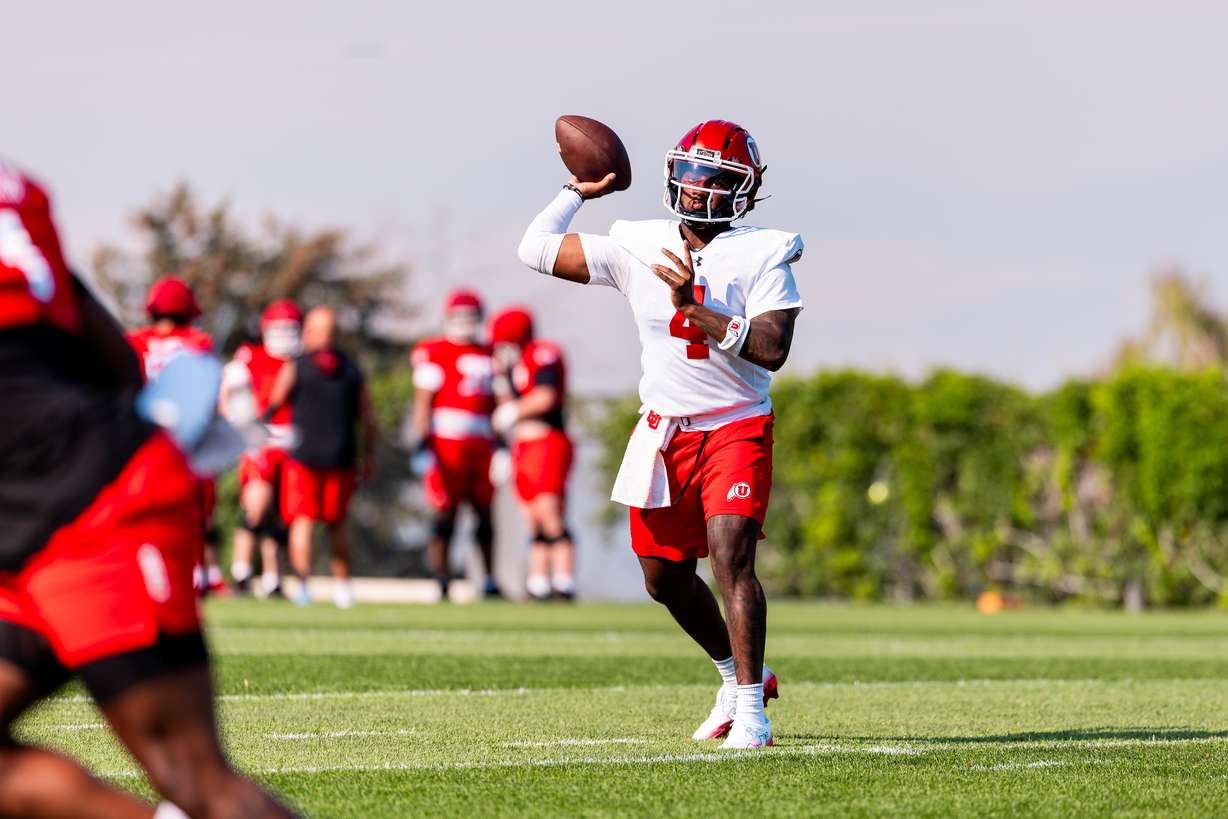
Whether it's a running back or receiver, or even a quarterback, McGiven sees arguably his best collective offensive unit that could produce in any number of ways, and he's optimistic about the offense's ability to "mix and match personnel and formations to attack people some different ways."
Though the influx of depth and talent at the receiver position has been noticeable and encouraging, McGiven is quick to recognize that there's other playmakers on the field, too.
"We have Wayshawn (Parker) back there, and Wayshawn needs to take on his share of the load, and he needs to be able to showcase that and have those opportunities," McGiven said. "But you've also got (Daniel) Bray back there that you can use in some similar ways as Wayshawn, some different ways as Wayshawn, in terms of his skill set.
"So to me, it's not so much about running and throwing it as much as just making sure that you're featuring your personnel the right way and that you're distributing to the right people at the right times."
Distributing the ball at the right time will be the tricky part, and "you never want to come out of a game and you have playmakers that didn't get opportunities," McGiven said. But he hopes to strike a "delicate balance" between the position groups and "see how it's unfolding."
McGiven isn't afraid to ride the hot hand, but understands balance can be equally encouraging for an offense, too.