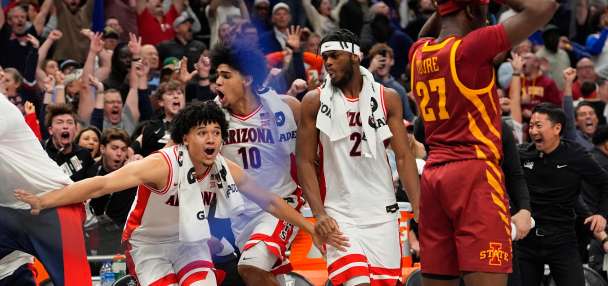
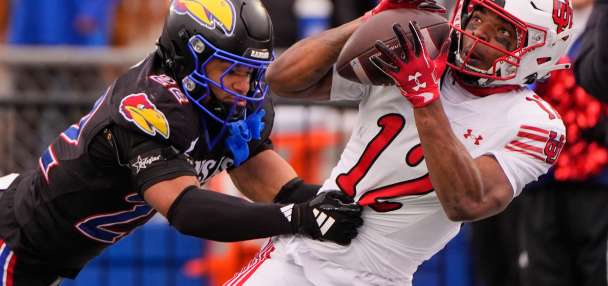
- BYU's football and basketball teams had disappointing finishes despite significant investment.
- Football lost key games to Texas Tech; basketball fell to a lower seed.
- Future challenges include losing key players and staff, impacting 2026-27 prospects.
BYU's football team won 12 games, qualified for the Big 12 championship game and was ranked in the Associated Press poll for 13 of 16 weeks.
The men's basketball team won 23 games, made the NCAA Tournament and was ranked in 17 of the 20 AP polls released thus far (with one remaining).
All in all, the Cougars were relevant nationally for six consecutive months.
And yet, three ghastly results overshadow all the victories:
- Texas Tech 29, BYU 7
- Texas Tech 34, BYU 7
- Texas 79, BYU 71
Those are, of course, the scores of the two biggest football games and the most important basketball game.
When it mattered most on the field, the Cougars were not competitive against the top team in the conference.
When it mattered most on the court, they lost to a No. 11 seed in the first round of the NCAAs.
What are we to make of the results? How should we dissect the three meek performances given the stakes and the tens of millions of dollars plowed into BYU's two rosters?
The Cougars were so invested in success. And yet, they were so far from true relevance — from reaching the biggest stages in the two sports.
With the spotlights on, they crumbled.
To be clear, that does not mean either season was a failure. The conclusions were disappointing, sure, particularly in the nature of the losses.
The Cougars looked like a JV outfit against Texas Tech in the regular-season duel and the Big 12 championship; and they were outclassed in the NCAAs by a lower seed with a worse record and vastly more difficult logistics. (Texas played in the First Four in Dayton on Tuesday, flew overnight to Portland, then handled the fresher Cougars on Thursday without much trouble.)
Disappointments, not failures.
The failure would have been in not trying, and goodness, did BYU make the attempt.
We don't know the specific dollars invested in revenue-sharing and NIL for either team. Schools guard the details closely, leaving the fans and media to make educated guesses.
But the Cougars were aggressive with both programs. Given market rates, it stands to reason they plowed $25 million to $30 million into the two rosters. That figure does not include operating expenses or compensation for the coaching staffs.
In exchange for that investment, they finished far short of their goals in both sports.
It won't get any easier in the 2026-27 competition season.
The football program lost several important pieces and the mastermind of a stout defense: coordinator Jay Hill, who headed to Michigan to join Kyle Whittingham's staff. Also, the chief competition, Texas Tech, upgraded at its weakest position, quarterback.
Meanwhile, the BYU basketball team is set to lose the best player in school history, AJ Dybantsa, the likely No. 1 pick in the NBA draft.
Yes, heralded recruit Bruce Branch potentially could mirror Dybantsa's impact and production. But the Cougars have other issues to solve, starting with a strong aversion to defense under coach Kevin Young. (They have finished outside the top 50 nationally in defensive efficiency in both of Young's seasons, according to the Pomeroy Ratings.)
Given the lack of big-game success, particularly when accounting for the resources allocated, it's not unreasonable to look askance at the return-on-investment and wonder if the Cougars should continue their commitment to winning — no matter the cost — at the highest level possible in both major sports.
Of course they should. Unless you're Indiana football, success isn't a straight shot to the penthouse.
It's built on years of institutional alignment, on a collective push to win, and the acceptance that stumbles are baked into the process.
Consider the Oregon football program and all the hundreds of millions of dollars the Ducks have devoted to chasing a national championship over two decades.
Or Gonzaga basketball.
Success is built on creating a virtuous circle in which victories on the field and the court lead to elevated donor engagement and fundraising/NIL dollars and unprecedented media exposure — all of which helps drive each subsequent wave of recruiting.
(The Cougars would not have landed Branch, the blue-chip prospect from Florida, without first securing Dybantsa.)
Above all, a sustained commitment to success is built on the presumption that major college sports will experience a structural change early in the next decade that coincides with the expiration of media agreements, including those governing the Big Ten and Big 12, that are holding the industry together.
Whether a super league forms or the Big Ten and SEC expand again, consolidation of the top brands is inevitable.
That's why Utah has partnered with a private equity firm.
That's why an oil billionaire is funding Texas Tech's roster.
It's why Washington and Oregon joined the Big Ten and Utah State jumped to the rebuilt Pac-12.
Although the structural shift itself won't unfold until the early 2030s, the back-channel discussions and fundamental strategies will play out well in advance of the next decade. They will start soon — in some nooks and crannies of the college sports world, they have already begun.
BYU is spending now to show it warrants a seat at the adult table later. It's the smart move, no matter how many disappointing finishes must be endured.

Most recent Big 12 stories
Related topics
 Jon Wilner
Jon Wilner has been covering college sports for decades and is an AP Top 25 football and basketball voter as well as a Heisman Trophy voter. He was named Beat Writer of the Year in 2013 by the Football Writers Association of America for his coverage of the Pac-12, won first place for feature writing in 2016 in the Associated Press Sports Editors writing contest and is a five-time APSE honoree. You can follow him on Twitter @WilnerHotline or send an email at jwilner@bayareanewsgroup.com.
Pac-12 Hotline: Subscribe to the Pac-12 Hotline Newsletter. Pac-12 Hotline is not endorsed or sponsored by the Pac-12 Conference, and the views expressed herein do not necessarily reflect the views of the Conference.